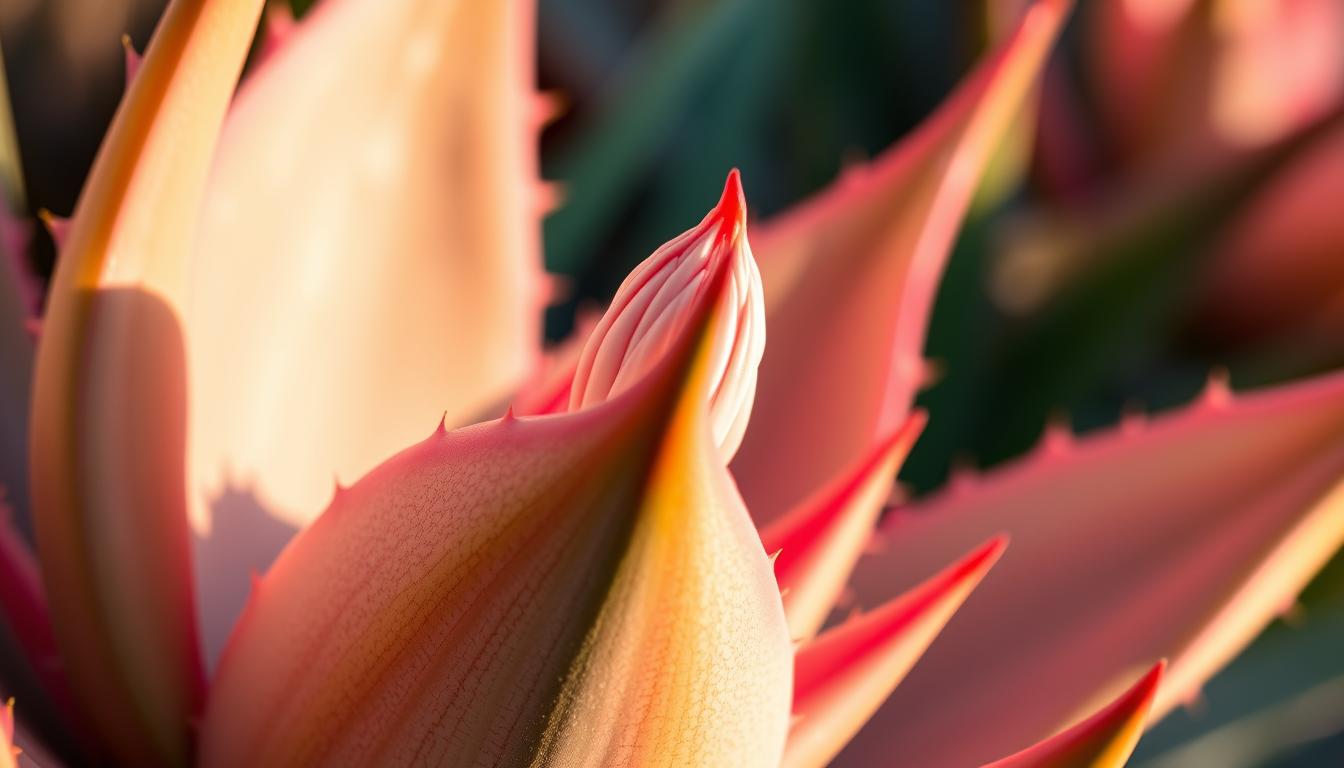
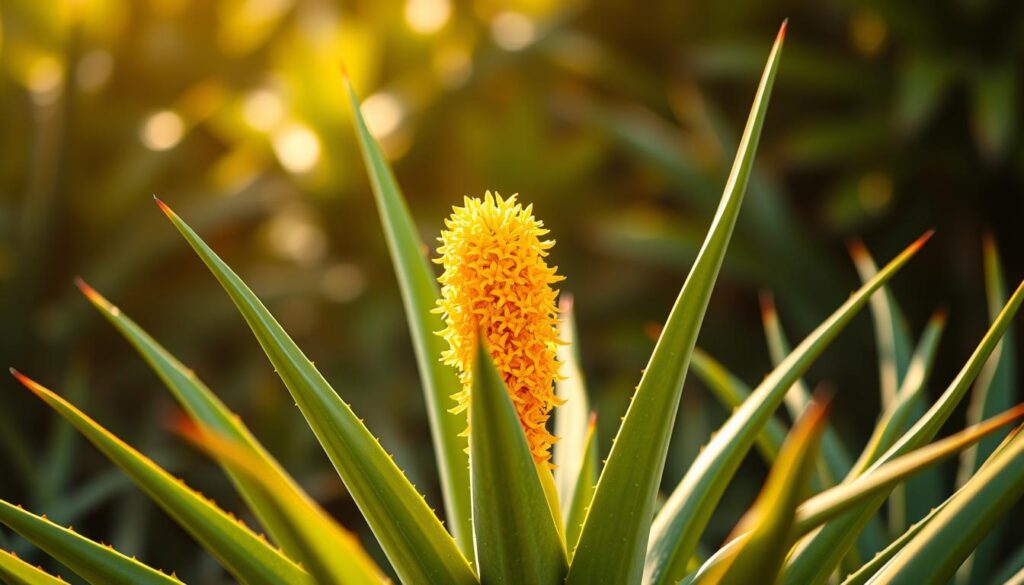
I still remember the surprise of spotting a tall stalk of orange tubular flowers rising above thick, fleshy leaves. That sudden splash of color made years of patient care feel worth it.
These moments are rare indoors. Most home growers see healthy rosettes for seasons before a bloom appears. Maturity, light, and dry, gritty soil work together over time to trigger the show.
To coax an aloe vera plant into flowering you must mimic its sunny, arid origin. Give bright direct sun, warm growing-season temps, and minimal winter water. Expect blooms in late spring to early summer that last a few weeks.
Care focused on strong roots and compact rosette growth pays off. For practical care tips and disease prevention that support flowering, see this guide on common issues and solutions: aloe vera care and prevention.
Key Takeaways
- Flowering is uncommon indoors but achievable with the right light and warmth.
- Maturity matters: many need about four years before blooming.
- Replicate arid, sunny conditions and use well-draining gritty soil.
- Watch for tight rosettes and robust leaves as early success signs.
- Plan for a multi-season effort; blooms are short but spectacular.
Why Aloe Plant Blooms Are Rare—and Why They’re Worth the Wait
What seems like a sudden show is actually years of stored energy surfacing as a flowering stalk. A mature rosette channels resources into a stiff, upright inflorescence that lifts well above the leaves.
What an aloe bloom looks like: Picture a tall stalk topped with dense clusters of tubular flowers that open top-to-bottom. Colors range from yellow and orange to red, white, or pink depending on variety. In the U.S., many send up spikes in spring, often from late spring into early summer.
Why flowering is uncommon indoors: Age and environment are the main limits. Most common specimens need at least four years before they have the reserves to produce a vera bloom.
Homes usually lack six to eight hours of direct sun and daytime warmth of 70–85°F. Brief dips in temperatures or cloudy stretches can postpone the show.
Because aloes evolved in arid, rocky habitats with intense sun and fast drainage, reproducing those conditions over seasons is the long game. Track your plant’s age and vigor so you know when bloom prospects improve.
- Stalk rises above the rosette for strong visual contrast.
- Many vera bloom spikes appear in spring under ideal light and temperatures.
- Patience across years often delivers the most dramatic rewards.
How to Encourage Aloe Plant Blooms Indoors and Outdoors
Give a mature specimen the right routine and you raise your chances of seeing a dramatic vera bloom. Start with a vigorous aloe vera that is at least four years old; younger specimens usually lack the stored energy to flower.
Light and temperatures: Aim for six to eight hours of bright, direct light daily. If windows fall short, use a full-spectrum grow light. Keep daytime temperatures near 70–85°F and avoid drops below 55–60°F.
Soil and potting: Use a gritty, fast-draining mix in a container with drainage holes. Leave roughly 1 to 1.5 inch between roots and the pot wall to encourage a dense root mass that supports flowering.
Water, feed, and moves: Water weekly in the growing season and halve that in winter. Feed lightly—half-strength 10-40-10 monthly or a balanced dose in spring and midsummer—and always flush the soil after feeding to prevent salt build-up.
Seasonal tip: Move the vera plant outdoors when days stay 70–85°F and no frost is expected. Bring it back or protect it if nights dip near 60°F.
After the Show: Flower Stalk Care, Troubleshooting, and Bloom Timing
When the final bloom drops, timely care helps the rosette redirect energy into roots and leaves. Remove the spent flower stalk by cutting it at the base where it meets the rosette. This simple step sends energy back to the core growth and prepares the vera for new shoots.
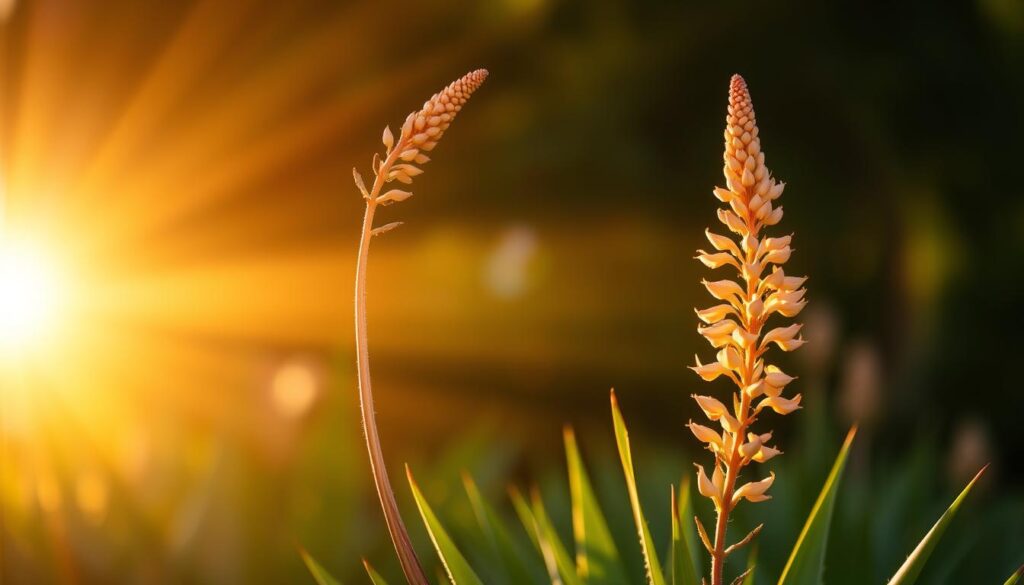
Cutting the spent stalk to redirect energy
Prune with purpose. Once all flowers fade, cut the entire stalk at its base. A clean cut prevents disease and conserves energy for root and leaf growth that supports future spikes.
If your vera won’t flower: checks and fixes
Check light and temperatures first. Lack of six to eight hours of direct sun or daytime temps under 70–85°F will stall bud set. Night drops below about 60°F also delay development.
Inspect the pot size—too roomy soil reduces root density and lowers flowering chances. Confirm the specimen is at least four years old; younger ones often lack reserves.
Maintain gritty, free-draining soil, allow full dry-downs between waterings, and feed sparingly. When you fertilize, flush the container afterward to leach salts that can harm roots.
When to expect blooms
In the U.S., expect spikes in late spring to early summer. Many vera plants bloom once per year for two to three weeks. In warm tropical zones, you may see flowers multiple times per growing season.
- Move plant outdoors during warm days for stronger sun, but bring the container in at night if temps may dip below 60°F.
- Keep pot sizing snug; a dense root mass supports flowering better than a too-large container.
- Note the month and duration of each spike so you can refine care next season.
“Cutting the spent stalk at the base helps the rosette recover more quickly and improves future flowering odds.”
For more on encouraging blooms and practical timing, see this guide to flowering aloe vera plants.
Conclusion
Consistent light, warm days, and gritty, well-draining soil create the right conditions for a vera plant to shift from leaf growth to reproduction. Give six to eight hours of sun, keep daytime temps near 70–85°F, and use a snug pot that lets roots build density.
Be patient over the years—many specimens need several years or about four years old before a serious chance at a bloom. Track care by months, feed lightly during the growing season, and move outdoors in summer when safe. Small, steady changes in gardening routine often make the difference; celebrate each flowering and then restore growth-focused care for the next cycle.
