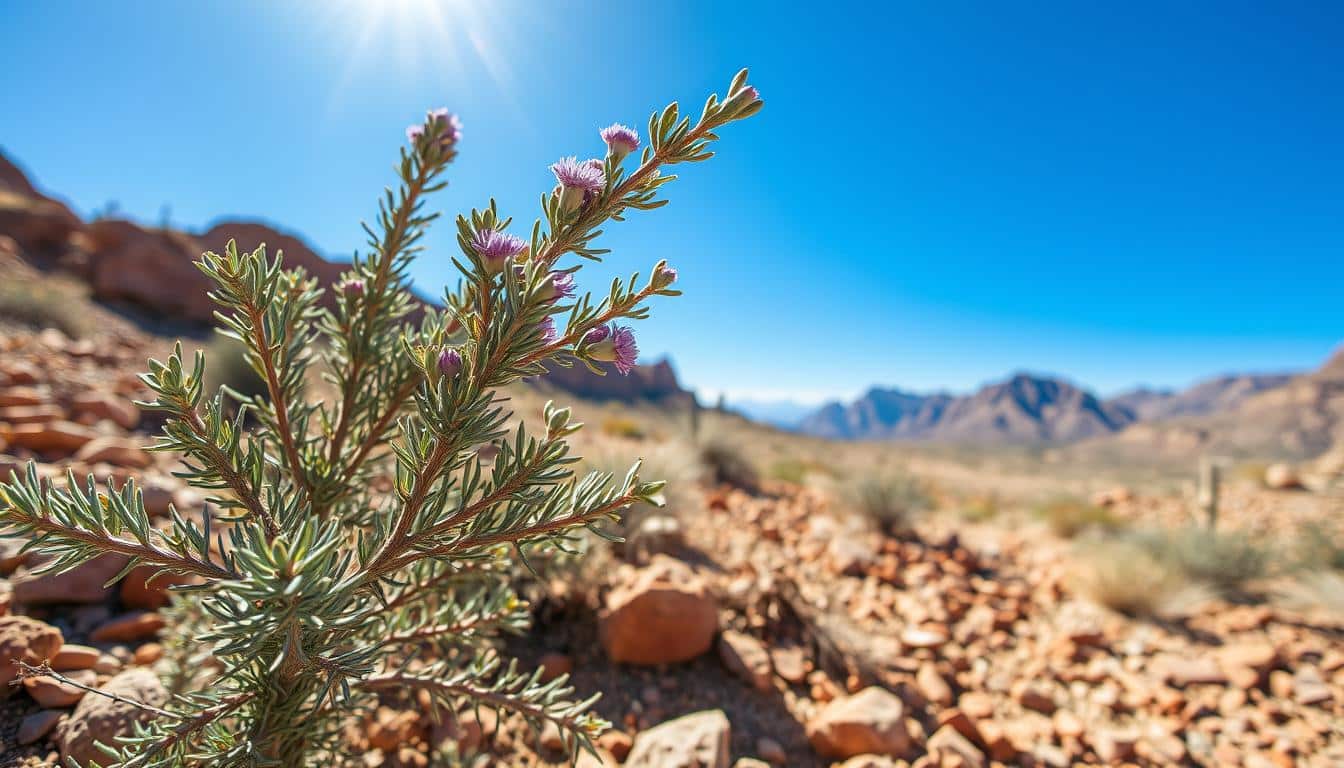
Can one hardy herb really thrive in blazing sun, survive frost, and still taste amazing on the grill?
Arizona Rosemary is a woody, aromatic evergreen herb prized for its resinous fragrance and savory, piney flavor. It thrives in full sun and lean, well-drained soil common to the low desert, making it a top choice for a sun-drenched garden where many plants fail.
Once established, this plant tolerates drought and can withstand brief cold snaps down to 10–20°F depending on variety. Older plants handle frost better than young transplants, so start with nursery transplants for faster success.
This short guide previews practical, field-tested tips on site selection, soil prep, planting time, watering schedules, container setup, pruning, harvest, and winter care. Expect blue-to-lavender flowers that attract pollinators and add seasonal charm.
Key Takeaways
- Plant in full sun with well-drained soil for best results.
- Use transplants instead of seed to get a head start.
- Water sparingly; rosemary is drought-tough once rooted.
- Prune and harvest year-round for fresh flavor and vigor.
- Flowers add pollinator value and seasonal interest.
- Learn harvest timing and tips from trusted guides like how to harvest for best flavor.
Getting Started with Arizona Rosemary in the U.S. Southwest
Pick a warm, sun-drenched corner with good air movement to reduce disease and speed root establishment.
Pick the right site
Choose a location with full sun and open airflow. Bright exposure and steady circulation cut mildew risk and help plants handle summer heat.
Soil and drainage
Use native, slightly alkaline soil near pH 7. Avoid rich garden beds that hold moisture. Ensure fast drainage so roots stay healthy.
Planting windows and zones
In low desert climates, aim to plant in fall (Oct–Nov) or late winter to early spring (Feb–Apr). Young starts need warm ground to establish before summer heat arrives.
| Need | Recommendation | Why it matters |
|---|---|---|
| Spacing | 2–4 feet apart | Allows airflow and room for mature width |
| Water at planting | Moderate amount, then let surface dry | Prevents root stress and rot |
| Flower color | Blue–lavender | Attracts pollinators without rich soil |
- Account for reflected heat near walls when you select a site.
- In cooler zones, use containers and bring plants inside before hard freezes.
Planting and Establishment: From Transplant to Rooted, Drought-Tough Plants
Start with a healthy nursery transplant to speed establishment and avoid the slow gamble of seed sowing.
Why pick transplants and how to inspect starts
Opt for transplants over seed. Look for vigorous, green foliage and avoid plants that are potbound. Gently tease the root ball—roots should be white and not circling the pot.
Spacing, shape, and airflow
Set plants 2–4 feet apart. This spacing allows good airflow, keeps stems dry, and gives a mature shape that invites pollinators.
Watering in the first months
Water every 3–5 days during establishment, more in heat waves. Track moisture by inches as a guideline, but watch for slight leaf droop to time the next watering day.
Container setup
Use a wide terra cotta container with a drainage hole. Mix potting soil with a gritty cactus/succulent mix for fast drainage. Avoid saucers that trap water under the pot.
“Plant a little high so the crown sheds water away from the stem—this reduces root rot risk.”
- Make sure planting holes do not form basins.
- Lightly pinch new stems to encourage branching; avoid heavy cutting while roots establish.
- Avoid rich fertilizer at planting; keep soil modestly lean.
| Need | Action | Why it helps |
|---|---|---|
| Start type | Transplant, non-rootbound | Faster root growth and higher success |
| Spacing | 2–4 feet | Airflow, shape, pollinator access |
| Initial watering | Every 3–5 days | Establish roots; adjust in heat |
Arizona Rosemary Care Through the Year: Sun, Water, Soil, and Winter Smarts
This hardy herb demands bright light and steady airflow to stay vigorous through long, hot summers.
Full sun and high heat
Provide full sun all year. In summer the plant tolerates strong light and heat when the soil drains fast and airflow is good.
Place in a sunny spot that gets at least six hours daily. Good circulation reduces mildew and keeps foliage fragrant.
Water, months of adjustment, and soil mix
After the first months, water less often but give deeper soakings. Let the top few inches of soil dry before the next irrigation.
Use a gritty soil mix for fast drainage. Make sure to monitor plants during heat spikes and adjust the amount and interval of water.
Fall hardening and winter smarts
In fall, avoid heavy pruning and extra nitrogen so stems harden for winter. Older shrubs tolerate mild frost better than new transplants.
Move containers indoors before hard freezes if you are in zones 7 or colder. Place near a bright window and cut back watering through winter.
Feeding, mulch, and pruning rhythm
Apply a light top-dressing of compost or mulch in early spring to feed soil microbes without promoting soft growth.
Avoid routine fertilizer. The plant prefers lean soil that encourages aromatic, sturdy growth. Prune lightly in spring or fall—no more than one-third at a time.
“Keep plants uncrowded for airflow; this deters mildew and helps leaves dry quickly after irrigation.”
| Need | Action | Benefit |
|---|---|---|
| Sun | Full sun (6+ hours) | Strong flavor, compact growth |
| Water | Deep, infrequent soakings | Healthy roots; less disease |
| Soil mix | Gritty, fast-draining mix | Prevents root rot in heat |
| Winter | Bring containers inside in cold zones | Protects young plants from hard freezes |
Pruning, Harvesting, and Propagation for Lifelong Growth
A few careful cuts each season set the stage for steady growth and strong flavor.
Prune for shape and healthy foliage. Cut conservatively—never remove more than one-third of the rosemary plant at a time. Do light touch-ups in spring and fall to remove crossing branches and improve airflow.
Use a clean, sharp tool on pruning day to make precise cuts. This reduces disease risk and keeps stems tidy.
Harvesting tips
Pick young stems and use the top 2–3 inches for best flavor. Avoid cutting into old wood; older branches resprout slowly and can set back growth.
In late season, keep harvests modest so the plant can harden off for colder months. Clip edible flowers as garnish and to support pollinators.
Propagating from cuttings
Take 6–8 inch non-flowering stems, strip the lower leaves, and submerge the nodes in clean water. Change the water every few days to prevent rot.
When roots reach about one inch, pot cuttings into a free-draining mix. Keep moisture even but never soggy during the first month as the new root system establishes.
“Track pruning and harvest months on a simple calendar to avoid over-cutting and keep growth balanced.”
- Shape: Limit cuts to one-third to protect energy reserves.
- Timing: Light pruning in spring and fall improves foliage and airflow.
- Harvest: Snip top inches of young stems for cooking; leave older wood intact.
- Propagation: Root 6–8 inch stems in water; pot when roots ≈ 1 inch.
Arizona Rosemary Varieties, Forms, and Landscape Uses
From upright hedges to trailing groundcovers, cultivar choice defines how you use this hardy herb in the garden.
Cold-hardy and culinary standouts:
- Choose ‘Arp’ or ‘Madeline Hill’ for proven winter toughness and reliable survival in colder snaps.
- For kitchen use pick ‘Tuscan Blue’ or ‘Tuscan Spires’ — upright types that yield abundant, flavorful stems and dense foliage.
- ‘Barbeque’ supplies long, straight stems ideal for grilling skewers and structural uses in the landscape.
Forms and colors: Upright types work as anchors or low hedges. Trailing types like Prostratus and Huntington Carpet spill over walls or soften planters. Expect flowers mostly in blue to lavender, with some white or pink forms for seasonal color and pollinator appeal.
“Use upright varieties for structure and trailing types to cover soil — both add year-round fragrance and evergreen shape.”
Landscape tips: Plant in full sun with good airflow. Combine with lantana, salvia, yarrow, agastache, coneflower, or succulents for resilient, desert-friendly designs that support pollinators during spring flushes.
BBQ-Ready Year-Round: Flavor, Stems, and Kitchen Techniques
Bring garden flavor to the grill with simple, reliable techniques. Strong, straight stems make excellent natural skewers and add smoke-kissed aroma to grilled dishes. Choose sturdy varieties like ‘Barbeque’ when you need long, usable stems that hold meat and veggies without splintering.
Cooking tips and pairings
Strip leaves by pinching from tip to base, then chop to the size you need. Use sprigs with lamb, chicken, pork, potatoes, squash, and summer vegetables.
Make sure to add herb early for roasts so the flavor infuses, and later for quick sautés to avoid bitterness. Flowers are edible and add color and a milder note as a garnish.
Storing and preserving
Fresh sprigs keep up to three weeks in the refrigerator if wrapped lightly. For longer use, freeze leaves in oil or water as ice cubes, or air-dry bundles for 7–10 days.
“Pre-portion frozen herb cubes to drop into pans on busy weeknights for instant flavor.”
- Use stems as skewers for grilled meats and vegetables.
- Make rosemary-lemon salt by pulsing leaves with coarse sea salt and lemon zest; store airtight.
- Infuse oils, vinegars, or alcohols for marinades and cocktails.
| Technique | Use | Why it helps |
|---|---|---|
| Stems as skewers | Grilling kebabs | Stable, aromatic handle; no metal needed |
| Frozen herb cubes | Quick weeknight cooking | Ready portions; preserves fresh flavor |
| Air- or oven-dry | Pantry storage | Long shelf life; easy to crumble for rubs |
| Infused oils/salts | Finishing and marinades | Concentrated flavor with controlled amount |
Conclusion
With sensible site choices and light maintenance, this plant becomes a low-effort garden staple.
Key care steps are simple: give full sun, a lean, gritty mix for fast drainage, and short, deep soakings of water while the roots get established.
Plant in fall or early spring for easier establishment. Space to improve airflow, use a gritty mix in each container, and avoid overwatering to reduce rot in heat and drought.
Prune lightly (no more than one-third), harvest young leaves for best flavor, and top-dress in spring to support steady growth and healthy foliage.
Ready to grow rosemary? Pick a day this week to prep the site, plan your planting, and check seedlings every days during the first few months to dial in care with confidence.
