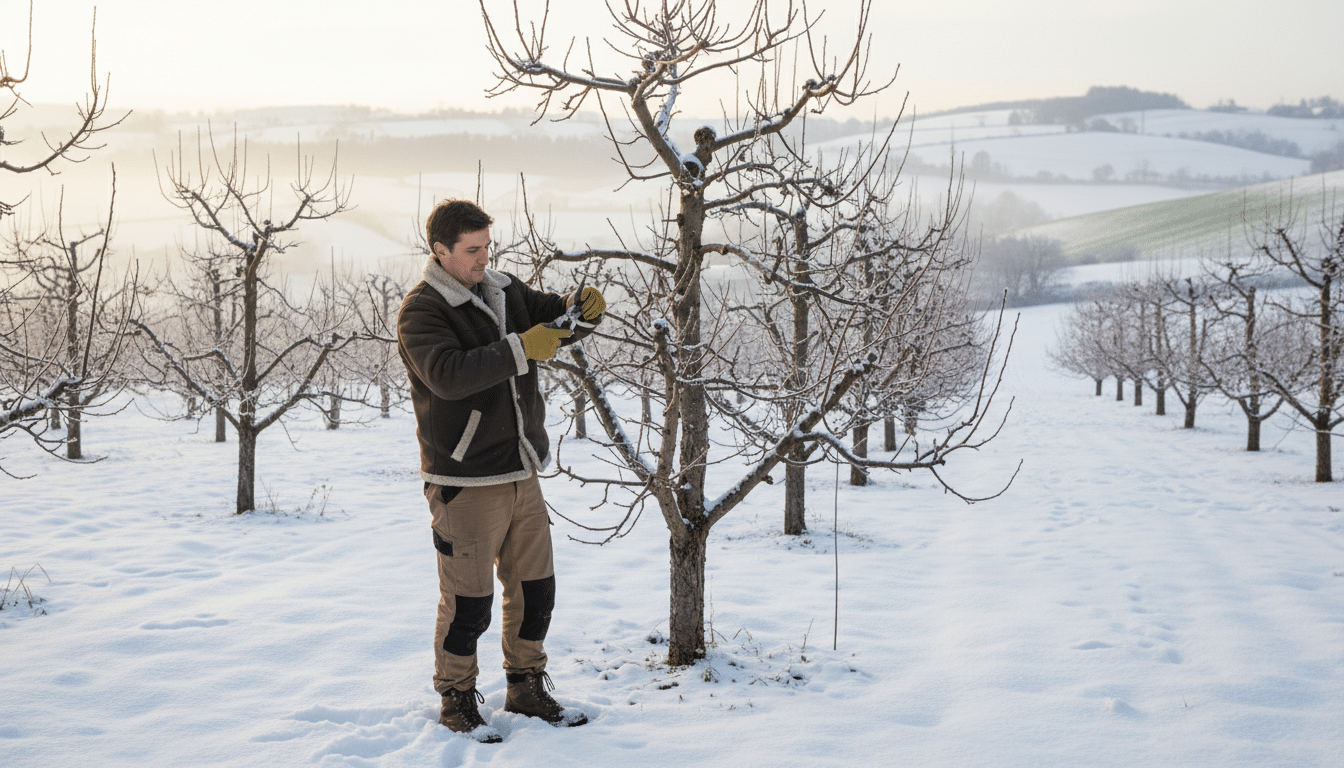
What if the best time to cut a fruit tree is when it looks the most bare—and not when it’s full of leaves?
Late February is the perfect time for pruning fruit trees. The branches are bare, making it easy to see what needs to be done. You can spot weak spots, crowded areas, and dead wood without any guesswork.
The goal of pruning isn’t to make the tree look pretty. It’s about getting better fruit, fewer problems, and a strong tree that can handle heavy crops. By pruning, you choose the right branches and remove those that block light and air.
It’s also important to understand what’s happening inside the tree. In fall, sugars move down to the roots. In winter, growth almost stops. By spring, this stored energy fuels new growth. Pruning in late February can help guide this growth.
In most of the United States, the best time for pruning is from early December to late February. This depends on local weather. This guide will help beginners with tools, safe cuts, and how pruning differs for various fruits.
Key Takeaways
- Late February pruning works well because leafless branches show the tree’s true structure.
- Pruning fruit trees is about health and harvest, not just looks.
- Late winter cuts help direct stored energy into strong spring growth.
- The dormant pruning window often spans early December to late February, depending on weather.
- Good pruning improves light, airflow, and branch strength for better fruit.
- This guide will explain how to prune fruit trees by species, with safety and disease tips.
Why Prune Fruit Trees in Late February?
Late February is often the best time to prune fruit trees in many U.S. regions. The branches are bare, making it easy to see what needs to be cut. This clarity helps you shape the tree for better light, airflow, and fruiting.
Pruning in winter means the tree is dormant. This makes it easier to spot problems like weak branches and old growth. Issues like cankers and dieback are also easier to see on bare wood.
If you want to know more about pruning times, check out this guide on when to prune fruit trees.
Benefits of Late Winter Pruning
Pruning in late winter encourages strong growth. The tree focuses its energy on fewer, better branches. This means longer, stronger shoots and better fruiting sites.
It’s also easier to decide on the tree’s structure in winter. You can choose a central leader or open-center shape. This way, you can remove low-quality branches and keep fruiting wood accessible.
Remember to sterilize your pruners between cuts to prevent disease. This is important when removing damaged wood to avoid spreading problems like fire blight.
Timing and Temperature Considerations
Timing is key when pruning. Pruning too early can slow healing and expose cuts to cold rain and freezes. Pruning too late can also harm the tree, as it has already started growing.
The goal is to prune when the tree is fully dormant but close to budbreak. This ensures the best growth response.
| Timing window | What you’ll notice | Typical impact on growth | Main caution |
|---|---|---|---|
| Early winter | Structure is visible, but wounds stay open longer | Can be uneven; healing is slow | Greater exposure to wet weather and infection risk on fresh cuts |
| Late February (late winter) | Clear branch structure; buds are asleep but “close to waking” | More vigorous response as energy concentrates into remaining wood | Avoid cutting during extreme cold snaps; wait for a milder stretch |
| After buds open (spring) | Winter-killed tips are easier to identify, on peach and apricot | Often less vigorous because energy has already gone into leaves and blooms | Avoid pruning apples during blossom time to reduce fire blight spread risk |
Pruning in spring is useful for checking winter damage. But, it’s not as effective as late winter pruning. Late February is often the best time for pruning fruit trees in many backyards.
Essential Tools for Pruning
Pruning fruit trees in late February is easier with the right tools. Sharp blades make clean cuts, helping wounds heal faster. This also makes pruning safer because you don’t have to force the cut.
When starting to prune fruit trees, choose tools that fit your hand and the branch size. A basic kit can handle most needs, from young trees to older ones needing more shaping.
| Tool | Best for | Typical cut range | Practical tip |
|---|---|---|---|
| Bypass hand pruners (Felco, ARS, Fiskars) | Small twigs, fruiting spurs, light thinning | Up to about 3/4 inch | Use a bypass blade for live wood; it leaves a cleaner edge than anvil styles. |
| Loppers (Corona, Fiskars) | Medium limbs that are too thick for pruners | About 3/4 to 1 1/2 inches | Let the handles do the work; cutting at full reach reduces bark tearing. |
| Pruning saw (Silky, Corona Razortooth) | Large limbs and tight crotches | Over 1 1/2 inches | Use a three-cut method to prevent stripping bark on the final drop. |
Tool condition matters as much as tool choice. Clean off sap often and sharpen pruners for smooth cuts. Sterilize blades after cutting diseased wood, and for fire blight, sterilize between cuts to stop spread.
Pruning Shears and Their Use
Pruning shears are for the fine details: water sprouts, thin shoots, and small growth. Always cut on the side of the branch you want to keep for neat cuts. This helps wounds heal better.
Make quick, controlled cuts instead of twisting or snapping stems. Shears are great for opening the canopy without cutting off big limbs too soon.
Loppers and Saws: What You Need
Loppers are for stubborn branches. They’re perfect for shaping without climbing and removing crowding that blocks sun. Use them for clean cuts where pruners would strain.
A pruning saw is for bigger wood, often removed during dormancy. Start with an undercut, then a top cut, and finish with a clean cut outside the branch collar. This method supports safe pruning and reduces torn bark.
Safety Gear for Pruning
Pruning in late winter means bigger cuts and more saw work. So, protect yourself first. Wear snug gloves, safety glasses, and boots with good traction for stable footing on cold ground. Always keep three points of contact on ladders and avoid overreaching.
Even the best tools are risky if you’re tired or in a hurry. Always slow down, keep your cutting path clear, and put down tools before moving branches. This is a good habit to develop while learning to prune fruit trees.
Understanding Fruit Tree Growth
Pruning fruit trees starts with understanding where the tree’s energy goes. In fall, sugars move down and store in the roots and trunk. In winter, growth slows, but the tree holds that fuel.
When late February warms up, budbreak is powered by that stored energy. This is why timing matters. A stronger cut can push vigorous shoots, while lighter cuts can steady growth and keep fruiting wood in place. Each cut guides where that spring energy will land.
Fruit tree pruning tips get easier once you spot what type of wood carries the crop. Some plants bloom or fruit on last year’s wood. Cutting everything back can erase the season’s display. This matters with ornamentals like Ceanothus, and it also shows up in fruiting shrubs like goumi.
How Different Species Grow
Apples and pears rely on spurs, but they don’t act the same. Apple spurs can stay productive for about 20 years. They often form near the base of newer shoots, so avoid stripping them off. Apples also respond well to an open center, with suckers removed, and can tolerate removing up to two-thirds of new growth in a year.
Pears fruit on spurs on wood that’s at least two years old. So, heavy cutting can delay production. Prune pears lightly to keep shape and reduce crowding, and note that late-summer pruning is often used for control. Plums fruit on wood at least two years old, with productive wood lasting up to about 10 years; they often need stronger cuts to tame vertical growth, commonly cutting back one-half to two-thirds of new growth.
Cherries also carry flowers and fruit on long-lived spurs, so the goal is mostly structure: shape the canopy and reduce overly upright growth. For plums and cherries, summer pruning is often chosen to lower Silver Leaf disease risk. Stone fruit like peach, nectarine, and almond can take heavier pruning, with fruit buds commonly set in the center third of shoots; thinning helps size and flavor, and spring timing is often used to support production.
Apricots fruit on 1-year shoots and 2–3-year wood, and the branches can be brittle, so cuts back to fat wood help prevent breakage. Many growers prune apricot right after fruiting in late summer or early fall, sometimes using a modified central leader with summer height control. Figs may carry two crops—an early one on last year’s wood and a larger late-summer crop—so remove old, tired branches but don’t wipe out productive new wood.
Citrus is usually pruned for height and air flow, with care not to remove buds and blossoms that set the next fruit. Persimmons are also brittle and are often pruned while dormant to build strong branch angles, then thinned as they age. Avocados set fruit at the ends of new twigs; avoid early spring and late summer pruning, and use selective thinning to improve air circulation even if it costs some fruit.
Flowering and Fruiting Patterns
Before you cut, match your plan to the tree’s fruiting habit. A tree that fruits on spurs rewards patience, while a tree that fruits on newer shoots needs steady renewal. These fruit tree pruning tips help you keep the right mix of young wood, established spurs, and open space for light.
| Tree type | Where fruit forms | What to protect during pruning | Timing notes that affect vigor |
|---|---|---|---|
| Apple | Short spurs, often long-lived | Spurs near the base of new wood; open center; remove suckers | Late winter cuts can drive strong shoot growth; can reduce up to two-thirds of new growth |
| Pear | Spurs on wood 2+ years old | Older spur wood; avoid heavy removal that delays cropping | Light shaping; late-summer pruning is often used for control |
| Plum / Cherry | Plum on 2+ year wood; cherry on spurs | Productive older wood; limit overly upright shoots | Summer pruning is often used to reduce Silver Leaf risk; plums may need strong height control |
| Peach / Nectarine / Almond | Fruit buds often in the center third of shoots | Balanced mix of last year’s and renewing wood for steady crops | Can handle heavier cuts; spring pruning is often used to support production |
| Fig / Citrus / Avocado | Fig on old and new wood; citrus on fruiting shoots; avocado at twig tips | Fig’s productive new wood; citrus buds; avocado tip growth | Selective thinning to manage light and airflow; avoid early spring and late summer cuts on avocado |
Once you know which wood matters, how to prune fruit trees becomes more predictable. Aim for light, air, and a clear structure, while keeping the buds and spurs that carry the crop. That’s the practical link between growth habits and pruning fruit trees in late February.
Pruning Techniques to Know
Choosing the right cut is key to good pruning. These techniques help shape the tree, improve airflow, and keep fruiting wood productive. For beginners, focus on opening the center, removing crowding, and guiding new growth.
Late February is a good time for big pruning because the tree is dormant. This makes it easier to see and work on the branch layout. Use these tips to make clean, planned cuts, not rushed ones.
Thinning Cuts for Healthier Trees
A thinning cut removes a whole branch back to where it started. This lets more sun and breeze in, helping leaves dry faster. It also lets the remaining fruiting branches work better.
Look for branches that grow inward, sit on top of each other, or run side-by-side. Thinning helps manage the tree’s “traffic.” It reduces shade and tangles, making it easier for spray coverage. For beginners, thinning is a safe way to improve the tree without causing weak shoots.
Heading Cuts to Control Growth
A heading cut shortens a branch instead of removing it. It’s good for managing height, slowing spread, or building denser growth. Heading changes direction and encourages branching.
Try a “slight trim” approach: remove 20%–30% of last year’s growth. Cut about 1/4 inch above an outward-facing bud. This pushes growth away from the center, keeping the canopy open.
The Art of Pinching Tips
Pinching tips is a light-touch method used on tender new growth, usually in the growing season. It doesn’t replace dormant work, but it complements it. For beginners, pinching feels less intimidating because you’re making small, reversible moves.
Use your fingers to remove the soft tip before it hardens, on vigorous watersprouts. This reduces shading and helps the tree focus on forming buds instead of long whips. Pinching is the fine-tuning step after the bigger cuts are done.
| Cut Type | What You Remove | Best Use in Late February | What It Encourages | Common Mistake to Avoid |
|---|---|---|---|---|
| Thinning cut | Entire branch at its point of origin | Clearing interior growth, removing redundant or parallel branches, opening the center | More light and airflow; stronger focus on remaining fruiting wood | Leaving a stub instead of cutting cleanly back to the branch collar |
| Heading cut | End of a branch, shortened to a bud or side shoot | Reducing height and spread; shaping scaffold limbs during dormant structure work | Denser branching near the cut; redirected growth toward an outward bud | Cutting too far above the bud or heading everything, which can trigger excess shoot growth |
| Pinching tips | Soft, new shoot tip removed by hand | Planning for spring and summer touch-ups after dormant pruning sets the structure | Slower shoot extension; better balance between shade and sun in the canopy | Pinching woody, hardened stems, which can tear bark and stress the shoot |
Identifying What to Prune
Start by making obvious cuts first. This clears the way and makes the next steps easier. These tips help you prune fruit trees without cutting too much.
Dead or Diseased Wood
Dead branches are brown, dry, and break easily. If a twig snaps and shows no green inside, it won’t grow back. Cutting out dead wood early helps with light and keeps pests away.
Diseased wood has dark stains, sunken cankers, or fuzzy spores. Cut back to healthy tissue and keep tools clean. If you think it’s fire blight, sterilize your pruners to stop it from spreading.
Suckers: What to Look For
Suckers grow from the base of the trunk or roots and take energy from fruiting limbs. Watersprouts grow straight up from branches and block light. Remove them when small for clean cuts.
- Suckers: shoots from the soil line, trunk base, or exposed roots
- Watersprouts: perfectly vertical growth from scaffolds or main limbs
Crossed and Rubbing Branches
Branches that cross or rub can rot and attract insects. Also, remove parallel branches that do the same job. This improves airflow and is a quick way to prune fruit trees.
Look for branches growing inward, downward, or from tight spots. Narrow spots can split under fruit weight. Choose wider angles and healthier bark for a cleaner tree.
| What you see | Why it matters | What to do | Quick cue |
|---|---|---|---|
| Brown, desiccated twig that snaps dry | No live tissue; can harbor insects | Remove back to a live lateral or branch collar | Scratch test shows no green |
| Discoloration, cankered spots, or visible spores | Disease can move into healthy wood | Cut to healthy wood; sanitize tools after infected cuts | Sunken or cracked bark around the lesion |
| Shoots from the trunk base or roots | Diverts energy from fruiting limbs | Clip at the point of origin, as low as possible | Growth starts below the graft or at soil line |
| Perfectly vertical shoots from main branches | Shades fruiting wood and crowds the canopy | Thin out early; remove the most upright shoots first | Straight-up growth with long internodes |
| Two limbs rubbing or crisscrossing | Creates wounds and weak spots | Keep the better-angled, healthier branch; remove the other | Polished bark where branches touch |
| Narrow crotch angle competing from one point | Higher chance of splitting under fruit load | Remove the weaker competitor to reduce stress | V-shaped union instead of a wider U-shape |
Step-by-Step Guide to Pruning
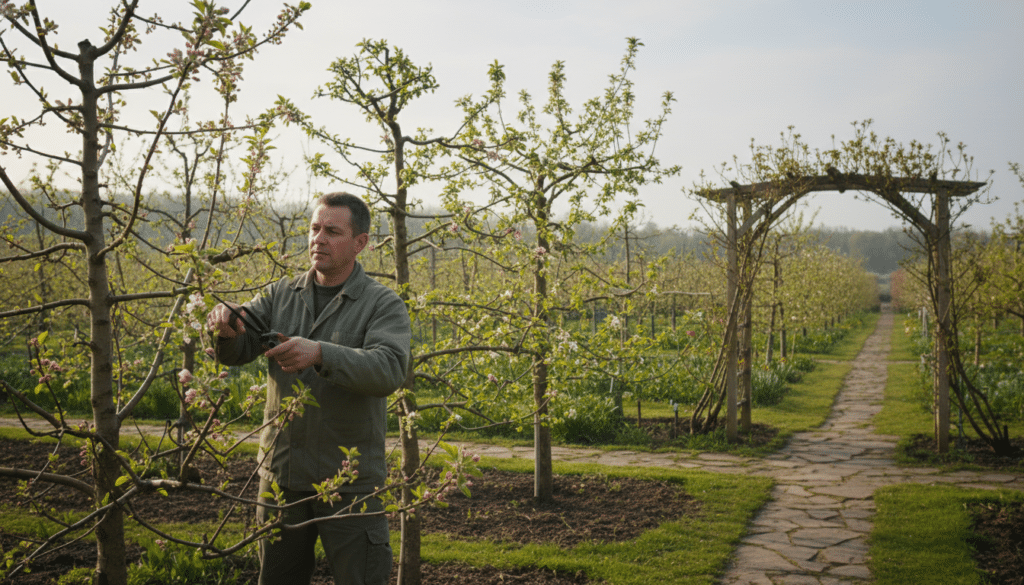
When late February comes, a simple plan helps you stay focused. This is the best time to prune fruit trees, when branches are bare and easy to see.
Use a calm, repeatable workflow for each cut. Good tree pruning techniques aim for light, air, and strong branch angles. This helps avoid busy growth.
Assessing Tree Health Before Pruning
Start by walking slowly around the tree. Look for broken limbs, sunken cankers, odd discoloration, or fuzzy fungal growth. Note any dead, dry wood.
Check the trunk base and major crotches. If you see disease signs on a limb, mark it. Plan to remove it before other cuts to limit disease spread.
Pruning Methodology by Species
For most apples and many pears, pruning in late winter works well. This is why many guides start here. Stone fruits can be different, as disease pressure can rise with wet cuts.
Cherries and plums are often pruned in summer to avoid Silver Leaf risk. Apricots are pruned right after fruiting, and many pear growers prune in late summer once growth hardens.
Peaches, nectarines, apricots, and cherries do best with dry weather cuts. Many growers follow up with a fungicide spray. If rain is forecasted, wait, as clean timing is key.
| Tree type | Typical timing focus | Main reason | Extra caution |
|---|---|---|---|
| Apples | Late winter while dormant | Clear structure and strong spring response | Prioritize wide angles and remove crowded spurs |
| Pears | Late winter or late summer after hardening | Control vigor and improve light penetration | Go lighter if the tree tends to watersprout |
| Cherries | Summer pruning | Lower Silver Leaf risk | Cut only in dry conditions; sanitize tools often |
| Plums | Summer pruning | Lower Silver Leaf risk | Avoid heavy cuts right before wet spells |
| Peaches/Nectarines | Dry windows; often spring/summer emphasis | Reduce fungal invasion through fresh cuts | Consider fungicide after pruning in wet regions |
Best Practices for Clean Cuts
Follow a simple three-pass sequence: clean up, thin out, then a slight trim. First, remove dead, damaged, or diseased wood. Then, take out suckers at the base and vertical watersprouts.
Next, thin for light and airflow by removing inward, downward, and crossing branches. Aim for even spacing, with about 6–12 inches of open air around larger branches. This helps pests and rot have fewer hiding spots.
Finish with a light “haircut,” cutting back about 20%–30% of last year’s growth. Find last year’s wood by the bark ring, then cut 1/4 inch above a bud that points where you want new growth.
Make crisp cuts without stubs, using sharp, clean blades. Wound paint usually isn’t needed; trees seal cuts with callus tissue once growth starts. Timing and tool hygiene matter when learning how to prune fruit trees.
Tips for Pruning Young Trees
Young trees grow quickly after a clean cut. So, planning is key. For beginners, focus on building a strong tree first, then worry about fruit later. In most U.S. areas, prune fruit trees in late February when branches are visible and the tree is dormant.
Pruning in late winter encourages new growth. This helps a new or bare-root tree settle. Be calm and consistent in your approach. Small corrections each year work better than big changes all at once.
Establishing a Strong Framework
Start shaping on planting day if possible, for bare-root stock. Choose healthy scaffold branches with wide angles, spaced around the trunk. Remove weak, narrow crotches that can split later under a heavy crop.
Use thinning cuts to reduce crowding and keep the center open. Aim for branches that do not stack on top of each other. If unsure, remember: keep the best-angled limbs, and take out the ones that compete.
- Keep 3–5 main scaffolds with strong attachments.
- Cut shoots that grow straight up through the center.
- Remove crossing or rubbing twigs before they scar.
Pruning for Better Future Production
Thinning a young canopy lets more light reach buds and spurs. This can improve color and sugar development later, even if you remove some fruiting wood now. This tradeoff is part of smart fruit tree pruning tips for long-term results.
The best time to prune fruit trees is late February for many home growers. This allows you to guide growth before spring takes off. Keep cuts clean and targeted, and step back often to check balance from all sides. For beginners, pausing to check your work is where most good decisions happen.
| Young-tree goal | What to cut | What to keep | Why it matters later |
|---|---|---|---|
| Strong structure | Narrow-angle crotches and co-dominant leaders | Wide-angled scaffolds spaced 6–10 inches apart vertically | Reduces breakage when branches carry fruit load |
| Balanced growth | One-sided heavy limbs and fast, upright water sprouts | Evenly distributed shoots with moderate vigor | Keeps the tree stable and easier to train |
| Light and airflow | Inward-growing and crossing branches | Open lanes of space through the canopy | Supports better color, sugar, and fruit quality |
| Easy future pruning | Extra small shoots on the trunk below the scaffold zone | A clean trunk and clear scaffold starting point | Makes annual maintenance faster and more precise |
How to Prune Established Trees
Pruning mature trees is about control, not a complete overhaul. Prune fruit trees in late winter to see the branch layout clearly. This approach also keeps the harvest within reach, which is important for fast-growing trees like sweet cherry.
Always remember: remove no more than one-third of the canopy at a time. This method keeps the fruiting wood while improving light and airflow. This balance leads to better color, fewer pests, and more consistent crops.
Maintaining Shape and Size
Start by focusing on the tree’s structure. In the dormant season, remove large limbs that make the tree too tall. Then, work your way inward to open up the center.
For trees that keep growing too tall, early spring cuts can help. Summer touch-ups can slow down vigorous regrowth. These tips also make picking safer, as you won’t have to climb high ladders.
- Remove interior-growing limbs to keep an open, bright center.
- Cut out redundant or competing branches to reduce shade.
- Lower height in stages, so the tree stays balanced.
Encouraging New Growth and Health
Thinning cuts are key for older trees. They reduce congestion, allowing leaves to dry faster after rain. Target downward, inward, crossing, and rubbing branches first when pruning.
Make sure to leave space between main limbs to prevent fruit spurs from being shaded. Many growers aim for about 6–12 inches of air space. This helps light move through the canopy, supporting stronger buds and fewer dead twigs over time.
| Pruning goal | What to cut first | Best season | What it helps |
|---|---|---|---|
| Keep harvest height manageable | One or two tall, dominant leaders or oversized upper limbs | Late winter or early spring | Access, safer picking, less top-heavy sway |
| Open the canopy for light | Inward-growing shoots and crowded interior branches | Late winter (dormant) | Better fruit color, stronger spur growth |
| Reduce rubbing and breakage | Crossing branches and tight “V” angles that compete | Late winter | Fewer wounds, lower disease risk |
| Slow overly vigorous growth | Soft new shoots that push size beyond the plan | Summer | Less regrowth, steadier shape |
| Stay on a maintenance rhythm | Dead, diseased, and crowded wood (light thinning) | Every 2–3 years, with yearly checks | Long-term health, reliable production |
Signs Your Tree Needs Pruning
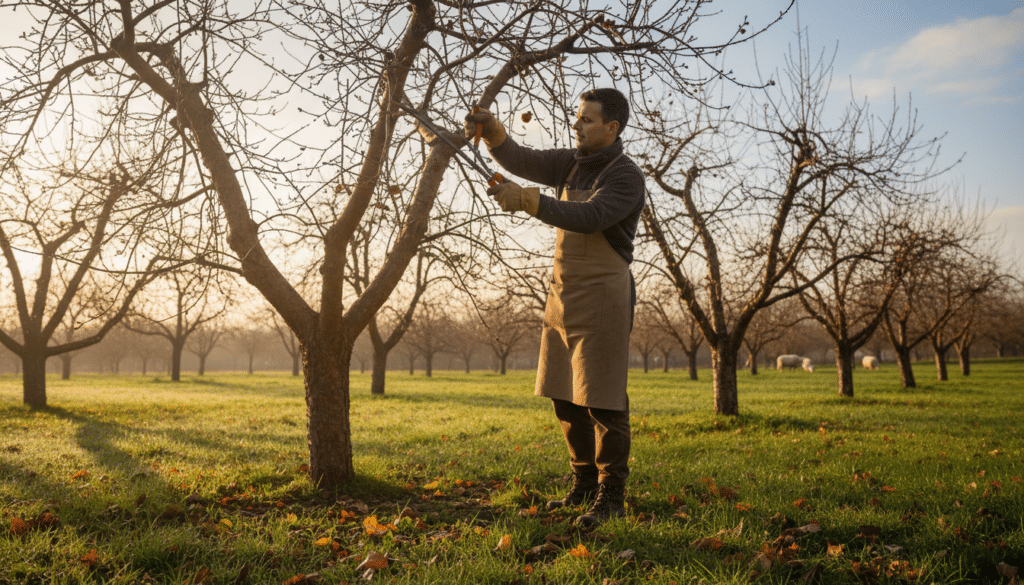
Some trees show you, in plain sight, when they need attention. Take a slow walk around the trunk and look up into the canopy. Bare branches in late winter make structure and damage easier to spot, which helps you plan cleaner cuts.
Timing matters for what you find. Many gardeners use late winter to judge shape. Pruning fruit trees in spring can reveal winter-killed tips after budbreak on more tender growth. Your goal is to match what you see to the best time to prune fruit trees for your yard and species.
Identifying Overgrowth
Overgrowth often shows up as a tree that is simply too tall to pick safely. A crowded canopy can also block sunlight, leaving shaded interior wood and fewer strong fruiting spurs. When light can’t reach the middle, fruit size and color can slip.
Watch for fast, upright watersprouts, plus clusters of branches fighting for the same space. Branches pointing toward the center, or running parallel like duplicates, waste energy and tighten airflow. Pruning fruit trees with smart thinning cuts can open “windows” for sun and reduce humidity inside the canopy.
Poor fruit quality can be a clue, too. If you’re getting lots of small, bland fruit, the tree may need more light penetration and better air movement. That improved exposure can help sugars and pigments build as the fruit ripens.
Recognizing Disease Symptoms
Damage and disease often announce themselves early, if you look closely. Broken limbs, hanging stubs, and cracks after wind or ice should move to the top of your list. Crossing branches that rub can create wounds that invite infection.
Scan for cankers, dark discoloration, oozing spots, or patches that look sunken or rough. Dead wood is usually dry, brittle, and brown inside when scratched. If you’re unsure what survived winter, pruning fruit trees in spring can help you confirm living buds and avoid leaving weak wood behind.
| What you notice | What it often means | Why it matters for fruit | When it’s easiest to confirm |
|---|---|---|---|
| Tree height is hard to manage from the ground | Top growth outpaced scaffold structure | Risky harvest, more shade, slower drying after rain | Late winter, when the outline is clear |
| Dense canopy with dim interior | Too many competing limbs and shoots | Lower color and sweetness; higher disease pressure | Late winter or early spring on a bright day |
| Many vertical watersprouts | Stress response or heavy past cuts | Steals energy from fruiting wood and thickens shade | Mid to late summer; also obvious in dormancy |
| Branches crossing, rubbing, or growing inward | Structure is congested and misdirected | Creates wounds and weak angles; reduces airflow | Dormant season, before leaves hide contact points |
| Cankers, discoloration, or dead, brittle tips | Infection, dieback, or winter injury | Spreads disease and reduces productive buds | Late winter for structure; after budbreak to confirm live wood |
Common Mistakes to Avoid
Even with good fruit tree pruning tips, mistakes happen. Taking off too much wood, cutting at the wrong time, or fighting the tree’s natural form are common errors. Prune in late February with a clear plan and clean cuts, not rushing.
Pruning fruit trees for beginners is easier when you go slow and check your work often. If you’re unsure, make fewer cuts and then look at the tree again before removing more.
Cutting Too Much or Too Little
Over-pruning can slow growth and reduce fruiting. It’s best to remove no more than one-third of the canopy wood in one session. Also, avoid pruning too late, as buds swell and sap and stored energy are concentrated in shoots and spurs.
Under-pruning is also a problem. Dense branches block light, trap moisture, and raise disease pressure. This makes the tree spend energy on shade instead of fruit. Good tree pruning techniques include thinning for airflow and keeping the center open enough that leaves dry fast after rain.
Timing mistakes matter, too. Pruning too early in winter can leave wounds exposed longer during wet weather. In many U.S. regions, fall cuts are also risky because healing slows as temperatures drop, so damage can carry into winter.
Ignoring Tree Structure
Structure errors are easy to miss in the moment, then hard to fix later. Don’t leave stubs; they die back and invite decay. Don’t cut so close that you nick the trunk bark, either. Use the branch collar as your guide, and keep spacing between main limbs at about 6–12 inches to support airflow and light.
Watch for crossing and rubbing branches, plus narrow crotch angles that split under fruit load or wind. For larger limbs, use the three-cut method to prevent bark tearing; the safety logic is similar to the approach outlined in the three-cut method guide. If a tree is tall or near power lines, hire a certified arborist instead of forcing a risky cut.
Species details can also trip you up. Apple spurs stay productive for years, so stripping them out can cut next season’s crop. Cherries and plums can face higher Silver Leaf disease risk when pruned at the wrong time. And if a variety fruits on last year’s growth, removing all that young wood can mean fewer blossoms.
| Mistake | What It Causes | Better Move |
|---|---|---|
| Removing more than 1/3 of the canopy at once | Stress, weak regrowth, fewer flower buds | Thin over 2–3 seasons; keep key scaffold limbs and reduce crowding in stages |
| Pruning during active bud swell | Lost stored energy, slower recovery | Prune in late winter while dormant, before rapid spring growth begins |
| Leaving stubs or cutting into trunk bark | Dieback, decay entry points, poor sealing | Cut just outside the branch collar with sharp, clean tools |
| Keeping crossing limbs and narrow crotch angles | Wounds from rubbing, breakage under fruit weight | Remove the weaker crossing branch; favor wide angles and stable scaffolds |
| Not matching cuts to the species | Lower yield or higher disease risk | Protect apple spurs, time cherry/plum cuts carefully, and keep last-year wood on trees that fruit on it |
Post-Pruning Care
After pruning fruit trees, focus on steady recovery, not a quick fix. Pruning in winter can lead to strong growth when days get warmer. This is because the roots have stored energy ready for new growth.
Keep cuts clean and stress low. If you removed a lot of wood, give the tree time to balance before making other changes in the yard.
Fertilization and Watering Tips
Wait to use heavy fertilizer right away, after pruning in winter. Too much nitrogen can cause soft shoots that break easily and attract pests.
When pruning in spring, plan to feed around new growth. Water deeply when the soil is dry a few inches down. Keep moisture even to help the tree seal cuts and support new buds.
| Care Task | Best Timing | What It Does for the Tree | Common Mistake to Avoid |
|---|---|---|---|
| Deep watering | After pruning, then as needed during dry weeks | Supports callusing, budbreak, and steady shoot growth | Frequent light watering that keeps roots shallow |
| Light feeding | As growth starts, based on soil and vigor | Replaces nutrients without forcing weak, fast growth | High nitrogen too early after pruning fruit trees |
| Mulch refresh | After cleanup, before heat arrives | Stabilizes soil moisture and reduces competition from weeds | Piling mulch against the trunk, which can trap moisture |
Monitoring for Pests and Diseases
Sanitation is key in pruning fruit trees, even after the last cut. Clean sap and sawdust off blades. Then, disinfect tools after diseased wood and between cuts when fire blight is a risk.
For peaches, nectarines, apricots, and cherries, prune on a dry day. Watch cut sites afterward. Some growers use Bonide All Seasons Horticultural Spray Oil for insects and Monterey Liqui-Cop or Bonide Liquid Copper Fungicide for common diseases.
Follow label timing closely: copper goes on at least 24 hours before oil. Spray early with low wind, and avoid rain in the next day. Apply before buds break, as these products are for dormant or delayed-dormant use in winter, not after leaf-out in spring.
When to Seek Professional Help
Some pruning jobs are easy, but others are risky. If you’re not sure how to prune fruit trees, it’s time to get help. A quick check can also confirm if the tree is healthy, even if it looks okay.
Get experienced help for tall, crowded trees or those needing big limb removals, like many cherry trees. Trees with diseases like black knot, canker, or fire blight need special care. A pro can help avoid infections and weak growth.
Timing is also important. Stone fruits like peaches and cherries do best in dry weather. Apples and pears need extra care around bloom time to avoid fire blight. If you’re unsure, a trained eye can protect your tree and harvest.
When hiring help, choose a certified arborist with fruit tree experience. Ask about their pruning methods and how they keep tools clean. For a good starting point and to schedule a consult, check out Elite Tree Care’s fruit tree pruning.
