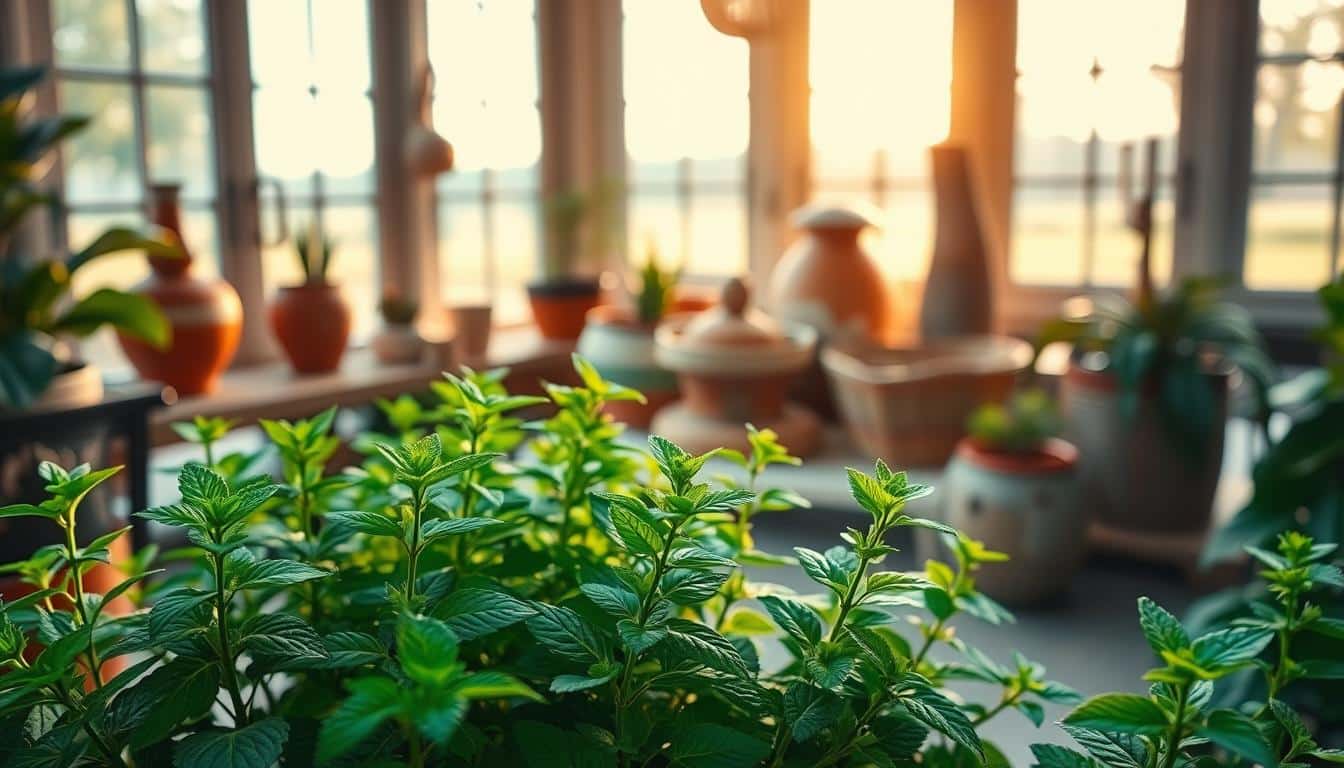
Can a tiny pot on your counter replace winter trips to the garden and supply tea-ready leaves all season?
Growing this fragrant herb at home is easier than most people think. With about six hours of direct sun or a dozen hours under LED or fluorescent lights, the plant thrives. Keep temps near 55–70 °F and humidity above 40% for best results.
Use a container at least 8 inches wide and 12 inches deep with good drainage. Water when the top inch dries, then flush and let it drain. Prune above nodes and remove flower spikes to keep leaf production high.
Propagate from cuttings that root in water in about a week, or start from seed at ~70 °F with light. Whether you pick a windowsill, a simple light bar, a small tent, or a hydro kit, there is a way to keep fresh mint within arm’s reach.
Key Takeaways
- Short light periods and moderate temps are the core of success.
- Choose a roomy pot with solid drainage to avoid root problems.
- Prune and remove blooms to maximize leaf harvests.
- Cuttings root fast, so you can replenish plants quickly.
- Small setups — lights, tents, or hydro kits — suit any home or budget.
- Indoor growing keeps plants from invading the garden while keeping flavor close.
Why Grow Mint Indoors Right Now: Fresh Tea Leaves, Aroma, and Year-Round Convenience
A single potted herb can cut grocery trips and keep fresh flavor within arm’s reach. Growing mint indoors gives you immediate, year‑round access to leaves for tea, cocktails, and recipes. You can snip exactly what you need at the peak moment for the best aroma and flavor.
The brisk fragrance brightens the kitchen and living spaces, especially when windows stay closed in cold months. Indoor cultivation also helps reduce food waste and packaging since you harvest only what you’ll use—a simple, greener way to live at home.
Reliable production in winter is easy when you place containers on a south-facing kitchen windowsill with at least 6 hours of sun. If that’s not possible, run a basic fluorescent or LED for about 12 hours to keep plants productive.
- Convenience: Harvest on demand for peak flavor.
- Sensory benefit: Fresh aroma uplifts indoor rooms.
- Low waste: Harvest only what you need to reduce packaging.
Even small households can grow mint in compact pots, making this an accessible way to learn light and watering basics. For practical harvesting tips, see when and how to start harvesting spices at.
Planning Your Indoor Mint Garden: Varieties, Space, and Sun Needs
Pick varieties that match your kitchen uses so each pot supplies the right flavor for tea, sauces, or desserts.
All common Mentha varieties grow cheerfully in a sunny spot or under lights. Aim for at least six hours of direct sun or roughly 12 hours of fluorescent or LED to keep growth compact and leaves flavorful.
Choose by flavor and use:
- Spearmint — classic for mojitos and savory dishes.
- Peppermint — bold for strong tea and confections.
- Chocolate mint — a dessert accent with a sweet, chocolatey note.
- Apple/sweet mint — milder for gentle teas and salads.
Mint spreads via runners outdoors, so containers are the best way to prevent invasions. Plan one container per plant to avoid overcrowding and to keep airflow good.
| Variety | Best Use | Light Needs |
|---|---|---|
| Spearmint | Mojitos, savory dishes | 6+ hours sun or 12 hrs light |
| Peppermint | Strong tea, confections | 6+ hours sun or 12 hrs light |
| Chocolate mint | Dessert garnishes | 6+ hours sun or 12 hrs light |
| Apple/sweet mint | Mild teas, salads | 6+ hours sun or 12 hrs light |
Rotate containers a quarter turn every few days so stems grow straight. Start with one or two different plants and label each pot to learn which variety performs best in your home.
Light and Placement: Windows, Grow Lights, and Winter Strategies
Place your pots where daylight is strongest so stems stay short and leaves stay flavorful. A bright south-facing kitchen window delivers full-spectrum sun in the northern hemisphere and helps plants build dense foliage when they get at least six hours of direct sun each day.
Window use and simple rules
Set containers on a sunny kitchen sill when possible. Rotate pots every few days so every side receives strong light and stems grow evenly.
Grow lights and timers
Use fluorescent or LED bars on for about 12 hours daily. Position lights close to the canopy for even coverage and put them on a timer to keep a steady photoperiod during grey days.
Grow tents and winter tips
Small grow tents (as small as 2′ x 2′ x 4′) create a controlled microclimate with steady heat and higher humidity. Keep setups away from HVAC outflows to avoid dry air and cold drafts that stress roots and foliage.
Watch plant signals
Yellowing leaves or elongated stems mean raise light intensity or add extra daily hours. Combining window sun with supplemental LED bars often bridges the darkest days and preserves lush leaf production.
| Setting | Light Recommendation | Tip |
|---|---|---|
| South-facing window | 6+ hours direct sun | Rotate pots; avoid vents |
| Fluorescent / LED | ~12 hours daily | Use timer; place near canopy |
| Grow tent | Controlled 12 hrs light + heat | Small tents boost humidity |
Containers, Potting Mixes, and Drainage That Keep Roots Happy
Choose a pot that gives roots room to spread and keeps the plant stress-free. A healthy root zone makes leaves fuller and harvests more reliable.
Right size and setup
Use a pot at at least 8 inches in diameter and 12 inches deep to support steady top growth. One plant per container simplifies pruning and airflow for indoor garden spaces.
Mixes and media
Pick a quality potting mix for good aeration, or use a coir/perlite/vermiculite blend as a soilless option. LECA also works for hydro setups because it wicks moisture and resists compaction.
Drainage and placement
Free-draining pots with ample holes and a tray protect floors and prevent waterlogged soil. Water over a sink until runoff appears, then let the pot drain fully before returning it to the window.
Watering, Humidity, and Temperature Targets for Steady Growth
Keep a simple watering and temperature routine to keep leaves bright and flavorful all winter. Regular checks are the best defense against stress and root problems.
Watering and drainage
Water when the top inch of soil feels dry or the container feels noticeably light. When you water, flush until runoff appears, then let the pot drain fully to protect roots from oxygen loss and rot.
Humidity tips
Maintain ~40–50% humidity with a pebble tray or occasional misting to keep leaves turgid and aromatic. Steady moisture reduces browning and helps resist pests like spider mites.
Temperature and timing
Keep daytime temps between 55–70 °F for peak flavor and steady growth. Avoid HVAC outflows and cold drafts that dry media fast or stress the plant.
- Avoid overwatering: saturated soil limits oxygen at the root zone and invites rot.
- Grow tents: can raise humidity and cut how often you need to water.
- Hydroponics: refresh nutrient solution every 5–7 days for oxygen and nutrient balance.
Develop a short routine—same time for checks and watering—so plants get water before symptoms appear.
Florida Mint Indoors: Starting from Seeds, Cuttings, or Hydroponics
Decide how you want to begin—seed, stem cutting, or a hydro plug—and prepare a warm, bright spot for success. Each method has pros: seeds give variety choice, cuttings root fast, and hydro plugs speed transplanting into systems.
Sowing seed and timing
Sow on the surface because mint seeds need light to germinate. Keep the media near 70 °F and the soil evenly moist. Sprouts typically appear within 1–2 weeks; thin to one strong seedling per container.
Water rooting and direct-stick cuttings
Take healthy green tips and root cuttings in water out of direct sun; white roots often form in days to a week. For direct-stick, dip the stem base in rooting hormone and insert into moist potting mix, keeping humidity moderate.
Hydro starts and plugs
Begin in starter plugs, then move successful plugs into LECA or your chosen system once roots peek through. Change nutrient solution every 5–7 days for oxygen and balance.
Sanitize scissors and containers before you propagate and start multiple small cuttings so at least one vigorous plant establishes. Early tip pruning encourages branching and more stems for harvest.
Pruning, Harvesting, and Routine Feeding to Maximize Mint Leaves
A simple pruning routine can multiply usable leaves and keep stems strong. Pinch or clip just above a growth node to force branching. This creates denser foliage and more harvestable mint leaves per plant.
Timing and harvest rules
Start larger harvests once pots reach about 8 inches tall. Take no more than one-third of the canopy at a time so the plant recovers quickly.
Routine snips and bloom control
Make frequent light snips of outer stems to encourage a bushier habit. Remove flower spikes early so the plant channels energy into leaf growth, not blooms.
Feeding cadence
Feed liquid fertilizer every 3 weeks in warm months and every 6 weeks in winter when growth slows. For hydro systems use a slightly higher-nitrogen solution and always adjust pH after adding feed.
“Clean tools and steady routines keep flavors bright and plants productive.”
Routine pruning also improves airflow and lowers pest or mildew risks. Keep scissors sanitized and harvest in time for the freshest flavor.
Troubleshooting Indoors: Light, Moisture, and Common Pests
Troubles pop up fast when light and moisture fall out of balance in a small herb pot. Catch problems early to keep stems short and leaves vibrant.
Leggy stems and browned leaves
Low light is the main cause of leggy, pale stems and browned leaf edges. Move the pot closer to a brighter window or add a small LED bar for winter weeks when daylight is short.
Rotate plants regularly so all sides receive even light and stems grow strong.
Preventing root rot and leaf disease
Avoid overhead watering to reduce rust and leaf spotting. Instead, water at the soil level and let excess drain away.
Use free-draining soil, empty saucers after irrigation, and never keep the medium constantly saturated to protect roots.
Fungus gnats and moisture management
Sticky adults or tiny larvae signal too-wet soil. Set a simple trap with apple cider vinegar and a drop of soap under perforated plastic and replace it as needed.
Cut back watering frequency and let the top inch dry to break the gnat cycle.
Spider mites, whiteflies, and early action
Check undersides of leaves weekly for webbing or tiny white insects. Raise humidity slightly, improve airflow, and treat affected plants quickly with targeted sprays or insecticidal soap.
In hydro systems, refresh nutrient solution every 5–7 weeks to prevent buildup; in practice refresh every 5–7 days for active systems to keep roots healthy and avoid stress.
- Use pot weight as a simple moisture gauge for consistent watering.
- Note variety differences — chocolate and spearmint types may show stress differently; observe and adjust care.
- For disease photos and visual help, see this plant disease visual guide.
Conclusion
Success comes from a short care formula: generous light, steady temperatures, and sensible watering.
Aim for about six hours of direct sun or roughly 12 hours under fluorescent/LED, keep temps near 55–70 °F, and hold humidity around 40–50% for steady growth.
Choose a container at least 8 inches wide and 12 inches deep with good drainage, use quality potting soil, and water when the top inch dries. Feed on a 3‑week schedule in warm months and every 6 weeks in winter.
Try varieties like spearmint, peppermint, or chocolate mint so you always have the right leaves for tea, desserts, or savory dishes. Harvest by pinching above nodes, remove flower spikes, and take no more than a third at once.
Start with one or two pots and scale as confidence grows. For practical steps on how to grow mint indoors, see this guide: grow mint indoors.
