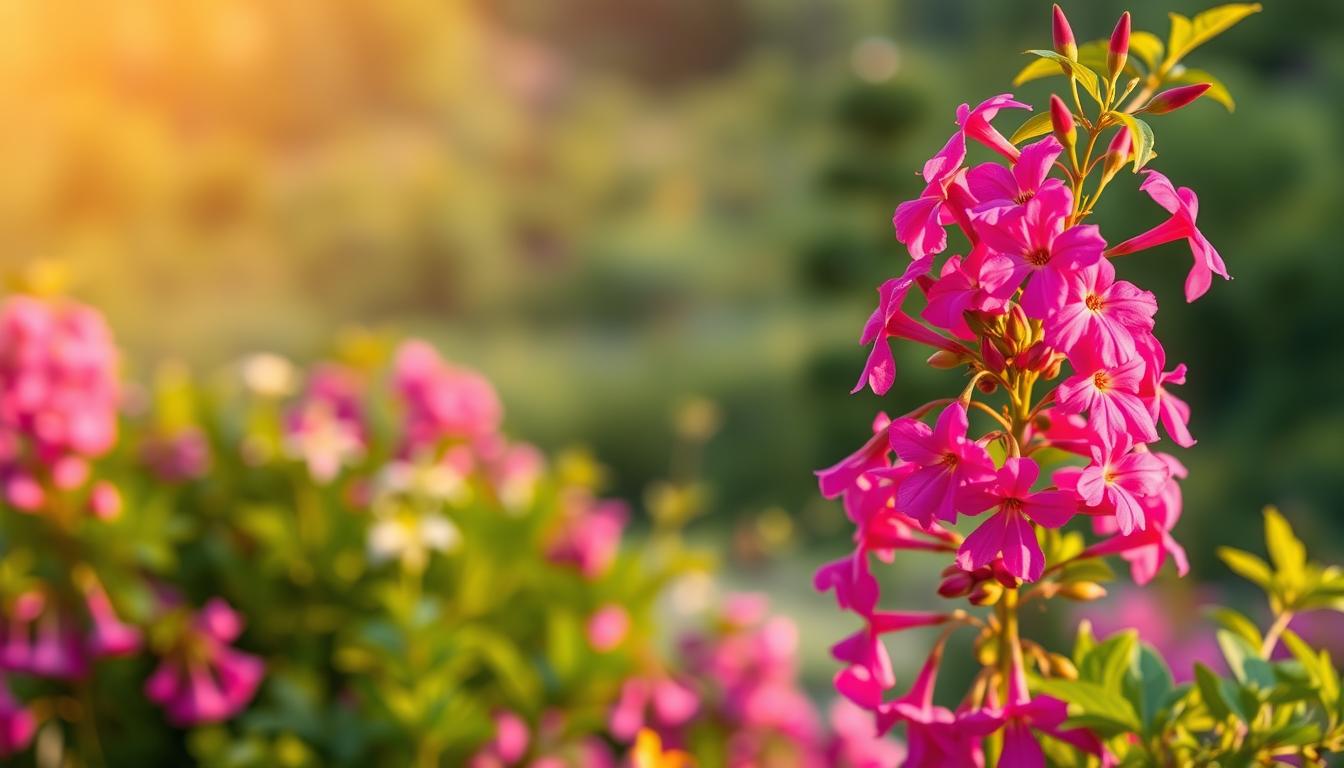
I still remember the first time a pendant bloom caught my eye on a gray afternoon — it felt like a small, brave promise of color in shade. That memory is why so many gardeners in the United States turn to these classic hanging beauties for patios, porches, and cool corners of the garden.
This guide gives you the clear, need-to-know steps to help these genus favorites thrive. You’ll learn key facts about origin and species, how to place them for morning sun and afternoon shade, and simple routines for even moisture and free-draining media.
Practical care tips are front and center: steady feeding, regular deadheading, and light pinching for fuller displays. Many growers treat them as annuals, yet with basic overwintering they can return for years.
Read on for easy, repeatable steps that cut the trial and error and help busy gardeners get steady blooms without extra fuss.
Key Takeaways
- These pendant bloomers excel in part shade and cooler spots on U.S. patios and gardens.
- Success depends on morning sun, afternoon shade, consistent moisture, and free-draining media.
- The guide covers origins, identification, planting, seasonal care, and overwintering steps.
- Simple routines — feed, deadhead, and pinch — boost flower time and plant fullness.
- With the right care, many specimens can live for years rather than a single season.
Understanding Fuchsia Flowers: Origin, Meaning, and Appeal
The story of these pendant plants spans continents, islands, and centuries of botanical study. The genus began largely in south america, where cool, moist habitats shaped tubular blooms and vivid, contrasting color that lure pollinators.
In the late 1690s French botanist Charles Plumier described Fuchsia triphylla on Hispaniola and named the group for the German botanist Leonhart Fuchs. Modern lists recognize about 108 recognized species, though counts vary by authority.
From South America to New Zealand and Tahiti
Most wild types come from south america, with island lineages — including three species in new zealand and forms in new zealand tahiti — adding unique habits and floral shapes.
Meaning, pollinators, and fruit
The bright sepals and contrasting petals evolved to attract hummingbirds. Many are bird-pollinated and set small fruit; F. splendens is noted for edible, citrus-pepper notes. Enthusiasts and the fuchsia society keep trials and preserve cultivars that extend garden life and appeal.
How to Identify Fuchsias: Flowers, Leaves, and Growth Habit
Look closely at a pendant bloom and you’ll see the design clues that identify this popular garden genus. Small details in bloom shape and foliage tell you what to expect from habit and hardiness.
Sepals, petals, and pendant blooms
Four long sepals often flare away from the tube, while four shorter petals sit inside to form a layered bell. This pairing creates the signature pendant silhouette.
Color combos range widely: pink sepals with purple inner petals, scarlet with white petals, and pure white petals that brighten shaded spots. Note how a single flower can show strong contrast.
Bushy vs. trailing forms: choosing the right habit
Leaves are opposite, usually medium green and finely serrated. Upright, bushy types give structure in beds; trailing forms spill from baskets.
“Position hanging baskets at eye level to enjoy the hidden bloom details.”
- Check labels for habit and mature size before buying.
- Hybrids may borrow traits from multiple species, including those from new zealand and island lines like new zealand tahiti.
| Habit | Best Use | Airflow Needs |
|---|---|---|
| Upright / Bushy | Beds, borders, trained standards | Moderate |
| Trailing | Hanging baskets, window boxes | Good to high |
| Hybrid Forms | Containers or mixed plantings | Depends on vigor |
Site and Soil: The Right Light, Temperature, and Mix for Success
A well-chosen site and an airy, rich mix set the stage for steady summer color.
Light: In the United States place plants where they get direct morning sun and gentle afternoon shade. This balance keeps blooms and foliage fresh through warm spells. In coastal or cooler zones, brighter exposures work. In hot-summer areas, favor filtered light and good airflow.
Soil, drainage, and pH
Target a neutral to slightly acidic pH of 6.0–7.0. Use a peat- or compost-amended mix to hold moisture without waterlogging.
A loose, airy medium helps roots breathe. Avoid compacted ground that stays soggy and stresses roots. Elevate beds in rainy regions to prevent crown rot.
“Plant in spring after nights stay steady so roots can establish before summer heat.”
| Setting | Mix | Temp |
|---|---|---|
| In-ground beds | Loamy ground + compost, pH 6.0–7.0 | Best under ~85°F days |
| Containers | Quality potting mix + compost; good drainage | Move to shade if temps spike |
| Hanging baskets | Light, free-draining blend with moisture retention | Filtered sun and airflow preferred |
- Plant in spring once soil and nights stabilize.
- Group with shade-tolerant plants to form a cohesive garden section.
- In mild microclimates some perennials persist; check species from new zealand and zealand tahiti for local success.
Planting Fuchsia Flowers in Beds, Containers, and Hanging Baskets
Timing and site choice make the difference between a sparse pot and a lush summer display. Plant in spring once night temperatures stay above ~40°F to prevent cold shock and help roots establish.
When to set out
In the United States, wait until nights no longer dip near freezing. This simple step reduces transplant stress and speeds growth.
In-ground planting
Loosen the ground and blend in compost to improve soil structure. Set the plant at the same depth as the nursery container, firm the mix, and water thoroughly.
Apply a 2–3 inch mulch layer to retain moisture and regulate temperature.
Containers and baskets
Use a quality potting mix with organic matter and pots with drainage holes. Fibrous or wooden baskets hold moisture longer than clay.
Plant multiple compatible varieties in larger baskets for a fuller display. Space to allow mature tall wide habits listed on labels.
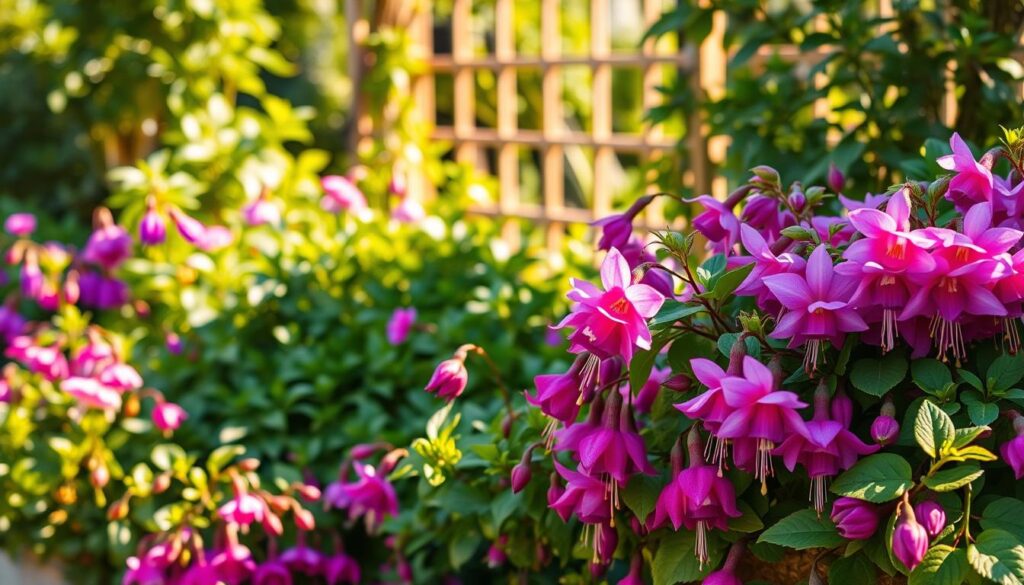
Positioning in warm regions
Place where plants get bright mornings and shaded afternoons to keep petals fresh. Maximize airflow and tuck baskets under eaves or in courtyards to shield from abrasive winds.
| Setting | Mix | Tip |
|---|---|---|
| Bed | Loamy soil + compost | Stake upright types |
| Container | Potting mix + compost | Water when top feels dry |
| Basket | Free-draining blend | Rotate weekly for even growth |
Seasonal Care: Watering, Feeding, Pruning, and Overwintering
Keeping a steady schedule for watering and feeding avoids the common ups-and-downs that stress plants.
Watering rhythm: Keep soil consistently moist but never waterlogged. Check hanging baskets and containers daily in hot weather and water when the top inch feels dry. Avoid saturating the root zone; soggy soil invites rot and weak leaves.
Feeding schedule that works
These are heavy feeders. In spring, apply a balanced, water‑soluble fertilizer at half strength every two weeks. Once buds form, switch to a bloom-focused formula to support abundant flowers.
“Stop fertilizing about two weeks before bringing plants indoors to let foliage harden off.”
Pinching and deadheading for more bloom
Pinch soft growing tips through early season to encourage branching and new growth. Deadhead spent blooms and remove forming berries to redirect energy into more flowers instead of fruit.
Overwintering in the United States
Bring containers inside before the first hard frost. Store at 45–55°F in low light and water lightly about once a month; expect some leaf drop. In late winter to spring, cut back to solid woody stems, refresh potting soil, and move plants to bright conditions to spur new growth.
- Watch leaf-curl or tip browning—check soil moisture before adding water.
- Keep shears clean between cuts to prevent disease spread.
- Make a simple care calendar for feeding, pruning, and winter checks.
| Task | Timing | Why it matters |
|---|---|---|
| Watering | Daily in heat; check top inch | Prevents stress and root rot |
| Fertilize | Every 2 weeks in spring; switch at bud set | Supports foliage and bloom production |
| Pinch & deadhead | Early season & ongoing | Encourages branching and more flowers |
| Overwinter | Store at 45–55°F, water monthly | Preserves perennials and readies spring growth |
Propagation Made Easy: Cuttings and Seeds
If you want reliable new growth, propagation by cuttings is the fastest route. Take 3–6 inch green tip cuttings in spring before buds form, or in fall for cooler rooting. Use clean shears and label each section with date and variety.
Tip cuttings step-by-step
Prepare a sterile, airy mix — equal parts sand, perlite, and peat. Moisten evenly so the medium supports roots without staying soggy.
- Strip lower leaves and cut just below a node.
- Dip the stem in rooting hormone if desired and insert to just below the next leaf set.
- For spring cuttings, cover loosely to keep humidity high and place in bright, indirect light. Vent daily to avoid fungus.
- For fall cuttings, skip the cover and keep them cool (45–50°F) to promote steady root formation.
Seed to seedling: timing and transplant
Expect roots in about 3–4 weeks and watch for new leaves as the cue to pot up into quality soil. Seed propagation can take up to four months and is more variable, so cuttings preserve cultivar traits and fast bloom performance.
| Method | Time to root/seedlings | Ideal temp |
|---|---|---|
| Tip cuttings | 3–4 weeks | 45–70°F (spring vs fall) |
| Seedlings | Up to 4 months | 65–75°F |
| Hardening off | 7–10 days | Gradual outdoor exposure |
“Labeling and clean tools cut losses and speed success.”
Popular Species, Hardy Choices, and Cultivars to Try
Hardy selections can turn a shady border into a reliable long-season display. In cool, maritime climates a few tough varieties outperform others for winter survival and steady bloom.
Hardy options and landscape use
Fuchsia magellanica leads the list as a hardy fuchsia valued for cold tolerance. It survives Pacific Northwest winters and parts of Britain and Ireland.
Train it as an informal hedge or shrub. Prune to shape and expect typical tall wide dimensions when mature.
Standout cultivars
‘Swingtime’ carries scarlet sepals with white petals and has earned awards for garden performance. ‘Voodoo’ offers deep pink sepals and rich purple double petals for dramatic baskets.
Upright picks like ‘Gartenmeister Bonstedt’ bring bronzed foliage and long cherry blooms as vertical accents.
Choosing and mixing habits
Mix upright and trailing forms: a tall center and trailing skirts make dynamic containers with layered petals and color contrast.
Check labels for mature size and habit so the chosen cultivars fit beds and baskets with the right maintenance level.
“Local chapters and the Northwest Fuchsia Society curate lists of proven varieties for cool regions.”
| Use | Best Choice | Why |
|---|---|---|
| Beds / hedges | fuchsia magellanica | Cold-hardy, structural |
| Showy baskets | ‘Voodoo’ | Double petals, bold color |
| Vertical accents | ‘Gartenmeister Bonstedt’ | Upright habit, bronzed foliage |
Breeders moved key traits from a handful of fuchsia species, originally noted by Charles Plumier from South America, into modern cultivars. Island lineages and the three species in New Zealand also shaped cold‑tolerant forms and new species introductions.
For more reliable picks, consult a local fuchsia society or the Northwest Fuchsia Society for regional lists and trial results.
Pests and Problems: Prevention and Treatment
A weekly check of leaves and stems catches most issues before they spread.
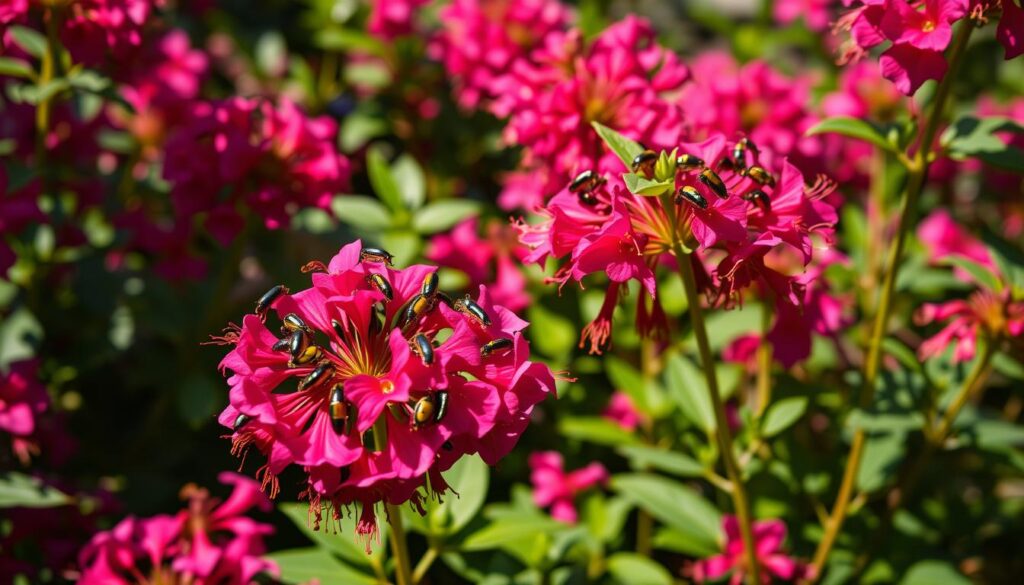
Insects to watch
In the United States the usual suspects include aphids on new tips, greenhouse whitefly under leaves, thrips that scar petals and leaves, and spider mites that cause stippling and webbing.
Action: Rinse affected areas with a strong water jet, introduce beneficial predators when practical, or apply insecticidal soap or horticultural oil. Repeat treatments as life cycles demand.
Gall mite and stem rot
Fuchsia gall mite (Aculops fuchsiae) produces distorted, swollen growth and malformed flower parts. Remove and dispose of affected shoots immediately to slow spread.
Stem rot often starts in wet soil. Improve drainage, raise containers, and avoid leaving saucers full of water. Cut away soft stems and let remaining tissue dry before watering.
Cultural fixes and routine care
Heat stress makes plants drop buds and halt bloom. Move baskets to deeper shade, boost airflow, and keep roots cool and evenly moist.
Maintain steady feeding and flush soil salts if leaf edges crisp from buildup. Sanitize tools between cuts and clear fallen debris to limit pests and pathogens.
| Problem | Key Sign | First Response |
|---|---|---|
| Aphids / Whitefly / Thrips / Mites | Sticky residue, scarring, webbing | Rinse, beneficials, soap/oil |
| Fuchsia gall mite | Distorted leaves and blooms | Prune out, dispose; consider removal |
| Stem rot | Soft crown, wilting despite wet soil | Improve drainage, reduce watering |
| Heat / underwatering | Bud drop, browning leaf edges | Move to shade, even moisture |
Conclusion
A few steady habits let these shade-loving plants return season after season with strong color and fresh new growth.
Recap: Give fuchsia flowers cool, bright spots with morning sun, consistently moist but well-drained soil, and regular feeding for a long display that draws hummingbirds.
Overwinter containers at 45–55°F, water lightly once a month, and prune back to woody stems before spring to encourage vigorous new growth. With this simple routine many container plants will come back for years and act like perennials in mild climates.
Explore cultivars—from crisp white petals with pink sepals to bold doubles—and match habit and tall wide dimensions to baskets, beds, or standards. Join local chapters or the Northwest Fuchsia Society for hardy lists and regional trials, and use the need-to-know steps above as your easy care roadmap.
