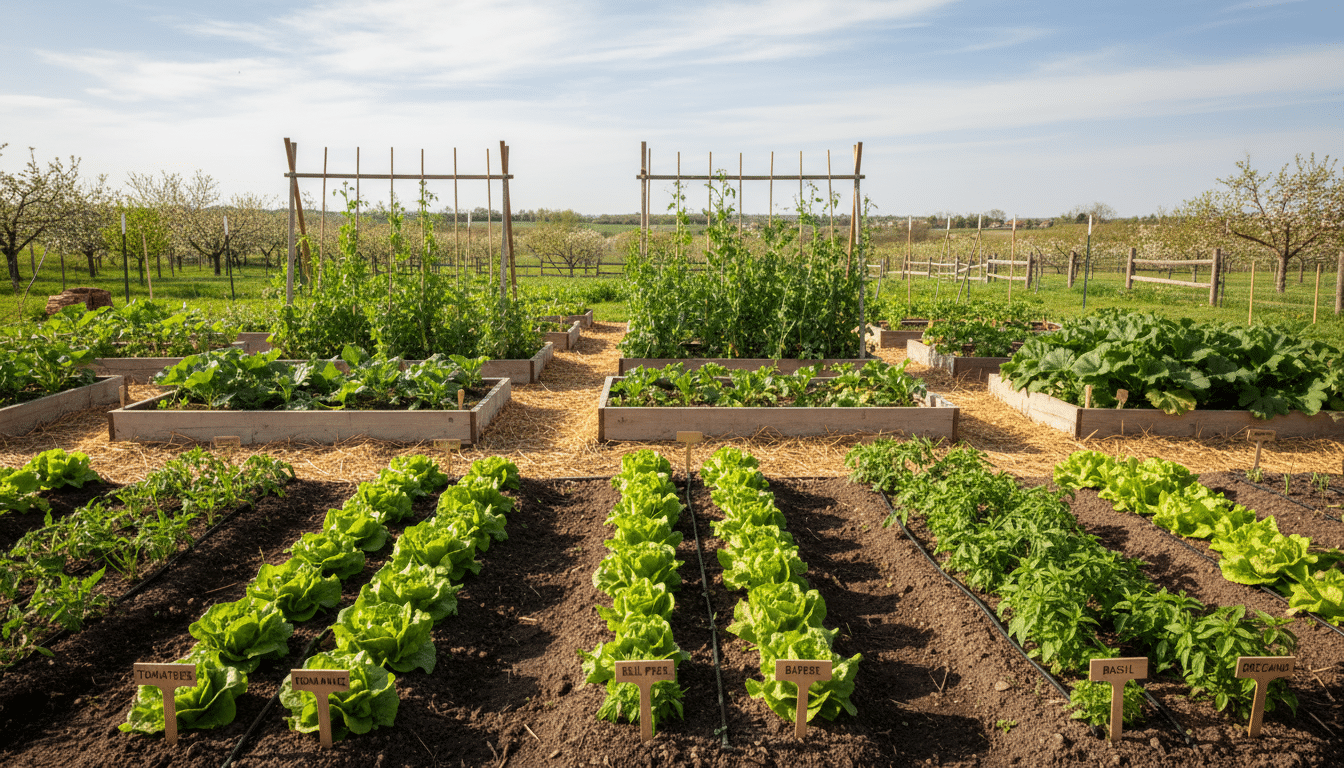
Can one simple change double what you harvest without adding hours to your week?
This short, friendly guide shows home growers how to get more pounds from the same space. It defines a clear idea of “maximum yield”: fewer gaps, fewer bottlenecks, and more steady harvests across the season.
The article walks a gardener step by step through measuring space, mapping sun, picking a layout style, and dialing in spacing. You’ll learn practical moves like planting in blocks, thinking square-foot, and training vines upward to save room and cut down on paths that steal growing area.
This approach suits raised beds, in-ground plots, small yards, and partially shaded areas in the United States. It keeps planning simple and flexible so the whole family can help without chasing perfection.
Key Takeaways
- Define yield by pounds harvested and fewer empty spots.
- Plan spring crops so the bed stays productive through the year.
- Measure, map sun, and choose a style that fits your space and time.
- Use block planting, square-foot thinking, and vertical supports.
- Keep paths minimal and make a flexible plan the whole family can follow.
Start With Your Space, Sun, and Spring Timing
Begin with a quick site survey: measure your available area, note sun and shade, and set planting dates around soil warmth. This small upfront work saves time later and keeps the bed productive all season.
Measure and choose reachable beds. Walk the space, record length and width, and avoid beds wider than 4 feet. A 4-foot or narrower bed lets you reach plants from either side without stepping inside. That protects soil structure and keeps every inch in use.
Decide in-ground versus raised beds by checking existing soil and drainage. Raised beds warm faster in spring, which helps warm-season crops that prefer soil near 65–70°F.
Map light across the space. Track morning and afternoon sun and mark spots with partial shade from fences or trees. Place sun-loving crops in bright areas and shade-tolerant ones where light is limited.
- Timing checklist: find last frost range, check soil temp targets (65–70°F), and list crops to direct-sow or transplant.
| Bed Type | Pros | Cons | Best Spring Timing |
|---|---|---|---|
| Raised beds | Better drainage, warms quickly | Requires soil/soil mix | Transplant after soil ~65–70°F |
| In-ground beds | Uses existing soil, lower cost | Warms slower, may compact | Plant cool-season early; warm crops 1–3 weeks after frost |
| Narrow reach beds (≤4 ft) | Full access, less compaction | May need more paths | Any season—optimized for spring work |
| Wide beds (>4 ft) | More planting area per bed | Harder to reach center, risk of compaction | Best if you add stepping stones or paths |
Choose a Garden Layout for Maximum Yield: Blocks, Not Big Rows
Instead of empty strips between rows, think in solid planting blocks that keep soil covered and productive.
Why blocks beat long rows
Blocks fill space. That means fewer bare patches, fewer weeds, and more steady production from the same bed.
Block planting lets you replant small sections as crops finish. It keeps the bed busy and reduces gaps that steal harvests.
When rows still make sense
Rows help when you need access or special tending. Use rows for staked tomatoes, potatoes you hill, and peas or pole beans that are easy to pick along a line.
Perennials and square-foot basics
Give long-lived plants their own block so asparagus or rhubarb don’t interrupt seasonal rotation.
Square-foot gardening means plant by area, not by row spacing. Divide beds into squares, use seed spacing guides, and count how many plants fit each section.
A simple decision way
- Blocks: carrots, beets, leafy greens, garlic — dense, quick turnover.
- Rows: tomatoes, potatoes, peas, pole beans — easier to tend or harvest.
That shift reduces dead zones and keeps the vegetable garden productive all season.
Use Vertical Gardening to Add a Whole New “Layer” of Growing Space
Adding vertical elements turns the top of a bed into usable planting area, giving you a literal second story to grow food.
Match supports to crops. Use trellises or fences for peas and pole beans, A-frames for cucumbers, and heavy stakes or sturdy frames if you want to train squash upward. This saves ground space and keeps fruit cleaner.
Grow in layers by planting shade-tolerant greens under climbers. Lettuce, spinach, and baby chard can thrive in the dappled light below taller vines.
Small-space tricks that work
- Place taller supports on the north side of beds so they don’t cast shadows on shorter vegetables.
- Tuck containers at the base of trellises and hang baskets for herbs and quick greens to reclaim edges and hardscape.
- Start with one fence or simple trellis this season; it often lets you add one more productive crop without losing beds to sprawl.
Dial In Plant Spacing for High Yields (Without Overcomplicating It)
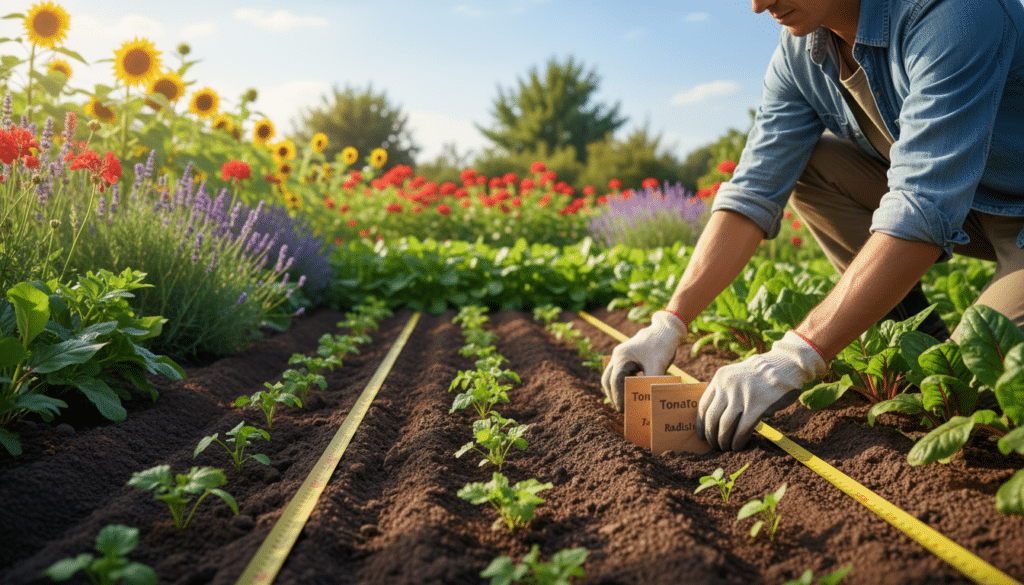
Simple spacing math removes the guesswork and helps you plan how many seeds to sow per section. Focus on the distance between plants, not wide row spacing designed for tractors. This shift fills beds evenly and cuts empty soil.
Square-foot math: divide 12 inches by the recommended spacing to get plants across a foot. Multiply across and down. Example: 12 ÷ 3″ = 4 across; 4 × 4 = 16 plants in one square foot. Apply this in raised beds or in-ground beds to plan counts fast.
Plant dense, then thin
Many crops tolerate tighter spacing than the packet says. Sow more seed, then thin seedlings when true leaves show.
Turn thinnings into food—baby greens, baby beets, or tiny carrots—so you don’t waste extra plants.
Scatter-seed blocks vs precision spacing
- Scatter-seeding is fast and suits dense blocks, but uses more seeds.
- Precision spacing saves seed and makes harvesting neater.
- Both work; pick the way that fits your time and comfort.
Bed care note: Closely spaced plants compete faster for moisture. Mulch and consistent water keep soil productive and reduce stress.
| Method | Seed use | Harvest neatness | Best when |
|---|---|---|---|
| Scatter-seed blocks | Higher | Less tidy | Quick planting, dense greens |
| Precision spacing | Lower | Tidier, easier harvest | Root crops, carrots, beets |
| Dense sow & thin | Moderate | Balanced; thinnings edible | Leafy greens, small roots |
| Raised beds use | Flexible | Good with square-foot math | Compact yards, tight plots |
Pick High-Performing Crops and Varieties That Pay You Back in Food
Pick crops that keep producing so each bed pays back with steady food all season.
Favor repeat harvesters. Choose cut-and-come-again greens, beans, and cukes that keep giving through the season. These crops return more edible weight per square foot than one-and-done plants.
Identify space hogs and stingy crops before you plant. Space hogs occupy prime real estate a long time. Stingy crops take lots of room but give little food. Either trellis space hogs or replace stingy types with denser producers.
Plan warm-season anchors early. Tomatoes, peppers, eggplant, cucumbers, and squash need supports and access. Set supports and mark their spots while soil is still cool. Plant them after last frost when soil reaches mid-to-high 60s°F so they grow fast instead of stalling.
Lean on cool-season workhorses—kale, Swiss chard, beets, and parsley—to carry spring and shoulder seasons. Block-plant these so you can harvest often and replant into gaps as big summer plants expand.
- Placement tip: Put quick spring crops where they will be removed before big plants need that space.
- Soil and pest note: Build beds with compost and watch young plants for insect pressure. Use row cover when needed to protect starts and preserve your high-performing plan.
Design Beds and Pathways to Maximize Growing Area Without Losing Access
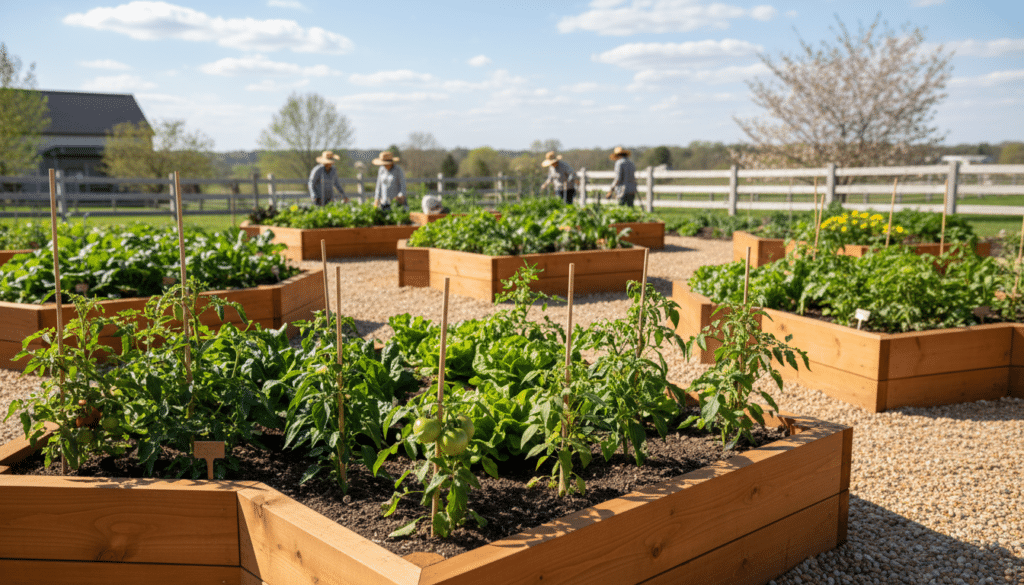
A few smart paths can free up dozens of feet to plant without making beds hard to tend.
Paths often hide lost growing space. Every extra walkway is non-growing ground that could host plants, especially in small yards. Reducing the number and width of paths lets you plant more while keeping tasks simple.
Practical rules: Keep beds narrow enough to reach from the side. In raised beds aim for ≤4 feet across. In in-ground plots, use stepping stones so paths stay thin but usable.
Minimize paths while keeping access
Use dead-end paths that go partway into larger beds. These give reach without a full corridor through the bed. Steven Biggs recommends this to reclaim growing area without losing service access.
Keyhole and access tricks
Keyhole-style access places one entry that reaches a bed’s center. It saves space and cuts the time you spend walking between beds. The easier it is to reach plants, the more likely you will water, thin, and harvest on time.
| Situation | Path rule | Benefit |
|---|---|---|
| Raised bed ≤4 ft | Single narrow path between beds | Full reach, low compaction |
| Wide bed >4 ft | Dead-end or stepping stone access | More planted area, still reachable |
| Larger circular bed | Keyhole entry | Center access with minimal corridor |
Conclusion
Finish planning with clear, bite-size steps you can try this week to boost long-term harvests.
Quick summary: Start with reachable beds, map sun, plant in blocks, add vertical supports, apply simple spacing math, and trim wide paths so more of the garden is productive.
These choices mean more vegetables for the kitchen, fewer gaps in harvest, and a bed that feeds you through the season and the year.
Pick 1–2 small changes now — convert one row into a block, add a single trellis, or narrow one path — and watch benefits compound next month.
High-impact examples: trellis cucumbers or squash, block-plant carrots/beets/greens, and space tomatoes correctly to ease care and increase harvests.
Keep simple notes on dates and outcomes, update your plans each season, and let your layout evolve as you learn.
Need timing tips to harvest at peak flavor? See this practical harvest guide to pair better planning with better picking.
