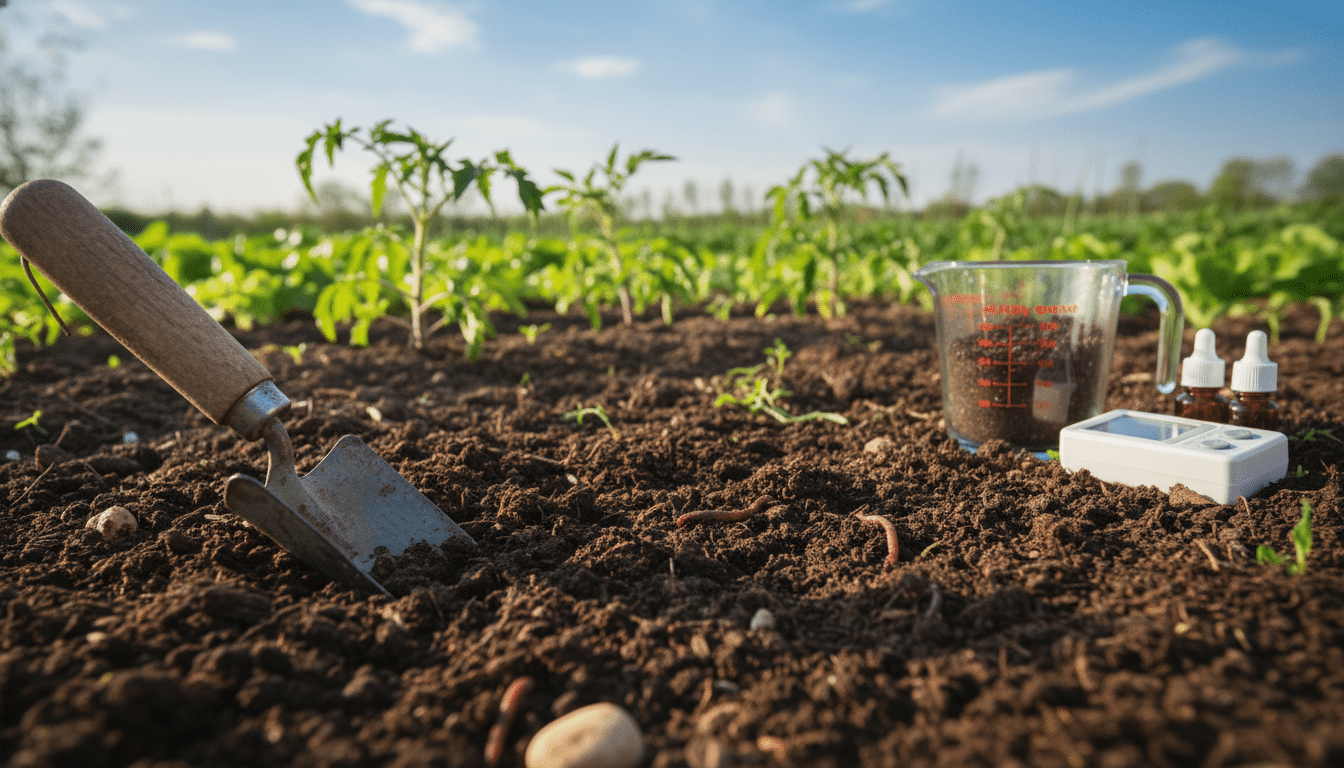
Want to avoid wasting money on compost or fertilizer that won’t fix the real problem? Testing now helps you make smarter choices before you spend a dime on raised beds or amendments.
Test soil in real life means two things: a simple lab soil test for pH and nutrients, plus a few quick at-home checks for texture, drainage, and compaction. These steps tell you what your plot needs for successful spring planting.
This short, step-by-step guide is written for vegetable plots and mixed beds across the United States. You will learn to gather tools, collect clean samples, run DIY checks, read a soil test report, and take practical action. Test in late winter or early spring so you have time to adjust pH and add organic matter before seeds or transplants go in.
Outcomes: healthier plants, stronger roots, fewer mystery problems like yellow leaves or stunted growth, and better water use through the season. You don’t need fancy gear—just a consistent process and clean sampling.
Key Takeaways
- Testing early saves money and effort before planting season.
- A lab soil test plus simple home checks give clear direction.
- Late winter/early spring is the best time to test and amend.
- Follow a consistent sampling process for reliable results.
- Fixes based on test results lead to healthier, more productive plants.
Why testing garden soil now sets you up for a better spring garden
Catch problems early: a simple test today makes spring planting smoother and more productive. Testing now gives you time to correct pH, add amendments, and fix drainage before seeds or transplants go in.
Why it matters: the top layer of ground is the engine of any garden. It controls nutrient availability, moisture retention, drainage, and oxygen around plant roots. When structure is right, roots explore the top 8 inches and plants resist heat, pests, and uneven watering.
Good structure balances water — holding moisture without staying soggy — which lowers root stress and disease risk. Even if nutrients are present, wrong pH or compacted pockets can keep them locked up. A timely soil test removes guesswork.
Biology matters too. Microbes and earthworms break down organic matter and improve crumbly texture over time. Persistent weeds or stunted patches often point to compaction, poor drainage, or low fertility that a test will reveal.
When to test and how often
- Test before spring planting so you have time to amend.
- Vegetable garden: retest every 1–2 years.
- Lawns and ornamentals: retest every 2–3 years.
What you’ll need to test soil at home and through a lab
A clean kit and a clear plan make home testing quick and reliable. Start by assembling simple materials so each sample truly reflects conditions where your vegetables will grow.
Simple tools to gather clean samples and avoid contamination
Basic at-home kit: a clean bucket, a hand trowel or soil probe, zip-top bags or a sample box, a permanent marker, and a small notebook for labeling.
Rinse and dry tools before you collect. Residue from fertilizer or compost can skew lab numbers. If you use a trowel for potting mix, rinse it well or use a dedicated tool.
Optional items that help: disposable gloves, a clean scoop, and a container reserved only for sampling.
What a standard soil test report typically covers
A typical lab report lists pH, buffer pH (often), organic matter (sometimes), and major nutrients like N‑P‑K. It usually adds tailored recommendations and may note micronutrients.
Turnaround often runs 4–6 days after the lab receives samples, so plan ahead. Don’t add new compost or fertilizer right before sampling unless the lab tells you to.
- DIY checks help with texture and drainage today.
- Lab tests give precise nutrient and pH guidance for amendments and fertilizer choices.
- Use results to match materials and fertilizers to actual needs so amendments aren’t wasted.
How to collect a soil sample the right way
A good sample gives labs the information you need to fix problems before planting. Collect multiple small subsamples across each bed and mix them to create one representative sample for that area.
Where to sample and how many
Sample separately from raised beds, in-ground beds, and any problem spots like low wet corners or patches with poor growth. Label each container clearly—use names such as “Front bed A” or “Tomatoes bed” for easy mapping.
Depth guidance tied to roots
Most vegetable roots concentrate in the top 8 inches of soil, so sample consistently at that depth for beds used for annual crops. For perennials or deeper-rooted plantings, check your lab’s depth instructions or take a deeper core.
Prep, label, and send for fast results
Air-dry and crumble samples if the lab requests it. Remove sticks and stones and include only the amount specified.
| Sample Type | Where to Collect | Depth |
|---|---|---|
| In-ground beds | Multiple subsamples across the bed | Top ~8 inches |
| Raised beds | Separate from in-ground areas | Top ~8 inches |
| Problem area | Collect independently (low wet, stunted patches) | Match root zone; adjust if deeper |
Shipping tip: write the sample ID on the bag, attach matching paperwork, and mail early in the week. Clean, labeled samples reduce delays and help you get lab results (usually 4–6 days) in time to prep beds for spring crops.
DIY soil checks you can do today for texture and drainage
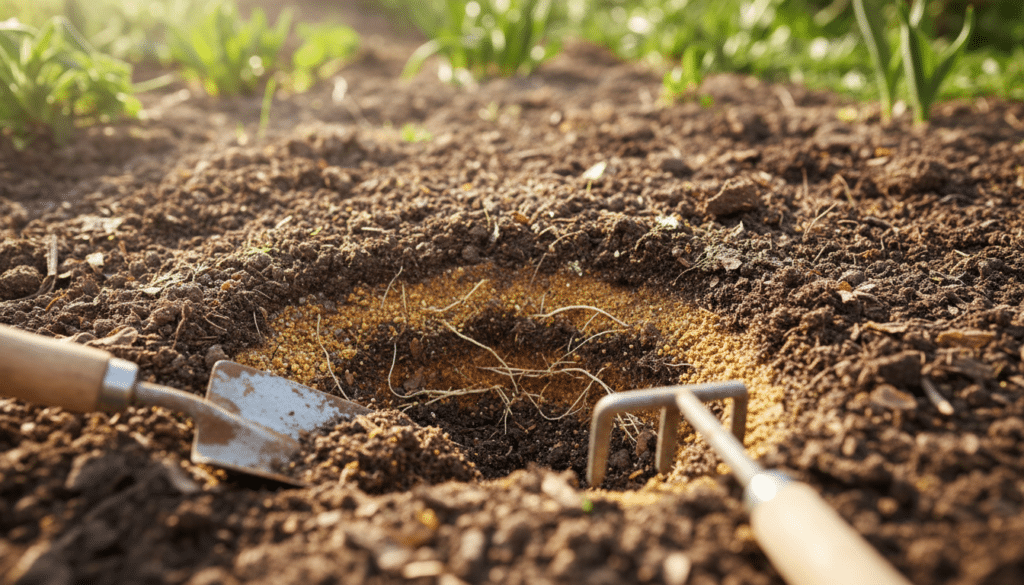
Start with a couple of quick tests to learn how your beds hold water and support roots. These checks take minutes and point to fixes before you plant.
The squeeze test to identify sand, clay, and loam
Wet a handful and squeeze. If the sample forms a tight, slippery ball you have clay. If it crumbles and feels gritty it is sand. If it holds together loosely then breaks apart, it’s loam.
The drainage test and what timing means
Dig a hole about 12 inches deep (use the phrase inches deep in timing notes). Fill it with water and note how fast it drains. If water clears in a few hours drainage is fine. If it still sits after 24 hours, expect compaction or clay-heavy patches and plan to add organic matter or try raised beds.
Check for compaction or a hardpan
Push a long screwdriver or garden fork into moist (not wet) ground. Sudden resistance often signals a hardpan that keeps plant roots shallow. Compaction raises drought stress and can cause patchy growth or stubborn weeds. If amendments don’t help, raised beds lift roots above problem zones.
Understanding your soil test results: pH, nutrients, and organic matter
Decoding a soil report makes amendment decisions simple and predictable. Read results in three parts: pH, N‑P‑K numbers, and organic matter. Each tells you what to adjust first so your vegetables get what they need.
Target pH and why it matters
pH controls nutrient availability. Most vegetables thrive at about pH 6.0–6.5. That slightly acidic range keeps key nutrients soluble and soil biology active.
If pH is above 6.5, adding lime can lock out some nutrients and cause yellowing or reduced yields. If pH is low, sulfur lowers it slowly — follow lab timing and rates.
Reading N‑P‑K and basic fertilizer labels
Numbers like 10‑10‑10 are percentages: 10% nitrogen, 10% phosphorus, 10% potassium. Nitrogen fuels leafy growth, phosphorus builds roots and flowers, and potassium improves vigor and stress tolerance.
Don’t assume higher numbers are better. Match fertilizer to your test so you add only what’s missing.
Organic matter and secondary nutrients
Organic matter is decomposed plant or animal material. It improves structure, water retention, drainage, and slowly releases nutrients. Prioritize adding compost and aged amendments to build it over time.
Secondary nutrients like calcium and magnesium matter for strong plants. Dolomitic lime supplies both while raising pH when that is needed.
| Result | What it means | Quick action |
|---|---|---|
| pH 6.0–6.5 | Optimal for most vegetables | Maintain; add organic matter |
| Low N | Poor leafy growth | Apply measured nitrogen based on report |
| Low P or K | Weak roots/flowers or reduced vigor | Use targeted fertilizer, not blanket high-N mixes |
| Low organic matter | Poor structure and moisture control | Add compost, aged manure, or leaf mulch |
How to fix common issues based on what your soil test shows
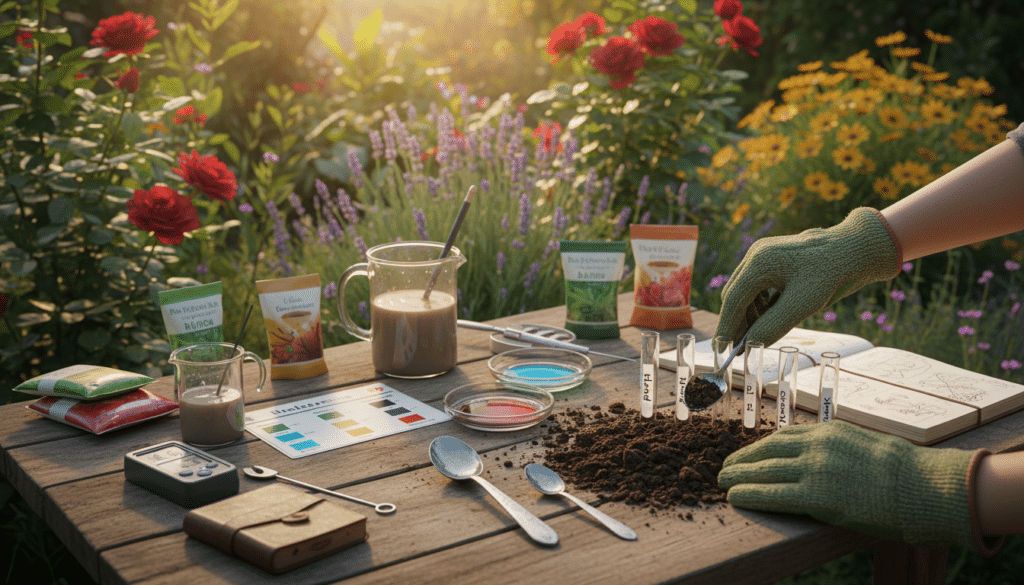
Start by using your test report to prioritize fixes—pH, fertility, organic matter, or drainage and structure. This creates a simple decision path so you act on measured needs, not guesses.
Adjusting pH safely with dolomitic lime or sulfur and why timing matters
If the test shows acidity, apply dolomitic lime to raise pH and add calcium and magnesium. Mix it in and plan for a 2–3 month reaction time before planting.
Do not lime if pH is 6.5 or higher—overliming locks out nutrients. To lower pH, follow lab rates for sulfur and allow similar time for change.
Building organic material with compost, aged manure, leaves, and mulch
Add compost and aged manure to improve structure and drainage. Shredded leaves and surface mulch help hold moisture and feed microbes over time. Top-dress established beds yearly and keep mulch on the surface to reduce erosion and moisture swings.
When adding nitrogen helps break down undecomposed materials
If you incorporate fresh organic material, sprinkle nitrogen to speed decomposition so microbes don’t steal it from young plants.
Choosing fertilizer types for vegetables and matching crops to feeding needs
- Use targeted mixes (10-10-10, 6-12-12, 5-10-15) based on test results.
- Group vegetables by heavy, medium, or light feeders so similar crops share beds and feeding plans.
- Don’t guess: follow the report for rates and timing.
| Problem | Quick fix | Timing |
|---|---|---|
| Too acidic | Dolomitic lime | Incorporate 2–3 months before planting |
| Low organic matter | Compost, aged manure, leaves | Top-dress yearly or mix into new beds |
| High undecomposed residue | Add nitrogen when turning under | At incorporation |
Pre-plant bed prep after you test: creating a seed-ready soil surface
Prep your beds after testing so the work you do matches the report. Start only when the ground passes the squeeze test: press a handful into a ball and if it crumbles, it’s workable. Never turn wet ground—working wet earth causes compaction that lasts all season and reduces root growth.
Depth to loosen and why the top inches matter
Loosen the surface to about 7–8 inches for most vegetable crops. That depth reaches the root zone where microbes and roots are most active.
The top inches are where seeds germinate, roots branch, and moisture swings matter. Good texture here gives even water and steady early growth.
Compost rates and handling organic matter
For new beds, mix 2–3 inches of compost into the top 6–8 inches. For established beds, top-dress 1–2 inches annually and let biology work it in.
Don’t overdo it: avoid burying heavy layers of fresh compost right before planting. Fresh, thick material can tie up nitrogen and stress young crops.
Finish: raking, rows, and when to choose raised beds
Rake soon after turning to create a fine, level surface for small seeds and consistent water. Use string lines or markers to set straight rows for easier planting and watering.
Choose raised beds for cold sites, compacted ground, or poor drainage. Raised beds warm and dry faster, letting you plant earlier in light climates.
“Work only when the ground crumbles; a single wet pass can undo months of good testing and prep.”
| Task | Action | Why it helps |
|---|---|---|
| Workable test | Squeeze ball test | Prevents lasting compaction |
| Loosen depth | 7–8 inches | Targets root zone and microbes |
| Compost | New: 2–3 in; Established: 1–2 in | Improves texture and water holding |
Conclusion
Start spring confident: test, fix, and protect the top layer your crops rely on.
Test soil early, collect clean samples for a soil test, and run quick texture and drainage checks. Use results to make targeted changes rather than random fertilizer or compost applications.
Aim for slightly acidic pH (~6.0–6.5), steady organic matter inputs, and good texture so water and air reach plant roots in the top inches. Add compost or aged manure as needed and consider raised beds where drainage or compaction persists.
Pick one bed, label it, act on the report, and retest on a 1–2 year cycle. With measured steps, your garden soil will feed microbes and earthworms, cut weeds, and help crops and plants thrive.
