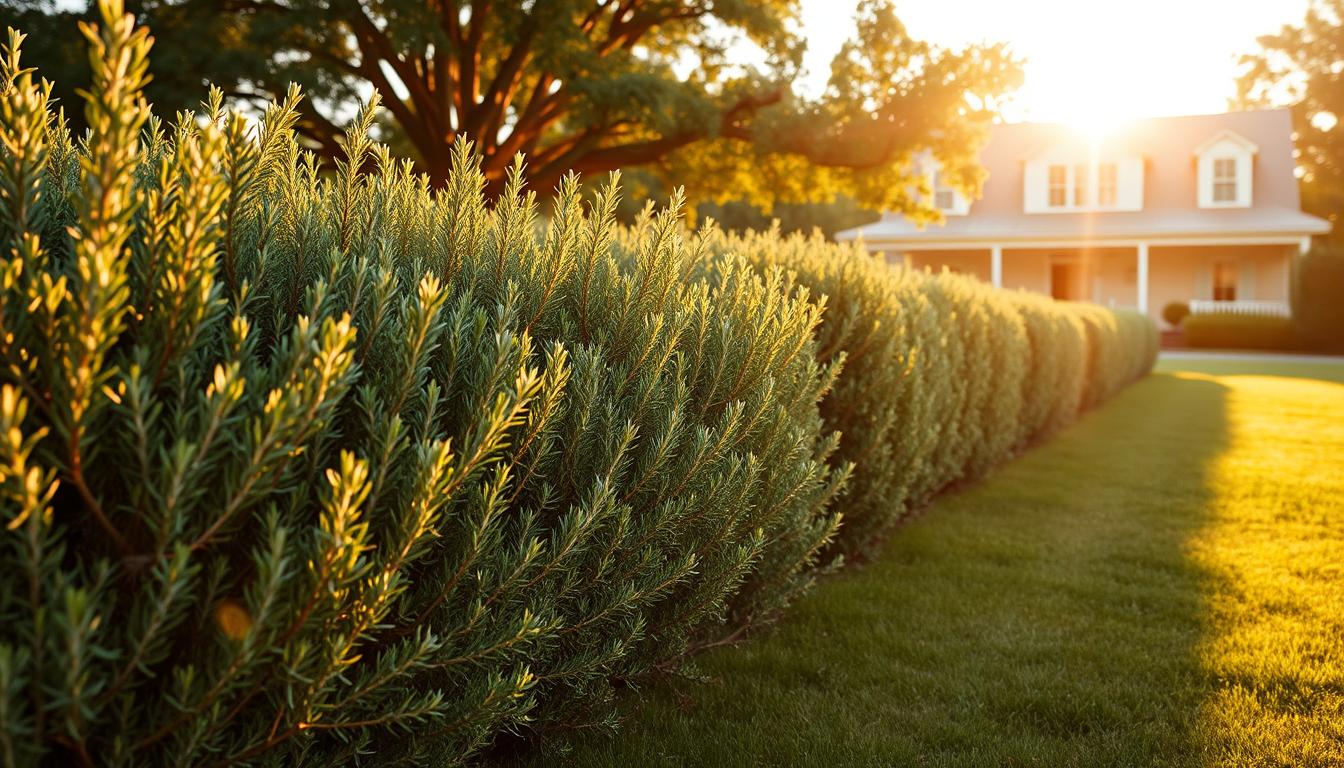
Can a single, low-care hedge give your entryway year-round structure and a pantry full of fresh flavor? This guide explains why a clipped line of aromatic shrubs delivers both curb appeal and kitchen value across varied microclimates.
These evergreen planting choices bring a resinous scent and blue flowers that welcome guests as they near paths or a front walk. Most plants reach about three feet tall; in warmer spots a clipped line can extend to five feet with light shaping.
Place them in full sun with well-drained soil and space each plant two to three feet apart. In colder pockets, keep specimens in a pot to move indoors during hard frost. This strategy keeps tender leaves productive while preserving the hedge’s silhouette.
Later sections cover variety choice, soil prep, exact spacing, watering rhythm, and pruning timing so you can plant with confidence. For tips on fitting herbs into an edible landscape, see our guide to edible landscape planning.
Key Takeaways
- Evergreen hedges add year-round structure plus culinary value from fresh leaves.
- Plant in full sun, well-drained soil, spacing 2–3 feet for a tight hedge.
- Most shrubs mature near 3 ft; clipping and warm sites can reach 5 ft.
- Use pots or moveable planters to protect plants from severe frost.
- Proper site choice and starter plants speed establishment and early harvest.
Why Georgia Rosemary Hedges Elevate Curb Appeal and the Kitchen
A sculpted row of aromatic shrubs anchors paths while offering fresh sprigs for the kitchen.
Evergreen structure gives a yard steady form through spring, summer, and cooler months. Blue flowers arrive seasonally and draw bees, adding life and color to the garden.
The scent released when you brush past these plants creates a welcoming, well‑kept feel at entryways. That sensory layer makes a small landscape feel intentional and inviting.
Ornamental and culinary payoff
Tender leaves supply bright, resinous flavor that lifts simple cooking — try roasted chicken, potatoes, breads, and infused oils. Edible flowers add a delicate garnish to salads and cheeses while helping pollinators across the yard.
Light shaping concentrates growth where you want density and gives regular stem clippings for fresh use. With simple seasonal pruning, a line of these shrubs can provide herbs for years with minimal upkeep.
| Feature | Ornamental Benefit | Culinary Use | Maintenance |
|---|---|---|---|
| Evergreen foliage | Year‑round structure | Leaves for fresh seasoning | Light annual shaping |
| Blue flowers | Pollinator magnet | Edible garnish | Minimal care |
| Aroma | Welcoming scent | Infused oils & vinegars | Harvest tips in spring/summer |
Climate Check: USDA Zones, Heat, and Cold Tolerance
Start with a climate check: where your garden holds heat will determine survival and form.
Zones 8 and warmer: dependable evergreen hedges
In zones 8 and warmer these shrubs make reliable evergreen lines when placed in full sun. They keep foliage year‑round and recover fast after brief cold snaps.
Choose elevated, well‑drained ground and avoid low spots that collect cold air. South‑ or west‑facing walls add radiant heat through winter and improve hedge quality.
Zones 7 and colder: container-first strategy
In zone 7 edges and colder, use a pot approach so you can move plants before deep freezes. Large containers buffer roots better than small ones.
Wheeled caddies and a sheltered spot let you roll pots under cover or indoors during extended winter events. This keeps year‑round culinary use intact.
Hardiness realities: 15°–23°F thresholds
These shrubs are hardy roughly between 15° and 23°F. When temps near that range, exposed tips may brown but the root system often survives.
“Brief frosts may singe tips without killing the plant — clean up damaged growth in spring to speed new shoots.”
Monitor weather during arctic blasts, use breathable covers overnight, then remove them by day to avoid condensation and disease. Also plan for heat and airflow: avoid cramped, windless corners that trap humidity.
- Log first and last frost dates for better timing next season.
- Maximize wood maturation before winter by planting early and prioritizing sun exposure.
Choosing the Right Rosemary Varieties for Hedges
Different growth habits decide if a row becomes a tight living wall or a soft, cascading border.
Salvia rosmarinus and its older name rosmarinus officinalis include both upright shrubs and trailing forms. Pick an upright variety when you need a dense, formal line. Choose a trailing variety to spill over retaining walls, raised beds, or large containers.
Upright vs. trailing types
Upright forms have stiff, vertical stems that knit together and make a tight screen. Trailing types send arching stems that soften edges and cascade.
Growth expectations
Many upright plants reach about 3–5 feet in a typical garden with light annual pruning. In ideal Mediterranean‑like spots, some varieties can grow larger—sometimes 5–10 feet—unless regularly shaped.
- Leaves and flowers: All share aromatic leaves and hallmark blue flowers, but habit shapes the look.
- Timing: Expect modest growth the first season, then stronger growth by the second year.
- Design tips: Use topiary-trained uprights as gate markers and keep a single habit along a run for even texture.
Read plant tags and local extension guidance to confirm mature feet height and spread before planting.
Site and Soil: Full Sun, Drainage, and pH
Select a bright, well-ventilated location to keep foliage dry and encourage strong root health.
Full sun and steady airflow are critical. Choose a spot where sun hits most of the day and breezes move through the row of plants. Good circulation reduces powdery mildew and helps the hedge grow compact and dense.
Soil texture and pH for healthy roots
Target a soil pH between 6.0 and 7.0. These shrubs tolerate average fertility but need excellent drainage to avoid root rot.
Amend heavy clay by mixing in several inches of compost across the bed rather than in a single hole. This loosens the texture and encourages roots to explore beyond the planting pit.
Containers and raised beds
Use a lightweight container mix for pots or raised planters so water moves away from the crown. Raise beds slightly above lawn grade to prevent pooling.
“Never plant crowns below soil level — that invites rot at the stem base.”
- Space plants 2 to 3 feet apart for a tight line and even growth.
- Lay out the hedge with a taut string, then dig uniform holes to support symmetrical top growth.
- After backfilling, firm soil lightly but avoid compaction to keep pore spaces for roots.
| Need | Recommended | Why it matters |
|---|---|---|
| Sun exposure | Full sun (6+ hours) | Encourages dense foliage and flowering |
| Soil pH | 6.0–7.0 | Optimal nutrient uptake for healthy roots |
| Soil amendment | Several inches compost | Improves drainage and structure |
| Container mix | Lightweight, well-draining | Protects crowns in pots and raised beds |
Planting Georgia Rosemary Hedges
Good timing and simple prep set new shrubs up for steady growth. Time planting for warm, settled soils so new roots push outward before summer heat arrives. In colder regions, wait until well after the last frost; in warmer climates you can also plant in fall.
Starter stock and starting methods
Most gardeners prefer nursery starter plants for the fastest hedge establishment. Seeds germinate slowly and take years to reach usable size. You can root cuttings easily by collecting them 8–10 weeks before the last spring frost and rooting indoors.
Step-by-step planting
- Prep the bed by loosening soil along the whole row and blend in several inches of compost for drainage and nutrients.
- Dry-fit spacing so plants 2 to 3 feet apart will form a continuous line when mature.
- Dig holes twice as wide as the root ball but only as deep; keep the crown level with surrounding ground.
- Gently tease circling roots, set each plant, backfill, and water thoroughly to settle soil.
- Lay a drip line or soaker hose and keep soil uniformly moist for the first few weeks, then let the top inch dry between waterings to encourage deeper roots.
Top-dress with mulch, keeping it away from the crown. For a container approach, use a quality container mix and a pot with good drainage; plant one rosemary per pot to avoid crowding. Expect modest growth the first season and stronger growth the second as roots establish. Light tip pinching after planting encourages branching without heavy pruning.
Designing the Hedge: Spacing, Feet, and Form
Good design starts at layout: precise spacing and a clear plan make a tidy, useful border.
Lay out the row with a taut guideline and mark planting spots so each plant sits about 2 to 3 feet from its neighbor. This space lets canopies knit into a dense screen without crowding roots or stems.
Adjust spacing slightly for different varieties to avoid gaps or bulges as plants reach their mature feet and spread. Check the line from multiple angles so the run reads straight from the street and the front walk.
Training options
Decide early whether you want a clipped architectural look, a looser shrub line, or occasional topiary accents. A lightly clipped hedge gives clean form; a natural shrub line creates a softer garden feel.
Keep tops slightly narrower than the base so sunlight feeds lower branches and the hedge stays full to the ground. Allow a one-foot setback from sidewalks, driveways, or walls to avoid scraping and simplify maintenance.
- Use edging—brick, stone, or steel—to define the planting bed and contain mulch.
- Include gentle curves where appropriate, keeping spacing consistent on inside and outside radii.
- Place topiary standards at focal points to punctuate entryways and corners.
“Revisit spacing after the first season; repair gaps early while plants are still small and easy to move.”
Containers and Small Spaces: Pots, Raised Beds, and Beachy Spots
Containers let you enjoy aromatic screening and quick relocation when weather turns risky.
Choose pots when frost is frequent so you can move a container to shelter without disturbing roots. A large pot buffers temperature swings and holds moisture longer than small ones.
Mix and drainage matter. Use a lightweight, free‑draining container mix; avoid garden soil that compacts. Raise pots on feet or pavers and pick containers with ample holes to keep crowns dry.
Coastal and small‑space tips
These plants tolerate salt spray, so coastal planters work well. Arrange a trio—upright in the center with trailing types at the edges—to mimic a low hedge in tight yards.
- Water deeply, then let the top inch dry before the next soak.
- Refresh the top few inches of mix each year with compost to restore nutrition.
- Use raised beds with coarse mix when native ground drains poorly.
| Site | Best container choice | Why it works |
|---|---|---|
| Frost‑prone patio | Large pot on wheeled caddy | Easy relocation, root stability |
| Coastal balcony | Wide, shallow planter | Salt tolerance and airflow |
| Poorly draining yard | Raised bed with coarse mix | Mimics rocky ground, prevents rot |
Watering, Feeding, and Mulch for Steady Growth
Keep a simple routine so your line of shrubs stays healthy through each season.
Set a simple watering routine that soaks the root zone, then let the top inch of soil dry before you water again. This deep, infrequent rhythm builds resilient roots and cuts disease risk.
Moisture rhythm and practical tips
Water deeply, then allow the bed to dry slightly. Pots and raised beds dry faster than in-ground planting and need more checks, especially in full sun.
Fertilizer: in-ground vs. container needs
Most in-ground plants in average garden soil do not need regular feeding. Container rosemary benefits from a balanced, gentle fertilizer after flowering to support new growth.
Mulching smart to protect roots
Use mulch to moderate temperature and conserve moisture, but leave a clear gap at the crown to prevent rot. Combine mulch with a drip line to deliver water at soil level and keep foliage dry.
- Check leaves: firm, aromatic foliage means good moisture; yellowing or wilting suggests overwatering or poor drainage.
- Water early in hot weather so leaves dry quickly if wet.
“Deeper, less frequent watering builds roots that tolerate dry spells better than light daily sprinkling.”
Pruning, New Growth, and Long-Term Hedge Care
A light annual trim sets the stage for strong, even new growth the following spring.
Schedule primary pruning just before spring flush. Remove dead or crossing stems and do light shaping. Avoid cutting into old, woody wood that seldom resprouts.
Tip-prune green stems to stimulate branching. Harvest no more than one-third of any plant at a time to keep vigor. Small, frequent snips through the season beat large, drastic cuts.
- Pinch tips in summer to delay legginess and keep plants bushy.
- Train faces with a slight taper so sunlight reaches lower growth.
- Keep tools sharp and clean for neat cuts that heal fast.
Watch for woodiness; after about five years some shrubs thin and lose lower foliage. Replace older specimens to refresh a line and match size and habit for continuity.
“Light, regular care sustains flowering and a dense facade more reliably than occasional heavy pruning.”
| Task | Timing | Why it matters |
|---|---|---|
| Primary prune | Late winter / pre-spring | Encourages robust new growth |
| Summer pinching | Midseason | Prevents legginess, boosts branching |
| Replace specimen | After ~5 years | Restores density and uniform appearance |
Winter and Frost Protection: In-Ground and Indoors
Cold weather calls for a simple protection plan so your hedgerow survives to feed and frame the yard.
Site matters: place in-ground shrubs near south-facing masonry when possible and out of prevailing winds. The sun and radiant heat from walls reduce desiccation during winter cold snaps and help protect roots.
Before hard frost, add a light layer of mulch over the root zone, keeping it pulled back from the crown to prevent rot. On nights with sharp freeze forecasts, drape breathable fabric over the row and anchor it to the ground; avoid plastic which chills foliage and traps moisture.
For container care, move pots to a sheltered porch or garage with bright light before deep cold arrives. Indoor pots need good airflow and sparse watering—let the mix dry slightly between waterings to protect roots.
“Remove covers by day so plants get sun and air; this reduces condensation and disease risk.”
- Use larger pots outdoors and wheeled caddies to buffer temperature swings and ease moves before a freeze advisory.
- After a cold event, wait until spring to judge damage and prune dead tips once new growth appears.
Pests, Diseases, Harvest, and Uses
Scout plants weekly for tiny sap-suckers and fungal spots so small problems don’t become big ones.
Watch for pests and disease. Check leaves and the undersides of stems for whiteflies, spider mites, scale, and mealybugs. In humid spots, powdery mildew can appear on foliage and poor drainage invites root rot.
Improve airflow by spacing and trimming adjacent plants. Water at soil level and avoid overhead wetting to reduce mildew risk.
Harvest and storage
Time harvests for spring and summer growth. Snip young, flexible tips and never take more than one-third of a plant at once.
Dry stems upside down in a warm, dark, ventilated spot, then strip leaves and store airtight. For quick use, freeze whole sprigs or infuse vinegar and oil.
Cooking and garden pairings
Use leaves to flavor lamb, pork, chicken, vegetables, soups, and breads. Flowers are edible and make a pretty garnish.
Plant near thyme, sage, and lavender in your herb garden for shared sun and drainage needs. Rosmarinus officinalis (syn. Salvia rosmarinus) adapts well to pots when roots need extra protection.
“Keep a small stash of dried leaves for off-season cooking while using fresh clippings most of the year.”
| Issue | Symptom | Action |
|---|---|---|
| Pests (mites, scale) | Discolored or sticky leaves | Rinse foliage, increase airflow, apply insecticidal soap if needed |
| Mildew | White powder on leaves | Reduce humidity, prune for light, avoid overhead watering |
| Root rot | Wilting, yellow leaves | Improve drainage, repot in well-draining mix, trim damaged roots |
Conclusion
Growing rosemary succeeds when you pick a sunny site, use fast‑draining soil, and set a clear plan for spacing and care.
Space plants about 2 to 3 feet (roughly feet) apart, prune lightly before spring growth, and favor a single variety or matching varieties along the run for an even look.
In warm zones a planted row makes a steady evergreen line; in colder areas keep pots so you can move a plant indoors during hard freezes. Harvest tender tips in spring and summer, dry or freeze extras, and replace older shrubs after several years to maintain a crisp edge.
With sun, airflow, and a simple seasonal routine, your garden will return fragrance, flowers, and kitchen flavor for years. Start preparing beds or select containers now so you can plant in the next frost‑free window.
