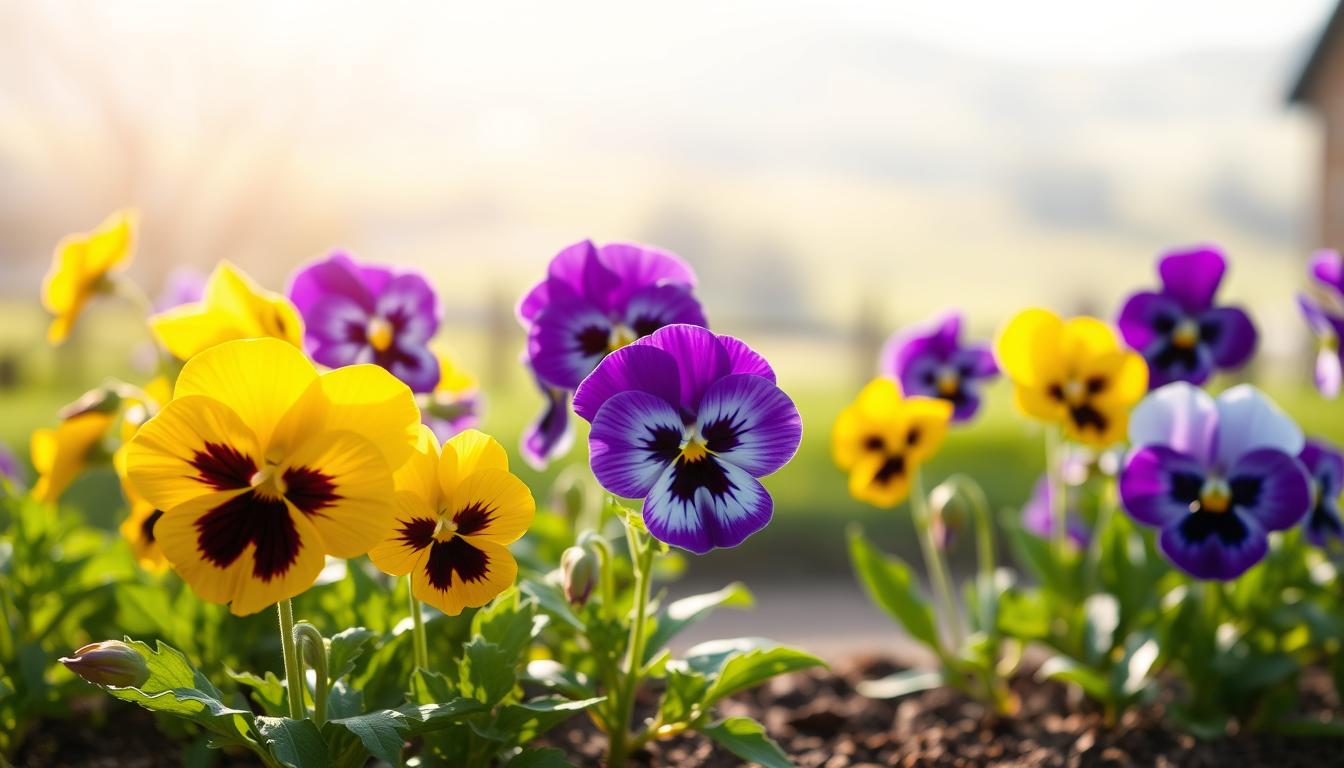
On a chilly morning, I remember pressing my palm to a small pot and feeling hope peek through the soil. These cool-season blooms have a way of cheering up gray days and making small gardens feel like celebrations.
Pansies are prized for their bright colors and little “faces,” and they perform best in the shoulder seasons of spring and fall. Hardy to light frost, they bounce back after cold snaps and fit well in containers, borders, and mixed plantings.
For abundant blooms, aim for moist, humus-rich, well-drained soil and morning sun with protection from hot afternoon sun. Simple care—consistent watering, modest feeding, and regular deadheading—keeps color coming through the season.
Want specifics on varieties, planting times, and starting from seed? This guide will walk you through when to plant for your region and how to keep those cheerful flowers going. For more botanical details and hardiness tips, see pansy planting notes.
Key Takeaways
- These cool-season flowers shine in spring and fall with vivid colors and face-like markings.
- They tolerate light frost and can rebound after single-digit temperatures in suitable regions.
- Morning sun, moist fertile soil, and protection from hot afternoons boost blooms.
- Regular deadheading and balanced feeding extend the flowering season.
- Ideal for containers, borders, and small-space gardening; also edible as a garnish.
Quick Start: What to Know About Pansies for Spring and Fall Color
Start with cool, compact plants and a spot that gets bright morning sun to jump-start spring and fall color.
These cool-season flowers deliver fast, vivid color and friendly “faces” for beds, borders, and containers. They perform best when soil sits between 45–65°F and daytime highs near 60°F with nights around 40°F.
Sun, spacing, and timing at a glance
- Sun: full sun to partial shade—favor morning sun and protect from hot afternoon rays to reduce heat stress.
- Spacing: 6–12 inches in beds for airflow; 3–4 plants in a 10–12 inch container to avoid crowding.
- Season: nursery starts appear late summer through spring. Plant in early spring or again in fall for steady color.
- Frost and heat: they tolerate light frost and may slow or go dormant in peak heat, often returning as temperatures cool.
- Planting tip: choose stocky, bud-filled nursery plants over spent blooms for faster results.
Best Time to Plant for Your Region and Season
Timing your planting to cool soil is the simplest way to ensure strong root growth and steady blooms.
Early spring vs. fall planting in the United States
In most U.S. climates, early spring is prime: set nursery starts out as soon as the soil can be worked. In warmer zones, late summer into fall gives longer, cooler-season performance.
Soil temperature, frost tolerance, and heat limitations
Aim for soil between 45°F and 65°F at planting for best root establishment. Light frosts are usually tolerated and plants often rebound. Expect leggy growth and fewer flowers during sustained heat; plan for a fall comeback when temperatures drop.
When to start seed indoors for spring or fall blooms
Start seeds indoors 8–10 weeks before your last spring frost for spring blooms. For fall or winter color, sow in late summer so seedlings are ready for cooler weather.
“Stagger early spring and fall plantings to keep color across multiple months.”
| Region | When to Plant | Seed Start Timing |
|---|---|---|
| Cold-winter zones | Early spring after soil thaws | Sow indoors late winter (8–10 weeks before last frost) |
| Mild-winter zones | Late summer to early fall | Sow in late summer for fall/winter color |
| Warm-summer zones | Late summer into fall for best performance | Nursery starts or late-summer sowing |
Sun, Soil, and Site: Setting Up Pansies for Success
Choose a bright morning spot with afternoon relief to keep flowers cool and prolific.
Morning light, afternoon shade strategy
Place plants where they get gentle early sun and escape late-day heat. In cool climates, more sun boosts blooms. In hot summers, afternoon shade preserves color and vigor.
Soil and root health
Use loose, humus-rich, well-drained soil with a slightly acidic pH of about 6.0–6.2. Add compost or mushroom compost to improve fertility and moisture retention without creating soggy conditions.
Spacing and airflow in beds and borders
Space transplants 6–12 inches apart to promote airflow and reduce disease. Expect plants about 6–9 inches tall with a 9–12 inch spread under good care. Avoid low, wet spots; raised beds or heavy-soil amendments help drainage.
| Site Factor | Recommendation | Why it matters |
|---|---|---|
| Sun | Morning sun, afternoon shade | Extends bloom quality and reduces heat stress |
| Soil | Loose, humus-rich, pH 6.0–6.2 | Improves nutrient uptake and root health |
| Spacing | 6–12 inches in beds | Promotes airflow and healthy growth |
Light mulch conserves moisture but keep crowns clear to prevent rot. With the right site and soil, your garden will reward you with steady growth and vibrant spring color.
How to Plant: From Seeds and Seedlings to Garden Beds
Begin with simple, repeatable steps to move plants from trays to the garden with minimal shock.
Starting from seed: stratify seed for about two weeks to boost germination. Sow shallowly on moist seed-starting mix and keep trays in complete darkness (cover with black plastic) until sprouts appear, usually in two weeks. After seedlings pop, shift them to bright light and keep the medium evenly moist.
Preparing seedlings: pot up when true leaves appear and harden off over two weeks. Move plants outdoors a little longer each day to cut transplant stress.
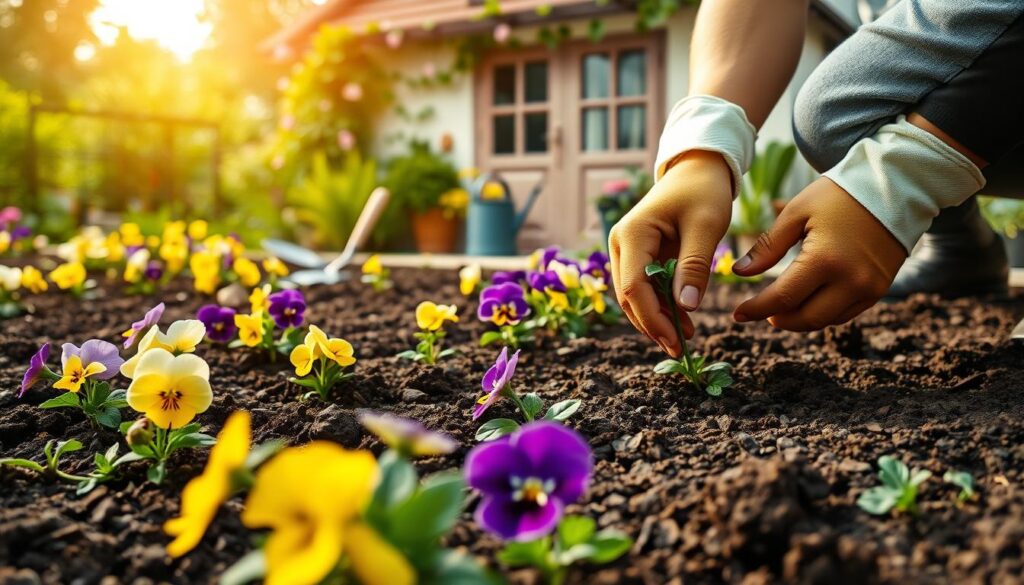
Transplanting and bed layering
- Set nursery starts at the same depth as in their pots and space 6–12 inches for airflow.
- Plant in workable ground in spring or early enough in fall for roots to establish.
- For extended color, tuck spring bulbs at normal depth and place pansies above so bulbs will push through.
“Choose compact, bud‑filled starts over flats of open flowers to avoid transplant stall.”
Pro tips: give seedlings strong light to prevent legginess, avoid excess nitrogen, water in well after planting, and mulch lightly—keeping crowns clear—to encourage steady growth and fuller habit.
Growing Pansies in Pots and Containers
Growing in pots gives you control over drainage and placement for steady color from spring into fall.
Choosing pot size, drainage, and potting mix
Select containers with drainage holes and use a quality potting mix, not garden dirt. Good mix holds moisture but drains so roots breathe.
A 10–12 inch pot fits 3–4 plants; avoid overcrowding to keep airflow and reduce disease.
Portable placement and seasonal light
Place pots in south-facing sun during cool months for maximum growth. As summer heat builds, move them to an east side or into afternoon shade to prevent stress.
Fertilizing, deadheading, and repotting
Keep soil evenly moist—water when the top inch feels dry and never let pots sit in standing water. Feed monthly with a balanced liquid fertilizer to support steady blooms.
Deadhead spent flowers to encourage more color. Repot every two years or when roots crowd the container, ideally in early spring to refresh the mix for the year.
- Use light-colored pots to reduce container heat.
- Empty saucers after heavy rain to avoid soggy roots.
- Pair with trailing varieties for spill-over color in baskets.
Ongoing Care: Water, Feed, Deadhead, and Prune for More Blooms
Keep a steady care routine to support healthy growth and steady flowers all season. A simple schedule prevents stress and keeps plants productive through cool weather and into fall.
Watering: Keep soil evenly moist but never waterlogged. Check the top inch daily during dry spells or windy days. Under-watering is a common cause of decline, so establish a regular rhythm.
Feeding: Apply a balanced fertilizer every four weeks. Avoid high-nitrogen mixes; they boost leaves instead of blooms. Light monthly feedings support steady growth and repeated flowers.
Deadheading and shearing: Remove spent blooms to stop seed set and direct energy to new buds. When plants look tired, shear lightly to trigger compact regrowth and another flush of color.
Heat and season shifts: In summer heat, allow plants to rest. Many will revive as temperatures cool and produce a fall encore. Protect container plantings with shade cloth during heat waves.
“A little attention at the right time delivers better blooms across the year.”
| Task | When | Why |
|---|---|---|
| Water | When top 1″ dries | Prevents wilting and supports steady growth |
| Fertilize | Monthly (balanced) | Promotes flowers without excess foliage |
| Deadhead/Shear | As blooms fade or seed forms | Encourages compact regrowth and more blooms |
Pansies Varieties and Colors to Try
Select varieties that match your site’s light and the design you want—compact for borders, trailing for baskets.
Classic series and reliable performers
Princess offers compact habit and dainty blooms for tight edging. Bingo is large-flowered and quick to show color. Cool Wave sprawls for spill-over impact, while Freefall trails and stays day-neutral—great for containers.
Novelty mixes and antique tones
Rococo Frill Mix and Frizzle Sizzle Yellow Blue Swirl bring frilled petals and striking contrast. Chianti Mix and other curated mixes blend cohesive tones for effortless schemes.
Nature Antique Shades and Panola Pink Shades suit wedding work and soft palettes where muted color and subtle petals matter.
“Trialed stems averaged 8–12 inches, with some reaching 15 inches under cover—excellent for cut use.”
| Type | Use | Notes |
|---|---|---|
| Compact series (Princess, Bingo) | Beds, borders | Uniform habit, dense color |
| Spillers/trailers (Cool Wave, Freefall) | Containers, hanging baskets | Good for spill-over and mixed pots |
| Specialty mixes (Rococo, Chianti) | Cut stems, novelty beds | Unique petals and blended tones |
- Pair violas for airy texture in small bouquets.
- Pick mixes strategically to coordinate petals and faces across a bed.
- Grow protected for longer stems and longer vase life.
Common Problems: Pests, Diseases, and Root Issues
Spotting the first signs of trouble early keeps plants productive and gardens tidy.
Deer, rabbits, slugs, and aphids are the most common pests in cool-season beds. Use repellent sprays or barriers for deer and rabbits. Dried sulfur or bloodmeal can deter rabbits but reapply after rain and avoid areas pets may dig.
Slugs thrive in damp shade. Thin crowded plantings, water in the morning, and apply slug bait when pressure spikes. For aphids, a strong spray of water or insecticidal soap usually does the trick; check leaf undersides where they hide.
Fungal threats and how to reduce them
Gray mold, powdery mildew, and leaf spots start when foliage stays wet. Maintain 6–12 inch spacing for airflow and avoid overhead watering late in the day.
Crown and root rot come from soggy soil and crowding. Once rot sets in, recovery is unlikely. Improve drainage, plant in raised beds, and keep soil moist but not saturated to prevent issues.
| Issue | Signs | Immediate Action | Prevention |
|---|---|---|---|
| Deer & rabbits | Missing leaves, chewed stems | Install barrier or use repellent | Physical fencing, placement away from edges |
| Slugs | Holes in leaves, slime trails | Remove by hand or bait in evening | Thin plants, morning watering, reduce shade |
| Aphids | Sticky residue, curled leaves | Blast with water or use insecticidal soap | Encourage predators, monitor regularly |
| Root/Crown rot | Wilting, darkened stems at soil line | Remove affected plants; avoid replanting immediately | Improve drainage, avoid overwatering |
- Keep beds clear of debris to lower disease reservoirs.
- Rotate plant locations when possible and amend soil to aid drainage.
- Use balanced fertilizer and steady care to help plants resist pressure from pests and diseases.
“Healthy soil and good spacing are your best defenses against most garden problems.”
Conclusion
A simple routine—timing plantings for cool weather, keeping soil evenly moist, and feeding monthly—makes the difference.
Keep it practical: choose nursery starts for instant color or sow seed with stratification and a careful hardening-off period for economy and vigor.
Site plants where they get morning sun and afternoon shade, space them 6–12 inches, and use well-drained, humus-rich soil to avoid crown rot.
Watch for pests and thin plantings to improve airflow. Pair pansies with violas, spring bulbs, or trailing varieties in containers for extended color and reliable stems.
Refresh containers yearly, rotate beds every few seasons, and do quick spot checks on moisture, shade, and fertilizer to keep growth and blooms steady year after year.
