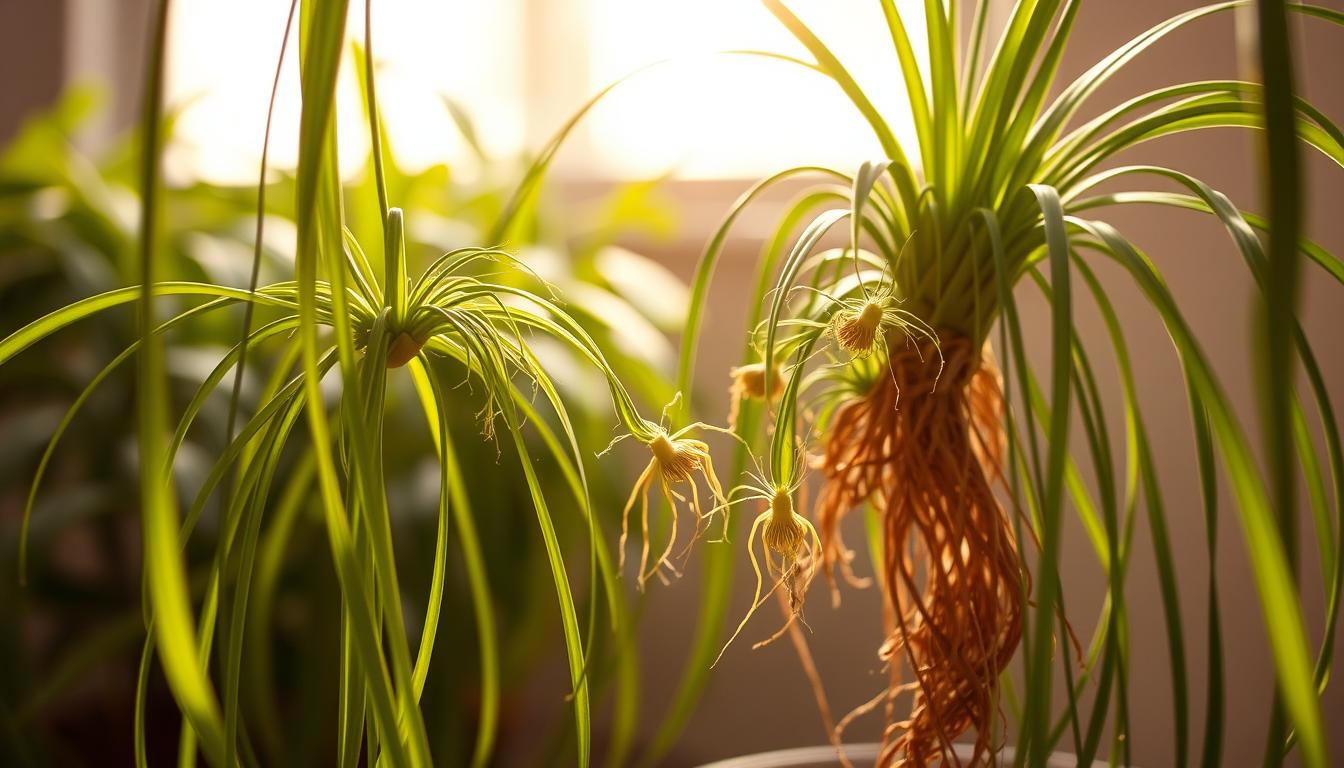
There’s a quiet joy in watching a tiny offshoot take root and become its own green companion. I still remember the nervous thrill of clipping a small plantlet from my first spider plant and seeing roots curl in clear water a week later.
Spiderettes are the small offsets that grow on arching stems from a mature spider. Each one can become a new plant using three simple ways: water, soil, or layering.
This guide will walk you through the low-cost steps, from rooting in a narrow glass jar to pinning a plantlet into nearby soil. I’ll note the tools you need, light and water tips to avoid brown tips, and how to tell when a start is ready to live on its own.
If you want a clear, practical walkthrough that fits beginners and seasoned growers, start here and then visit a detailed primer on spider plant babies for extra photos and troubleshooting.
Key Takeaways
- Spiderettes are offsets that easily become a new plant using water, soil, or layering methods.
- Use clear glass for water rooting, small pots and potting mix for soil, or pin plantlets to layer into nearby soil.
- Keep starts in bright to medium, indirect light to avoid leaf burn and brown tips.
- Filtered water and fresh changes help prevent tip browning and algae in jars.
- Look for resistance to a gentle tug and new growth before separating and potting up.
Before You Start: Understanding Spider Plant Babies and Setting Up
Choosing the right offset and the right tools makes the difference between a lucky start and a lasting new plant. Begin by inspecting each baby on the stem and plan a tidy workspace.
When a spiderette is ready: look for small aerial root nubs or tiny roots at the crown. Those signs mean the offset will form roots quickly in either water or soil. Prioritize offsets with firm crowns and several leaves. Avoid mushy or discolored bases to protect the parent plant and improve success.
Tools and supplies to gather: sterilized pruners or scissors, narrow-mouthed glass jars for water starts, and 2-inch nursery pots with drainage for soil starts. Use a lightweight houseplant potting soil and a pencil or chopstick to make holes.
- Keep a spray bottle with filtered water to mist crowns and lower brown-tip risk.
- Stage propagation in bright to medium, indirect light and steady temps (65–85°F).
- Sanitize blades before each cut and pre-label jars or pots with dates and method.
“Select offsets with visible root buds and healthy crowns—these root and anchor best.”
Propagating Spiderettes
You can create new spider plants from healthy offsets using water, soil, or by pinning them while still attached.
Rooting in water: jars, test tubes, and windowsill care
Use a narrow, clear glass jar or test tube and filtered or distilled water. Seat each spiderette so the leaves keep the crown above the rim and only the root zone stays submerged.
Place jars on a bright, indirect-light windowsill. Top off water as it drops and swap it when it looks cloudy to prevent algae and low oxygen.
Aim for 1–2 inches of white roots before moving to pot soil or a larger water vessel.
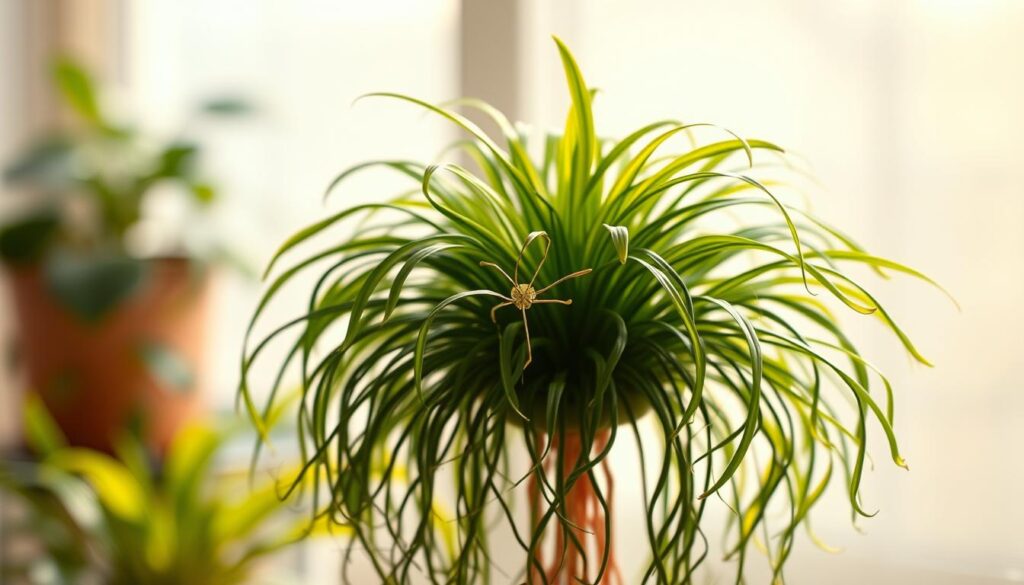
Planting directly in potting medium
Fill small nursery pots with quality houseplant soil and make a guide hole with a pencil or chopstick.
Set the crown at the surface—do not bury it—and lightly firm the mix. Mist to keep even moisture without sogginess.
Tent the pot in a clear bag or use a mini-terrarium to raise humidity and speed root formation.
Layering while attached to the parent plant
Place a small pot beside the parent plant and drape the runner so the plantlet rests on fresh soil. Pin it with a floral pin or small stone.
Keep soil moist by misting daily. When the baby resists a gentle tug and shows new growth, cut the stem with sterilized pruners.
“Use a gentle tug test to confirm roots have anchored before separating and potting up.”
Aftercare for New Spider Plants: Light, Water, and Potting
After roots form, the right light and watering routine determines how quickly a plant will fill out. Place new spider plants where they receive bright to medium, indirect light. Direct sun will scorch leaves and cause brown tips.
Water and soil: keep the top 1–2 inches of soil evenly moist but not soggy. Check moisture with a finger and water when that layer feels dry.
Use pots with drainage holes and empty saucers after watering to protect roots. It’s safer to slightly underwater than to overwater young plants.
Placement and humidity
Maintain room temps between 65–85°F. Average indoor humidity usually works, but if your air is dry, add a small humidifier or place the plant in a steamy bathroom for short periods to reduce leaf-edge browning.
Potting and creating a fuller plant
For a bushier look, plant several plantlets in one pot or tuck a few spider plant babies around the mother. When repotting, choose a container 1–2 inches wider and keep the crown level with the soil surface.
“Give new growth time to mature before sizing up the pot; spider plants tolerate being slightly root-bound.”
- Feed lightly in spring and summer with half-strength houseplant fertilizer; avoid extra watering the week you feed.
- When moving from water to soil, keep initial soil moisture even and humidity high for the first week.
- Monitor leaves: pale, floppy foliage can mean low light; crisp brown edges suggest too much sun, low humidity, or salt buildup.
| Care area | Target | Why it matters |
|---|---|---|
| Light | Bright to medium, indirect | Prevents leaf burn and supports steady new growth |
| Water | Top 1–2″ moist, never soggy | Reduces root rot risk while keeping roots active |
| Potting | 1–2″ larger pot when needed | Balances root space and plant stability |
| Temperature & Humidity | 65–85°F, moderate humidity | Promotes healthy leaves and minimizes brown tips |
For a step-by-step refresher on starting plantlets before aftercare, see how to propagate spider plant.
Troubleshooting and Pro Tips for Healthy Plantlets
Troubleshooting begins with clear observation: leaves, soil, and roots tell the story. Start by checking light and moisture before making big changes. Small adjustments often fix common problems quickly.
Brown tips and leaf burn: Brown edges often come from chemicals in tap water, low humidity, or too much direct sun. Switch to filtered or distilled water and move plants to bright, indirect light. Raise humidity with a tray of pebbles or a nearby humidifier.
Watch for pests early
Identify mealybugs (white, cottony clumps) and scale (brown bumps). Isolate affected plants and treat small outbreaks by dabbing with rubbing alcohol on a cotton swab. Follow with a gentle soap wash and repeat weekly until clear.
Prevent root rot
Use pots with drainage and a well-draining mix. Avoid letting pot soil stay soggy; allow the top layer to dry between waterings. If growth stalls or leaves yellow, check roots—mushy or circling roots need repotting and fresh soil.
“Look for new growth to confirm recovery after adjustments.”
| Issue | Quick action | Why it works |
|---|---|---|
| Brown tips | Use filtered water; raise humidity | Removes salts and reduces leaf stress |
| Pests | Isolate; alcohol swab + soap wash | Removes insects without harsh chemicals |
| Root rot | Improve drainage; repot if needed | Restores oxygen to roots and stops decay |
For more step-by-step guidance on caring for baby plants and successful spider plant propagation, see propagating spiderette guide.
Conclusion
Choose the way that fits your space and schedule: jars on a bright sill for gentle water starts, quick pot-up in soil for speed, or layering to root while still attached to the parent plant. These propagation options are reliable—pick what matches your time and patience.
Use the tug test and look for new growth before separating any offset. That simple check helps you move a new spider into normal care without setbacks.
For a fuller display, plant several offsets together to create a lush, new spider in less time. Keep conditions steady: bright to medium indirect light, even moisture without sogginess, and good drainage.
Tip: use filtered or distilled water if tap water browns leaf tips. With consistent care and small adjustments, spider plant propagation is forgiving and rewarding—enjoy your new plants.
