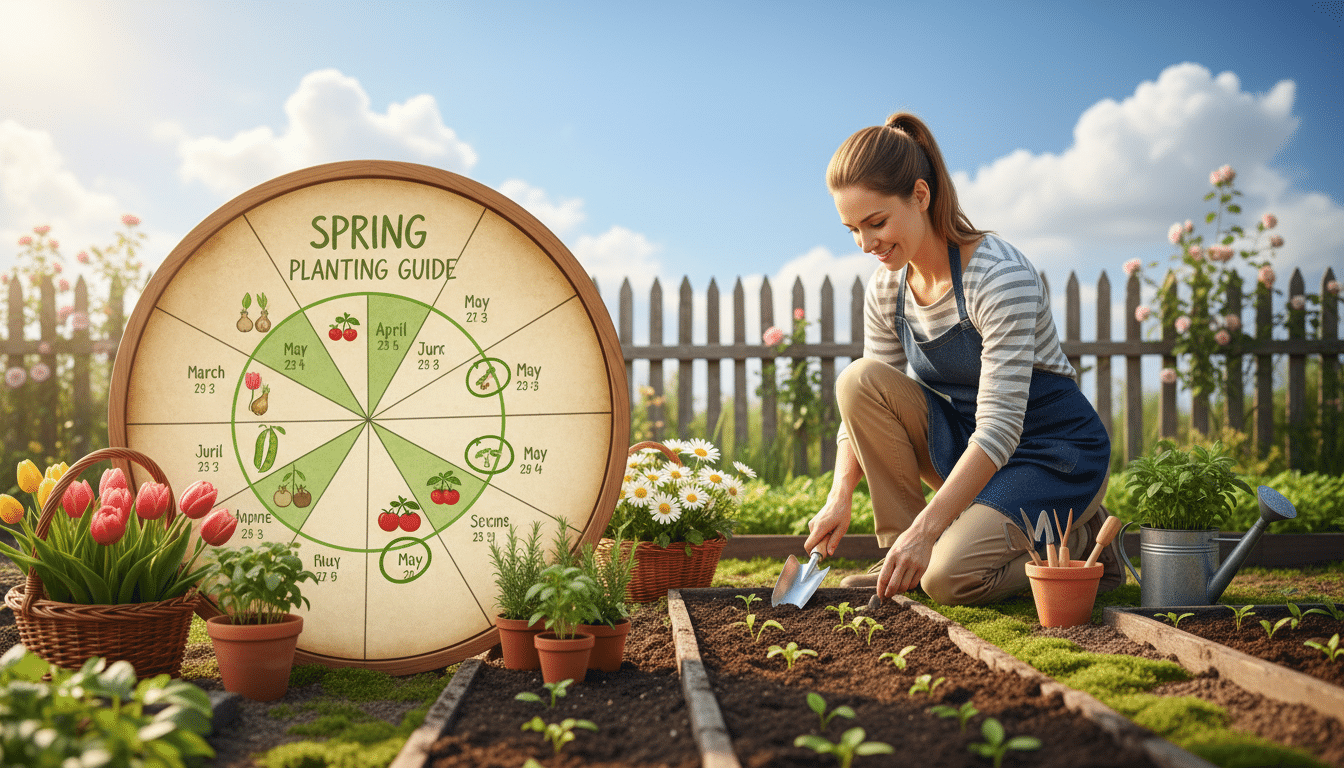
Ever wondered why some beds burst to life while others lag behind? A clear, week-by-week calendar built around your last frost date turns fuzzy plans into reliable action.
A spring garden planting calendar is the simplest way to match tasks to your zone. It maps cool-weather starts, when the ground is workable, and keeps warm-season crops under cover until nights are safe.
We’ll show how to set harvest goals, find your frost window, prep soil, pick crops, and map each seed packet’s “weeks before last frost” timing into a readable schedule.
Expect trial and error; frost dates are estimates you refine with notes. Seed packet timing and week-based rules stay front and center so your plan adapts year after year.
By the end you’ll have a repeatable template you can update in minutes—no perfection needed, just steady improvement and smart timing.
Key Takeaways
- Build your plan around the last frost, not a fixed date.
- Start cool-weather crops as soon as soil can be worked.
- Keep warm-season seedlings indoors until frost risk passes.
- Use seed packet “weeks before last frost” as your timing guide.
- Take notes and refine frost estimates with trial and error.
- Once set, the calendar becomes a reusable annual template.
- For more timing tips and resources, visit explore your green thumb.
Set Your Goal for the Spring Garden Season
Pick your favorite vegetables and herbs, and let those choices shape the season’s schedule.
Decide what you want to harvest and when you want it ready
Start by listing 5–10 vegetables and herbs you actually eat. Include one new crop to learn each year. Keep the list short so beds stay manageable.
Define a clear harvest window for each item. For example: “salads by late April” or “stir-fry greens in May.” That desired time drives sowing and transplant dates.
- Choose quick wins: greens, radishes, and peas finish fast and free space for later crops.
- Start long-season crops early: brassicas can get a head start before heat arrives.
- Plan around life: match tasks to weekends, travel, and kids’ activities so maintenance fits your routine.
Keep a “must-grow” vs “nice-to-grow” list to avoid overcrowding and simplify spacing decisions.
| Crop | Harvest Window | Sow Method |
|---|---|---|
| Lettuce | Late April – May | Direct sow / succession |
| Radish | April | Direct sow |
| Broccoli | May – June | Start indoors, transplant |
Decide if you want continuous harvests with repeat sowings or one big harvest. Once goals are set, the last frost date becomes the anchor that turns them into a reliable calendar for the season.
Find Your USDA Zone and Average Last Frost Date
Pin down your local frost timing so seed packet “weeks before last frost” instructions make sense.
Why the last frost date matters more than the calendar
Your USDA hardiness zone gives a quick snapshot of regional climate patterns. It helps approximate winter lows and growing conditions, but it does not replace a planting schedule.
Use your ZIP code to estimate frost timing
For U.S. readers, run a ZIP-code frost-date calculator to get an estimated last frost. Write that date at the top of your calendar. Many seed packets use that anchor, so it turns vague timing into clear action.
Treat frost dates as estimates and adjust with real weather
Microclimates—city heat islands, elevation, wind exposure, and nearby water—can shift frost risk within the same zone. Watch the 10–14 day forecast and keep row cover ready.
A late cold snap after a warm spell is common. Expect to pause or speed up tasks based on actual weather, not just averages.
| Action | Why | Quick tip |
|---|---|---|
| Find zone | Shows average climate patterns | Use USDA map |
| Get ZIP estimate | Gives last frost anchor | Note it on your calendar |
| Adjust locally | Accounts for microclimates and odd weather | Check forecasts & keep covers ready |
Prep the Ground for Early Spring Planting
A few careful prep steps now make germination and growth far more reliable later.
Build better soil with compost and organic matter
Decide when the ground is workable: not frozen and not sticky or muddy. Working wet soil creates clods and long-lasting compaction that hurt roots.
For a basic compost plan, aim to mix about 2 inches of compost or organic matter into the top ~6 inches of soil. This improves structure, drainage, and nutrients for young roots.
How much organic matter is too much?
Too much good stuff can slow plants. Adding endless compost into a small soil volume may hold nutrients or keep roots soggy.
Balance is key: add steadily over seasons instead of dumping a large amount at once.
Create a workable seed bed and fertilizer basics
Loosen and break clumps, remove debris, and mix in compost plus a basic fertilizer if needed. Choose an all-purpose garden fertilizer and follow label directions—never assume more is better.
A fine, level surface helps tiny seeds like lettuce establish, while larger seeds need consistent moisture at depth.
What to do with heavy, wet, or clay-like beds
For stubborn clay, aim for roughly 1 part organic matter to 2 parts soil. That ratio improves air space and drainage without overwhelming the soil.
Remember: soil building is ongoing. Keep composting through the year and add organic material in fall to make next season’s prep easier.
Tip: Wait until the ground crumbles when you squeeze it—then work it. If it sticks together, give it more dry days.
Choose What to Grow for Spring Garden Planting
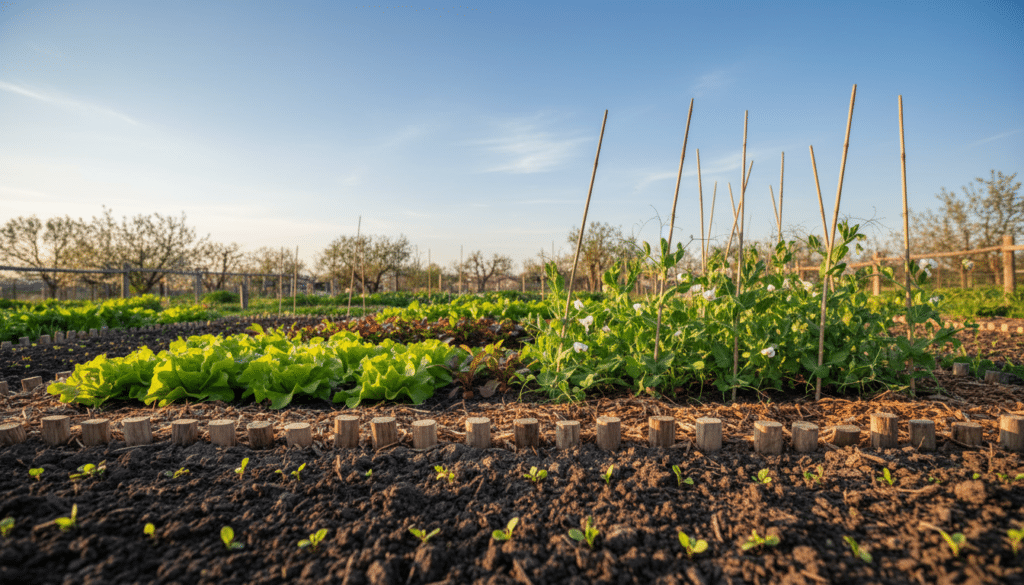
Deciding what to sow early makes the season easier and more productive. Focus on a few dependable crops that thrive in cool weather and free beds for summer crops later.
Cool-season winners for early spring
Fast payoffs: lettuce, spinach, kale, peas, and radishes establish quickly and tolerate chilly nights. These greens and peas give harvests in weeks, not months.
Cole crops and bulbs that beat the heat
Brassicas such as cabbage, broccoli, and cauliflower do most growth before hot weather arrives. Start them early so they mature ahead of summer stress.
Root vegetables: a simple temperature cue
Direct sow beets, carrots, turnips, and other root seeds when daytime temps are roughly 40–50°F. That range helps steady germination and reduces rot and weak stands.
Direct sow vs. transplant
Root crops do best direct sown to avoid disturbing developing roots. Onions and many brassicas benefit from indoor starts and then transplanting for an earlier harvest.
Simple variety planning for small beds
Choose one dependable variety and one fun variety per crop (classic leaf + romaine lettuce, for example). Prioritize what you eat weekly—salad greens and peas are high-return choices that save space.
Seed sourcing tip: pick clear, reputable seed packets from known companies so timing and spacing are easy to follow. Early crops often finish before you plant tomatoes, cucumbers, and basil, freeing beds for summer success.
Map Each Crop to a Timeline Based on Weeks Before Last Frost
A simple backward count from your last frost date turns vague instructions on seed packets into an actionable weekly plan.
How to convert packet language into dates: write your estimated last frost on a calendar, then count back the number of weeks shown on the seed packet. Mark sow and transplant weeks so you see overlaps and busy times at a glance.
Direct-sow lane for quick early spring crops
For lettuce, kale, peas, and radishes, place direct-sow entries about 3–6 weeks before last frost depending on packet notes. These crops tolerate cool soil and reward quick success.
Indoor-start and transplant lane
Start onions, cabbage, broccoli, and cauliflower indoors so they can be hardened and moved out about 4–6 weeks before the last frost. Translating “start indoors X weeks” into calendar dates avoids guesswork.
Succession for steady harvests
Stagger small sowings every 1–2 weeks to keep salads coming. Treat each marked week as a window, not a single day.
- Plan A / Plan B: pencil in alternative weeks for late frost or early warm spells.
- Take notes: record what worked each year so your calendar improves.
Good timing makes care tasks predictable; next, learn spacing, depth, and frost protection to turn dates into food.
Plant Like a Pro: Spacing, Depth, Water, and Frost Protection
Get the basics right—depth, spacing, gentle watering, and quick frost fixes make the difference between struggling starts and steady harvests.
Seed depth made simple: plant seeds at about two times the seed width. Small seeds like lettuce sit very shallow (~1/8 inch). Larger seeds such as peas go near 1 inch deep. Correct depth improves germination and reduces rot.
Spacing strategies that boost production
Use consistent rows or blocks and thin seedlings on time. Avoid overcrowding because tiny seedlings grow fast and compete for light and soil.
Hand-spacing cues and staggering
Use your hand as a tape: FIST ≈ 4″, THUMBS UP ≈ 6″, SHAKA ≈ 9″. For multi-row beds, offset the middle row so transplants are staggered. This improves airflow and reduces disease without wasting space.
Water basics and quick pre-plant checks
Keep the seed zone evenly moist, never flooded. Water gently so small seeds don’t wash away. Make sure to confirm labels, check spacing before you plant the whole bed, and re-check soil moisture after cold nights that slow drying.
Protecting young plants from surprise cold
Treat frost protection as normal. Keep row covers, Hotkaps, or Walls O’ Water-style protectors handy. Secure edges, vent on warm days, and remove or loosen covers during heat spikes so protection helps instead of cooking plants.
Quick rule: depth, spacing, steady water, and covers—follow these and you’ll see stronger starts all season.
Conclusion
Close your calendar with a short, repeatable routine that links goals to your estimated last frost and simple actions for the season. Count back weeks from that date, note weather trends, and mark busy windows so future years start with clear dates.
Start small: a bed of greens, peas, and radishes gives quick harvests and builds confidence. Use seed-packet “weeks before last frost” guidance, steady soil improvements with measured organic matter, and correct seed depth for reliable results.
Keep brief records: planting dates, first harvest, and any frost events. That information makes next year’s calendar more accurate and faster to set up.
Finally, make sure seed depth, spacing, water, and quick frost protection are in place. Make sure basics beat perfection—then enjoy the season and scale up next year.
