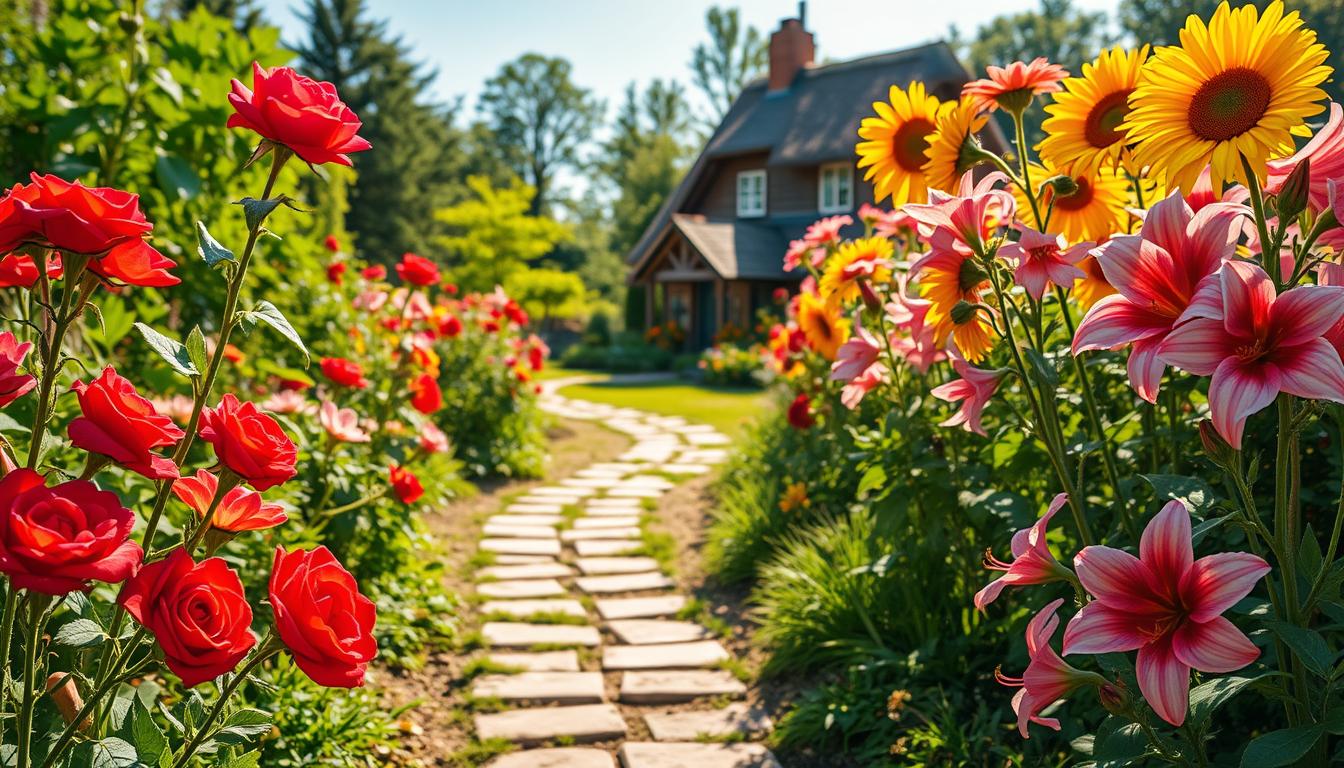
I remember the first time I dug into new soil — the smell felt like hope. A small patch of earth can change a week, a season, even the way you see your home.
This guide will help you choose the right area, test soil, plan beds, and pick plants so the space blooms by spring. You’ll learn simple steps to assess light and moisture, send soil samples to a lab, and time seed sowing 4–6 weeks before last frost.
Expect practical advice on bed building, design ideas that use repetition and layers, and watering and mulch tips that cut weeding time. We also cover close spacing for long cutting stems and easy edges to prevent trampling.
For a deeper how-to, see a trusted resource with step-by-step methods at this guide.
Key Takeaways
- Assess site light, moisture, and topography before you dig.
- Test soil from multiple spots and amend with compost for a fertile bed.
- Plan timing: start seed indoors about 4–6 weeks before last frost.
- Design with shape, repetition, and layered heights for visual impact.
- Use close spacing to reduce weeds and harvest better cut stems.
Why Start Your Flower Garden now
Late winter planning gives you a clear path to spring color and steady bouquets all season. Planning early helps you hit key windows for seed sowing and bulbs so beds fill fast and weeds stay low.
User intent and benefits: color, curb appeal, and cut flowers
If you want flowers that boost curb appeal and deliver weekly bouquets, now is the time to act. Close planting yields longer stems and more blooms while cutting down weeds. Mix bulbs and cool-tolerant varieties for spring, then add heat-loving annuals for summer and resilient picks for fall.
Quick overview of the steps you’ll take
- Assess light and moisture, then test the soil.
- Outline the flower bed, build layers, and plant for strong form and function.
- Water, mulch, and follow simple weekly care so plants reward you with plenty to cut.
“Complementary hues like blue and yellow really pop in golden hours.”
For photo ideas and variety suggestions, see a helpful gallery of beautiful flowers here.
Plan the perfect spot: light, moisture, topography, and frost timing
Really know your site by being honest about light, moisture, and slope before you outline a bed. Simple observation saves work later and helps plants thrive without constant fixing.
Know your site: observe sun patterns and drainage
Walk the area several times a day to map sun and shade. After rain, watch how water moves; note low spots and compacted soil so you can correct drainage issues.
Check local last and first frost dates to schedule seeds and transplants
Check local average dates for your ZIP code. Use the last frost date to back-time seed starts (4–6 weeks before last frost) and plan hardening-off so transplants leave without frost damage.
Be realistic about time and maintenance needs
Size the bed to fit the hours you can give each week. Match plant choices to conditions—choose flowers like drought-tolerant sun lovers for hot slopes and shade-tolerant picks for moist spots.
- Note wind and microclimates near walls or pavement.
- Mark utilities and irrigation before you dig.
- Plan to add a 2–3 inch compost layer to improve soil structure in the inches that matter.
Soil smarts: testing, compost, and the inches that matter
Good soil is the single best investment you can make for bigger, healthier blooms. Start by collecting a representative sample so you know what to fix before planting.
How to take a sample and read results
How to take a soil sample and what results mean
Dig several holes about one foot deep across the bed. Take a few tablespoons from each hole and combine them in a clean jar until it fills a quart. Mail this mix to a lab such as the UMass Soil and Plant Nutrient Testing Laboratory for nutrient and pH data.
Use the report to guide amendments. Test-based changes prevent over- or under-amending and help flowers perform better.
Build better beds with compost and structure
Build better beds with 2-3 inches of compost and good structure
Spread at least 2–3 inches of compost across the bed and work it into the top inches. Choose compost with mixed particle sizes; avoid ultra-fine, sand-like bagged products that collapse and fail to improve structure.
This layer improves drainage, root growth, and long-term soil life for healthier plants and more vigorous flowers.
Moist, not wet: the squeeze test to time your digging
Work soil when it’s moist. Squeeze a handful—if it forms a ball that breaks with a tap, conditions are right. Too wet causes compaction; too dry makes mixing amendments ineffective.
- Prepare edges and centers evenly so the whole bed benefits.
- Record lab results and what you add this year for future reference.
- Use lime or sulfur only when the lab recommends it—guessing can lock up nutrients.
From ground to gorgeous: preparing new and existing flower beds
Preparing a new or tired bed well pays off all season with stronger plants and fewer weeds.
Plan the outline in fall by shaping the area with a garden hose to test curves and widths. Smother existing grass with five to six layers of newspaper, avoiding slick color inserts. Top the paper with a 2–3 inch layer of compost and let decomposition begin.
Brand-new beds: depth and turning
After the layer breaks down, turn the soil with a shovel or fork to at least 12 inches; double-dig to 18 inches for long-rooting species. A tiller reaches 6–8 inches; use a shovel when you need deeper work.
Existing empty beds and planted areas
Refresh empty beds by spreading 2–3 inches of compost and raking smooth. For planted beds, add a couple inches of compost around stems, keeping it off trunks to avoid rot.
Weed control and watering options
Mulch thickly to suppress seedlings. If using weed-and-feed, follow label cautions and do not sow seeds into treated soil. Install drip irrigation before planting so water reaches roots and reduces hand watering.
“Work the soil when it is moist, not wet, to avoid compaction.”
| Task | Depth / Layer | Why it helps |
|---|---|---|
| Smother growth | 5–6 newspaper layers + 2–3 inches compost | Breaks down and enriches topsoil for planting |
| Turn soil | 12–18 inches (shovel), 6–8 inches (tiller) | Increases root volume and stability for tall flowers |
| Top dressing | 2 inches compost | Refreshes nutrients without disturbing roots |
Design that dazzles: color, shape, layers, and fragrance
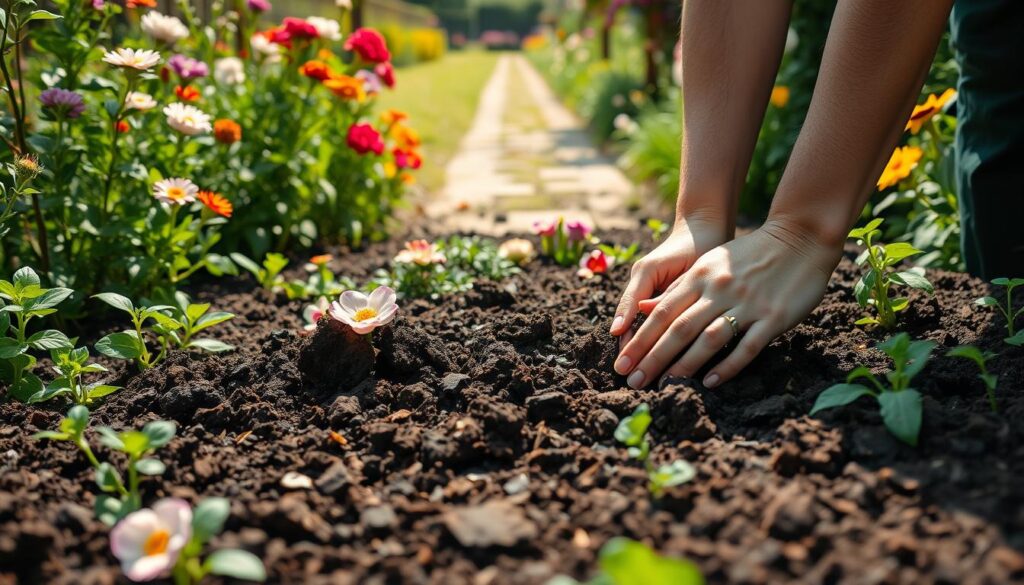
Good design makes the beds feel intentional, guiding the eye with repeated shapes and thoughtful color notes.
Unify with color variations and tones by choosing a dominant palette, then add small complementary accents—blue paired with sunny yellow creates lively contrast in full sun, as Keith Wiley notes.
Unify with a color scheme; excite with complementary hues
Pick a limited palette to tie beds together across the landscape. Use one dominant tone, two supporting hues, and a single accent for punch.
Use plant shapes for rhythm
Work with shape categories—spires, plumes, discs, and globes—and repeat key forms so the bed reads calm and organized, following ideas from Piet Oudolf.
Layer heights for natural sight lines
Layer by softly overlapping tall, mid, and low plants to avoid a rigid step effect. This keeps views open and the look natural.
Fragrance and movement
Place scented plants where prevailing breezes carry the scent toward seating areas. Textured foliage adds movement that keeps the composition lively.
Paths, edges, and structure
Use shrubs and perennials as structural anchors. Edge beds with flagstone or low walls so stems spill over without mower damage.
“Complementary hues like blue and yellow really pop in golden hours.”
| Design Element | Example | Why it helps |
|---|---|---|
| Color palette | Dominant + supporting + accent | Creates continuity and controlled contrast |
| Shape repetition | Spires, plumes, discs | Builds rhythm and calm across beds |
| Layering | Tall → mid → low, softly overlapped | Maintains sight lines and a natural look |
| Edges & paths | Flagstone borders, wide paths | Protects stems and eases harvest/maintenance |
Plant choices by season: seeds, transplants, bulbs, and cut-flower categories
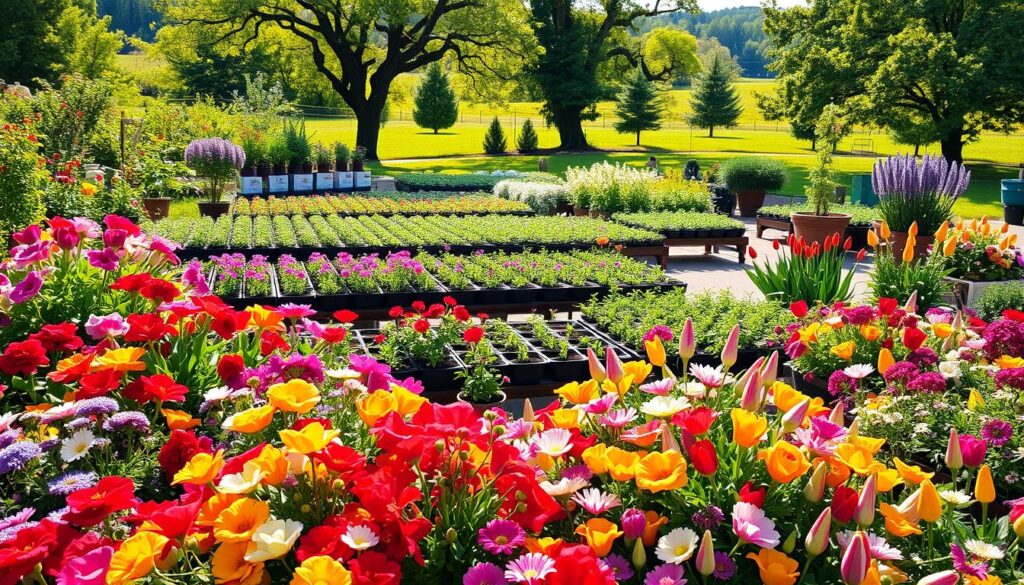
Plan plants by bloom window and bouquet role so the bed supplies steady color and stems across the seasons. Mix bulbs, seeds, and transplants to stagger blooms and keep vases full most of the year.
Spring picks favor bulbs and cool-season seed varieties. Use Tulips and Daffodils as focals, Snapdragons and Larkspur for spikes, Poppies for discs, and Statice or Bupleurum as fillers. Add Bachelor’s Button for airy accents.
Summer stars are heat lovers. Plant Zinnias and Sunflowers as dependable focals. Celosia and Salvia supply spike shapes, while Cosmos and Rudbeckia give disc contrast. Fill with Amaranth, Basil, and Gomphrena for texture and scent.
Fall color extends the season. Choose Chrysanthemums, late Zinnias, and Sunflowers for strong focal interest. Include Strawflower and Rudbeckia for discs, Celosia spikes, and Eucalyptus or Sweet Annie as aromatic fillers.
Build bouquets
- Focals: big, eye‑catching blooms.
- Spikes: vertical movement and height.
- Discs: contrast and mass.
- Fillers: body and texture.
- Airy bits: lightness and flow.
| Season | Focal examples | Spike / Disc / Fillers |
|---|---|---|
| Spring | Tulips, Daffodils, Ranunculus | Snapdragons / Poppies / Statice, Bupleurum |
| Summer | Zinnias, Sunflowers, Lilies | Celosia / Cosmos / Amaranth, Basil |
| Fall | Chrysanthemums, late Zinnias | Celosia / Rudbeckia / Eucalyptus, Sweet Annie |
Practical tips: start seed indoors for cool spikes, direct‑sow Cosmos, and set transplants for quick fill. Amend planting holes with compost so roots establish and stems grow straight. Space robust summer plants about a foot apart and stake tall sunflowers early.
For guidance on selecting reliable cut varieties, see how to choose the best cut.
Planting day made easy: spacing, depth, water, and mulch
Planting day goes smoothly when you follow a clear plan for spacing, depth, and watering. A small checklist saves time and helps plants settle without shock.
Seed timing and frost: Start seed indoors about 4–6 weeks before last frost using a covered tray and grow lights. Harden off seedlings for 7–10 days and set transplants out only after the last frost risk has passed.
Close spacing for stronger stems and fewer weeds
Lay out the bed with slightly tighter spacing than you think. Close plant spacing shades soil, cuts weed pressure, and often produces longer stems for cut flowers, a technique many growers recommend.
Planting depth, water, and top layers
Set plants at the same depth they grew in pots. Backfill gently and firm the soil to remove air pockets. Water each hole thoroughly, then water the whole bed so roots contact moist soil.
Switch on drip tubing for steady root-level moisture and reduced leaf wetting. Add a 1–2 inch layer of compost or mulch over the soil surface to keep moisture even and protect young roots.
“Close spacing reduces weeds and encourages longer stems for cutting.” — Erin Benzakein
| Action | Measure | Why it helps |
|---|---|---|
| Seed start | 4–6 weeks before last frost | Gives seedlings time to grow sturdy indoors |
| Hardening off | 7–10 days | Prevents transplant shock after frost risk |
| Mulch / compost layer | 1–2 inches | Conserves water and stabilizes soil temperature |
| Spacing for large summer plants | ≈1 foot or by inches per plan | Allows airflow while shading soil to cut weeds |
- Make sure to follow fertilizer label directions at transplant time to avoid burning roots.
- Use a measuring stick to keep rows straight and spacing even by inches.
- Set reminders to sow subsequent seeds so spring fills in waves of flowers.
Conclusion
A few steady habits across the year make the biggest difference in bloom quality and stem length. Make sure to refresh compost annually and keep mulch neat so soil stays healthy and beds resist compaction.
Water deeply at the root zone with drip irrigation and time tasks around frost dates to extend color into fall. Revisit design, repeat strong color combos, and favor smaller cultivars and shrubs to help maintain structure with less pruning.
Note what you plant and when. These simple tips will keep the garden productive, supply plenty of cut stems, and improve each year.
