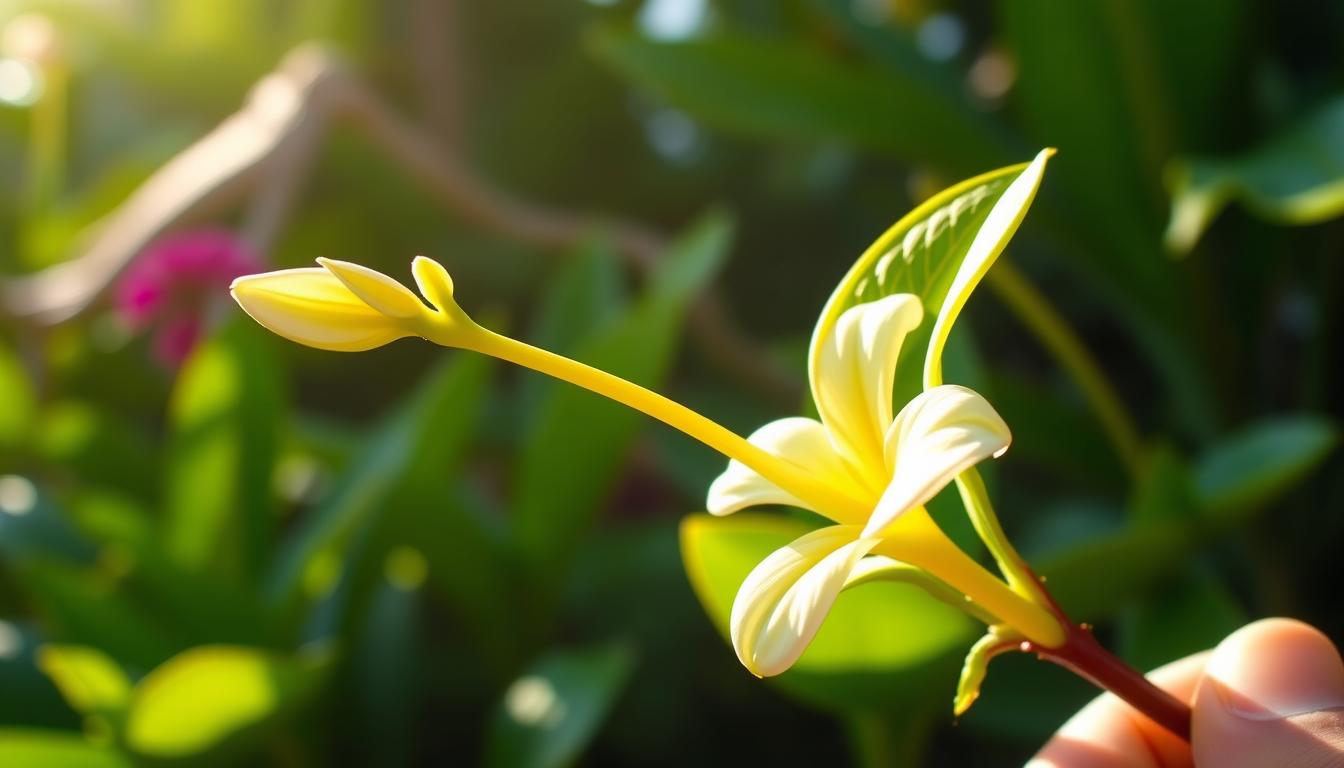
I still remember the first time I brought a small branch home and watched it find new life. That quiet hope — and the scent of blooms to come — is what draws many of us to learn the craft of cloning a favorite garden plant.
This guide walks you through the simple, reliable steps to turn a healthy stem into a thriving plumeria plant.
Start with a strong donor, let the wound callus for about a week, and use a perlite-heavy soil mix so air reaches the base.
Dip the end in rooting powder, plant halfway into the mix, stake if needed, water once, then let the medium dry between checks. Warm root-zone temps and bright light speed roots; expect visible roots in 60–90 days.
Key Takeaways
- Select a healthy donor to improve success.
- Allow the cut end to callus about one week before planting.
- Use 2/3 perlite + 1/3 potting soil in a large container.
- Water once at planting, then let the mix dry to prevent rot.
- Warmth and bright light speed rooting; expect results in 1–3 months.
Why and When to Start Plumeria Cutting Propagation
Start with warm days, healthy wood, and careful timing to give new cuttings the best chance to root.
Spring and early to mid-summer are the most reliable windows in the U.S. growing season. Warm days, long light, and active sap flow help cuttings form roots well before cold weather arrives.
Late summer can work, but it leaves less time to fix problems. Starting in fall or winter is risky without supplemental heat and light because cool media and slow metabolism stall root growth.
Picking the right donor and branch
Use vigorous, pest-free plants and avoid donors showing mineral deficiencies or heavy nitrogen feeding. Water the chosen plant the night before you take cuttings so tissues are well hydrated.
Select past-season wood with light gray bark and favor lateral shoots when possible. These branches often root faster and more consistently than soft terminal tips.
- Stage newly potted cuttings in a place with morning light and warm air, then harden toward full sun.
- Plan timing so the cutting has a full warm season to root and grow if you intend to grow plumeria outdoors.
For step-by-step prep and planting tips, see this guide to plant plumeria.
Tools, Mixes, and Setup for Rooting Success
A clean toolkit and the right potting mix set the stage for reliable root formation.
Sanitation and cutting tools
Use sharp bypass pruners or a fine-tooth saw to make a single clean cut that encourages a healthy callus. Wipe blades between each cut with isopropyl alcohol or a 1:9 bleach solution to reduce disease risk.
“Sterile tools protect the fresh end and greatly increase success.”
Media and drainage
Two proven mixes work well: 2/3 perlite + 1/3 potting soil for maximum drainage, or a 1:1 perlite-to-potting mix for balanced moisture control.
Containers, staking, and heat
Use a 1-gallon pot or rooting tube with many drainage holes. Pre-moisten the media and make a centered 3–5 inch hole slightly wider than the stem to avoid scraping the cut end.
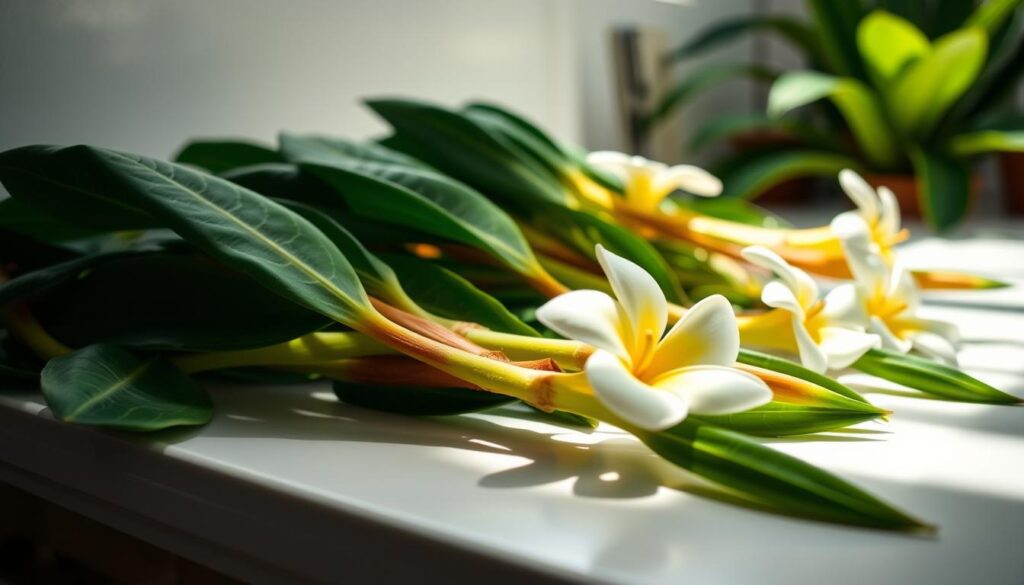
- Dip the cut end in rooting hormone, tap off excess, then insert and firm the mix.
- Stabilize with bamboo stakes and label cultivar plus date.
- Water once to settle soil; wait to water again to prevent rot.
- Place pots in a bright garden area with airflow; use a heat mat to keep root-zone temps 75–85°F if needed.
| Item | Recommendation | Why it matters |
|---|---|---|
| Tool | Sharp bypass pruners or fine-tooth saw | Clean cuts reduce tissue damage |
| Sanitizer | Isopropyl alcohol or 1:9 bleach | Prevents pathogen transfer |
| Mix | 2/3 perlite + 1/3 potting soil or 1:1 mix | Fast drainage limits rot |
| Pot | 1-gallon with many holes | Space for root growth and drainage |
For related indoor rooting tips, see this guide on how to propagate pothos.
Step‑by‑Step: Preparing and Callusing Plumeria Cuttings
Choose a healthy, mature branch and follow simple steps that let the cut end dry to a firm callus.
Selecting and sizing the stem
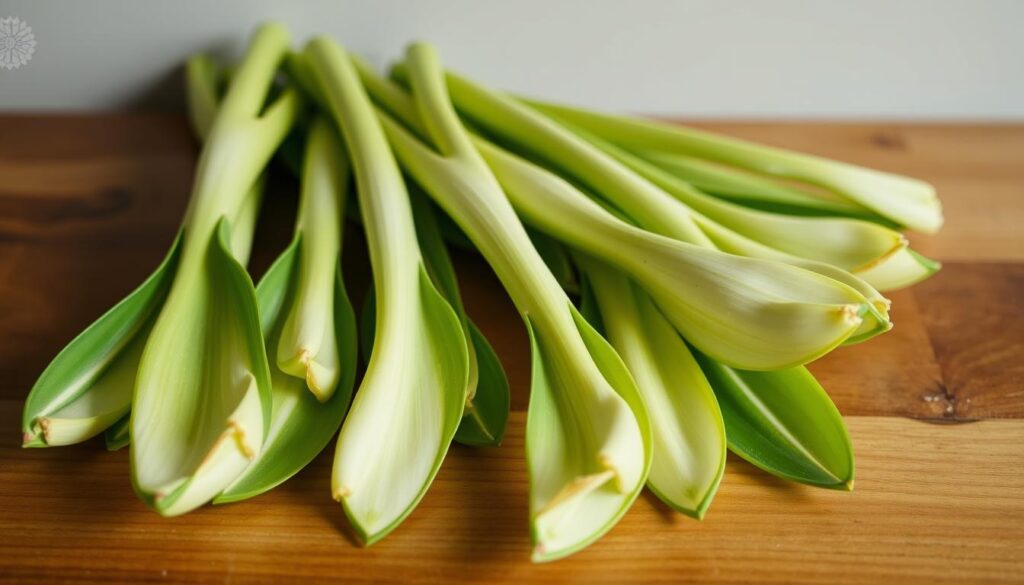
Select past-season, light-gray wood about 12–18 inches long. This length balances stored energy with manageable handling.
Removing leaves and flower clusters
Cut off all leaves by trimming the petioles about 1/2 inch from the stem. Remove any inflorescences so the piece conserves moisture and directs sap toward root formation.
Making a clean cut and applying hormone
Use sterilized bypass pruners to make a single smooth cut and avoid bruising. Immediately dip the fresh end in rooting hormone for best uptake and reduced infection risk.
Callusing and short-term storage
Place the treated piece in a warm, dry, shaded place with good airflow for about 1–2 weeks. Check the cut end every few days; a firm, dry callus will form in warmer conditions and may take several weeks in cool rooms.
- If the end softens or darkens, recut to clean white wood, reapply hormone, and restart the callus period.
- Handle tips gently to avoid micro-damage that steals moisture before potting.
- Label multiple tips so you can compare which branch maturity roots best in your place and time.
Remember: roots develop only after a proper callus forms, so patience now reduces rot and improves success later.
Plumeria Cutting Propagation: Planting and Early Care
A careful potting step and a patient water routine give new stems their best start.
Mixing and potting
Make a fast-draining mix: use 2/3 perlite + 1/3 potting soil or a 1:1 blend. Pre‑moisten the media lightly.
Create a centered guide hole 3–5 inches deep and slightly wider than the tip. Insert the stem about halfway into the pot and firm the soil so it does not wobble.
Stabilize with a stake immediately; even small movement can shear tender roots.
Watering, light, and warmth
Give one thorough water at planting to settle media, then wait. Hold off on additional water to prevent rot; mist the stem only if the skin shows clear wrinkling.
Place in bright light and move gradually to full sun as leaves develop. Keep the root zone near 75–85°F to speed root growth; use a heat mat if needed.
Timeline and signs of success
Roots usually form in about 4–12 weeks. Look for slight swelling at the base, resistance to a gentle tug, or new leaves—often 3–4 full leaves—before repotting.
- Blend perlite with potting soil for oxygen at the root zone.
- Pre‑moisten, make a 3–5 inch hole, insert halfway, and firm.
- Water once, wait weeks, and monitor for subtle signs of root growth.
Troubleshooting, Timing Pitfalls, and Next Steps
When a stem shows stress, fast action protects future growth.
Avoid overwatering first. If the mix stays wet, roots suffocate and rot spreads. Lift the pot, increase drainage, and pause water until the medium dries slightly.
If the cut end turns soft or black, recut to firm white wood, dust with hormone, and let it callus before repotting. Mild wrinkling needs only light misting; foul smells signal rot and require reset.
Heat, hard-to-root types, and transplant timing
For stubborn varieties or cool nights, use a heat mat to keep the root zone near 75–85°F. That steady warmth speeds rooting and reduces time to visible roots.
Transplant when you see several new leaves or roots at drain holes. Wait until frost risk passes before moving plants to the ground. Begin gentle feeding with a dilute balanced foliar feed after leaves appear.
“Diagnose overwatering first; timing and warmth are the next big factors.”
| Issue | Quick fix | When to act |
|---|---|---|
| Waterlogged mix | Raise pot, improve drainage, hold water | Immediately on persistent wetness |
| Soft or blackened end | Recut to white wood, re-dust hormone, callus | At first sign of darkening |
| Slow rooting in cool weather | Use heat mat, add light | Start early and monitor temps |
| Transplant timing | Move after 4–6 leaves or visible roots | Avoid before last frost |
For a deeper look at leaf and stem problems, see common plumeria problems.
Conclusion
Follow a clear routine of clean cuts, a perlite-forward potting mix, and steady warmth to get reliable root growth.
Recap: Select past-season wood, remove leaves and blooms, make a clean cut, dust the end with rooting hormone, let the tip callus about a week, then set the stem into a fast-draining mix of perlite and potting soil.
Use a labeled pot with plenty of drainage, stake the stem to stop movement, water once at planting, and keep the root zone near 75–85°F. Most cuttings root in 4–12 weeks during spring and summer.
Watch for new leaves or gentle resistance when you tug the stem — these are the best signs roots form. When several leaves appear, up-pot and wait to set plants in the ground until frost risk has passed.
Consistency wins: clean tools, correct mix, careful water, warmth, and patience will help you grow plumeria reliably and scale from a few pots to a fuller collection over the years.
