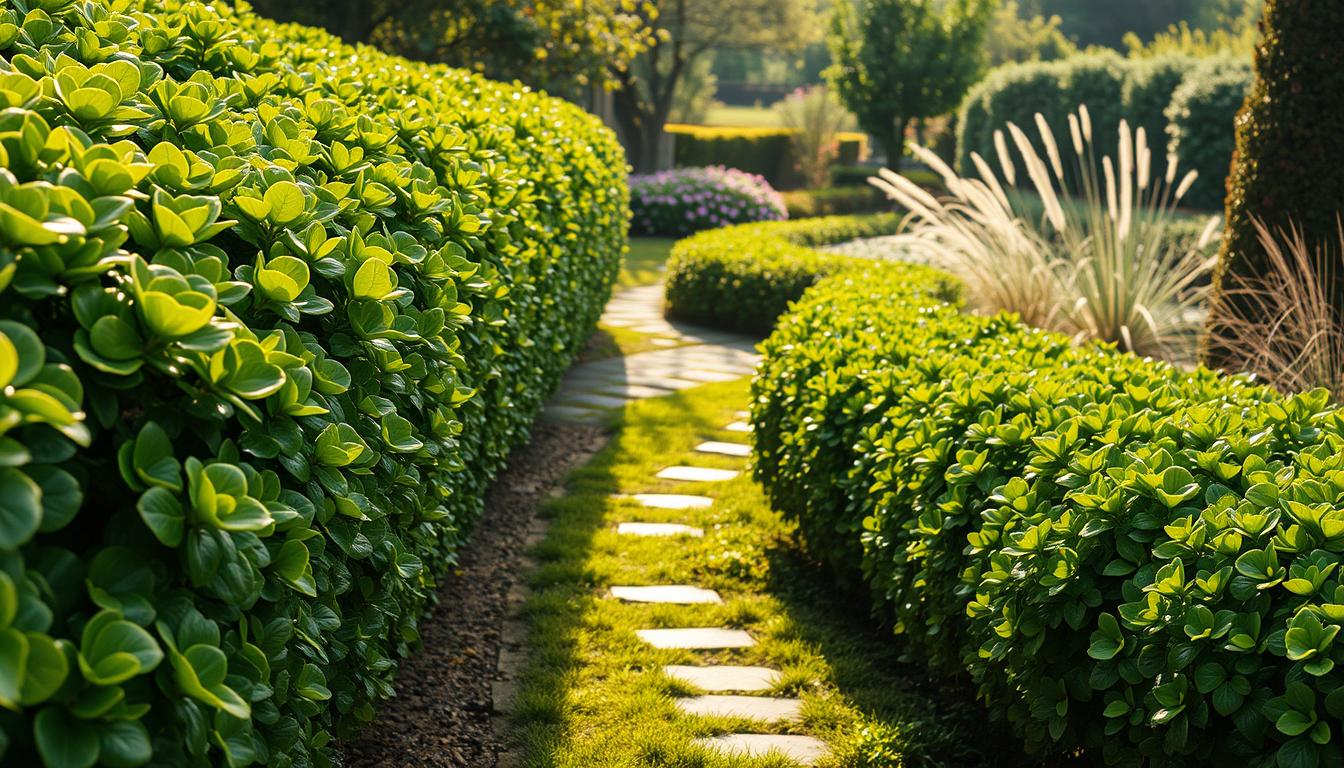
I remember the first time I planted a row of shrubs along my backyard fence — I wanted beauty and a quiet place to read. That mix of hope and a little worry is familiar to many homeowners. You want a screen that grows fast, looks great, and fits your space.
This guide helps you pick the right plants, spacing, and placement so your garden becomes a living wall that serves privacy and adds charm. Proper Viburnum Hedge Spacing sets clear expectations: too close brings crowding and disease, too far delays a full screen.
Different viburnum varieties reach very different sizes and growth rates. Some stay compact and evergreen; others get tall and vigorous, so site choice matters near structures. With thoughtful spacing, your landscape will gain lasting appeal and wildlife value without surprise maintenance.
Key Takeaways
- Right spacing balances fast coverage with long-term health.
- Match plant size to your landscape and privacy goals.
- Consider site conditions and placement near structures.
- Some varieties need generous room; others can sit closer.
- Good planning reduces maintenance and improves appeal.
Why Spacing Matters for a Stunning Viburnum Hedge in the U.S.
Giving each shrub enough room lets roots and canopies expand without fighting for water and light. Proper spacing keeps plants healthy as they mature and reduces competition for nutrients and moisture.
Air circulation matters. When shrubs sit with adequate space, wind moves through the leaves and lowers disease risk. Good airflow also helps lower branches stay vigorous so the hedge keeps a full-to-the-ground look.
- Allow enough center-to-center space for root and canopy development so each plant can reach its mature size.
- Match distances to the species and cultivar: compact types need less room than vigorous, large-maturing plants.
- Plan wider intervals if your soil drains well and you want long-term resilience over fast cover.
Keep soil evenly moist during establishment and use a balanced granular fertilizer in spring and summer to support steady growth. Map center-to-center lines before digging to create a uniform face with fewer repairs later.
Viburnum Hedge Spacing: Quick Rules for Dense, Healthy Screens
How you space plants determines whether a screen fills in fast or stays healthy for years.
Simple rule of thumb: plant most hedge-forming viburnum about 3–4 feet center-to-center to create dense coverage that stays full to the ground. Closer than 3 feet speeds coverage but risks competition and bare lower stems over time.
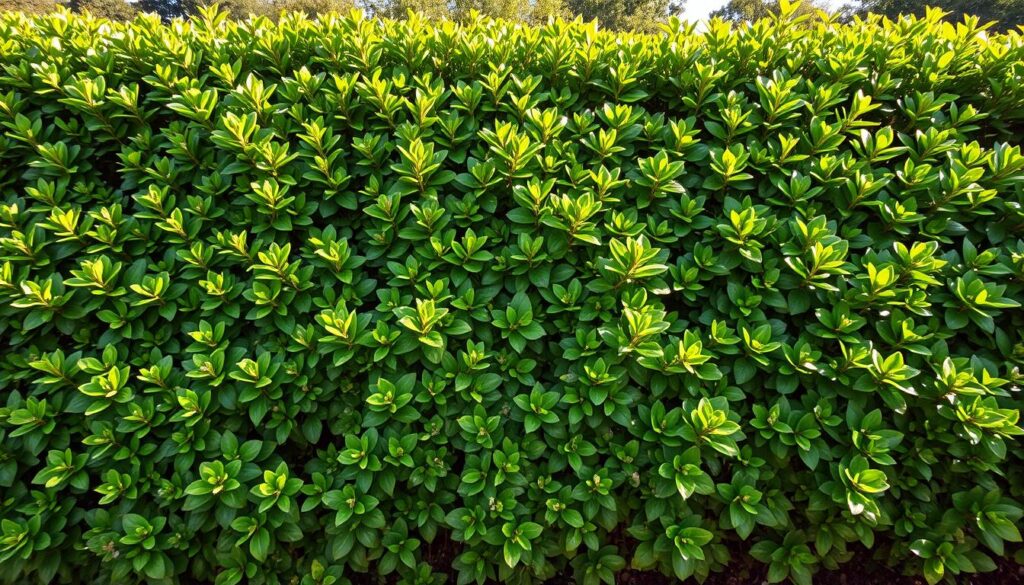
Recommended distances for a dense hedge vs. natural screen
- 3 feet: faster cover and privacy in less time.
- 4 feet or more: softer, natural screen and room for companions.
Airflow, disease prevention, and the “full-to-ground” look
A generous gap improves airflow, which lowers fungal risk and helps lower branches stay vigorous.
Consistent center-to-center spacing and a taut line keep the run straight and visually unified.
Choosing spacing by purpose: privacy, backdrop, or mixed border
- For fast privacy, lean to the 3-foot side.
- For mixed borders, widen spacing so perennials and roots don’t compete.
- Time your structural pruning in spring after bloom to keep flowers and form.
“Calibrate distances by mature size, not nursery height, to avoid crowding later.”
Spacing by Viburnum Types and Sizes to Match Your Landscape Goals
Choosing the right species for your site means planning how big each plant will be at maturity. Below are practical distances and tips for common types so your row looks intentional from year one onward.
- Laurustinus (V. tinus): compact evergreen—plan about 4 feet center-to-center for a neat, winter-blooming line.
- Sweet viburnum (V. odoratissimum): fast grower; use 3–4+ feet depending on maintenance and avoid close plantings near buildings.
- Sandankwa / Florida (V. suspensum): tolerates sun and shade—3–4 feet apart; keep 3–4 feet from walls and 4–5 feet from paths.
- Arrowwood (V. dentatum): native appeal; give wider gaps to support wildlife movement and fruiting in part shade.
- Snowball: often 6–10 feet tall with large clusters of white flowers—space to its mature width for a small privacy run.
- Nannyberry (V. lentago): larger and drought-tough—allow extra room for height and airflow to reduce foliar problems.
| Type | Mature Size | Recommended Center-to-Center | Notes |
|---|---|---|---|
| Laurustinus (V. tinus) | 4–6 feet | 4 feet | Compact, winter blooms; neat formal lines |
| Sweet (V. odoratissimum) | 6–20 feet | 3–4+ feet | Fast grower; avoid tight sites near structures |
| Sandankwa / Florida (V. suspensum) | 4–8 feet | 3–4 feet | Sun or shade tolerant; keep clearances from walks |
| Arrowwood (V. dentatum) | 6–12 feet | 4–6 feet | Native, berry-rich, great for wildlife |
| Snowball / Nannyberry | 6–10 / 10–20 feet tall | Adjust to mature width | Large clusters and structure; give room for blooms and airflow |
“Tie spacing to both species and your intended use—tight for privacy, moderate for structure, generous for habitat.”
Site and Soil Prep Before You Plant for Long-Term Success
Good site prep pays off: pick a place that gives roots oxygen and keeps crowns healthy.
Match light to species by tracking how many hours of sun the location gets. Most shrubs bloom and fruit best in sunnier spots, though some do well in part shade. Choose specimens that suit your garden’s light for fuller leaves and denser form.
Test drainage before you dig. Amend heavy soil with compost or organic matter to improve structure and moisture balance. In clay sites, raise the planting area slightly so roots avoid standing water.

Layout and first-season care
- Map center-to-center marks on the ground to keep a straight line and consistent placement.
- Remove turf and weeds along the strip to cut competition for water and nutrients.
- Consider wind and microclimates that can stress leaves and increase water needs.
- Water new plantings well and keep the soil consistently moist during the first season.
Well-prepared sites reduce long-term work and improve foliage quality across the landscape.
For timing and follow-up tips, see our planting timing guide.
How to Plant Viburnum for a Uniform, Attractive Hedge
Laying out exact centers before you dig saves time and keeps plants uniform. Measure and mark 3–4 feet between centers for a dense run, or use a staggered two-row (triangular) layout for faster coverage.
Marking and layout
Use stakes and string to keep a straight line for single rows. For staggered double rows, offset the second row midway between the first row plants to tighten the screen without crowding.
Planting steps
- Dig holes 2–3× wider than the root ball and only as deep so the crown sits level with surrounding soil.
- Loosen circling roots, set each specimen plumb, and backfill with native soil blended with compost for quick establishment.
- Water each planting thoroughly to eliminate air pockets, then water the entire run to even out moisture.
- Apply 2–3 inches of mulch over the root zone to conserve moisture, keeping mulch a few inches away from stems to prevent rot.
- Maintain clearances: keep about 3–4 feet from walls and 4–5 feet from walks or drives for access and airflow.
Work in stages for long runs: plant key specimens at the ends and center first to guide alignment, then infill. Orient each shrub so its best side faces the garden or street.
“Plan your watering schedule ahead so no plant is missed during the critical first season.”
Care, Growth Rates, and Pruning to Maintain Density Over Time
Regular attention in spring and summer makes the difference between patchy growth and a full, green face. Follow a simple plan for water, feed, and timely cuts to keep plants vigorous and flowering well.
Water and feed: establish a consistent routine in spring and summer, letting soil dry slightly between cycles to promote deep roots. Fertilize with a quality granular product three times a year — spring, summer, and autumn — to boost foliage and bloom.
Pruning and timing
Light trims right after flower fade keep lines tidy and encourage branching. Make heavier, structural cuts in early spring after bloom to control size and shape. Keep the top a bit narrower than the base so lower leaves get light.
Growth expectations
With good care expect roughly 12–24 inches of new growth per year. Sweet odoratissimum rebounds fast after trims; Sandankwa (suspensum) is slower and prefers steadier moisture. Watch leaves for early signs of stress from uneven water or fertility.
| Action | Timing | Frequency | Notes |
|---|---|---|---|
| Watering | Spring–summer | Weekly to biweekly | Let soil dry slightly between cycles; adjust in heat |
| Fertilizing | Spring, Summer, Autumn | 3× per year | Use balanced granular fertilizer for steady growth |
| Pruning | After flower; major cuts in spring | Light trims yearly; hard prune as needed | Shape to preserve blooms and density |
| Mulch & checks | Spring | Annually | Refresh mulch, inspect for pests and disease |
“A predictable care rhythm keeps hedges dense and resilient through each growing season.”
Conclusion
Good layout starts with a simple rule: plan about 3–4 feet center-to-center for a dense privacy run, then tweak distances for each species and mature size.
Choose varieties that suit your site and patience. Sweet odoratissimum and suspensum fill in quickly in warm zones, while tinus and dentatum offer evergreen structure and wildlife value.
Keep plants 3–4 feet from walls and 4–5 feet from drives for access and health. Expect 12–24 inches of annual growth with regular watering, seasonal feeding, and pruning after spring blooms.
Measure, mark, and plant with intent so your shrubs and flowers form an even, full run that saves time and protects your landscape investment.
