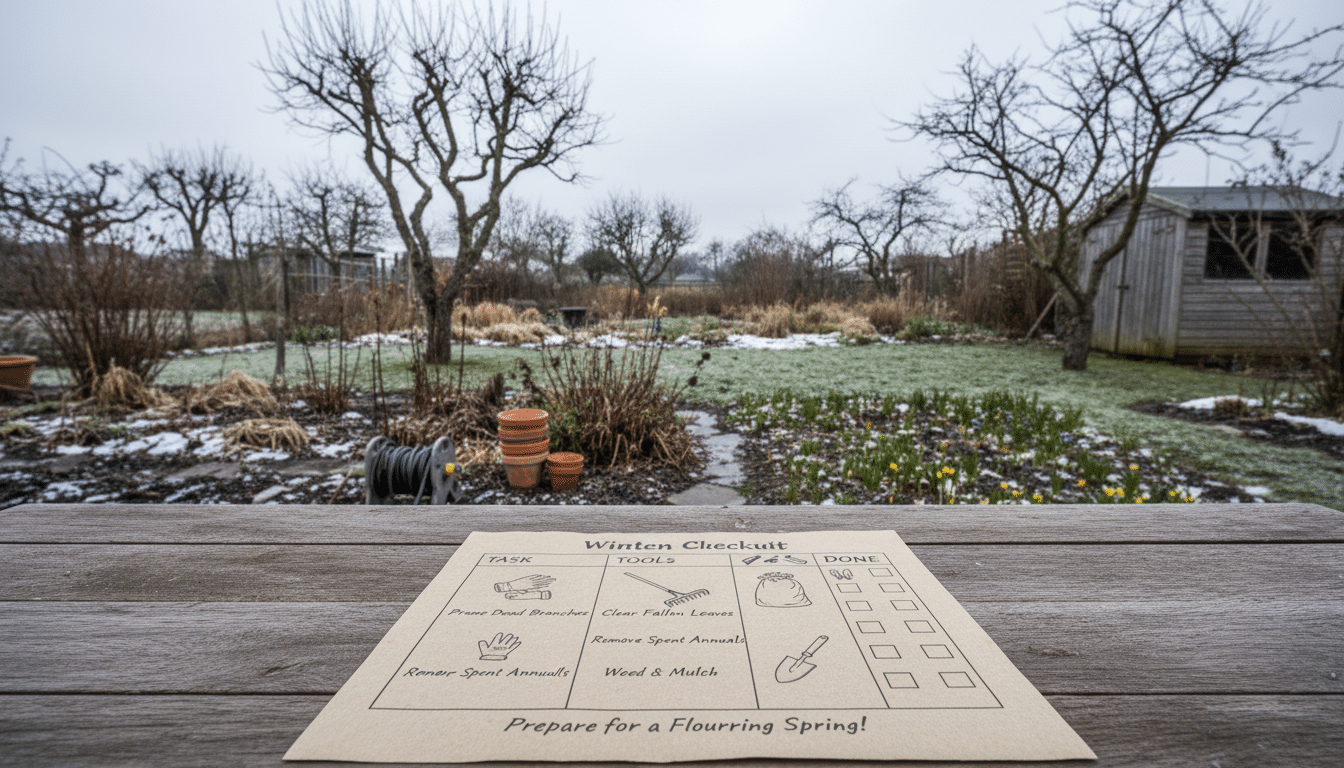
What if one slow afternoon now could save you weeks of scrambling when planting season arrives?
Use the quiet months to set spring up for success. Tidy beds, remove diseased debris, and add compost or mulch to protect soil. These small steps cut overwintering pests and ease weed pressure in the long run.
Start key tasks after a hard frost or when annuals die back. Leave some perennial seedheads and leaf litter in low-traffic spots to help pollinators and wildlife. That balance keeps nature and neatness working together.
We’ll preview practical sections—bed reset, soil building, pruning and protection, plus tool care—so you can follow a simple, do-it-in-order plan. Tackle it over a weekend or spread tasks through cold months; either way, a little now saves big time when spring rains arrive.
Key Takeaways
- Clean diseased material and debris to reduce pests and disease next season.
- Protect soil with compost or mulch to improve structure and moisture retention.
- Time work after frost or when annuals fade; regional timing varies.
- Keep some seedheads and leaves for pollinators and wildlife habitat.
- Clean, sharpen, and oil tools now to speed spring tasks.
- Follow the step-by-step plan or spread tasks to fit your schedule.
Winter garden cleanup checklist: timing, weather, and what to tackle first
Let the landscape tell you when to act. Watch for clear dieback or the first killing frost as your cue to move from observation to work. In warmer regions, use faded annuals and declining crops as the signal instead.
Quick safety & weather check: watch icy patches on the ground, slick leaves, or frozen ruts. Postpone digging when soil is saturated to avoid compaction and loss of air pockets that roots need.
Follow this simple order of areas: vegetable garden first to reduce disease carryover, then perennial beds, and finally trees and the yard. Do a fast scan of each area, jot tasks, and batch similar jobs (pulling, pruning, hauling, disinfecting) to save time.
- Timing: begin major work after the first killing frost, but remove diseased or pest-ridden plants immediately.
- Regional tip: if your months don’t bring frost, start when annuals fade and keep a running task list.
- Priority rule for busy gardeners: Remove disease first, protect soil second, store equipment third.
- Keep notes on what stayed soggy, what drained well, and which spots get the most winter sun for next year’s planning.
Clear debris and reset garden beds for healthy spring growth
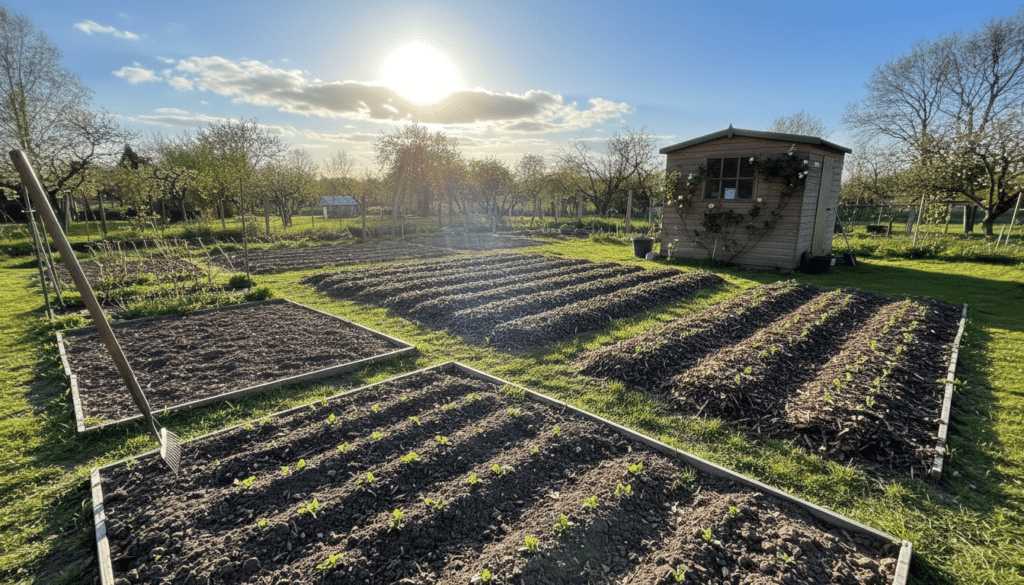
Give beds a fresh start with small, deliberate steps. Pull spent annuals and dead vegetable plants, then immediately bag and trash anything showing disease so it won’t reinfect soil or nearby plants.
Vegetable tip: cut bean and pea vines at soil level and leave the roots in place. Those roots return nitrogen to the bed and feed soil life.
Weed once, save yourself later. One late weed can drop hundreds or thousands of seeds. Take one final, careful pass now to reduce seed pressure next season.
Handle leaves smartly: shred with a mower or chipper, rake the chopped leaves into beds as mulch, and set some aside for leaf compost. At the same time, leave a few out-of-the-way piles to support overwintering pollinators and other wildlife.
Create no-dig beds by scalping grass, covering with thick newspaper, adding a layer of compost, then topping with chopped leaves. This smothers grass and builds rich, friable soil over winter.
“Dispose of diseased material in the trash, compost the clean stuff, and keep paths clear for safe yard access.”
- Rake or shovel sticks and stones from beds and lawn edges.
- Sweep pine needles and fine debris from paths and hard surfaces, then hose them down to prevent slippery buildup.
- Make sure to compost healthy plant debris and trash diseased material.
Build better soil now: compost, mulch layers, and nutrient planning
Give soil a head start now so microbes can convert organic matter before planting season.
Add compost or well-rotted manure: spread a 1–2 inch layer across beds so microorganisms can break it down over cooler months. This feeds soil life and improves texture for quicker spring planting.
Apply mulch as a protective layer: cover bare soil with straw, shredded leaves, or wood chips to reduce compaction and stop erosion. Mulch also insulates beds and helps retain moisture during freeze-thaw cycles.
Soil testing and targeted amendments
Take representative samples from several beds and contact your local Cooperative Extension (for example, University of Arkansas Extension offers testing). Follow their recommendations so amendments are active by spring.
Cover crops and rotation
Plant a quick cover crop to protect and add nutrients over the cold months. Record crop locations now to rotate next year and avoid repeating the same nutrient draw or pest pressure.
“Adding compost and a layer of mulch now means beds are fed, insulated, and ready when planting time arrives.”
| Action | Timing | Benefit |
|---|---|---|
| Add compost/rotten manure | Now (late season) | Feeds microbes; improves texture |
| Apply mulch layer | After amendments | Prevents compaction and erosion; insulates |
| Soil test and amend | Now — send samples | Targets missing nutrients; saves money |
| Plant cover crop | As soon as beds are clear | Protects soil; adds organic matter |
- Raised beds: consider a floating row cover for extra insulation.
- Budget tip: test first, then buy amendments to avoid waste.
- Goal: when the ground warms, beds show better growth and are easier to plant next spring.
Prune and protect plants, trees, and shrubs during the dormant season
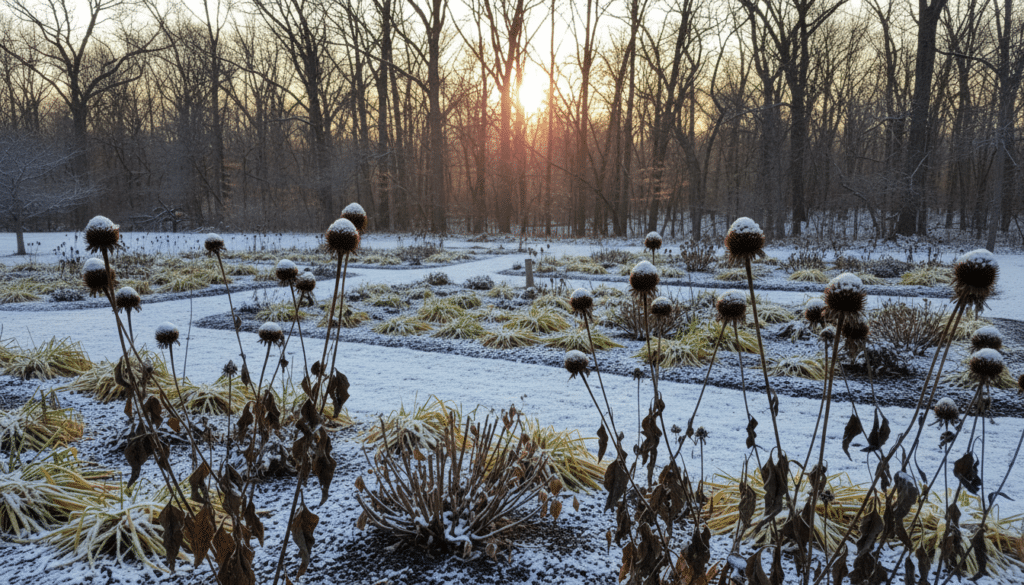
A calm pruning session now reduces disease and speeds new growth when warm weather returns.
Healthy pruning for structure and airflow
Focus first on dead, damaged, or diseased branches. Cut to healthy wood and thin crowded limbs to improve light and water movement through the canopy.
- Remove rubbing or crossing branches.
- Shorten long water sprouts on fruiting branches.
- Sanitize tools between cuts on infected wood.
Rodent protection and shrub caution
Mow or trim grass and groundcover around fruit trees to reduce vole and mouse hiding spots.
Then wrap trunks with fine mesh hardware cloth to stop chewing damage.
Avoid pruning spring-blooming shrubs now if you want those flowers; confirm bloom timing before cutting.
Perennials and overwintering vegetables
Cut back diseased foliage, but leave sturdy seedheads for pollinators and winter habitat where it won’t cause problems.
For overwintering vegetable beds, add extra mulch—about 8 inches for crops like carrots or garlic—and use row covers, cloches, or low tunnels to extend harvest.
| Action | When | Benefit |
|---|---|---|
| Prune dead/diseased branches | Dormant season | Better structure; less disease |
| Install mesh trunk guards | Before deep freeze | Protects bark from rodents |
| Add deep mulch / row covers | After harvest / bed prep | Insulates roots; extends harvest |
“Healthier pruning cuts and solid protections mean faster leaf-out and fewer setbacks in early spring.”
Clean, repair, and store gardening tools and supports
A short maintenance session on tools and water gear saves hours later. Tackle supports first: collect tomato cages, stakes, and trellises. Knock off soil and let them dry before treating.
Disinfecting supports: spray metal and plastic frames with a two-to-one solution of water and bleach, let air dry, then store indoors to cut disease carryover.
Sharpen, remove rust, and oil
Wash blades and handles, scrub rust with a wire brush or steel wool, and for stubborn corrosion try a vinegar soak. Rinse, dry, then apply a light coat of oil.
Pruner sharpening: hold a consistent 20–25° angle and file the beveled edge in one direction for a clean, lasting cut.
Winterize water gear and containers
Turn off outdoor taps, drain hoses completely, and coil them indoors where they can’t freeze. Remove pumps and fountains, clean and dry parts, and store them safely.
Bring clay and ceramic pots inside and sterilize with a diluted bleach rinse if you plan to reuse them.
“Well-maintained tools make cuts cleaner, reduce plant damage, and speed every spring task.”
| Task | How | Benefit |
|---|---|---|
| Disinfect supports | Spray 2:1 water-to-bleach; dry | Reduces disease carryover |
| Remove rust & oil tools | Wire brush or vinegar soak; dry; oil | Prevents corrosion; extends life |
| Sharpen pruners | File at 20–25° in one direction | Cleaner cuts; less plant damage |
| Winterize water gear | Shut off water; drain hoses; store pumps | Prevents freeze damage; saves replacements |
Conclusion
Turn slow months into momentum. Take time now to note what worked last year, sketch bed plans, and map crop rotation so your vegetable garden stays healthier each season.
Small, steady steps, make a big difference. Do a quick walk-through after storms or thaws to spot pooling water, erosion, or wind damage. Order seeds and supplies, set up a simple seed-start station, and write brief notes in a garden journal.
When spring arrives, you’ll thank yourself: beds are ready, tools are tuned, and planting is pure focus instead of repair. Keep this short routine and the payoff will last all year.
