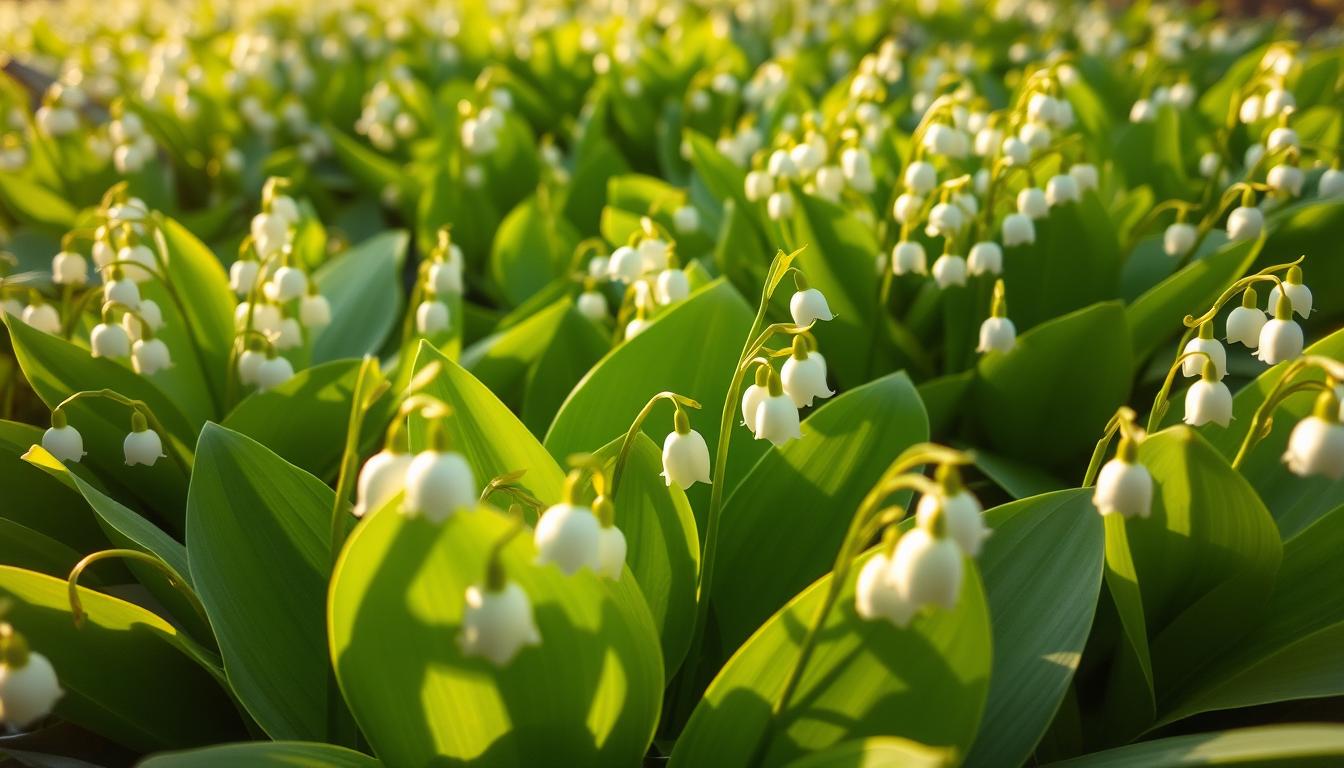
There is a small, fragrant memory many gardeners carry — that first breath of tiny bell blooms in a shaded corner. This guide meets you there. It will help you identify hallmark bell-shaped flowers and learn where this woodland plant thrives.
Expect a resilient, low-growing perennial that rewards shade gardens with tidy foliage and strong scent. You will learn safe planting habits, how to manage its aggressive spread, and when to plant in U.S. climates.
We cover simple steps: planting windows in spring or fall, a head-start trick for better first-year establishment, and whether to use containers to contain spread. Safety matters: every part is poisonous if eaten, so plan placement carefully around kids and pets.
Key Takeaways
- Identify bell-shaped, fragrant flowers and typical 6–12 inch height.
- Best in shade or partial shade with even, well-drained soil.
- Plant in spring or fall; consider pre-soaking crowns for a stronger start.
- Manage spread with containers or root barriers to avoid aggressive rhizomes.
- All parts are poisonous—place away from play areas and handle with care.
Lily of the Valley Basics: What You’re Growing and Why It Shines
A single-sided stalk of tiny, nodding bells atop a neat mound of leaves is the signature look that makes this woodland ground cover so beloved.
Fragrant, bell-shaped flowers—usually white, sometimes soft pink—appear along one side of a leafless stalk. Expect a concentrated three-week bloom in late spring that fills paths and entry gardens with a classic perfume.
The broad, lush foliage arises from the base and forms dense clumps about 6–12 inches tall. These leaves create a solid green backdrop that hides bare soil and helps suppress weeds in low-light corners.
Caution: this is an aggressive spreader via underground rhizomes, so plan boundaries or use containers to control growth. Also, all plant parts are poisonous; always wear gloves when dividing or disposing of material and avoid planting near edible beds.
“Its scent and tidy habit make it ideal for shaded borders, but containment is key to keep beds tidy.”
- Best in shade to partial shade for long-lasting leaves and less heat stress.
- Most common color is white; choose pink forms if you want a softer accent.
- At 6–12 inches tall, it fills space under shrubs and along foundations.
Where and When to Plant for Success in the U.S.
Choosing the right spot and timing sets up Convallaria majalis for steady establishment.
Light and location: Prioritize shade or partial shade so leaves do not scorch and soil stays cooler. Pick a garden location with even moisture but good drainage; avoid low-lying, waterlogged holes that can rot roots.
Best timing: Planting works well in spring as soils warm or in fall while crowns are dormant. For a head start, soak dry crowns about 30 minutes, pot them in March, and keep them watered in a cool greenhouse until roots fill the pots.
- Prepare soil by loosening to spade depth and mixing in aged manure or compost for steady nutrients.
- Check each crown for a pointed pip (shoot) and healthy roots; handle gently to avoid breaking the growing tip.
- Plan watering during the first season so new roots establish without drought stress.
How to Plant Lily of the Valley and Get It Established
Careful placement at planting sets young crowns up for steady spread and future blooms.
Step-by-step in-ground planting
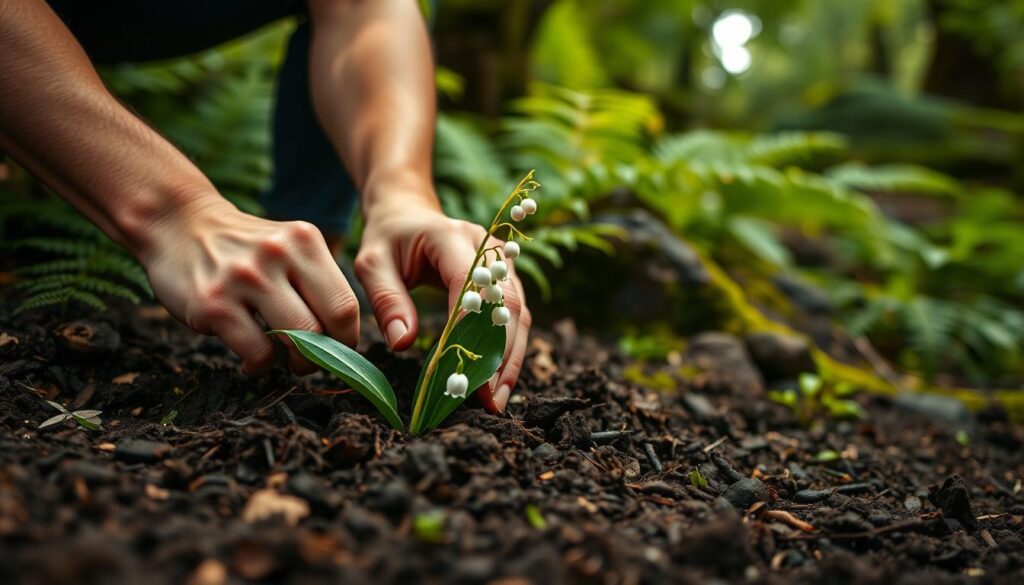
Dig a small hole and place the rhizome so the pip sits about one-half inch below soil level. Spread roots gently around the pip.
Space crowns about 6-inch apart to allow a uniform ground patch without instant overcrowding. Backfill and firm soil to remove air pockets.
Container planting for small shady spots
Use a wide, shallow pot with drainage and a quality mix. Plant lily crowns in a shady garden corner or on a cool porch.
Soak crowns for 30 minutes when you plan a head-start, pot in 3-inch containers, and move out after roots hold the soil.
Spacing, depth, and first-season expectations
Set depth precisely: one-half inch encourages prompt shoots. Keep mulch light and away from emerging crowns.
“Water thoroughly after planting to settle soil and protect new roots.”
Expect foliage first year and more reliable blooms once clumps mature underground. Check moisture weekly and adjust for dry spells.
How to Grow Lily Of The Valley: Care, Propagation, and Indoor Blooms
A simple routine each season helps these shade-loving plants thrive and rebloom.
Ongoing care
Keep soil evenly moist and avoid letting it dry, especially for young clumps. Side-dress with compost when new shoots appear in spring to support steady growth.
Seasonal calendar
Spring — water and add compost. Summer — maintain moisture and scout for pests. Fall — mulch with aged manure or compost and tidy beds for winter rest.
Propagation by division
Divide when dormant in early spring or fall. Lift sections, separate rhizomes with visible pips, replant 6 inches apart, and water deeply to settle soil.
Pests and diseases
Watch for aphids, slugs, snails, and lily leaf beetles. Fungal issues like Botrytis, rust, and leaf spots thrive in poor air flow; remove infected debris promptly.
Forcing indoors
Dig divisions in fall, pot them, and keep in a bright, cool spot for winter bloom. Water consistently—pots dry faster than beds.
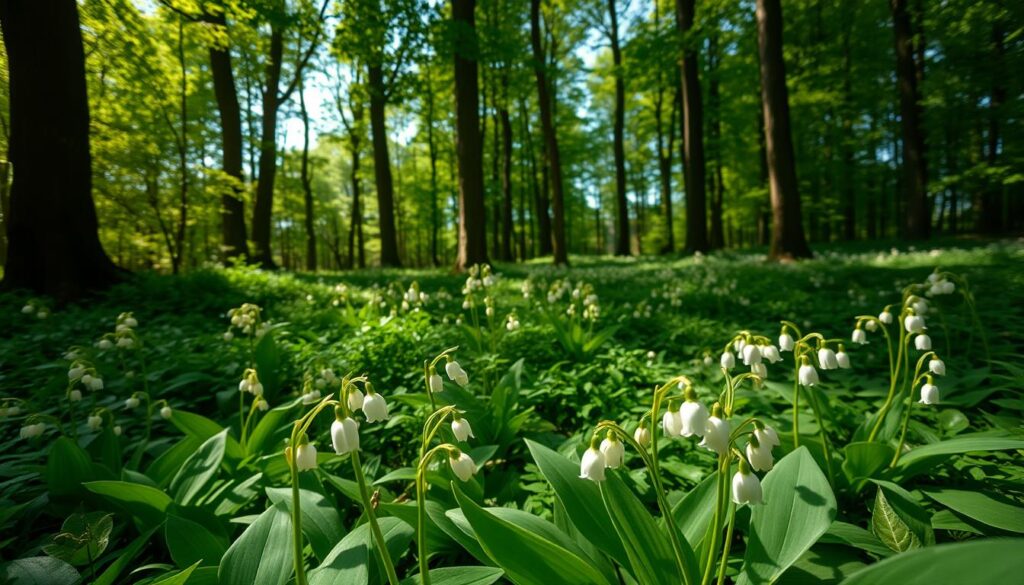
“Leave foliage after bloom so leaves can replenish rhizomes and support future flowers.”
| Season | Key Task | Tip |
|---|---|---|
| Spring | Water, side-dress with compost | Check pips before dividing |
| Summer | Maintain moisture, monitor pests | Hand-pick beetles early |
| Fall | Mulch, divide if dormant, pot for forcing | Use aged manure or compost |
| Winter | Allow dormancy or force indoors | Protect crowns from severe freeze |
Varieties, Design Ideas, and Native Alternatives
A careful mix of cultivars and companions turns a small shady spot into a layered, fragrant scene.
Notable selections: Convallaria majalis var. rosea offers soft pink flowers with milder scent. ‘Albostriata’ pairs white flowers with elegant variegated leaves. Pick ‘Bordeaux’ for larger white blooms on tall stalks, and choose ‘Fernwood’s Golden Slippers’ for early golden-green foliage that brightens spring beds.
Use these plants as low ground cover under shrubs, in woodland borders, or along shady foundations. Place specimens near entry paths or seating areas so fragrance is noticed without letting rhizomes wander into delicate borders.
Companion and design tips:
- Contrast variegated leaves with deep-green ferns or Tiarella cordifolia for striking texture.
- Cluster 6–9 crowns of one cultivar in a single spot for cohesive impact in small gardens.
- Edge beds or use containers to keep runners from spreading into lawns or mixed plantings.
Native alternatives: For a native-focused garden, consider Asarum canadense, Tiarella cordifolia, Maianthemum canadense, and Clintonia species. These shade-tolerant plants offer similar coverage, seasonal interest, and lower ecological risk.
“Balance scent and safety by placing fragrant clumps where people can enjoy them, but away from play areas and pet paths.”
Conclusion
This short guide wraps key steps into a simple checklist for confident planting and care.
strong, Select a shady spot with well-drained soil, set crowns about one-half inch deep, space them roughly 6 inches apart, and water thoroughly to help roots settle.
Follow seasonal rhythms: new shoots in spring, steady moisture through summer, a mulch refresh in fall, and quiet winter rest each year.
Keep safety and control in mind — this plant can spread and is poisonous. Use containers or barriers when needed and handle divisions with gloves.
Prioritize root establishment in year one and expect more reliable flowers over time. Use the indoor head-start if conditions are tough, and enjoy mature clumps as they fill shady corners of your garden.
