Insecticidal Soap: Effective Pest Control for Gardens
In this guide
I remember the first summer my tomatoes wilted under a cloud of tiny attackers. I felt frustrated and worried for my family and the food we grew. That moment led me to seek gentler options that protect plants without harsh chemicals.
Insecticidal soap is a low-toxicity pesticide made from potassium salts of fatty acids and water. It works on contact to disrupt soft-bodied insects, like aphids and whiteflies, and is safe for edible plants and animals when used as directed.
Use thorough coverage and repeat every 3–7 days until pests are controlled. Choose labeled products or pure liquid castile mixes, avoid dish detergents, patch test sensitive species, and do not spray in heat above 90°F.
Key Takeaways
- Insecticidal soap offers an eco-friendly option for home garden pest control.
- It kills soft-bodied pests on contact and has little residual action.
- Apply every 3–7 days, cover leaf undersides, and patch test sensitive plants.
- Use labeled products or pure liquid castile; avoid dish or laundry detergents.
- RTU and concentrate products (Safer Brand, Bonide, Garden Safe) provide easy options.
What Insecticidal Soap Is and Why Gardeners Use It Today
Soft-bodied pests respond well to a plant-safe spray derived from fatty acids.
Insecticidal soap is a horticultural product made by reacting plant- or animal-derived fatty acids with an alkali to form potassium salts of fatty acids. It is distinct from common detergents and lacks harsh additives that strip plant cuticles. This formulation is designed for use on plants and minimizes phytotoxic risk when used as directed.
The product works on contact. Soaps disrupt insect cell membranes and remove surface waxes, causing desiccation. Because it has no systemic activity and does not affect eggs, thorough spray coverage—especially on leaf undersides—is essential for good control.
Residue breaks down quickly, so this option suits edible crops and can be applied near harvest with minimal residue concerns. Gardeners value it for low toxicity, organic compatibility, and safety around children, pets, and pollinator-friendly areas.
- Most effective on aphids, whiteflies, spider mites, mealybugs, and mobile scale crawlers.
- Limited effect on hard-bodied insects, eggs, and some flying pests.
- Adding small amounts of horticultural oil in some mixes can improve wetting without turning it into an oil pesticide.
For more technical guidance and label details, see the insecticidal soaps factsheet.
Insecticidal Soap: Ingredients, Options, and When to Choose Each
Knowing what goes into a plant-safe spray helps you pick the right product for each pest problem.
Core chemistry: Soaps form when fatty acids from plant or animal oils react with a strong alkali to make potassium salts of fatty acids. These salts disrupt soft pest membranes on contact and cause rapid desiccation.
Formats and guidance:
- RTU sprays: Ready-to-use products are convenient for spot treatments and quick outbreaks.
- Concentrates: Better value for routine programs across many plants; follow label dilution ranges.
- DIY mixes: Use pure liquid castile soap and clean water. Avoid dish or laundry detergents and fragranced soaps that can harm foliage.
EPA-aligned dilution: Aim for about 1–2% soap by volume — roughly 2.5–5 tablespoons per gallon. Never exceed product label rates to cut the risk of leaf burn.
Do a small test mixture first to check compatibility and look for a uniformly milky solution. Track applications and avoid stacking sprays too closely, especially in hot, humid weather. Small amounts of oil can improve wetting when allowed on the label, but always patch-test before wide use.
How to Make and Use Insecticidal Soap for Effective Pest Control
Gather simple, clean tools before you mix to ensure a safe, effective home spray.
Gather supplies: Use a clean spray bottle or garden sprayer, pure liquid castile soap, good-quality water, and optional cooking oil. A tidy kit reduces contamination and improves spray performance.
Mixing recipes: For a traditional solution, dissolve about 2.5–5 tablespoons of castile soap per gallon of water (roughly 1–2% by volume). To make an oil emulsion, stir 1 tablespoon of pure soap into 1 cup of cooking oil and shake well before diluting.
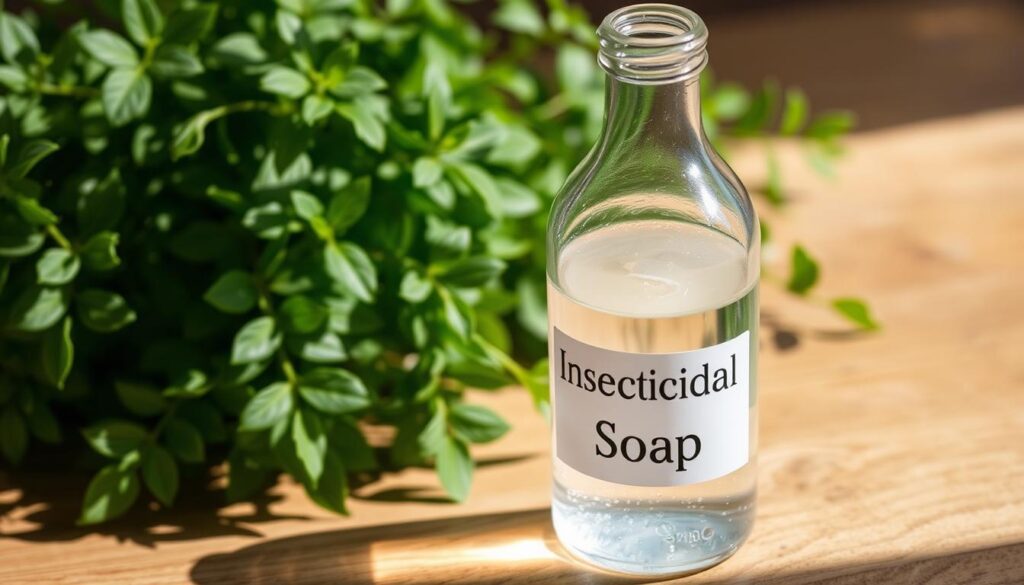
Dilution and testing: Start with the weakest mix and patch test one healthy leaf. Wait 24 hours. If no spotting appears, proceed with wider applications.
Application technique: Spray to drip so tops and undersides of leaves get full coverage. Control depends on direct contact, so aim for thorough wetting of tight growth where pests hide.
Timing, water quality, and add-ins: Apply in early morning or late afternoon every 3–7 days, avoiding heat above 90°F. If hard water forms scum in a jar test, switch to distilled water. Add BT for caterpillars, copper for disease, or pyrethrin for severe outbreaks only when labels allow.
Practical tips: Measure tablespoons accurately, mix only what you’ll use, label the bottle with the recipe and date, and avoid dish detergents or fragranced body soaps to protect foliage. Wear gloves if you have sensitive skin and store materials safely away from children and pets.
Safety, Sensitivity, and Troubleshooting for Plants and Beneficial Insects
Garden safety starts with knowing which plants are likely to react to fatty-based sprays.
Plant sensitivity checklist: Portulaca, hawthorn, cherries, plums, horse chestnut, mountain ash, Japanese maple, bleeding heart, maidenhair fern, crown of thorns, lantana, nasturtium, gardenia, and Easter lily commonly show damage. Azalea, begonia, fuchsia, geranium, and impatiens are somewhat sensitive.
Seedlings, fresh flushes of growth, drought-stressed plants, and drought-hit conifers are more prone to leaf burn. Always patch-test a small area and wait 24 hours before wide use.
Heat, sun, and stress: Avoid spraying in full sun or when temperatures exceed about 90°F. Spray in early morning or late day and avoid hot, humid periods to reduce phytotoxic risk.

Residue, rinsing, and timing
Let the last treatment dry fully so contact control works. After several applications, rinse leaves with clean water to reduce residue buildup but do this only after the active treatment has had time to act.
Troubleshooting and common mistakes
- Avoid substituting dish or laundry detergents or using ultra-strong mixes; they burn leaves and harm beneficial insects and animals.
- Do not skip undersides of leaves—aphids, spider mites, scale crawlers, and azalea lace bug nymphs hide there.
- Follow the product label for rates and intervals; excessive applications can stress plants and reduce effectiveness.
“If leaf browning or wilting appears, rinse immediately with clean water and reduce concentration or pause applications.”
Monitoring: Check for renewed honeydew, sooty mold, stippling, or webbing between applications. Eggs and protected stages are not affected, so reapply every 4–7 days as needed to catch newly hatched insects.
Conclusion
Simple habits—proper dilution, timing, and coverage—turn a mild spray into effective pest control.
Insecticidal soap offers a low-toxicity, contact-based option for U.S. gardens to manage soft-bodied pests while protecting people, pets, and beneficial insects. Use about 1–2% by volume, spray to drip on both leaf surfaces, and repeat every few days until pressure eases.
Apply in cool hours, use clean water, and rinse foliage after several treatments to avoid buildup. Choose RTU for quick jobs, concentrates for scale, or make insecticidal soap at home with pure castile when you control ingredients.
Read labels, patch-test sensitive plants, and combine this approach with cultural practices for a resilient garden pest management plan.
FAQ
What is insecticidal soap and how does it differ from dish detergents?
Which garden pests does this treatment control?
Can I make an effective homemade solution with castile or pure liquid soap?
How do I mix and apply the spray for best results?
How often should I reapply and when is it safe to spray?
Will this treatment harm beneficial insects like ladybugs and bees?
Are commercial ready-to-use (RTU) products better than concentrates or DIY?
What dilution ranges are recommended and how do I test for plant safety?
Does water quality affect effectiveness?
Can I combine this solution with other garden products?
Which plants are most sensitive and require extra caution?
What common mistakes should I avoid?
How do I minimize residue while keeping the treatment effective?
Written by
Keep reading
Pests & problems
Oregon Mache: The Gourmet Winter Green You’re Not Growing (Yet)
Oregon Mache: the gourmet winter green you're missing. Uncover its health benefits, taste, and simple growing instructions for a bountiful harvest.
Pests & problems
Common Problems with Growing Salvias
Salvias, commonly known as sage, are a diverse group of flowering plants belonging to the mint family, Lamiaceae. With over 900 species, salvias are…
Pests & problems
Troubleshooting Common Vine Plant Problems
Pest infestations can wreak havoc on plants, often leading to significant damage if not addressed promptly. The first step in identifying a pest problem…