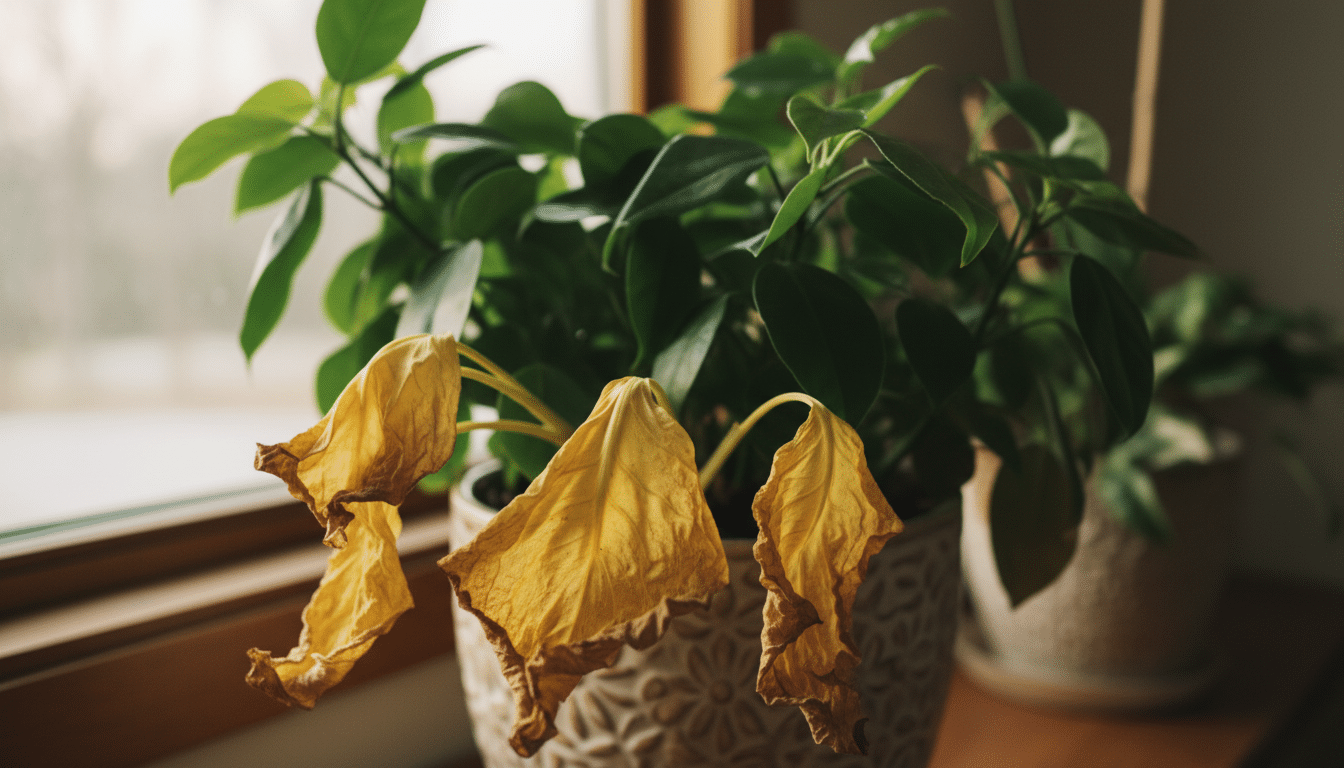
What if that shift in your foliage’s color isn’t a simple aesthetic change, but a vital message? Many indoor gardeners spot this discoloration and feel a pang of concern. Your green companion might be communicating a need.
The expert Grow-How® Team at Bloomscape is here to translate. They provide clear guidance to help you understand what your indoor greenery is saying. Identifying the specific reason for the change is the crucial first step toward a cure.
Foliage often reacts to its environment. Changes in appearance signal its overall health status. We will explore how common care mistakes, like incorrect watering or poor lighting, lead to this widespread issue.
By following these professional insights, you can restore your houseplant’s vibrancy. Ensure it remains a lush and healthy part of your home for years to come.
Key Takeaways
- Yellowing foliage is a frequent signal of stress in indoor plants.
- A precise diagnosis is essential for an effective solution.
- Both too much and too little water can cause leaf discoloration.
- Light exposure and soil nutrients are critical factors for health.
- The Grow-How® Team offers trusted advice for plant care challenges.
- Often, simple adjustments in care can revive your plant.
- This guide details ten common causes and their practical fixes.
Understanding Yellowing in Plants
Discolored foliage often triggers alarm, but distinguishing between natural processes and distress calls is key. Not every change in color means your greenery is in trouble.
Many species, like the Norfolk Island pine, naturally shed lower boughs as they mature. This is a standard part of growth. When a plant directs energy to new growth, it may let older leaves fade.
Natural Leaf Aging vs. Stress Responses
A clear sign of natural aging is yellowing confined to the bottom of the plant. The top foliage stays vibrant. This selective drop is normal.
It differs sharply from a stress response. Widespread or rapid color change across the leaves usually points to an issue.
Environmental Factors at Play
Sudden shifts in temperature or light exposure can shock a plant. Drafts, moving pots, or seasonal changes often cause stress. This leads to the development of yellow leaves.
Correctly identifying the cause—natural cycle or external factor—is the essential first step for any effective care adjustment.
Why Are My Plant Leaves Turning Yellow?
Seeing that familiar green fade can be puzzling. It usually points to a specific imbalance in your plant’s routine. Two of the most frequent culprits are incorrect watering and unsuitable light or soil conditions.
Overwatering versus Underwatering
Giving your greenery too much water is a common mistake. Soggy soil suffocates roots. They cannot absorb oxygen. This stress manifests as pale, yellow foliage.
Conversely, a thirsty plant will sacrifice its older parts. It does this to conserve moisture. You’ll see dry, crispy leaves turning yellow before they drop.
| Symptom | Soil Condition | Immediate Action |
|---|---|---|
| Yellow, soft leaves | Constantly wet, waterlogged | Let soil dry completely |
| Yellow, dry leaves | Hard, cracked, and dry | Water thoroughly until it drains |
| Wilting with yellowing | Heavy and dense | Check drainage, repot if needed |
Soil and Lighting Impacts
The type of potting mix matters. Heavy soil feels dense and retains too much moisture. This creates an environment where roots struggle.
Light exposure is equally critical. Shade-loving species, for example tropical ferns or calathea, will fade to yellow if placed in direct sun. Their delicate foliage burns easily.
Insufficient light also causes problems. Without adequate brightness, photosynthesis slows. This often leads to a loss of color and stunted growth.
Optimizing Watering Techniques
Getting the watering routine right can transform your greenery from struggling to thriving. It’s the most common care adjustment needed. The Grow-How® Team recommends their guide for ensuring moisture reaches the roots evenly.
Evaluating Soil Moisture and Drainage
Always check the soil before adding water. Feel the top inch; if it’s dry, it’s time to hydrate. Your container must have drainage holes at the bottom.
These holes let excess liquid escape. This simple feature prevents roots from sitting in stagnant water, a frequent cause of decline.
Proper Watering Methods for Healthy Roots
When you water, do so evenly around the entire pot. Continue until you see liquid drip into the saucer. This technique ensures the entire root ball gets hydrated.
Consistent watering maintains the right moisture balance in the soil. Poor drainage can lead to other common house plant diseases. A good routine keeps your indoor collection healthy.
Balancing Light and Temperature Needs
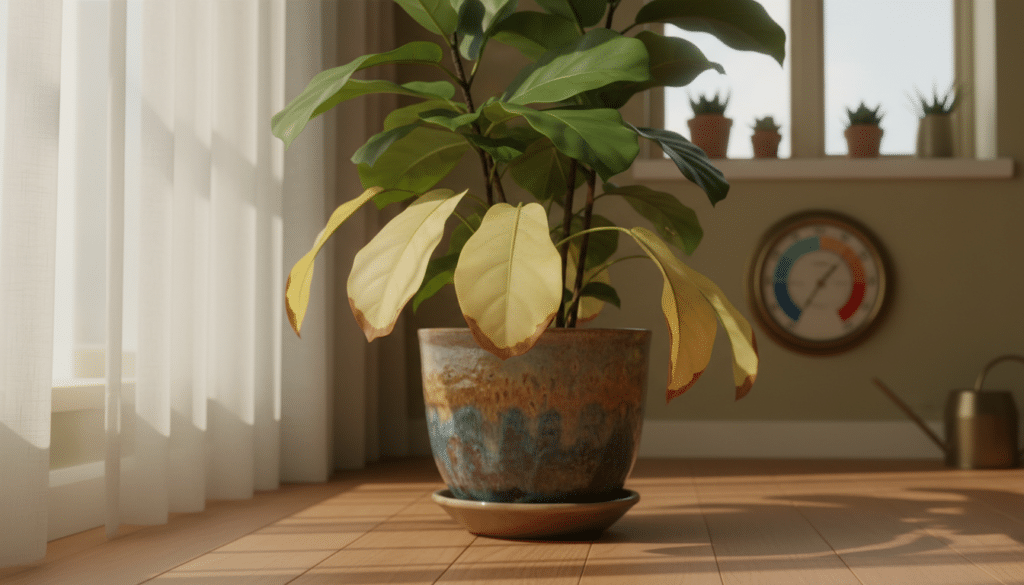
Light and temperature form the invisible framework of your plant’s daily life. Getting them wrong can lead to visible distress. These environmental factors directly fuel growth and keep foliage vibrant.
Each species has a unique preference. Placing a shade-lover in direct sun is as harmful as putting a sun-seeker in a dark corner.
Identifying Light Requirements for Different Plants
Observe your greenery’s response to its location. A clear sign of insufficient light is leggy stems and pale, yellowing plant yellow leaves. It may also drop foliage to conserve energy.
Sun-worshippers, like the jade plant, need six or more hours of direct sun daily. Without it, their color fades.
| Plant Type | Ideal Light | Stress Symptom |
|---|---|---|
| Jade Plant, Cactus | Bright, Direct Light | Stunted growth, pale leaves |
| Monstera, Pothos | Bright, Indirect Light | Leaves turn yellow, slow growth |
| Fern, Calathea | Low to Medium Light | Browning tips, leaf drop |
Managing Temperature to Prevent Leaf Stress
Most houseplants thrive between 65 and 80°F. Sudden chills or hot drafts from vents are major stressors. This can cause leaves turn yellow and drop prematurely.
Avoid placing pots near drafty windows or heating vents. Consistent warmth is key. Temperature stress weakens plants, making them susceptible to issues like those shown in this visual guide to common diseases.
Find a stable, comfortable spot away from direct airflow. Your greenery will reward you with steady, healthy growth.
Addressing Nutrient Deficiencies and Pest Issues
When basic care checks out, look deeper. Nutrient shortages and tiny invaders are common hidden culprits.
Over time, potting soil loses its vitality. Your greenery uses up the available food. This deficiency is a frequent problem.
Fertilizing and Nutrient Boosting Tips
Chlorosis is a clear sign. It may be caused by a lack of iron, manganese, zinc, or nitrogen. These nutrients are vital for green, healthy foliage.
A targeted feeding schedule makes a difference. The right plant food corrects the imbalance.
| Deficiency | Key Symptom | Quick Fix |
|---|---|---|
| Nitrogen | Older leaves turn pale yellow | Apply balanced liquid fertilizer |
| Iron | New growth yellow with green veins | Use chelated iron supplement |
| Magnesium | Yellow patches between leaf veins | Epsom salt solution (1 tbsp/gal) |
Recognizing and Treating Common Pests
Aphids and spider mites are major pests. They suck sap from the leaf, causing yellowing and stunted growth.
Aphids resemble small grains of rice on stems. Spider mites create fine webs under leaves.
Organic insecticides can treat an infestation. First, ensure the plant is not suffering from root rot or over watering. These issues mimic pest damage.
“A balanced, micronutrient-rich plant food applied during the growing season prevents most deficiency-related discoloration,”
Address both nutrition and pests. This dual approach solves the yellowing problem at its source.
Handling Repotting and Root Bound Problems
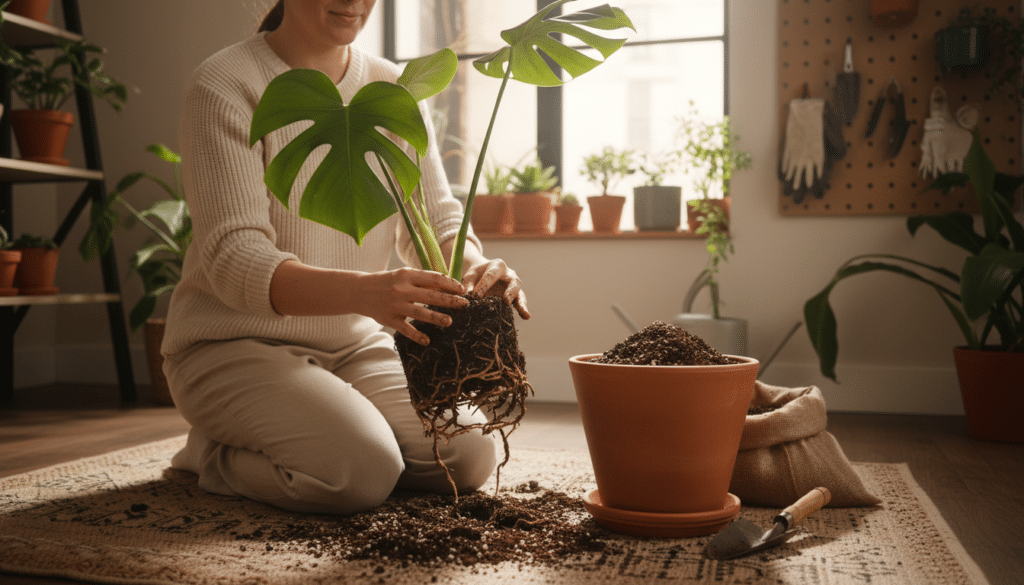
Even with perfect watering and light, your plant might still struggle if it’s living in cramped quarters. When roots run out of space, they can’t function properly. This condition is called being root bound.
Signs Your Plant Needs a Bigger Pot
Look for visible clues. If roots are circling the edge of the pot or growing through the drainage holes, it’s a clear sign. You might also spot roots creeping up the soil surface.
A root bound plant has outgrown its container. The roots have no more room to expand. They cannot absorb necessary moisture and nutrients effectively.
Water behavior is another indicator. If water rushes through the pot immediately during watering, it means roots have taken up all available room. The soil can’t hold moisture.
When you bring a new plant home from the garden center, give it time to adjust. Repotting too soon can cause transplant stress. This stress often leads to yellow foliage.
Good gardening practice involves monitoring for these signs. Repotting into a larger pot provides the roots with space to thrive. It prevents the yellowing caused by nutrient and water limitations. Choose a container only one size larger with good drainage. This simple step from your gardening routine can restore health.
Conclusion
A vibrant indoor garden is within reach with the right knowledge and support. Foliage discoloration is often a simple care issue. With a few adjustments, your greenery can return to vibrant health.
The Grow-How® Team at Bloomscape offers expert guidance. They provide a 30-day delivery guarantee and direct support. Our customer service is available from 9am to 8pm for any questions.
For immediate care, prune any leaf showing more than 50% yellowing. Avoid removing over 30% of total foliage at once. This encourages new growth.
We partner with over 40 specialist growers. This ensures each plant arrives healthy, free from common causes of yellow leaves. Following these practical tips helps diagnose and fix issues quickly.
Your indoor garden will continue to thrive. Remember, yellow leaves are often just a sign. The right adjustments make all the difference.
