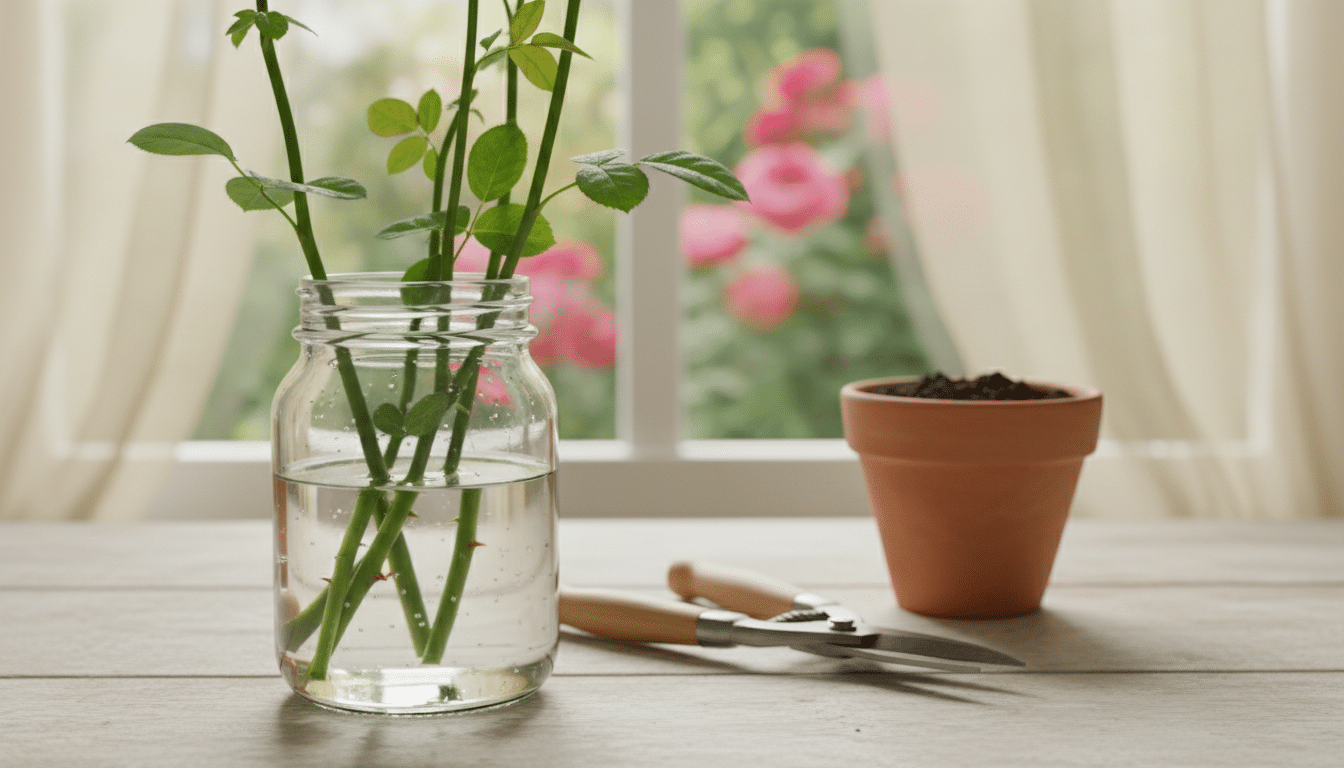
What if you could create a whole new rose bush from a single stem you trimmed from your garden?
Many gardeners are surprised to learn that propagating these beautiful plants is far easier than they imagine. With the right timing and a straightforward technique, you can turn a simple cutting into a thriving, independent plant. This skill is incredibly rewarding and opens up a world of possibilities for your landscape.
Successfully cloning your favorite varieties acts as a living insurance policy for your garden. It ensures your most beloved blooms continue for years. You can also expand your collection without the expense of buying new nursery stock.
This guide provides a comprehensive look at the methods needed to develop strong root systems on your stem pieces. Whether you’re just starting out or have years of experience, understanding these nuances will significantly boost your success rate. Let’s begin the journey of creating new life from your existing plants.
Key Takeaways
- Plant propagation is a simple and highly rewarding gardening skill anyone can learn.
- This process allows you to clone and preserve your favorite rose varieties forever.
- Creating new plants from cuttings acts as a cost-effective insurance policy for your garden.
- You can dramatically expand your floral collection without a large financial investment.
- Focusing on correct timing and proven techniques is the key to strong root development.
- Gardeners of all experience levels can achieve excellent results with clear guidance.
- Following a structured, step-by-step approach maximizes your chances of success.
Introduction to Propagating Roses from Cuttings
Starting roses from cuttings is a practical way to expand your garden with plants that are genetically identical to your favorites. This method, called propagation, lets you clone beloved blooms directly from a healthy stem.
You create a living backup of your prized specimens. It’s a simple yet deeply satisfying process.
Benefits of Growing Your Own Roses
When you propagate, you produce own-root roses. These are often heartier and healthier than grafted varieties from a nursery.
They develop a robust, independent root system. This makes them more resilient to pests and disease.
Having spare plants acts as a vital insurance policy. If an original bush is lost, you have a ready replacement.
The process also fosters a unique sense of accomplishment. You gain a deeper connection to your garden’s life cycle.
An Overview of Rose Propagation Techniques
The basic technique is straightforward enough for beginners. Even experts find it a fascinating challenge.
You take a stem cutting and encourage it to form roots. With simple materials, you can multiply your floral collection while preserving specific traits.
| Feature | Own-Root Roses | Grafted Roses |
|---|---|---|
| Root System | Grows on its own roots | Uses rootstock from a different plant |
| Disease Resilience | Often more resilient | Graft union can be a weak point |
| Long-Term Health | Can be very long-lived | Depends on graft compatibility |
| Ease of Cloning | Easy from cuttings | Requires advanced grafting |
Understanding Rose Varieties and Patents
Not all roses are created equal when it comes to the ease and legality of creating new plants from cuttings. Your source plant’s history and legal status are critical for a successful, trouble-free project.
Old Garden Roses Versus Modern Grafted Varieties
Old garden roses, like many heirloom varieties, are fantastic for propagation. They are not protected by patents and typically thrive on their own roots.
This makes them resilient and perfect for home cloning. Modern hybrids, such as popular hybrid teas, present a different story.
They are often grafted onto hardy rootstock for commercial efficiency. A significant risk exists where the desired top part can die back in harsh winters, leaving only the rootstock to grow.
Legal Considerations for Propagation
Many modern roses are protected by plant patents, which typically last for 20 years. Propagating a patented variety during this period infringes on intellectual property rights.
After the patent expires, the variety enters the public domain. Then, anyone can legally make new plants from its stems.
Always research your specific rose’s patent status before taking any cuttings. Sticking with non-patented or old garden varieties ensures your efforts are both successful and lawful.
Timing is Crucial: When to Take Cuttings
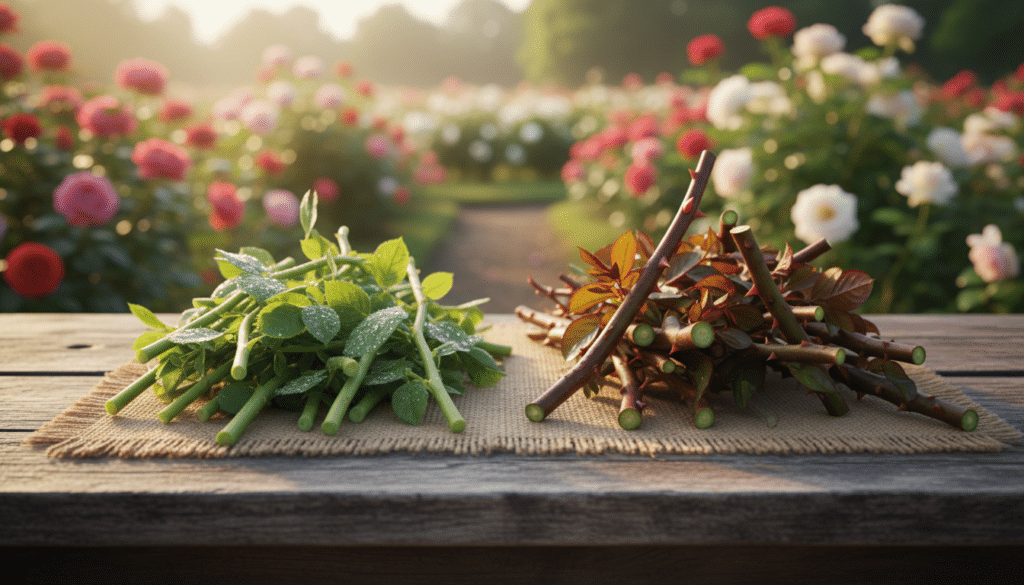
The success of your propagation project hinges on one critical factor: perfect timing. Getting this right is often more important than any specific technique you use.
Mark your calendar to align with the plant’s most active growth periods. This simple step dramatically increases your chances of success.
Softwood vs Hardwood Cuttings Explained
You have two primary choices based on the season. Softwood cuttings come from new, pliable stems early in the spring or summer.
They root much faster because the tissue is young and vigorous. Hardwood cuttings are taken in late fall or winter when stems are rigid and dormant.
This method is slower but the stems are hardy. They can survive colder conditions while developing roots.
Seasonal Guidelines for Success
In regions like Ohio, the growing season typically begins in mid-April. This is the ideal time to start watching for new stem growth on your rose bush.
Aim to take softwood cuttings about six weeks after you see the first true leaves. For hardwood propagation, wait until after the first frost when the plant is fully dormant.
Following these seasonal cues ensures your stem pieces have the best possible start.
Preparing Your Tools and Materials
Assembling a simple toolkit before you start can mean the difference between thriving plants and disappointment. Proper preparation ensures your stem cuttings have the best possible start in life.
Essential Tools and Equipment
Your most critical tool is a sharp pair of bypass pruners. Brands like Fiskars are preferred for making clean cuts without crushing the delicate cane.
Crushed stems struggle to absorb water and can invite disease. Always sanitize your blades with rubbing alcohol before and after use.
This protects both the parent plant and your new cuttings.
Choosing the Right Rooting Hormone and Medium
A high-quality rooting hormone, such as Hormex #8, significantly boosts success rates. This powder encourages rapid root cell development.
For your growing medium, mix equal parts potting soil and horticultural sand. This combination provides excellent drainage while retaining some moisture.
Use containers with several drainage holes. Waterlogged soil is a common cause of failure for delicate new roots.
With your tools sharp and your medium ready, you’re set for the next exciting step.
How to Grow Roses from Cuttings: Step-by-Step Instructions
The moment you make that first clean cut is where the magic of propagation truly begins. This precise sequence turns a simple stem into a rooted plant.
Start with a healthy, pencil-thick cane from this year’s growth. Aim for a length of five to six inches for optimal results.
Snip off any flower buds. This redirects the plant’s energy toward forming new roots instead of blooming.
Next, take a sharp knife and gently scrape the bark from the bottom half-inch of the stem. This wounding technique exposes the inner cambium layer.
“Wounding the base is a small trick that signals the plant to hurry up and grow roots,” notes a veteran propagator.
Dip this prepared end into your rooting hormone powder. Tap off any excess before the next step.
Strip all the lower leaves from your cutting. Leave just one or two sets at the very top to reduce moisture loss.
Now, insert the stem into your pre-moistened soil mix. Gently firm the soil around it to eliminate air pockets.
This ensures good contact between the stem and the growing medium. Your rose cuttings are now set for their rooting journey.
Following each step carefully gives your cutting the best foundation. Soon, those first tiny white roots will appear.
Creating the Optimal Environment for Rooting Cuttings
A carefully crafted microclimate is the secret to coaxing delicate stems into forming strong roots. This involves managing two critical elements: consistent humidity and a supportive growing medium.
Maintaining Proper Moisture and Humidity
Your new cuttings have no roots to draw up water. Creating a mini-greenhouse solves this.
Place a clear plastic bottle or a glass jar over the pot. This traps evaporating moisture, creating the high humidity they crave.
Set your containers in a bright spot with indirect light. Direct sun will overheat this enclosed space and cook your precious stems.
Selecting the Best Growing Medium
The right mix supports the stem while allowing perfect drainage. Expert Burling Leong recommends a blend of two-thirds perlite and one-third peat moss.
This is superior to standard soil or a gritty sand mix. It holds just enough moisture but never stays soggy.
Ensure each cutting has enough room. Overcrowding stifles airflow and invites fungal disease. For propagating many roses, a fine misting system provides ideal moisture control.
Using Rooting Hormone and Wounding Techniques
To give your stem pieces the best possible start, focus on the critical steps of hormone application and stem preparation. These methods work together to signal the plant and accelerate development.
Benefits and Proper Application of Rooting Hormone
A rooting hormone provides the chemical signal that tells a stem to prioritize root formation. It contains auxins, natural plant growth regulators.
Applying this powder is simple. Dip the moistened base of your cutting into the container, coating the lower inch.
Tap gently to remove excess. Both liquid and powder formulas perform equally well in nursery tests.
Always follow the label instructions for your specific product. This ensures the correct concentration for optimal results.
Effective Wounding Methods to Encourage Rooting
Wounding is a physical technique that complements the chemical boost. It involves gently scraping the stem’s outer bark with a sharp knife.
This action exposes the white cambium layer underneath. The cambium is the active tissue responsible for generating new roots.
While optional, wounding is highly effective for encouraging faster and more robust growth, especially on stubborn varieties.
Combining this light injury with a high-quality rooting hormone creates the ideal conditions. Your cuttings receive a clear, powerful message to transition into independent plants.
Monitoring Growth and Troubleshooting Common Issues
Now that your stems are planted, your focus shifts to patient monitoring and problem-solving. This phase requires a watchful eye over the next several weeks. Resist the urge to tug on the cuttings to check for roots.
Signs of Successful Rooting
Successful development typically takes four to six weeks. The first positive sign is often new, green leaf growth at the very top of the stem.
A more definitive signal is seeing white roots poking through the drainage holes of your pot. Maintaining a warm environment between 70 and 80 degrees Fahrenheit encourages this healthy progress.
Dealing with Overwatering and Rot
The most common issue is giving too much water. Soggy soil suffocates delicate new roots and leads to stem rot.
Check moisture by poking a bamboo skewer into the soil. If it comes out dry, add water. If it’s damp, wait.
Keep your cuttings in bright, indirect light. Direct sun can overheat the mini-greenhouse and wilt the foliage. Blackened stems or fuzzy mold are clear signs of trouble requiring immediate attention.
Advanced Tips from Expert Rose Propagators
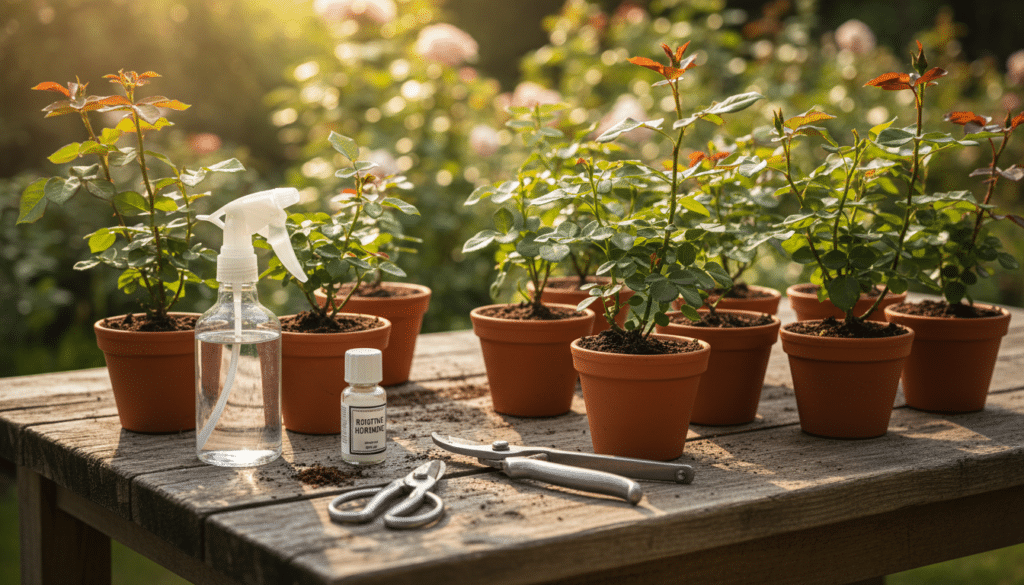
The most successful plant cloners know that innovation often comes from using everyday items in new ways. Their best advice often focuses on creating the perfect environment without fancy equipment.
Utilizing Misting Systems and Alternative Setups
For those with many cuttings, a simple misting system is a game-changer. Set it to cycle for a few minutes every hour during daylight. This provides consistent water vapor without ever making the soil soggy.
It protects delicate new roots from rot. If you lack the space or budget for a system, don’t worry.
A clear plastic bottle or a large glass jar placed over a pot works wonderfully. These create a miniature, humid greenhouse. Expert propagators love repurposing items like coffee cups with clear, domed lids.
They are free, readily available, and create an ideal, low-cost environment. The key is to experiment with different containers. Find what works best for your specific climate and rose varieties.
Advanced growers also use a simple moisture meter. This tool takes the guesswork out of watering. It ensures your cuttings get just the right amount of hydration to thrive.
Maintaining Your New Rose Plants After Rooting
Once your rose cuttings have established a healthy root system, the next phase of care begins to ensure their long-term vitality. This stage focuses on transplanting and acclimating your young plants for future success.
Steps to Transplant into Larger Containers
When white roots are visible, gently move each plant into a larger pot. Choose a container with several drainage holes to prevent waterlogging.
Fill it with a well-draining soil mix and firm it around the stem. Keep the soil consistently moist but never soggy as the roots expand into their new space.
Long-Term Care and Plant Health
Protect your young plants during their first winter. A cool greenhouse or sheltered porch is ideal.
Growing them in pots for at least a year before garden planting offers the best chance for survival. This allows a strong, permanent root system to develop.
With consistent care, these cuttings can produce their first beautiful blooms by the following summer. Place them in a spot with bright, indirect sun to encourage healthy top growth.
Your patience and attention will be rewarded with vigorous, flowering plants.
Conclusion
Mastering the art of rose propagation is a deeply satisfying achievement for any gardener. Successfully learning how to grow roses from cuttings brings more of your favorite blooms into your personal garden.
Remember, this process is often a numbers game. Taking extra stem pieces significantly increases your overall success rate.
Patience remains key throughout. Some varieties may form roots in just a few weeks, while others need a full year to establish.
By following the proven techniques outlined here, you can create healthy, independent plants. This brings immense personal satisfaction and floral beauty.
We hope this guide empowers your own project. Enjoy the vibrant results for many seasons to come!
