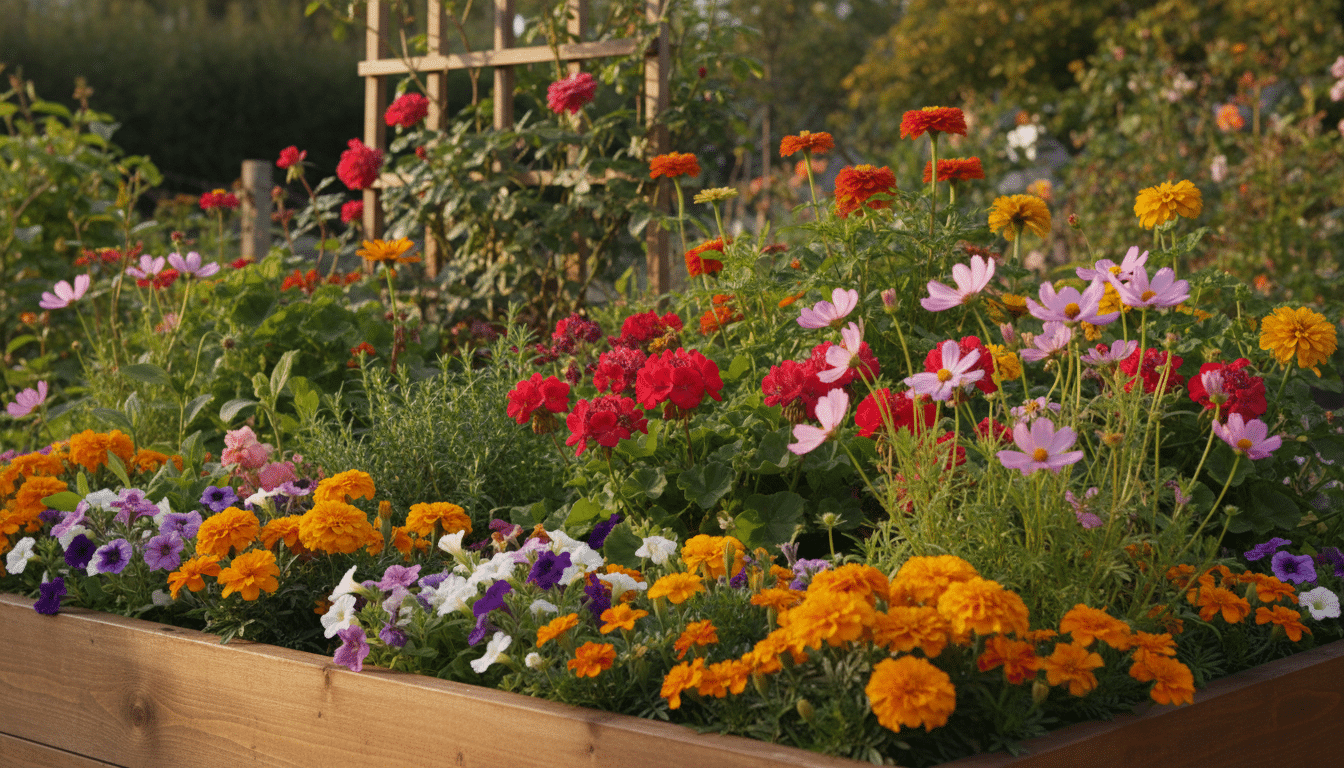
What if your vegetable patch could be the most stunning part of your yard? Many believe a productive plot can’t also be beautiful, but that’s a myth ready to be busted.
Integrating vibrant blooms into your raised plot transforms the space into a personal oasis. You can harvest fresh bouquets while giving your vegetables healthier neighbors.
This approach to cultivation is supported by experts. Companies like Washington’s Floret Flower Farm breed unique varieties perfect for this purpose. Maine-based Johnny’s Selected Seeds is a favorite for high-performing, organic options.
Colorado’s Botanical Interests brings 25 years of experience with herbs and blossoms. Their collective wisdom helps any gardener, new or seasoned, create a thriving display.
Selecting the right plants ensures a vibrant and productive growing season. This guide will show you how to make your backyard planting efforts a major success.
Key Takeaways
- Elevated containers offer excellent drainage and soil control, creating an ideal home for many blossoms.
- Mixing blooms with your vegetables can attract helpful pollinators and deter pests naturally.
- Trusted sources like Floret Flower Farm and Johnny’s Selected Seeds offer unique and reliable seeds for your project.
- Planning for successive bloom times ensures color and interest throughout the entire season.
- Starting with a few easy-care varieties builds confidence and leads to a more impressive display over time.
- Regular harvesting of blossoms for bouquets encourages plants to produce more flowers.
- A well-planned raised bed oasis provides joy, beauty, and fresh cuts right from your backyard.
Introduction to Raised Bed Flower Gardening
The secret to a truly engaging outdoor space lies in blending utility with sheer visual delight. This approach moves beyond traditional plots to create a living, multi-purpose oasis.
Exploring the Beauty and Benefits of Flower-Vegetable Combinations
Integrating colorful blooms among your crops does more than please the eye. It creates a powerful partnership where each plant supports the other. This method, often called companion planting, brings tangible benefits to your entire plot.
Mixing blossoms with vegetables attracts helpful insects like bees, butterflies, and hummingbirds. These pollinators are essential for a healthy and productive ecosystem. Your harvests can become more bountiful as a result.
How Flowers Enhance Your Garden’s Appeal and Function
Adding these vibrant plants transforms a simple food-growing area into a source of constant beauty. You gain a landscape to enjoy throughout the entire year. The pops of color make the space look intentional and inviting.
You create a functional sanctuary. It provides fresh produce and a peaceful retreat. This dual-purpose design is the heart of modern, joyful gardening.
Understanding Raised Beds and Their Benefits
A raised planting system transforms how you interact with soil, space, and water resources. This approach gives you command over the core elements of cultivation.
Maximizing Soil, Space, and Water Efficiency
The soil in a contained bed is yours to perfect. You fill it with a ideal mix for your plants. This control prevents compaction, letting roots spread easily.
Limited ground area is no longer a barrier. You can use vertical trellises or tiered designs. This smart use of space lets you grow more in a smaller footprint.
Managing water becomes simpler. These structures drain well but also hold moisture evenly. Your plants get a consistent drink, even during dry spells.
For personalized advice on your layout, resources like Vegega’s support line (1-888-698-1379) can be helpful. They offer guidance on optimizing your setup.
This efficient way of gardening makes every task easier. Your raised beds become a thriving, manageable centerpiece.
Best Flowers for Raised Garden Beds
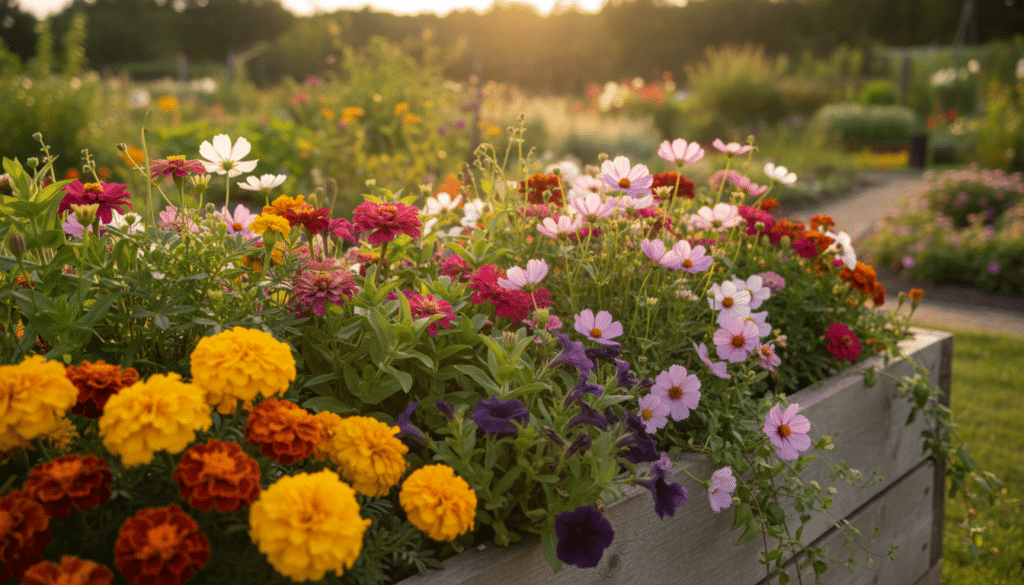
The heart of a vibrant, multi-season display lies in selecting plants with purpose and longevity. Your elevated plots offer a unique chance to curate a living tapestry.
What to Look for in Ideal Flower Varieties
Seek out varieties known for long-lasting performance. Consider their mature height and sun needs to ensure they thrive alongside your vegetables.
Bloom time is crucial for a seamless show. Many gardeners turn to specialists like Washington’s Floret Flower Farm. They breed unique plants specifically for home cultivation.
Integrating Annuals and Perennials for Vibrant Displays
Mixing annuals and perennials creates a dynamic, ever-changing scene. Annuals provide bold, season-long color, while perennials return each year with reliable structure.
This strategy ensures your garden beds are never bare. For a trusted selection, companies like Botanical Interests draw on 25 years of expertise. They offer reliable choices for diverse needs.
Top Annual Flowers for Raised Beds
Filling your contained growing spaces with vibrant annuals ensures a non-stop show from spring to fall. These one-season performers bring immediate joy. They are perfect for experimenting with new looks each year.
Zinnias: Colorful, Cheery, and Easy to Grow
Zinnias top the list for their sheer ease and brilliant rainbow of colors. The Benary’s Giant variety is a favorite. It produces large, cheerful blooms that thrive in many climates.
They are incredibly forgiving, making them ideal for novice growers. Their long stems also make them excellent for cutting.
Black-eyed Susan, Globe Amaranth, and More for Companion Planting
For added depth and texture, consider Black-eyed Susan. The ‘Prairie Sun’ variety stands out. It features a unique green center and two-toned yellow petals.
Globe Amaranth is another stellar choice. Its blooms persist past the first frost. They hold their color when dried, offering lasting interest.
Mixing these plants with your vegetables creates a dynamic partnership. This approach attracts beneficial insects. It also provides ample material for bouquets.
| Flower | Key Variety | Bloom Time | Special Feature |
|---|---|---|---|
| Zinnia | Benary’s Giant | Summer to Frost | Large, diverse colors; easy for beginners |
| Black-eyed Susan | Prairie Sun | Summer to Fall | Two-toned yellow petals, green center |
| Globe Amaranth | Common varieties | Summer to Frost | Long-lasting, holds color when dried |
Integrating these selections, like the ever-reliable zinnias, creates a lively display. Your plots will buzz with life and color all season long.
Seasonal Favorites: Warm Season and Early Bloomers
To create a seamless tapestry of blooms, savvy gardeners focus on two key groups: early risers and summer stars. This strategy fills your plots with color from the first warm days of spring straight through the heat of the growing season.
Marigolds and Other Warm Season Standouts
Marigolds are a classic choice for companion planting. They release a natural compound called pyrethum. This acts like nature’s bug spray, deterring common pests such as squash bugs and nematodes.
The warm season is defined by temperatures between 65°F and 84°F. All chance of frost must pass before adding these frost-sensitive plants. This ensures they thrive through the long summer.
Pair early spring bloomers with these warm season favorites. Your garden will have vibrant color from the start of the year until fall. Strategically placing these flowers protects your vegetables while adding cheerful hues.
This approach makes your space both beautiful and functional. You gain a lively display that supports a healthy ecosystem all summer long.
Exploring Perennial Flowers in Raised Bed Gardens
While annuals provide instant color, perennials offer the gift of recurring beauty season after season. These plants are a fantastic investment for your landscape, returning reliably each year without the need for replanting.
This creates a permanent foundation that grows more established and lush over time. Let’s look at some standout choices for long-lasting impact.
Perennial Picks for Long-Lasting Beauty
Echinacea, or coneflower, is a reliable choice. It is drought-tolerant and produces bold, daisy-like blooms from summer into autumn. These flowers are excellent for attracting pollinators to your raised bed.
Sedum is another top performer for low-maintenance spaces. It is exceptionally drought-tolerant and nearly pest-free. This plant thrives even in challenging soil conditions, adding great texture.
Together, these perennials add structural depth and ensure vibrant growth throughout the seasons. For more variety, consider incorporating white flower varieties to complement their colors. Your garden becomes more beautiful with each passing year.
Companion Planting with Flowers in Raised Beds
The true magic of a productive plot unfolds when blossoms work hand-in-hand with crops. This strategy, known as companion planting, builds a resilient and lively ecosystem right outside your door.
Attracting Pollinators and Beneficial Insects
Specific selections are champions at inviting helpful wildlife. For instance, Verbena bonariensis is a favorite for drawing butterflies and other pollinators from July until the first frost.
Salvia is another well-known hummingbird magnet. When placed throughout your elevated plots, it continues to bloom all summer long.
Integrating these varieties creates a diverse habitat. This supports beneficial insects and improves the overall yield of your vegetable crops.
By using blossoms to attract pollinators, you ensure your space remains productive and healthy. It’s a natural way to manage your plot without harsh chemical interventions.
These plants serve as a beautiful, functional support system. They make your garden efforts more rewarding and sustainable.
Planting and Transplanting Techniques for Success
Your journey from seed packet to vibrant bloom hinges on choosing the right starting method. Two main paths lead to a beautiful growing season: using young plants or sowing seeds directly.
Each approach has its own advantages. Mastering both gives you flexibility and ensures your colorful oasis gets off to a strong start.
Advantages of Starting with Seedlings
Beginning with young plants is a fantastic head start. You gain several weeks on the season.
This method lets you enjoy gorgeous flowers much earlier in the spring. It’s perfect for impatient gardeners who crave quick color.
You can either grow your own indoors or purchase healthy starts from a local nursery. Proper handling during planting is key for their long-term success in your bed.
Tips for Direct Seeding Your Favorite Flowers
Direct seeding involves placing seeds straight into your garden soil. It’s a simple and satisfying process.
The most important rule is timing. Always check the seed packet for the right time to plant in your region.
Integrating these sowing dates into your spring garden calendar creates a cohesive design. Your display will transition beautifully throughout the year.
By mastering these methods, you give all your plants the best possible beginning. Your bed will be filled with healthy, blooming flowers in no time.
Creative Garden Design: Blending Vegetables and Colorful Blooms
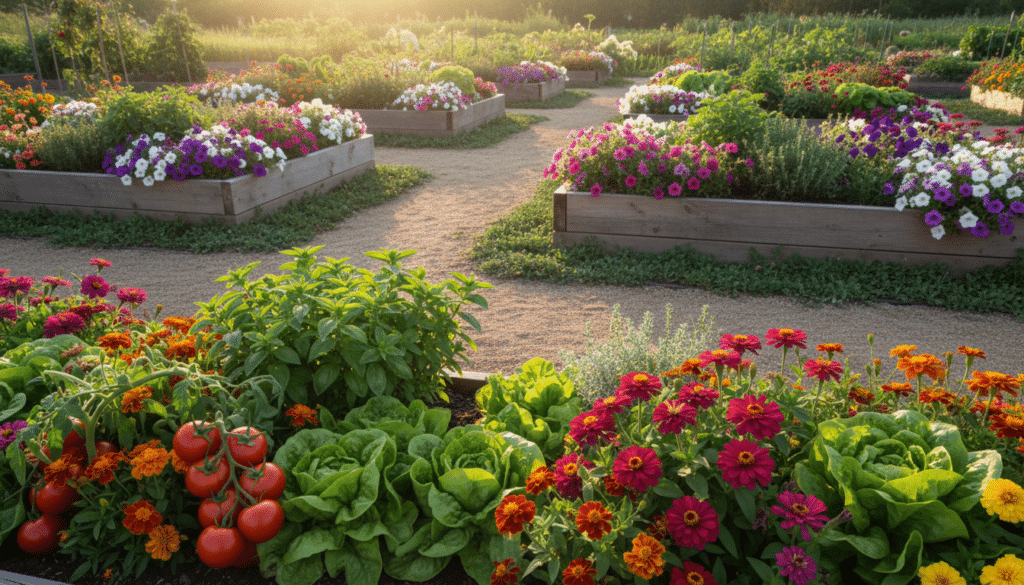
Imagine stepping into your backyard to find a living canvas where edible greens mingle with bursts of vibrant hues. This creative approach turns a simple plot into a personalized oasis. It combines the joy of growing food with the pleasure of a beautiful view.
Your design choices shape how this space feels and functions. A structure like a 32-inch tall three-tiered bed is perfect for this. It lets you layer plants by height, adding amazing depth to your layout.
Designing Eye-Catching Layouts for Maximum Impact
Start by placing tall varieties, like delphiniums, at the back. This anchors your design and creates a lovely backdrop. Compact, ground-hugging plants go in the front for a full, lush look.
Think about color themes to unify your garden. A harmonious palette makes your vegetables and blossoms feel like one cohesive unit. This thoughtful arrangement maximizes visual impact.
Such planning supports healthy growth for all your plants. It transforms an ordinary area into an eye-catching display. You’ll enjoy beauty and productivity throughout the entire season.
Maintenance and Care for a Flourishing Garden
A thriving oasis doesn’t happen by chance; it’s the result of consistent, thoughtful care throughout the growing months. Your colorful display will reward you with vibrant health and non-stop color when you follow a simple routine.
Seasonal Care and Ongoing Tips to Keep Blooms Vibrant
Regular attention is the best way to ensure your plants stay productive. A little time each week prevents big problems later.
Deadheading spent blooms is a key task. It encourages your flowers to put energy into new growth instead of seeds. You’ll see more blooms all season long.
Check your garden often for pests and provide adequate water. This keeps everything flourishing during hot summer months.
By dedicating yourself to these habits, you create a resilient space. It remains a source of joy and beauty every single year.
For more inspiration on selecting varieties, explore this guide with beautiful flower pictures and. Proper care ensures your colorful oasis is always picture-perfect.
Conclusion
Transforming your edible garden into a colorful sanctuary is a rewarding journey. It blends beauty with bounty right in your own backyard.
Integrating vibrant flowers with your vegetables creates a space that is both productive and visually stunning. This approach, known as companion planting, supports a healthy ecosystem. It attracts beneficial insects and pollinators.
Whether you’re just starting out or have years of experience, there’s always a new technique to discover. The process of designing and tending your raised beds brings joy each season.
Begin by selecting a few favorite plants. Enjoy watching your personalized oasis flourish throughout the year.
