Have you ever wondered why some backyards produce huge harvests while others struggle to keep one tomato alive? Every vegetable you grow pulls nutrients from the earth, leaving your dirt depleted over time. To fix this, you need the best fertilizer for vegetable garden success to replenish those vital minerals.
Think of this as a multivitamin your backyard needs to stay productive. Whether you prefer organic scraps or synthetic beads, choosing the right fertilizer ensures your plants thrive throughout the season. Healthy soil is the foundation of every thriving garden, acting as the fuel to power your favorite greens.
It is easy to get overwhelmed by the many options at the local store. However, finding the right balance to help your plants makes all the difference in the world. You want healthy stalks and big roots, not just a bunch of leafy growth that leads to zero fruit.
By understanding how these products work, you can avoid common mistakes that hinder your vegetables. This guide provides the tools to keep your plants healthy and feed your soil correctly. Let’s dive into making your garden the envy of the neighborhood while ensuring your plants get exactly what they need.
Key Takeaways
- Understand the difference between organic and synthetic options to choose what fits your lifestyle.
- Replenish vital nutrients that your crops consume throughout the busy growing season.
- View fertilization as a supplement similar to vitamins to support long-term plant health.
- Avoid over-fertilization to prevent excessive foliage growth at the expense of actual food production.
- Apply practical advice on timing and application to set your backyard up for a massive harvest.
Understanding Fertilizer Basics for Your Vegetable Garden
Your garden soil acts like a pantry, but sometimes it needs a little restocking to support your crops. While soil provides a home, fertilizer delivers the essential fuel your vegetables crave. By adding these nutrients, you ensure your garden remains productive season after season.
What Fertilizer Does for Your Plants
Vegetables are hungry survivors that pull minerals directly from the earth. Over time, previous harvests can leave your soil empty and tired. Using the right fertilizers helps bridge this gap, providing the energy needed for a bountiful harvest. It is about giving each plant the specific tools it needs to succeed. These products provide essential elements that your soil may no longer hold on its own.
Decoding NPK Numbers on Fertilizer Bags
When you look at a bag, you will see three bold numbers like 3-4-4 or 5-10-10. These represent the percentage by weight of nitrogen, phosphorus, and potassium. For example, a tomato blend also contains calcium to prevent common issues like blossom-end rot. A general vegetable fertilizer with a 3-4-4 ratio works well for most garden tasks.
Nitrogen (N): The Growth Engine
This element acts as the primary driver for growth in your garden. It helps plants produce chlorophyll, which results in lush, green leaves. Nitrogen ensures that your vegetables grow quickly and stay vibrant throughout the spring. Without it, your foliage may look pale or stunted.
Phosphorus (P): Root and Bloom Developer
Phosphorus focuses on what happens below the surface and during the flowering stage. It is vital for root development and increasing the size of your blooms. This ensures your plant stays anchored and produces a heavy crop of vegetables.
Potassium (K): Disease Resistance Builder
Think of potassium as an immune system booster for your vegetables. It protects against common pathogens while aiding in photosynthesis. This mineral keeps the overall growth cycle moving smoothly and improves fruit quality.
| Nutrient | Key Role | Garden Benefit |
|---|---|---|
| Nitrogen | Leaf Production | Green, lush foliage |
| Phosphorus | Root Growth | Stronger establishment |
| Potassium | Immunity | Disease resistance |
Essential Macronutrients Beyond NPK
Your garden needs more than just the big three elements to thrive. Secondary nutrients play a supporting role that is just as vital for long-term health. These minerals help build the actual structure of your vegetables.
Calcium and Magnesium
Calcium is crucial for building strong cell walls in every vegetable you grow. Magnesium supports the center of the chlorophyll molecule, helping with energy processing. Together, they ensure your garden remains sturdy and productive.
Sulfur
Sulfur is usually found in most soils already, but it remains a key player. It assists in protein production and helps plants stay hardy against cold weather. Most balanced fertilizers ensure your soil has enough to keep things running well.
Micronutrients Your Vegetables Need
Small amounts of boron, zinc, and iron are still necessary for a perfect harvest. Even though fertilizers might only have a trace of them, they prevent hidden deficiencies. While they are taken up in small doses, they are critical for preventing yellowing or poor fruit set. Using a complete fertilizer ensures you don’t miss these tiny but mighty helpers.
“The goal of fertilization is to supplement the soil’s natural ability to provide a balanced diet for your crops.”
Why Soil Testing Matters Before Fertilizing
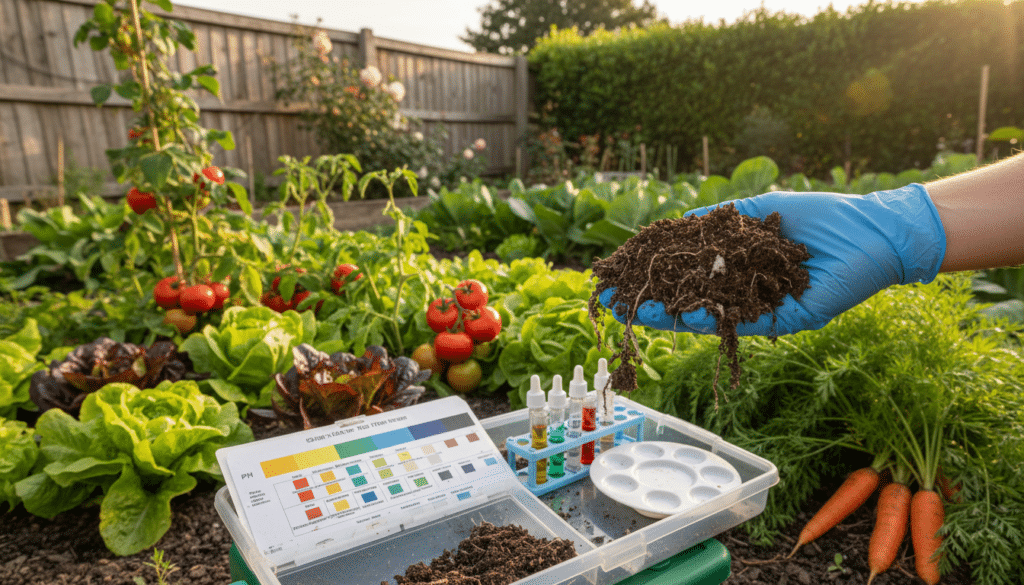
You wouldn’t take medicine without a diagnosis, and your garden shouldn’t receive fertilizers without a proper check-up first. Establishing a vegetable garden in a new location is the most critical time to invest in a soil test. This simple step reveals exactly which nutrients soil currently holds and which ones are missing for healthy growth.
Conduct a new analysis every three years to follow changes in your garden soil conditions. By following a scientific report, you prevent the wasteful application of fertilizers that your plants might not even need. This proactive approach saves you money and protects the local environment from nutrient runoff.
How to Take a Proper Soil Sample
To get an accurate representative sample, you must collect earth from several spots across your plot. Always use a clean plastic bucket to ensure that no metallic contamination from a metal pail affects your final laboratory reading.
Best Time to Sample Your Soil
The ideal window for sampling is either in the fall after your harvest or during early spring before you start planting. Avoid taking samples right after applying manure, lime, or fertilizer. You should also wait for the ground to dry, as you should never sample excessively wet soil.
Collection Method for Accurate Results
Walk in a random pattern across your garden and collect 15 cores from the top 6 inches of the ground. Mix these thoroughly in your bucket, break up any large clumps, and pack about half a pound of the mixture into your soil test kit.
Understanding Your Soil Test Results
Your results will show whether specific nutrients soil levels are adequate, high, or deficient. County Cooperative Extension offices provide these testing services to residents for a nominal charge. A slightly acidic soil with a pH near 6.5 is the optimum environment for growing most common vegetables.
However, specific crops have unique requirements you must consider. For example, a pH of 5.5 is recommended if you are growing potato varieties that are susceptible to scab. Understanding these nuances helps you tailor your amendments to the specific vegetables you plan to harvest.
Adjusting Soil pH with Lime Applications
If your garden soil is too acidic, you may need to apply lime to bring it into the proper range. The amount of lime required depends heavily on your specific texture and the current pH level of your plot.
| Soil Texture | Target pH Change | Lime per 1000 sq. ft. |
|---|---|---|
| Sandy Loam | 5.5 to 6.5 | 50 lbs |
| Silt Loam | 5.5 to 6.5 | 100 lbs |
| Low Magnesium | Any | Dolomitic Lime |
When your soil test shows low magnesium levels, always choose dolomitic lime over calcitic lime. This ensures you boost that specific mineral while adjusting the acidity. Using the right amendments ensures your soil stays balanced so that your fertilizers work with maximum efficiency.
Choosing the Best Fertilizer for Vegetable Garden: Organic vs Synthetic
Picking the right nutrition for your vegetables depends on whether you prefer slow-building soil or instant results. You will find that different types of fertilizers work in unique ways to support your plant health and long-term garden success.
Organic Fertilizers: Slow Release and Soil Building
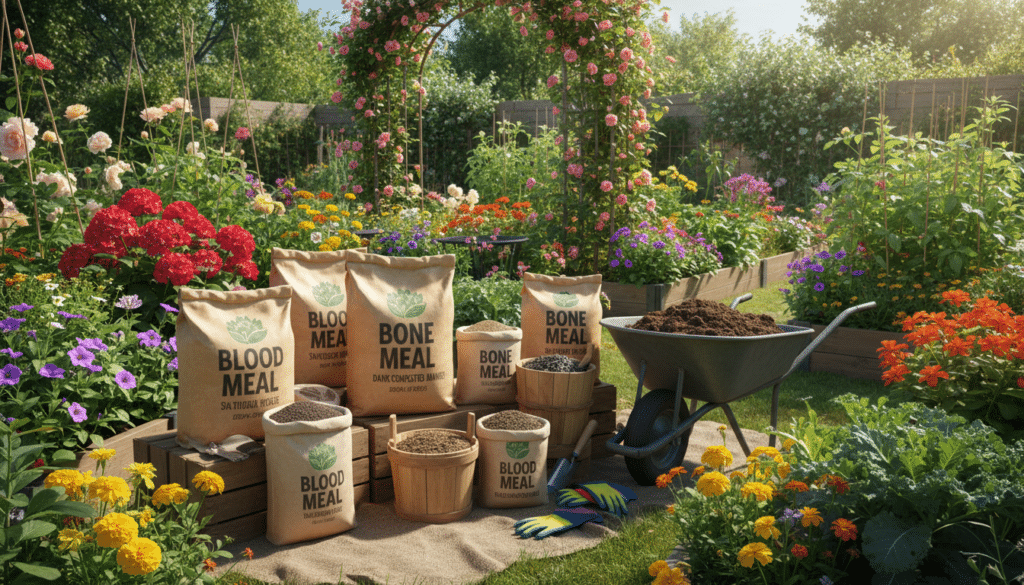
Microorganisms in the soil must break down an organic fertilizer before your crops can use it. This natural process adds vital organic matter to the earth, which improves the structure of your garden beds over time.
Most organic fertilizers are slow-release, meaning they provide steady food for months. Because they are not water-soluble, they are less likely to wash away and pollute local streams compared to many chemical types.
Using compost and other natural products is a great way to recycle nutrients back into your land. While these options might cost more at first, they require fewer applications throughout the season.
Blood Meal (12-15-1-1)
This high-nitrogen amendment provides a medium-rapid release for hungry greens. It is a powerful tool to help your leaves stay vibrant and healthy.
Bone Meal (1-15-0)
You can use bone meal to give your seedlings a strong start. The high phosphorus in bone meal is essential for sturdy root growth and beautiful blooms.
Because bone meal releases at a medium pace, it stays in the ground where your roots need it most. Adding bone meal during planting ensures your vegetables have the energy they need for a big harvest.
Composted Cow Manure (1-1-1)
A bag of composted cow manure offers a balanced and gentle source of food. This manure acts as a wonderful soil conditioner while feeding your plants slowly.
When you use well-rotted manure, you are building rich organic matter that holds moisture. Always ensure your manure is fully composted to avoid burning tender vegetable stems.
Fish Emulsion and Seaweed Fertilizer
These liquids provide readily available nutrients and trace elements. They work perfectly as a supplemental snack for your vegetables during the heat of summer.
Synthetic Fertilizers: Quick Results and Precision
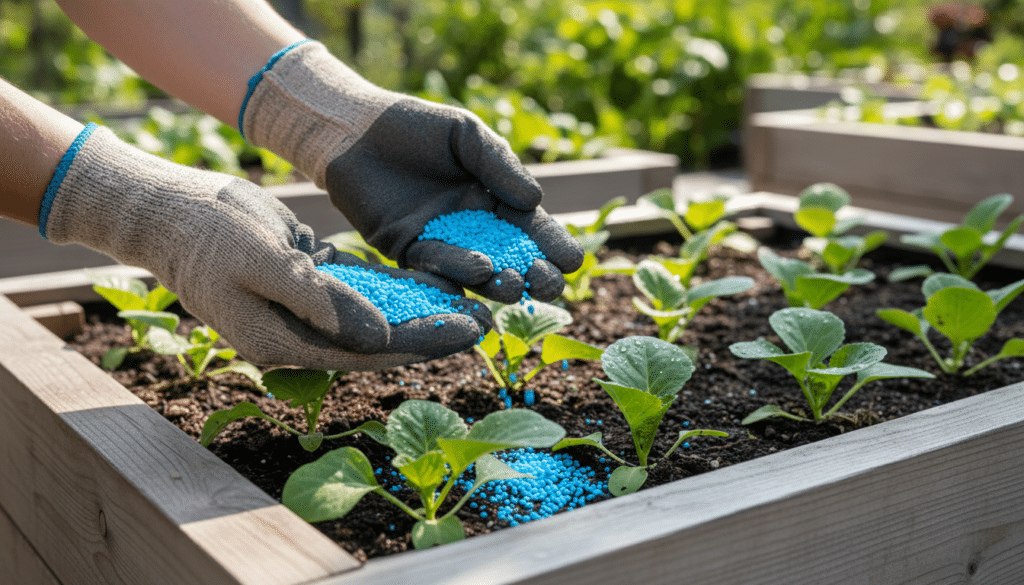
Manufacturers create synthetic fertilizers from minerals and salts to deliver concentrated food. These fertilizers are often water-soluble, which triggers rapid growth almost immediately after you water them in.
You can solve specific deficiencies quickly because the NPK ratios are very precise. This precision allows you to give your garden exactly what it lacks without any guesswork.
Ammonium Nitrate (33-0-0)
This single-nutrient source packs a punch with 33% nitrogen. It is a go-to choice when your plants need a fast green-up after a heavy rain.
Urea (46-0-0)
Urea is one of the most concentrated nitrogen sources available for home gardens. You must apply it carefully to prevent the concentrated salts from damaging your roots.
Complete Formulas (5-10-10, 10-10-10)
Balanced fertilizers like 10-10-10 provide all three major elements in a single application. These formulas are convenient for gardeners who want a simple, one-step feeding routine.
Which Type Should You Choose for Your Garden?
Your choice depends on your budget and your long-term goals for your soil. If you want to build organic matter and soil life, then bone meal, manure, and compost are your best friends.
However, if your vegetables show signs of a severe deficiency, a synthetic boost can save your harvest. Remember that even natural products like manure can cause pollution if you use too much at once.
Always follow the label instructions regardless of the product you choose. Responsible feeding leads to a strong, healthy garden that yields delicious vegetables all year long.
When to Apply Fertilizer to Your Vegetable Garden
To get the most out of your vegetable patch, you need to sync your feeding schedule with the natural rhythm of your plants. Feeding them at the right time ensures they have nutrients exactly when they need to grow, bloom, and produce.
Every crop follows a specific growth cycle that dictates its hunger levels. By understanding these cycles, you can provide the necessary support for a bountiful harvest throughout the garden season.
Spring Application: Setting the Foundation
Most edible crops thrive when you provide a strong start in the spring. This initial application sets the stage for healthy roots and vigorous early growth across your entire plot.
Before Planting Your Seeds or Seedlings
It is best to mix fertilizer into your garden soil just before planting. This allows the nutrients to settle in the root zone where young sprouts can easily reach them.
For perennial flowering varieties, wait until the ground is no longer frozen. Aim to fertilize about one week before the last expected frost in spring.
After Planting: Safe Application Methods
If you already finished planting, do not worry. You can gently work granular fertilizer into the top 3-5 inches of soil around your vegetables.
Always water the area thoroughly after this application to help the nutrients reach the roots. Avoid using liquid options on very young seedlings, as they might burn tender root systems.
“What plants really need is help when they’re growing the most.”
Mid-Season Sidedressing Schedule
As your garden hits its stride, some crops require a second helping of nutrients. This mid-season boost helps heavy feeders finish the spring and summer seasons strong.
Timing this feeding depends on the specific crop’s growth spurt. Corn and squash usually hit their peak growth in midsummer, while leafy greens grow fastest much earlier.
| Crop Category | Best Feeding Time | Key Nutrient |
|---|---|---|
| Leafy Greens | Early Spring | Nitrogen |
| Heavy Feeders | Mid-Summer | Balanced Fertilizer |
| Root Crops | At Planting | Phosphorus |
Identifying Plants That Need Extra Nitrogen
Corn, squash, and potatoes often require extra nitrogen during their most active weeks. These plants consume existing nutrients quickly to build large stalks and leaves.
For tomatoes, watch for the first signs of flowers. At this stage, switch to a low-nitrogen blend to favor the production of fruit rather than just more green leaves.
Plants That Should Not Receive Extra Nitrogen
Be careful not to give too much nitrogen to root crops like carrots or beets. Excessive levels can cause these crops to grow massive tops but tiny, stunted roots.
Adding too much nitrogen to sweet potatoes or watermelons also causes problems. It often results in lush green vines but very little fruit for you to harvest at the end of the year.
Fall Fertilization for Perennial Vegetables
Don’t forget your perennials when fall arrives. Applying nutrients to asparagus or rhubarb in the late season helps them store energy for the long winter dormancy.
Healthy perennials benefit from this boost to ensure a strong emergence next year. Proper timing ensures your plants stay resilient and productive for many seasons to come.
How to Calculate and Apply the Right Amount of Fertilizer
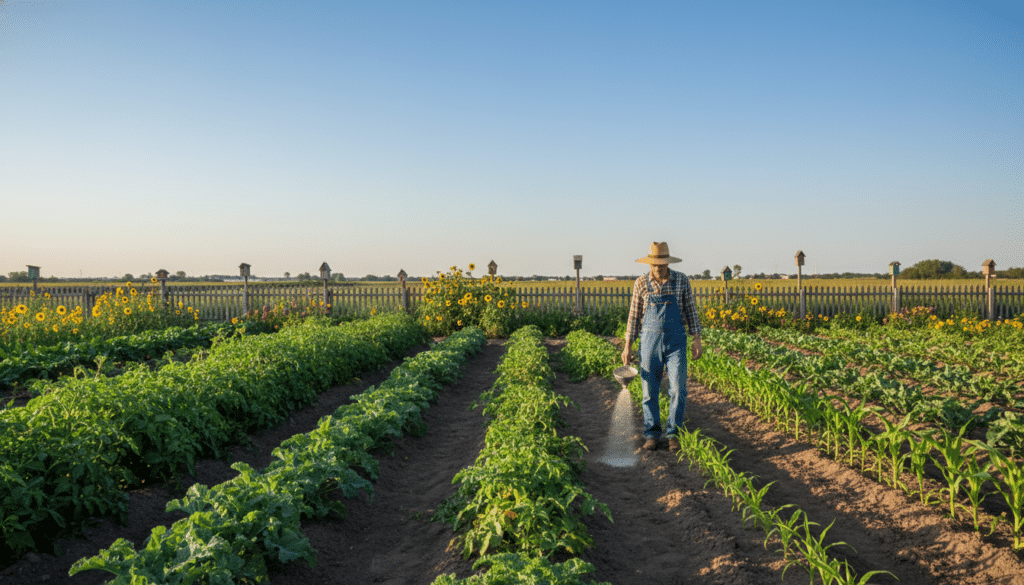
Once you have your soil test results, you need to know exactly how much product to spread. Feeding your garden requires more than just guessing. Measure your square feet before buying any supplies to ensure you have enough for the season.
Proper application prevents waste and protects your local environment. Precision is the secret to a healthy harvest. Using the correct amount of fertilizer ensures your vegetables grow strong without being overwhelmed by chemicals.
Step 1: Calculate Fertilizer Rates per 100 Square Feet
To find the right dose, divide the pounds of nutrient you need by the grade percentage. For example, if you want 1 lb of nitrogen per 100 square feet and use a 5-10-10 mix, divide 1.0 by 0.05. This means you need 20 lbs of material per 100 units of area.
Check the bag label for the specific amount per 100 to apply. You want to apply the right fertilizer every 100 feet to avoid nutrient runoff. This math helps you provide what is needed every 100 square feet garden space. Use this method for any 100 square foot section you plan to plant.
You should calculate the rate per 100 for every section of your yard. Measuring the area per 100 helps you buy only what you need. Accuracy per 100 is vital for a healthy 100 square foot plot. Always re-check your math per 100 before you start spreading.
Step 2: Apply Granular Fertilizers Correctly
Granular fertilizers are great for long-term feeding because they break down slowly. You should spread them evenly every 100 feet to ensure total coverage. This method provides a steady stream of nutrients to your thirsty plants.
Broadcasting Method
Spread the granules by hand or with a spreader over your 100 square feet garden plot. Mix it into the top 4-6 inches of soil before you start planting. This ensures the nutrients are right where the young roots can reach them.
Side-Dressing Technique
For plants already in the ground, apply fertilizer every 100 feet alongside your crop row. Avoid putting the product directly on the stems to prevent chemical damage. Place the food every 100 inches from the plant base for the best results.
Working Fertilizer into Soil
Use a hoe or spade to work the granules 3-5 inches into the dirt. This helps the nutrients reach the roots in every 100 square feet of your plot. Watering after you apply the fertilizer every 100 feet also helps it leach down into the planting row.
Step 3: Apply Liquid Fertilizers Safely
Using a liquid fertilizer can provide a quick boost to your vegetables. These fertilizers are often easier for plants to absorb through their leaves and stems. Using liquid fertilizer requires care to prevent foliage damage.
Proper Dilution Guidelines
Always dissolve the product in water exactly as the package says. Pour the mixture on the soil around plant bases and on the leaves. Apply this liquid fertilizer on dry days during the early morning or late evening. Ensure the liquid fertilizer reaches the around plant zones where it is needed most.
Avoiding Root Burn
Wait at least 2-3 weeks after transplanting before you use fertilizer on your garden. Always soak the area around plant roots with plain water first if the ground is dry. This protection keeps the soil around plant roots safe from salt stress. Check the moisture around plant stems before you begin the application.
Step 4: Recognize and Avoid Overfertilization
Too much fertilizer can hurt your harvest more than it helps. Look for signs like dark green leaves with no fruit or brown, crispy leaf edges. If you see this, reduce how much you apply per 100 square feet.
Check your results per 100 carefully throughout the growing season. Proper care every 100 feet ensures a healthy balance for your vegetables. Use the right amount of fertilizer every 100 units of space to keep the soil healthy.
Monitor the growth every 100 days to see if your plants need more or less. Adjust the portion per 100 units if the plants look stunted. Maintaining a healthy balance per 100 feet will lead to a massive harvest.
| Application Method | Best Usage | Application Frequency |
|---|---|---|
| Broadcasting | Pre-planting soil prep | Once per season |
| Side-Dressing | Mid-season nutrient boost | Every 4-6 weeks |
| Foliar Spray | Quick leaf absorption | Every 2 weeks |
| Soil Drench | Immediate root feeding | Every 2-3 weeks |
Fertilizing Specific Vegetables: A Detailed Guide
To get the best harvest, you need to tailor your vegetable fertilizer to each specific plant. Not every crop in your garden has the same appetite for nutrients.
Feeding your vegetables the right vegetable fuel at the right time ensures a healthy garden. By following a custom schedule, you will see plants reach their full potential and produce plenty of fruit.
Tomatoes: 3-4-6 Ratio with Calcium
Your tomato plants need a specific fertilizer ratio to thrive. We recommend a 3-4-6 blend that includes calcium to prevent blossom-end rot.
Calcium is vital for strong cell walls as the tomato grows. This nutrients soil addition keeps the plant stable throughout the season.
“Providing the right balance of phosphorus and nitrogen is the secret to heavy-producing tomato plants.”
Before Planting: 3 lbs of 5-10-10 per 100 Square Feet
Start your garden right by adding 3 lbs of 5-10-10 fertilizer per 100 square feet. Mix this into the soil before planting to build a strong foundation.
At First Bloom: 1 lb Nitrogen Sidedressing
When you see the first yellow flowers, apply a 1 lb nitrogen sidedressing. Use a high-quality vegetable fertilizer to keep the growth steady.
After First Harvest: Second Application
To keep your tomato plants producing, add another round of fertilizer every 100 square feet. This second dose supports late-season fruit development.
Peppers and Eggplants: Monthly Feeding Schedule
Peppers require 2 lbs of 5-10-10 per 100 square feet to start. Then, you should add fertilizer every month to maintain production in the garden.
Eggplants love manure or a 3-lb dose of 5-10-5 per 100 square feet. When the first vegetable appears, add 2 more lbs to help them grow.
Leafy Greens: Nitrogen-Focused Approach
Leafy vegetables crave nitrogen for those lush, green leaves. These plants grow fast and need plenty of nutrients to stay tender.
Lettuce and Spinach Requirements
Work 4 lbs of 10-10-10 into the soil for every 100 square feet of lettuce. Spinach is less demanding and only needs 1 lb of fertilizer initially.
Cabbage, Broccoli, and Brussels Sprouts
These plants benefit from higher nitrogen about 4 weeks after transplanting. You should provide fertilizer every month for Brussels sprouts to get a large vegetable harvest.
Root Vegetables: Low Nitrogen Requirements
Root vegetables are different because too much nitrogen makes the leaves grow but leaves the roots small. Focus on phosphorus to help the roots expand under the soil.
Carrots, Beets, and Radishes
For carrots, add 1 lb of fertilizer every 50 ft row before you start. Beets prefer 4 cups of 5-10-10 per 20 ft row, while radishes usually need nothing at all.
Potatoes: Special Considerations
Work 4 lbs of 5-10-10 into every 100 square feet before you tuck them in. Apply another 4 lbs of fertilizer every four weeks after they emerge from the ground.
Corn and Squash: Heavy Feeders
Some vegetables are very hungry and require a lot of nutrients. Sweet corn and squash will quickly use up what is in your soil.
Sweet Corn: 2 lbs Nitrogen When 8 Inches Tall
Apply 2 lbs of nitrogen when the stalks reach 8 inches in height. This heavy feeding schedule is why the fertilizer ratio for corn is so important.
Squash, Pumpkins, and Cucumbers
Apply 3 lbs of fertilizer every 100 square feet at three different stages. Feed them at planting, when vines reach 1 foot, and when fruit appears.
Beans and Peas: Minimal Fertilizer Needs
These plants fix their own nitrogen, so they are easy to please. Only use 1 lb of fertilizer every 100 square feet if your soil is very poor.
For beans, you can add a tiny bit of fertilizer every row throughout the summer. Peas rarely need more than a single initial dose for a great garden result.
| Vegetable Type | Pre-Planting Dose (per 100 sq. ft.) | Sidedressing Schedule | Key Nutrients |
|---|---|---|---|
| Tomatoes | 3 lbs of 5-10-10 | At first bloom & harvest | Calcium & Phosphorus |
| Sweet Corn | 3-5 lbs of 5-10-10 | When 8 & 12 inches tall | High Nitrogen |
| Leafy Greens | 4 lbs of 10-10-10 | When 10 inches tall | Nitrogen |
| Root Crops | 1 lb per 50 ft row | At 6 inches tall | Phosphorus |
| Beans & Peas | 1 lb of 5-10-10 | Minimal (Every 4 weeks) | Low Nitrogen |
Conclusion
You now possess the essential expertise to select and apply the ideal fertilizer for your outdoor space. Whether you choose a slow-release organic fertilizer or a synthetic option, your garden will benefit from a tailored approach. Success begins beneath the surface with a detailed soil test to guide your decisions.
This step reveals exactly which nutrients your garden vegetables require to thrive during the season. By understanding the NPK ratio, you can support vigorous growth and help each plant develop strong roots. You can now calculate precise amounts and avoid harming your growing plants with too much product.
Different plants have unique needs, ranging from heavy-feeding corn to low-maintenance beans. Regular plants in your beds need proper timing during the spring and mid-season feeding cycles. High-quality fertilizers provide the foundation for a massive harvest and healthy plant development all year long.
Your hard work will pay off when you see the lush growth resulting from balanced soil chemistry. Using the right fertilizer at the correct time creates the perfect environment for hungry plants to flourish. Enjoy the journey of watching your garden produce an abundance of fresh, healthy food.
With the proper fertilizer and a well-maintained soil profile, your garden will remain vibrant and productive. These targeted fertilizers ensure your plants get the essential nutrients they need to succeed. This knowledge empowers you to grow a bountiful harvest for many years to come.
