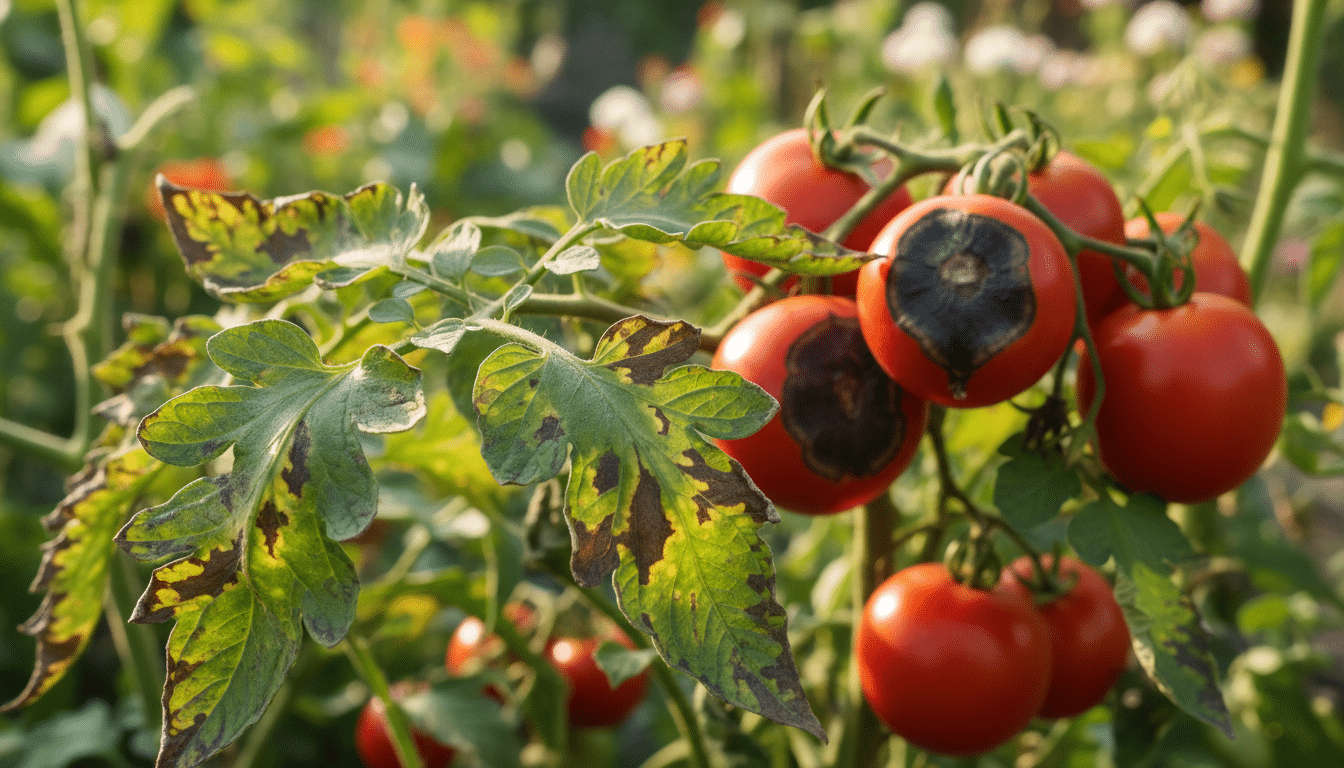
What if a single rainy week could wipe out your entire tomato harvest? This isn’t just gardener’s folklore; it’s the real threat posed by a group of diseases known collectively as tomato blight.
These issues are caused by various fungi and pathogens, not a single culprit. Early blight comes from the fungus Alternaria solani, while the infamous late blight is driven by Phytophthora infestans. Another common foe is Septoria lycopersici.
Proper identification is your most powerful tool. Knowing exactly which disease you’re facing is the critical first step to saving your crop.
This guide cuts through the confusion. We’ll provide clear, actionable strategies to identify, prevent, and manage these problems. Our focus is on effective, natural solutions to keep your garden productive all season long.
Key Takeaways
- Tomato blight refers to several distinct fungal and pathogen-based diseases.
- Early blight is caused by Alternaria solani, and late blight by Phytophthora infestans.
- Correctly identifying the specific disease is essential for effective control.
- Proactive garden management is key to preventing outbreaks.
- Organic and natural solutions exist to protect your plants.
- Understanding disease life cycles helps you time your preventive actions.
- A healthy garden starts with knowledge and early intervention.
Understanding Tomato Blight
Think of ‘tomato blight‘ as an umbrella term covering several distinct fungal and pathogen-based problems. It refers to a group of diseases that can quickly devastate your garden. The three main culprits are early blight, late blight, and Septoria leaf spot.
What is Tomato Blight?
This collective term describes conditions caused by different organisms. Early blight comes from the soil fungus Alternaria solani. The infamous late blight is driven by Phytophthora infestans, a water mold. This same pathogen caused the historic Irish potato famine.
Septoria leaf spot is another fungal issue, from Septoria lycopersici. It mainly attacks leaves but often spares the fruit. Knowing which disease you face is the first step toward an effective response.
| Disease Type | Primary Pathogen | Key Characteristic | Typical Impact |
|---|---|---|---|
| Early Blight | Alternaria solani | Targets lower leaves first | Leaf loss, reduced yield |
| Late Blight | Phytophthora infestans | Fast-spreading in cool, wet weather | Can destroy entire plants rapidly |
| Septoria Leaf Spot | Septoria lycopersici | Small, circular leaf spots | Severe defoliation, weakens plant |
This foundational knowledge helps you protect your crop. For a deeper look at symptoms and management of these common tomato diseases, more resources are available.
Identifying Symptoms on Tomato Plants
Your tomato plants will send you clear distress signals long before a disease takes over. Learning to read these signs is your first line of defense.
Regular, close inspection of foliage reveals the specific problem. Each pathogen leaves a unique fingerprint.
Recognizing Early Blight Signs
Look for dark brown spots on the lower, older leaves first. These lesions often feature concentric rings, like a target.
This bullseye pattern is a classic sign of early blight infection. Affected areas may turn yellow before the leaf drops.
Spotting Late Blight Indicators
Late blight creates irregular, water-soaked lesions on leaves. These greasy-looking patches are often ringed by a pale yellow halo.
In cool, damp weather, a fuzzy white mold may appear on the underside. Dark, firm lesions on fruit signal an advanced stage.
Another common issue is Septoria leaf spot. It causes many small, circular grey or tan spots on foliage.
Differences Between Early Blight and Late Blight
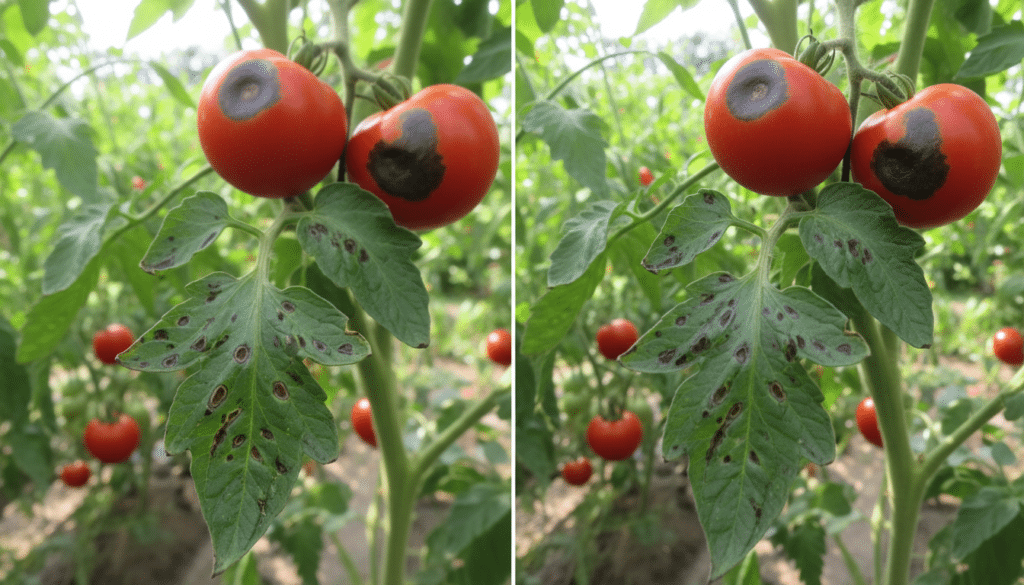
While both are destructive, early blight and late blight have distinct origins and behaviors. Knowing these differences helps you choose the right response.
Causing Agents and Conditions
The primary difference lies in the causing agent. Early blight is linked to the fungus Alternaria solani. Late blight is driven by the water mold Phytophthora infestans.
Their preferred conditions also vary greatly. Early blight thrives in warm, wet weather with temperatures between 75-86°F. Late blight prefers cool, damp, and humid environments.
You can visually distinguish these diseases. Early blight creates dark brown spots with concentric rings, like a bull’s-eye. Late blight causes irregular, water-soaked lesions.
Late blight is a more aggressive disease. It can cause rapid plant decline. Understanding these specific conditions allows for better management strategies.
How to Treat Blight in Tomatoes
Effective management hinges on a simple, two-part strategy: remove and observe. Acting quickly after spotting symptoms is your most powerful move.
Immediate removal of diseased material stops fungal spores from spreading. Consistent monitoring lets you catch problems at their earliest stage.
Step-by-Step Treatment Process
Begin by sanitizing your pruning shears with a bleach solution. This prevents you from accidentally spreading the pathogen as you work.
Carefully prune away all infected leaves and stems. Make your cuts well into healthy tissue, several inches below any visible damage.
Place this debris directly into a bag. Do not let it touch other plants or the soil. Dispose of it with your household trash, not in a compost pile.
After cleaning up, make a habit of inspecting your tomato crop every few days. Look for new spots or yellowing on both upper and lower leaf surfaces.
This routine surveillance is a vital part of controlling tomato blight. Early detection makes managing this disease much simpler and more successful.
Organic Treatment and Natural Remedies
For gardeners committed to organic practices, finding effective disease control presents a unique challenge. You want solutions that are safe for your soil and family while still being powerful against fungal threats.
Using Fungicides and Copper-Based Options
Fixed copper formulations are a cornerstone for many organic growers. They are among the few OMRI-listed products with proven efficacy against aggressive diseases like late blight.
These fungicides create a protective barrier on plants. It helps stop spores from germinating and taking hold.
However, copper-based options can be a significant investment. Their cost is an important factor for home gardeners managing a few tomato plants.
Always read the product label thoroughly before any application. These instructions are legal documents designed for your safety and the plant‘s health.
Integrating these organic fungicides into your routine helps protect your crop. Remember, they work best alongside smart cultural habits and early spotting of the disease.
Homemade Sprays: Baking Soda and Hydrogen Peroxide Options

Your kitchen pantry holds surprising power against garden fungal threats. Two common household items offer accessible control methods for gardeners.
Mixing and Application Tips
A simple baking soda spray requires three tablespoons mixed into one gallon water. This creates a basic fungal solution.
For a hydrogen peroxide treatment, use eight to twelve tablespoons per gallon. Always test this mix on a few plants first.
Apply any homemade spray in the early morning or late evening. This timing prevents leaf burn from midday sun.
Precautions and Best Practices
The baking soda mixture works by creating an alkaline surface on leaves. This environment helps stop fungi from colonizing tomato foliage and fruit.
Hydrogen peroxide acts as a contact oxidizer. It kills fungal spores on the plant.
These remedies provide a cheap and effective layer of protection. Use them alongside other good garden habits for the best defense against blight.
Selecting Blight-Resistant Tomato Varieties
Planting blight-resistant varieties is like giving your garden a suit of armor. This proactive choice is one of your most effective strategies for a healthy harvest.
These special tomato plants are bred to possess genetic resistance. They can often withstand exposure to the pathogens that cause devastating blight.
Popular Resistant Varieties Overview
Several excellent varieties are available to home gardeners. Defiant PhR is a reliable round tomato with strong late blight resistance.
For cherry tomato lovers, Mountain Magic produces large, crack-resistant fruit. It also boasts impressive defenses against the same disease.
Heirloom enthusiasts can try Matts Wild Cherry. This variety offers some natural tolerance, blending traditional flavor with better disease performance.
When choosing varieties, consider your local climate and the specific blight pressures in your area. This careful selection supports a more resilient garden.
Using resistant plants significantly reduces the need for sprays. You’ll spend less time managing problems and more time enjoying beautiful, healthy tomato fruit.
Environmental and Cultural Practices to Prevent Blight
Preventing tomato blight starts long before you see a single spot on a leaf. Your daily garden habits build a strong foundation for plant health.
These methods focus on creating an environment where fungal spores struggle to survive and spread. Consistent effort here is your best control.
Proper Spacing, Mulching, and Watering Strategies
Give your tomato plants room to breathe. Proper spacing allows for excellent air circulation.
This airflow keeps foliage dry, making it much harder for blight to take hold. It’s a simple but powerful step.
Lay down a thick layer of organic mulch around each plant. This barrier is a highly effective control method.
Mulch prevents soil-borne spores from splashing up onto lower leaves during rain or watering.
“Good culture is the best fungicide.” This old gardener’s saying highlights the power of smart practices over reactive sprays.
Always water your garden in the early morning. This timing lets any moisture on leaves evaporate quickly in the sun.
Wet foliage overnight invites disease. Since blight lesions can appear within just 3-5 days of infection, every hour of dryness counts.
Consider an early season planting schedule. Getting your crop established ahead of peak summer humidity helps it escape the worst disease pressure.
| Practice | Primary Benefit | Key Action | Impact Timeline |
|---|---|---|---|
| Proper Spacing | Improves air flow, dries leaves | Space plants 24-36 inches apart | Season-long prevention |
| Mulching | Blocks spore splash from soil | Apply 2-3 inch layer of straw or wood chips | Immediate physical barrier |
| Morning Watering | Allows leaf drying before nightfall | Water at the base, not overhead | Reduces risk daily |
| Early Season Planting | Avoids peak disease conditions | Set transplants out after last frost | Strategic, early season advantage |
Remember, fungal spores can travel 5-10 miles on wind and rain. Scout your tomato plants often for the earliest signs.
This vigilant observation, combined with these cultural practices, forms a complete shield for your garden.
Managing Infections: Early and Advanced Treatment Steps
When infection strikes your tomato patch, decisive action separates a saved crop from total loss. Effective management exists on a spectrum, from simple pruning to the difficult choice of removing entire plants.
Your response must match the stage of the disease. Catching it early gives you many more options.
Pruning and Removing Infected Plant Parts
At the first sign of trouble, grab your sanitized shears. Infected leaves must be removed immediately.
Cut well below any visible spots or lesions. Always prune into healthy plant tissue to ensure you get all the fungus.
Dispose of this material far from your garden. Never add diseased leaf matter or stems to a compost pile.
The spores can survive and haunt your plants next season. Bag it and put it in the trash.
What about your tomato fruit? Small blight spots on the surface often don’t ruin the whole harvest.
You can usually cut out the affected area. The rest of the fruit is typically safe to eat.
Advanced cases demand tougher choices. If the main stem is compromised by disease, the entire plant may need to go.
This prevents the blight from spreading to healthy neighbors. Consistent sanitation is your best tool for managing this disease.
It keeps your garden productive even when tomato blight is present.
Additional Tips and Expert Advice for Home Gardeners
Building a resilient tomato crop involves integrating smart planning with reliable resources. For home gardeners, this means looking beyond immediate symptoms to build a lasting defense.
Combine daily habits with expert knowledge. This approach creates a strong shield for your plants.
Cultural Practices and Crop Rotation Insights
Crop rotation is a powerful, long-term strategy. It breaks the life cycle of soil-borne pathogens like Alternaria solani.
Do not plant tomatoes, potatoes, or peppers in the same spot each year. This simple change prevents pathogen buildup.
Plan your early season activities carefully. Good spacing, morning watering, and mulch are your first line of control.
Resources and Further Reading
Staying informed is a key part of disease management. Use tools like the USAblight website.
This resource provides forecasts and reports on early late blight outbreaks in your region. Getting an alert gives you time to act.
The NC State Extension Plant Pathology portal is another excellent resource. It offers detailed guides on managing tomato and other vegetable crop diseases.
These include deep dives on phytophthora infestans, septoria leaf spot, and more.
Remember, managing early late blight requires a mix of good practices and good information. By staying proactive, home gardeners can enjoy a healthy, bountiful harvest.
Conclusion
Gardening success against fungal threats comes from a blend of vigilance and smart practices. Managing tomato blight requires a dedicated, integrated approach. Combine early spotting of symptoms with strong cultural habits and effective organic fungicides.
Understanding pathogens like Phytophthora infestans helps you protect your garden. Consistent monitoring and quick removal of any infected leaf material are your best control methods. This stops spores from spreading to healthy plants.
Whether using homemade sprays or commercial options, timely application is key. It keeps your tomato plants healthy and productive. Focus on good soil health, proper watering, and smart spacing.
With proactive strategies, you can overcome this disease. Enjoy a thriving garden full of beautiful fruit for many days to come.
