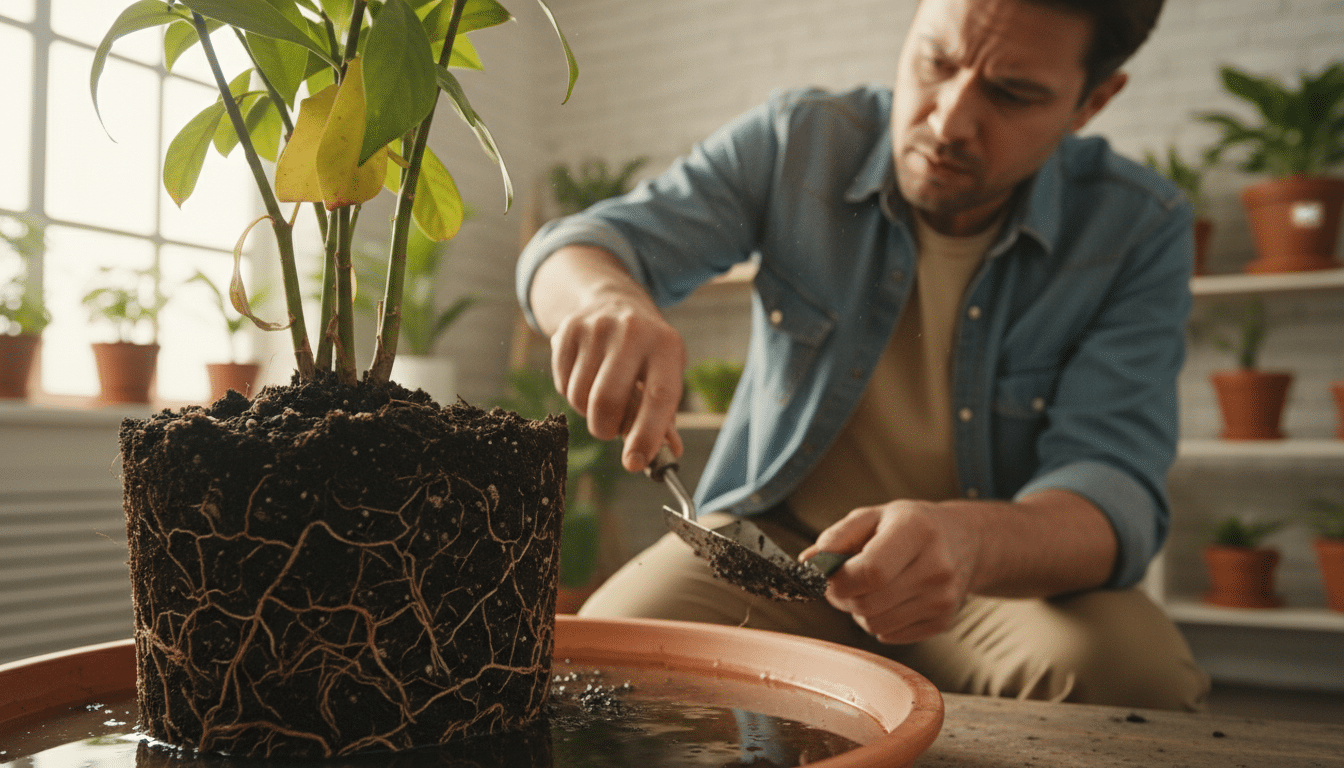
What if the most common advice for keeping your greenery alive is actually leading to its demise?
For over three decades, I’ve nurtured a collection that grew from just five specimens to well over a hundred. Through all those years, one silent menace has remained a constant threat: the decay of a plant‘s foundation.
Many enthusiasts believe that simply avoiding too much water will save plant collections from this horror. Unfortunately, that belief is often incorrect.
Understanding this complex issue is essential. It’s a common problem that can quickly destroy your favorite indoor plants. When you see your botanical friend struggling, acting fast is vital.
You must check if the underground system is suffering from fungal issues. This guide provides a comprehensive look. We will explore specific causes and give you actionable steps.
You’ll learn how to manage the health of your collection effectively. Our goal is to ensure your pots thrive for a long, healthy life.
Key Takeaways
- Root decay is a persistent threat to plant collections, even for experienced growers.
- Preventing this issue involves more than just careful watering habits.
- Early identification of problems in the soil and root system is crucial for plant survival.
- Acting quickly when a plant shows signs of distress can prevent total loss.
- Proper pot selection and soil management are key to long-term plant health.
- Understanding the environmental causes of decay empowers you to create a safer space for your plants.
- With the right knowledge, you can rescue affected plants and prevent future outbreaks.
Understanding Root Rot in Houseplants
Beneath the surface of your favorite greenery lies a hidden battle against microscopic invaders.
What Is Root Rot?
This condition is a fungal disease. Specific pathogens like Pythium and Phytophthora are often to blame.
They thrive in soggy, oxygen-poor soil. A primary warning sign is a foul odor from the potting mix.
This smell is frequently compared to rotten eggs.
| Characteristic | Healthy Roots | Roots with Rot |
|---|---|---|
| Color | White or light tan | Brown or black |
| Texture | Firm and crisp | Mushy and slimy |
| Smell | Earthy, neutral | Foul, sulfurous |
| Flexibility | Flexible, springy | Brittle, fall apart |
How It Affects Plant Health
Damaged roots lose their ability to uptake water and nutrients. This directly causes stunted growth and yellowing leaves.
Excess moisture creates the perfect environment for the problem to spread. Tiny pests like fungus gnats can also carry these pathogens between your plants.
Recognizing these early signs is the first step to stop the issue.
Recognizing Early Warning Signs
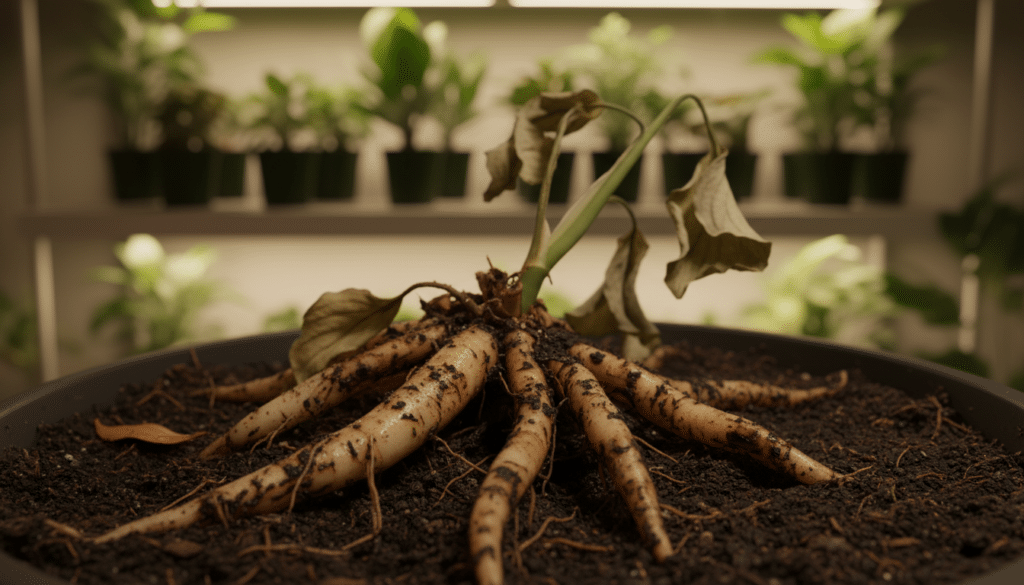
The first clues of trouble aren’t always hidden; they show up in plain sight if you know where to look.
Spotting these symptoms early gives you the best chance to help your green companion recover fully.
Wilting, Yellowing, and Stunted Growth
Wilting leaves are a common distress call. This symptom can appear even when the potting medium feels wet to the touch.
The underlying issue prevents proper uptake of moisture and food. Yellowing foliage, especially lower leaves, often follows.
If your specimen’s growth has completely stalled, it’s a strong indicator of a serious problem below the soil line.
Soil Indicators and Unusual Smells
Always check the condition of your potting mix. Soil that remains waterlogged for too long is a major red flag.
A foul, rotten odor emanating from the container is another telltale sign. Excess water that doesn’t drain creates the perfect environment for decay.
Gently lift your green friend from its pot for a closer inspection. Healthy anchors should be firm and pale in color.
Compromised ones will feel soft, look dark, and may have a slimy texture.
root rot in houseplants treatment: A Step-by-Step Guide
The rescue mission for a distressed plant starts the moment you lift it from its container. This hands-on process is your best chance to stop decay and encourage recovery.
Inspecting and Cleaning the Roots
Gently take your specimen out of its pot. Wash the anchor system in lukewarm water to remove soil.
This allows you to see the true condition of each strand. Look for dark, soft areas that indicate infection.
Healthy parts will be firm and pale. A foul smell often confirms the presence of harmful fungi.
Cutting Away Affected Tissue
Use sterilized pruning shears for this step. Carefully cut off all mushy, darkened material.
Be thorough to prevent any remaining decay from spreading. Your goal is to leave only crisp, white anchors behind.
These are the parts that can absorb water and nutrients effectively. A diluted hydrogen peroxide solution can sterilize your tools and the pot.
| Step | Inspection & Cleaning | Pruning |
|---|---|---|
| Primary Goal | Assess damage and remove debris | Eliminate infected material |
| Tools Needed | Lukewarm water, clean workspace | Sterilized shears, hydrogen peroxide |
| Key Action | Gently rinse and examine each root | Cut precisely at the boundary of healthy tissue |
| Desired Outcome | Clear visibility of root health | A system composed solely of healthy roots |
Effective Methods for Treating Root Rot
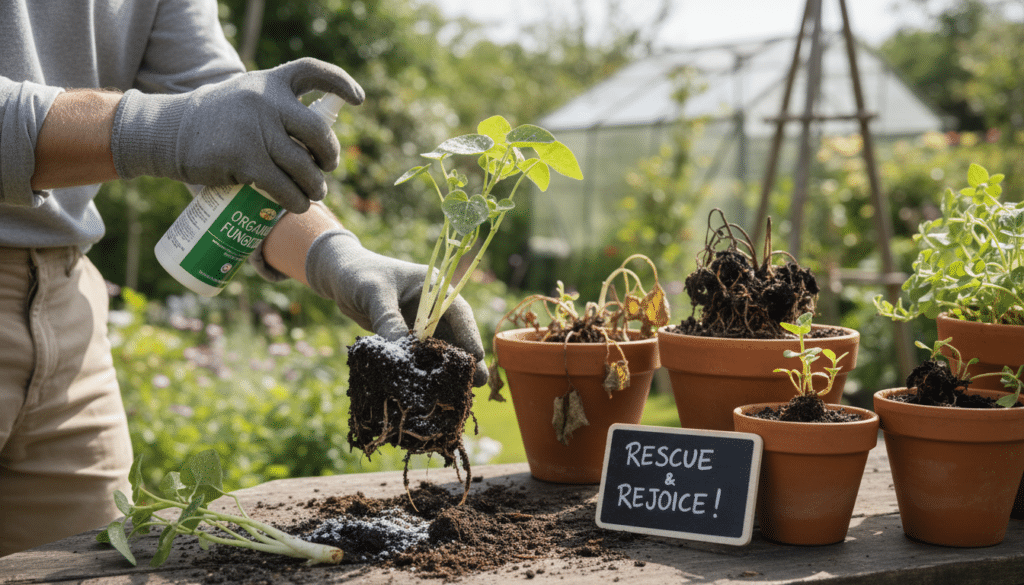
Your plant’s comeback story isn’t over after surgery. The next steps are critical to prevent a relapse.
Protecting the remaining healthy system is your top priority. Strategic actions now build a strong foundation for future growth.
Washing, Pruning, and Fungicide Application
Applying a systemic fungicide is one of the most effective ways to guard against reinfection. A product like Buxus Blight targets common pathogens.
It provides a 30-day shield. This period lets new, healthy roots establish in fresh potting mix.
You can use hydrogen peroxide to sterilize the soil first. Wait 48 hours before using the fungicide for best results.
Optional Root Treatments and Insurance Cuttings
Taking insurance cuttings is a smart care strategy. Snip tips from healthy stems to propagate a clone.
This saves the plant’s genetics if the original doesn’t pull through. Always use a new container with drainage holes.
Good holes stop excess water from pooling. That moisture is what cause root rot thrives on.
Selecting the right potting medium is vital for indoor plants. It balances air and moisture for the roots.
| Action | Primary Goal | Key Benefit |
|---|---|---|
| Fungicide Application | Prevent fungal return | 30 days of systemic protection |
| Taking Insurance Cuttings | Preserve plant genetics | Provides a backup specimen |
| Using Proper Pot & Mix | Create ideal recovery environment | Ensures drainage and aeration |
Monitor your specimen closely after this treatment. Look for signs of new growth and firm, white roots.
Following these steps gives your greenery the best shot at a full recovery.
Preventing Root Rot Through Watering and Soil Care
Long-term plant health starts with mastering two fundamental care elements: watering and soil. These are your first line of defense against fungal decay.
Focusing on prevention is the smartest strategy for any collection. It saves you from future rescue missions.
Choosing the Right Potting Mix and Drainage
Your choice of potting mix is critical. Select a blend that promotes excellent airflow and drainage.
Always use containers with sufficient drainage holes. A layer of rocks at the bottom is a myth; it does not improve water flow.
The right medium allows oxygen to reach the anchor system. This environment discourages harmful pathogens.
Watering Techniques and Schedule Adjustments
Over-watering is the most common problem. It creates soggy conditions where decay thrives.
Use a moisture meter to check if the soil is dry before adding more water. This tool takes the guesswork out of your routine.
Allow the potting mix to dry between sessions. Good airflow and bright light help moisture evaporate faster.
Never share water between specimens. This practice can spread fungi to your entire indoor garden.
| Preventive Practice | Key Action | Primary Benefit |
|---|---|---|
| Potting Mix & Drainage | Use well-aerated mix and pots with holes | Prevents waterlogging, ensures oxygen flow |
| Watering Schedule | Check soil dryness with a meter before watering | Avoids excess water, respects the dry cycle |
| Environmental Care | Provide good airflow and light | Helps soil dry evenly, promotes healthy roots |
By prioritizing these measures, you build a strong foundation. Your greenery will stay vibrant for many years.
Additional Tips for Maintaining Healthy Indoor Plants
Building a resilient indoor garden goes beyond reacting to problems—it’s about establishing daily habits that foster vitality.
These simple practices create an environment where your green companions naturally resist issues.
Tool Sterilization and Repotting Best Practices
Always clean your pruning shears and pots between uses. This prevents spreading harmful fungi to other specimens.
A quick wipe with hydrogen peroxide works well. When repotting, choose containers with proper drainage holes.
Fresh potting mix gives your plant a clean start. It helps avoid old, compacted soil that holds too much moisture.
Increasing Airflow, Light, and Warmth
Good air circulation helps soil dry evenly between watering sessions. It also strengthens stems and leaves.
Place your indoor plants where they get adequate light. More warmth encourages faster growth and natural water use.
This combination is one of the best tips for long-term care. Your plants will show their appreciation with vibrant health.
Conclusion
Your journey to a thriving indoor garden is built on knowledge, observation, and timely action.
Successfully managing root rot requires a combination of early identification, proper treatment, and consistent preventative care. By learning how to fix root rot, you can save your favorite greenery. Ensure the roots remain healthy and strong for years.
Always prioritize well-draining soil and proper watering habits. Choose a pot with adequate drainage. These are the most effective ways to keep your plant collection thriving.
Remember, every plant failure is a learning opportunity. It helps you become a more skilled and confident plant parent over time.
With the right tools and knowledge, you can easily maintain a vibrant indoor garden. For more insights, explore our guide on common houseplant diseases.
Thank you for following this guide. We hope you feel empowered to protect your plants.
