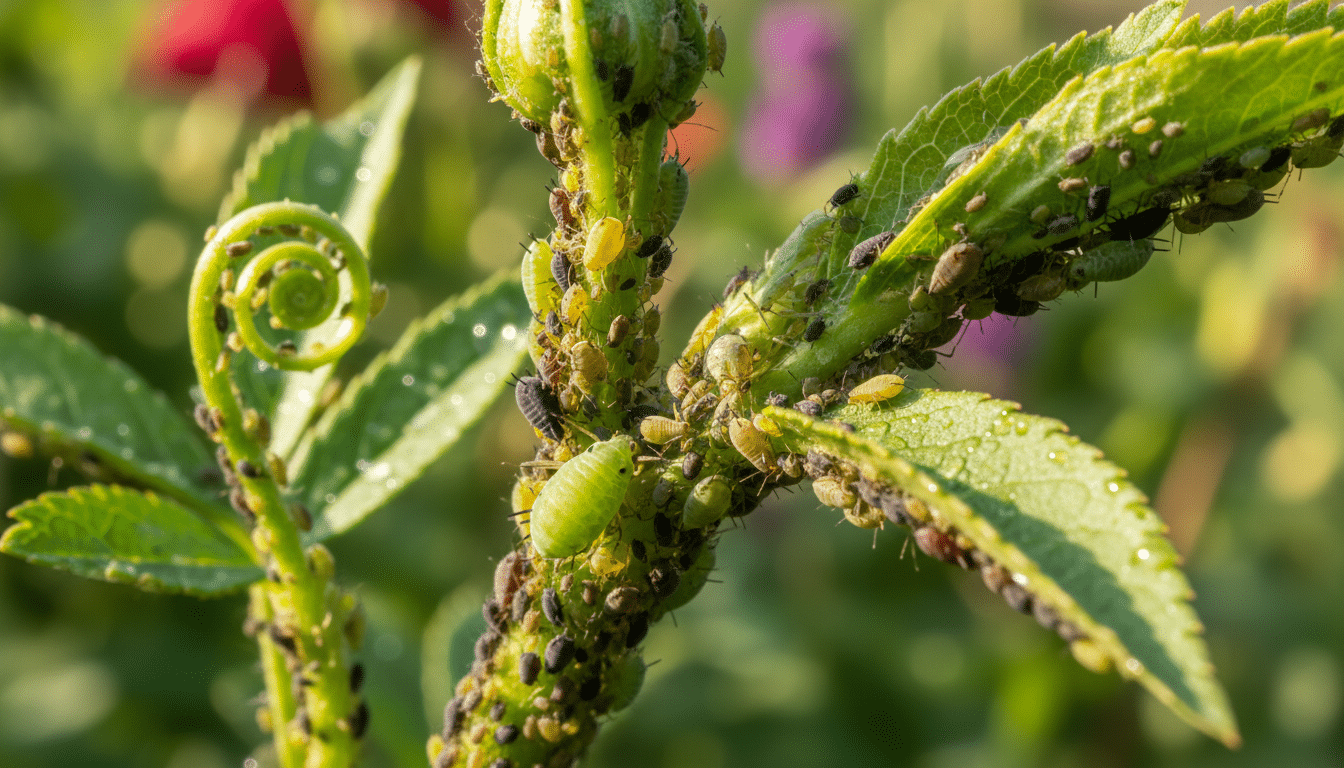
What if the tiniest garden visitor could cause the biggest problems for your favorite plants? These small, soft-bodied insects appear in early spring, sucking nutrient-rich juices and potentially harming your greenery.
A few individuals can quickly become a major infestation. Professional gardeners with decades of experience, like those in the San Francisco Bay Area, stress that consistent monitoring is your first line of defense.
You can identify an aphid by its pear-shaped body. Look for the tiny cornicles that distinguish it from other bugs. Catching them early is crucial for effective control.
These pests reproduce rapidly in favorable conditions. A proactive approach protects your flowers and vegetables from stunted growth and viral threats. Many find that beetles, like ladybugs, are essential allies for a balanced garden.
Regular inspection lets you address issues before they spread. Learning to manage aphids helps you maintain a vibrant and healthy outdoor space.
Key Takeaways
- Aphids are small, sap-sucking insects that can quickly multiply and damage plants.
- Early detection and consistent monitoring are critical for preventing large infestations.
- Identify aphids by their pear-shaped bodies and the presence of two tailpipe-like cornicles.
- A proactive management strategy protects plants from stunted growth and disease.
- Natural predators, such as lady beetles, are valuable for maintaining ecological balance.
- Regular plant inspections allow for timely intervention before the problem escalates.
Understanding Aphids and Their Impact on Your Garden
Gardeners often overlook aphids until the damage becomes unmistakable on leaves and flowers. Knowing these pests is the first step in protecting your green space.
What Are Aphids?
These insects have soft, pear-shaped bodies with long antennae. They are often nearly invisible to the naked eye.
In mild climates, aphids reproduce asexually. A single adult female can give birth to up to 12 live offspring per day.
You might notice an aphid infestation on indoor and outdoor plants. They favor tender new growth during the spring and summer.
Signs of Aphid Infestations on Leaves and Flowers
Aphids feed by sucking nutrient-rich liquids from stems and leaves. This can weaken a plant significantly over a year.
The sticky substance they secrete is called honeydew. It often attracts ants, which protect the aphids from natural enemies.
Most established plants can tolerate some feeding. Large populations cause leaves to curl and stunt overall growth.
Remember, these pests are a vital food source for many garden predators. Early identification is key on plants like roses and vegetables.
Identifying and Assessing Aphid Damage
Your plants might be sending silent distress signals through their leaves and stems. Learning to interpret these signs is the first step toward effective garden care.
Visual Clues and Symptoms
Look for the tiny, tubelike cornicles on an aphid’s hind end. This feature separates these insects from other common pests.
Large groups cause leaves to turn yellow. They also stunt new shoots. The sticky honeydew they leave behind often turns black with sooty mold.
Some species inject a toxin. This makes leaves curl and distorts new stems and foliage. This damage weakens the entire plant.
If you see many ants climbing a tree, it’s a clue. An aphid infestation is likely above. Ants farm honeydew and protect the aphids.
Check the undersides of leaves regularly. These insects hide there from natural enemies. Summer monitoring is vital because some species mature in just seven days.
Even a few aphids can spread viruses to crops. A careful inspection helps you get rid of them before permanent damage occurs.
| Symptom | Likely Cause | Recommended Action |
|---|---|---|
| Yellowing leaves & stunted growth | Large aphid population sucking sap | Apply a strong spray of water to dislodge pests |
| Sticky honeydew on plants | Aphids feeding and excreting sugar | Wipe leaves clean; watch for sooty mold |
| Curled or distorted leaves | Toxin injection from certain aphid species | Prune affected foliage to encourage new growth |
| Increased ant activity on stems | Ants tending to aphids for honeydew | Disrupt the ant trail and address the aphid colony |
This table helps you quickly assess the health of your garden. Early identification makes control much easier.
how to get rid of aphids on plants: Natural and Effective Strategies
Nature provides some of the simplest tools for managing unwanted garden visitors. Starting with gentle, physical tactics often solves the problem before it grows.
Using Water-Based Methods to Dislodge Aphids
A strong blast from your garden hose works wonders. This stream knocks the soft-bodied insects right off stems and leaves.
It also washes away the sticky residue they leave behind. This method is best for sturdy plants that won’t suffer damage from the force.
Incorporating Insecticidal Soaps and Neem Oil
These solutions work by smothering the pests. Neem oil is a popular plant-based oil for this job.
Complete coverage is essential. You must coat the undersides of leaves where insects hide.
Never use these sprays on thirsty plants or in extreme heat. This prevents further stress.
Since they only affect insects present at time of spray, repeat applications are key. Treat every seven to ten days to manage newly hatched eggs.
Taking this time for proper application is the most effective way to control an infestation for the season.
Natural Methods for Aphid Control
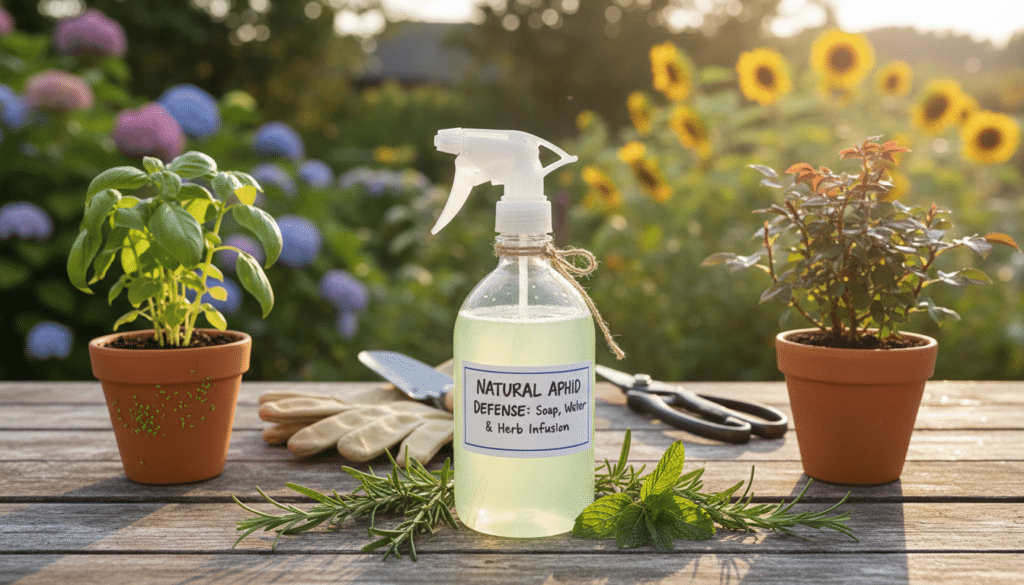
Creating your own solutions at home is a rewarding way to tackle garden pests. These gentle, effective strategies put you in charge of your plant’s health.
DIY Sprays and Home Remedies
Many gardeners find success with simple mixtures. One plant enthusiast with over 60 houseplants cleared a hoya infestation using water and insecticidal soap.
Homemade sprays often combine mild dish soap with a little oil. They work by smothering the soft-bodied insects on contact.
Neem oil is another popular, plant-based choice. It helps control these bugs while being gentle on your garden soil. Always test any mix on a small leaf first.
Proper Application Techniques to Minimize Plant Stress
Wear gloves when you use a spray. Apply it in the cool morning or evening, never in direct sun.
Carefully avoid treating seedlings or plants that are stressed from improper watering. This prevents additional harm.
If you spot eggs, plan for repeated applications every few days. This breaks the life cycle of new aphids.
This mindful approach manages the problem while protecting beneficial insects. These natural enemies, like ladybugs, are vital for long-term balance.
Biological and Cultural Control Options
Beyond sprays and soaps, your garden’s ecosystem holds powerful allies against pests. These strategies work with nature to create lasting balance.
Attracting Beneficial Insects and Predators
Lady beetles and lacewings are voracious predators. University of California research notes a large rose bush might need 1,500 lady beetles per application.
Parasitic wasps are highly effective natural enemies. They lay eggs inside aphids, turning them into crusty mummies.
Planting diverse flowers provides nectar and pollen. This attracts beneficial insects that feed on pests all season.
Ant Management and Other Complementary Tactics
Ants often protect aphid colonies from predators. Disrupting their routes is a key cultural control.
Prune out infested leaves and stems. This makes the habitat less suitable, especially on large trees.
Reflective mulches can repel invading populations during the summer. They also reduce virus transmission.
If a spray is necessary, choose products that leave no toxic residue. This protects your garden‘s predators for the long term.
These tactics, combined with proper care like learning to manage invasive grasses, foster a resilient landscape.
Maintaining a Healthy Garden Year-Round

Year-round plant health depends on proactive habits rather than reactive fixes. A consistent routine prevents small issues from becoming major headaches.
This approach builds a resilient outdoor space that can withstand occasional pest pressure.
Seasonal Monitoring and Preventative Care
Check your garden at least twice a week during spring and summer. This helps you catch an infestation early.
Look for natural enemies like lady beetles and lacewings. Also, watch for the mummified skins of parasitized aphids.
Protective covers shield young plants from these insects. They also stop viruses that cause stunted growth.
Adjusting Fertilization and Watering Practices
High nitrogen levels favor aphid reproduction. Choose slow-release fertilizer for the growing season.
Healthy soil and proper watering make your plants stronger. They can better tolerate sap-sucking pests.
If you must use a spray, target the undersides of leaves and tender stems. This is where adults and eggs hide.
Long-Term Strategies for Sustainable Plant Health
Keep a close eye on your garden all year. Implement strategies that keep your space thriving.
A balanced ecosystem with diverse beneficial insects is the best way to get rid of these aphids. It also stops them from returning.
| Season | Key Task | Primary Benefit |
|---|---|---|
| Spring | Begin weekly monitoring; apply slow-release fertilizer | Prevents early population buildup |
| Summer | Inspect twice weekly; use row covers for seedlings | Controls spread during peak activity |
| Fall | Remove plant debris; add compost to soil | Eliminates overwintering sites for eggs |
| Winter | Plan crop rotation; order beneficial insect larvae | Prepares a resilient garden for next year |
Conclusion
Effective pest management transforms potential problems into opportunities for a healthier landscape. Managing these soft-bodied insects requires consistent monitoring and support for natural enemies.
While aphids are common in any garden, they rarely kill established plants when you act early. Utilizing a strong water spray, insecticidal soaps, or neem oil can protect your foliage and flowers from significant damage.
Remember, a healthy garden ecosystem is your best long-term defense. Beneficial insects like ladybugs provide sustainable control by preying on aphids.
Always prioritize non-chemical methods first. This ensures you do not harm the predators that help keep your plants vigorous.
With the right techniques and a bit of patience, you can successfully manage these insects. Enjoy a thriving, beautiful outdoor space all season long.
