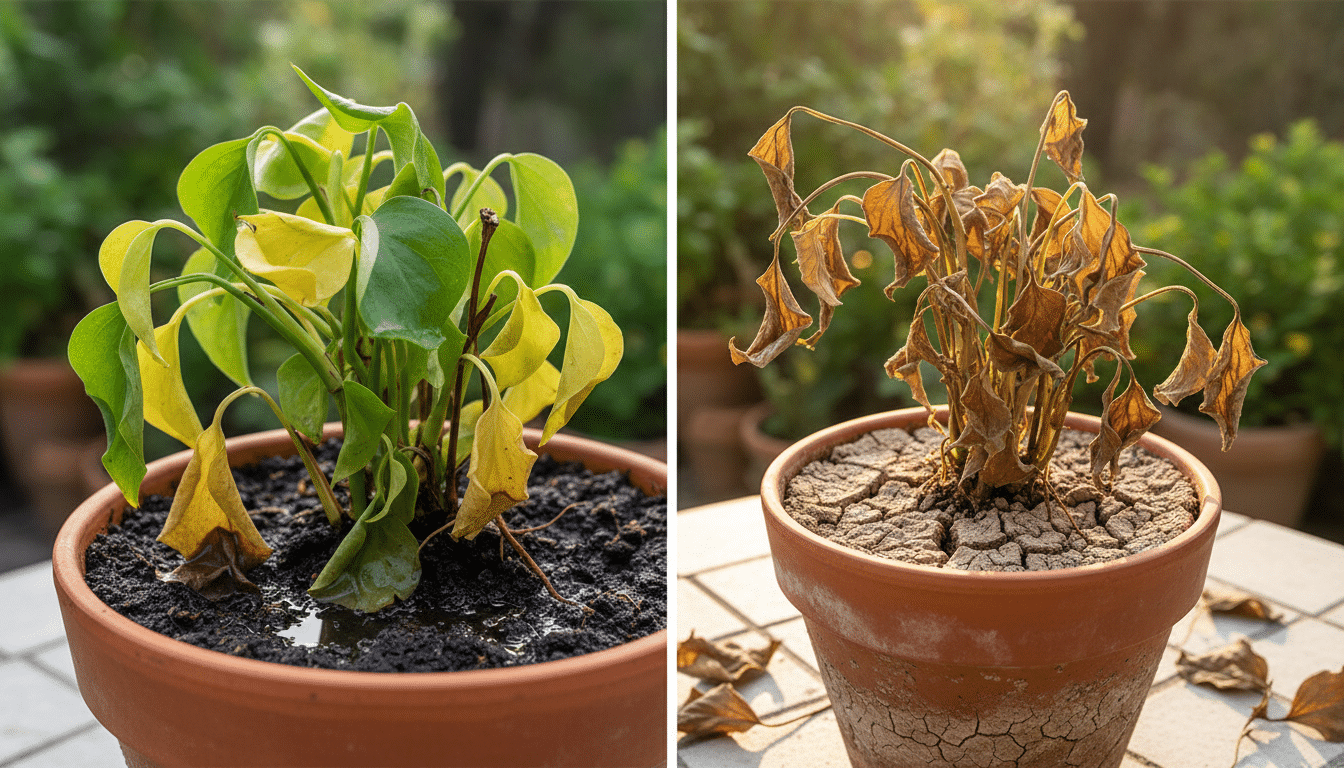
Have you ever stared at a struggling houseplant, completely unsure if it’s begging for a drink or drowning in one? You’re not alone.
Many indoor gardeners find themselves in this exact spot. The visual cues for too much and too little moisture can be frustratingly similar. This makes troubleshooting feel like a guessing game.
Resources like Bloomscape emphasize that knowing your green friend’s specific needs is the first, crucial step to a healthy, vibrant life. Getting this balance wrong is one of the most common care mistakes.
This guide is here to cut through the confusion. We’ll help you learn to read the subtle signals your foliage sends. With this knowledge, you can act confidently to prevent lasting damage.
Key Takeaways
- Both overwatering and underwatering can cause similar-looking distress in your indoor greenery.
- Correctly identifying your specific plant’s needs is the foundation of good care.
- Learning to interpret physical cues is essential for effective troubleshooting.
- Mastering moisture balance helps you avoid the most frequent plant care errors.
- Early intervention based on accurate diagnosis can save your plant from permanent harm.
- Reliable guides from experts like Bloomscape are invaluable for getting started.
- Your plant’s appearance holds the key clues to its health and hydration.
Understanding Overwatering: Causes and Impacts
The leading cause of houseplant failure isn’t a lack of attention, but an excess of it. Plantify University notes that giving too much water is the most common reason for a green friend’s demise. This often happens from a daily watering habit or a container that doesn’t let moisture escape.
How Poor Drainage and Excess Water Damage Roots
When a pot lacks holes, it forces your plant to sit in stagnant moisture. The soil becomes waterlogged, which pushes out vital oxygen. Without air, the roots can’t breathe or absorb nutrients, leading to rapid decay. This is a primary trigger for issues like root rot, which you can learn more about in our guide to common aloe plant diseases.
Environmental Factors That Contribute to Overwatering
Your home’s environment plays a huge role. Low light or cool temperatures slow down how quickly your greenery uses available moisture.
If your space is consistently humid, the soil may stay wet for dangerously long periods.
This creates a hidden threat, as the top layer can feel dry while the root zone remains saturated.
Common Signs of Overwatering for Houseplants
A houseplant suffering from excess moisture often displays a specific set of symptoms. Recognizing these clues is your first step toward helping it recover.
Yellowing and Limp Leaves
One of the earliest warnings is foliage that turns yellow and feels soft. This change typically begins on the lower, older leaves.
The saturated roots struggle to function, causing this distinctive yellowing and loss of firmness.
Mushy Stems, Rotten Roots, and Odorous Soil
When the situation worsens, the stems near the soil may become soft and mushy. If you inspect the roots, they might appear dark, slimy, and easily break apart.
This is a classic sign of root rot, a serious condition caused by decay.
The environment in the pot also gives clues. Consistently wet soil can attract pests like fungus gnats or show surface mold. An organic pesticide like Pyrol can help manage these infestations.
A persistent, foul smell from the potting mix is a serious red flag. It indicates decay is happening in an oxygen-starved environment.
Recognizing Underwatering in Your Indoor Plants
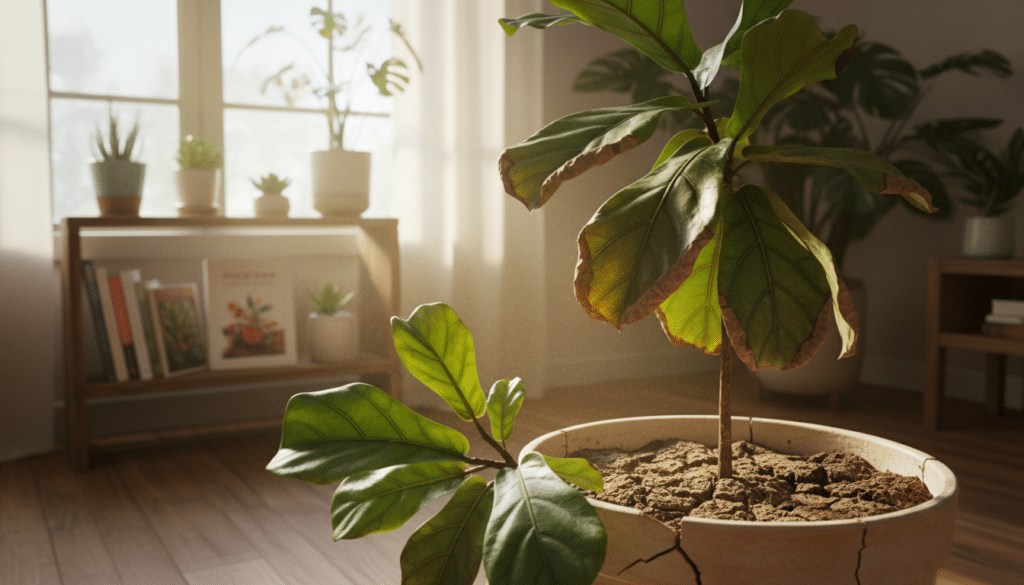
On the opposite end of the watering spectrum, a lack of adequate hydration creates its own distinct set of problems. Your green companion will send clear signals when it’s thirsty.
Wilting, Crispy Edges, and Dry Soil Characteristics
When a specimen doesn’t get enough water, its leaves often wilt or curl. They lose internal pressure. This can make them feel thin and papery.
The edges may turn brown and become brittle. You might hear a slight crunch when touched.
Check the potting mix. If it has shrunk and pulled away from the sides of the container, it’s too dry. The entire root ball has dehydrated.
Lifting the pot is a quick test. A surprisingly light weight confirms the issue.
| Symptom | Description | Immediate Action |
|---|---|---|
| Wilting Leaves | Foliage droops or curls inward due to low internal water pressure. | Provide a thorough, deep watering. |
| Crispy Edges | Leaf margins turn brown, dry, and brittle to the touch. | Trim damaged edges and increase humidity. |
| Soil Pulling Away | The potting mix contracts and separates from the container walls. | Soak the pot in a water basin to rehydrate evenly. |
| Lightweight Pot | The container feels much lighter than usual, indicating very dry soil. | Water until moisture runs from the drainage holes. |
Overwatering vs Underwatering Plants Signs Comparison
Your green companion’s distress signals differ dramatically depending on whether it’s too wet or too dry. Learning to spot these contrasting clues is the first step to an accurate diagnosis.
Correctly identifying the issue prevents you from applying the wrong remedy. This can save your foliage from further stress.
Comparing Soil Moisture and Root Health
The feel of the soil tells a clear story. Soggy, cold potting mix that clings to your finger points to excess moisture.
In contrast, a hard, bone-dry medium that has pulled away from the pot’s edge screams dehydration. For a definitive check, gently remove the plant.
Healthy roots are firm and white or light-colored. Mushy, dark, or slimy ones indicate rot from too much water.
Brittle, shriveled roots often mean a severe lack of hydration. This root inspection is a powerful diagnostic tool.
Visual Indicators on Leaves: Yellowing vs Browning
Foliage provides the most obvious visual symptoms. Generalized yellowing, especially in lower leaves, is a classic sign of overwatering.
These leaves often feel soft and limp. On the other hand, browning at the tips or edges, with a crispy texture, typically signals underwatering.
Both conditions can cause wilting, but the leaf texture is key. Soft wilting suggests waterlogging, while dry, papery wilting points to thirst.
Understanding these patterns helps you spot other common house plant diseases that may mimic them.
Assessing Soil Moisture and Drainage for Better Plant Health
The secret to perfect watering isn’t a strict schedule, but a reliable check of what’s happening below the surface. Learning to assess your potting mix correctly stops guesswork. This simple skill is the foundation of a thriving indoor garden.
Tools and Techniques to Check Soil Moisture
You have two excellent ways to get an accurate read. The classic finger test is fast and requires no tools. For a more objective reading, a moisture meter gives you a clear number.
| Method | How It Works | Best For | Pro Tip |
|---|---|---|---|
| The Finger Test | Insert your finger about 1 inch into the mix. Feel for coolness or dampness below the dry top layer. | Quick, daily checks and getting a physical sense of the soil moisture. | This is the standard depth for most indoor greenery. If it feels dry at your fingertip, it’s likely time to water. |
| Moisture Meter | Insert the probe into the root zone. The device displays a reading on a scale from dry to wet. | Eliminating doubt, especially for deeper pots or if you’re a beginner. It provides an unbiased check soil reading. | Insert the probe in a few different spots for an average reading. Clean the probe after each use. |
Whichever way you choose, the goal is the same. Let the potting mix dry out most of the way—about 75%—before adding more water. This pause prevents most moisture-related stress.
Good drainage supports this process. Always use a container with holes so excess liquid can escape each watering time. If your check soil reveals it’s still damp, simply wait a few more days. Your plant will thank you for the patience.
Watering Tips to Prevent Overwatering and Underwatering
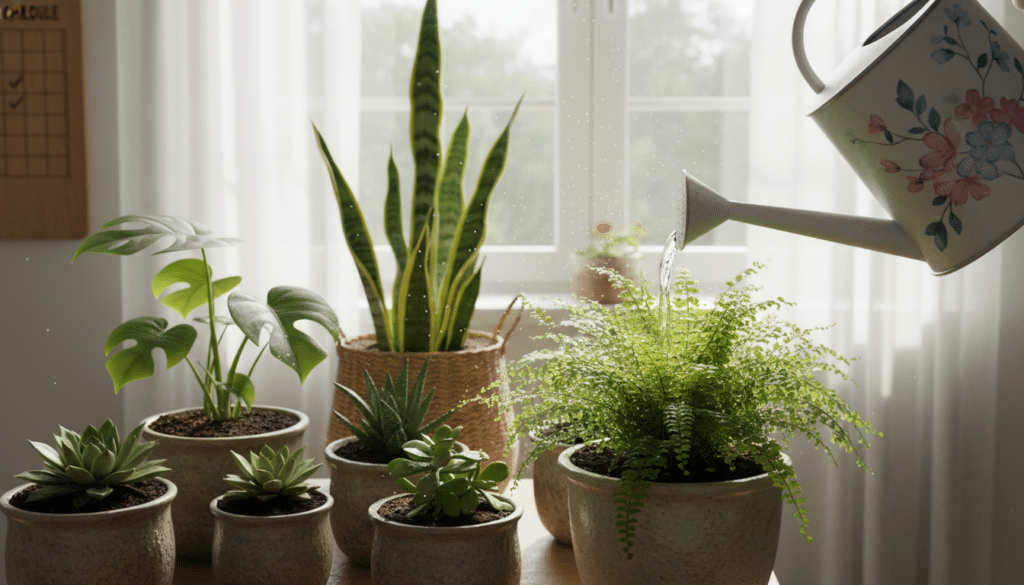
The key to a thriving indoor garden lies in proactive strategies that prevent moisture problems before they start. By focusing on a few foundational habits, you can build a resilient routine. Resources like Bloomscape offer detailed guides for your specific indoor plants.
Adopting these practices helps you avoid the common pitfalls of both overwatering and underwatering. Let’s explore two core areas for success.
Establishing a Consistent Watering Schedule
Consistency is your best friend. A regular watering schedule helps your greenery expect and use moisture efficiently. This prevents the stress swings that cause visible signs of distress.
Your plant type dictates this rhythm. Some species need the soil to dry out completely, while others prefer steady dampness. Research is vital.
Light exposure directly affects watering frequency. Specimens in bright spots typically need more frequent drinks than those in low-light areas. Adjust your routine with the seasons.
Choosing the Right Pot and Soil Mix
Your container and growing medium are critical. Always select a pot with adequate drainage holes. These holes in the bottom allow excess water to escape, stopping harmful pooling.
Pair this with a well-draining soil mix. A quality blend lets moisture through without holding it around the roots for too long. This simple choice is a cornerstone of good plant care.
Together, a good pot and mix create a healthy root environment. They give you control over the amount of water your plants actually receive, making your care routine more effective.
Adjusting Plant Care Based on Environmental Conditions
The same plant will have wildly different water requirements when placed in a sunny window versus a cool, shaded corner. Your care routine must adapt to these changing environmental conditions.
Treating every day and every spot the same is a recipe for stress. Your green companion’s needs shift with the room’s climate.
How Sunlight, Temperature, and Humidity Affect Water Needs
Bright light and high temperature act like a signal for your foliage to work harder. This increases the evaporation rate from both the soil and the leaves.
You must account for this by offering water more frequently. A move to a sunnier spot demands an immediate routine check.
Humidity plays the opposite role. Moist air slows down how fast the potting mix dries out. In a humid room, you can safely wait longer between sessions.
Seasonal changes are the biggest shift. During winter, lower light and cooler air mean most plants need significantly less moisture than in summer.
| Environmental Factor | Effect on Soil & Plant | Care Adjustment |
|---|---|---|
| Bright Light & High Temperature | Soil dries rapidly; foliage uses moisture faster. | Increase watering frequency. Check soil more often. |
| Low Light & Cool Temperature | Soil stays moist longer; growth and water use slow. | Reduce watering frequency. Let soil dry thoroughly. |
| High Humidity | Evaporation slows; potting mix retains dampness. | Extend time between waterings. Ensure excellent drainage. |
Always observe how your specific plant responds. Be ready to change your approach as the seasons shift and your home’s environment evolves.
Remedies for Overwatered Houseplants
Discovering your beloved houseplant is suffering from too much moisture can be alarming. Immediate action can turn things around. The right steps focus on drying the environment and healing the root system.
Steps to Improve Drainage and Allow Recovery
First, stop adding water completely. Let the soil dry out for several days. This gives the overwatered plant a chance to breathe.
Next, check the pot. Ensure it has proper drainage holes. If not, repotting is a smart move.
Carefully remove the plant to inspect its root system. Healthy roots are firm. Trim any soft, dark sections with clean shears.
Techniques for Handling Root Rot and Fungal Issues
If you see rot, act fast. Repot the overwatered plant into fresh, well-draining mix. This new start helps recovery from damage.
Fungal problems often follow excess moisture. An organic pesticide like Pyrol can manage these issues. It targets pests and fungus safely.
Finally, prune any yellow or limp leaves. This lets your plant focus energy on new root growth. With good drainage and care, your green friend can bounce back.
Strategies for Reviving Underwatered Plants
Reviving a parched specimen is a rewarding process that hinges on proper rehydration techniques. When your foliage shows clear distress from lack of moisture, timely action is key. These strategies focus on gentle, thorough methods to avoid shock.
Deep Watering Methods and Rehydration Techniques
The most effective way to help a dry plant is a deep soak. Place the entire pot in a sink or basin filled with water. Let it sit for 20 to 30 minutes.
This allows the root system to fully absorb moisture. After this time, lift the container and let all excess liquid drain out. Never let the plant sit in a puddle.
If your greenery is rootbound, consider repotting. A larger container with fresh soil gives roots better access to water. Always check the soil moisture after a deep soak to ensure recovery is on track.
| Method | Procedure | Best For |
|---|---|---|
| Bottom Watering | Place pot in a water-filled tray. Let soil absorb moisture upwards through drainage holes. | Specimens that dislike wet foliage or have compacted soil. |
| Full Soak | Submerge the entire pot in water until air bubbles stop. Then drain thoroughly. | Severely dehydrated plants with soil that has pulled away from the pot walls. |
| Repotting | Move the plant to a larger container with fresh, well-draining potting mix. | Rootbound greenery where roots circle tightly, preventing proper water uptake. |
Monitor your plant closely in the following days. New growth is a positive sign that your care is working.
Conclusion
The path to a lush indoor garden is paved with attentive observation and responsive care. Mastering moisture balance is a rewarding skill that deepens your connection with your plants.
Learn to read the subtle signs your foliage sends. Specific symptoms like leaf texture and soil condition tell you exactly what is needed. This knowledge lets you adjust your plant care routine with confidence.
Consistent monitoring is one of the best tips for success. Always check the soil before you add water. Your plant‘s needs change with light, temperature, and seasons.
With patience and these core tips, you can nurture a vibrant collection. Enjoy the journey of becoming a more intuitive plant parent.
