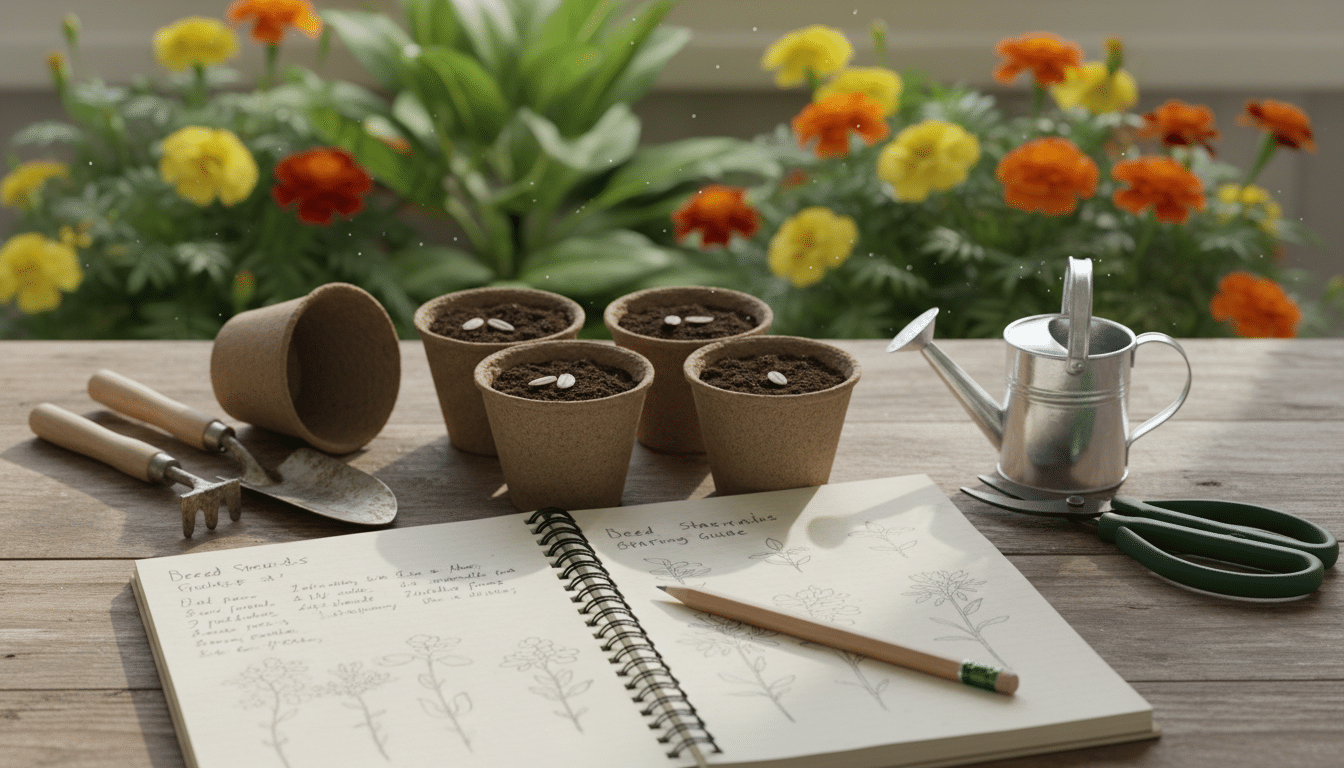
What if the most vibrant, pest-resistant flowers in your garden could start from a tiny packet of seeds?
These cheerful annuals are a powerhouse of color and utility. Originally from Mexico and Central America, they bring a sunny, low-maintenance spark to any outdoor space.
Their bright blooms don’t quit, offering a continuous show of color right up until the first hard frost of fall.
Beyond their good looks, these plants are incredibly versatile. They thrive in garden beds, containers, and even act as natural guardians for your vegetable crops.
This friendly guide walks you through every step. You’ll learn to cultivate a stunning display that rewards you all season long, whether you’re just starting out or have years of experience.
Key Takeaways
- Starting these flowers from seed is a rewarding and cost-effective project for gardeners of all levels.
- They are native to the warm climates of Mexico and Central America.
- Known for being tough and low-maintenance, they adapt to various garden conditions.
- As annuals, they provide non-stop color from planting until the first killing frost.
- Their uses are diverse, perfect for borders, pots, and as companion plants.
- They offer natural pest protection, helping to safeguard nearby vegetables.
- With proper care, you can enjoy a long, prolific blooming season.
Understanding Marigolds and Their Benefits
Beyond their sunny appearance, these hardy annuals offer a host of practical advantages. They are a top choice for gardeners seeking vibrant color paired with real garden utility.
Why Grow Marigolds?
These plants are incredibly inexpensive and low-maintenance. They deliver a non-stop show of cheerful blooms from spring until fall’s first frost.
Their strong, distinctive scent acts as a natural pest deterrent. This helps protect nearby vegetable crops from insects and even small animals.
Overview of Marigold Varieties
Knowing the main types helps you pick the perfect plant. The three primary groups are French, Signet, and African marigolds.
French marigolds (Tagetes patula) feature broad, fern-like leaves. They typically grow up to 24 inches tall and excel at pest control in veggie plots.
Signet marigolds (Tagetes tenuifolia) are the most compact. Reaching only about 12 inches, they have delicate, lacy foliage and produce charming single flowers.
African marigolds (Tagetes erecta) are the giants. They can soar to 3 feet, making their large, fluffy blooms ideal for the back of ornamental borders.
This diversity in size and form means there’s a marigold for every garden need. Their warm red, orange, and yellow hues create stunning visual impact.
Preparing for Planting: Soil, Sun, and Timing
Success with these bright blooms begins with two non-negotiable elements: abundant sunlight and well-prepared earth. Getting these basics right sets the stage for a season of vibrant color.
Selecting the Ideal Garden Location
Your marigolds demand a spot that receives full sun for at least six hours daily. This direct light is the fuel for their prolific flowering.
Without enough sun, plants become leggy and produce fewer blooms. Scout your garden for the sunniest bed or border before you start planting.
Soil Preparation and Fertility Tips
These flowers thrive in moderately fertile, well-draining soil. Begin by digging down about six inches to loosen the earth. This improves aeration and root penetration.
Mix in a generous amount of organic compost. This step is vital for enriching poor soil, whether it’s heavy clay or too sandy.
Good drainage prevents waterlogging, protecting your marigolds from root rot. Healthy, prepared soil encourages strong establishment and vigorous growth all season long.
how to grow marigolds from seed: Starting Your Journey
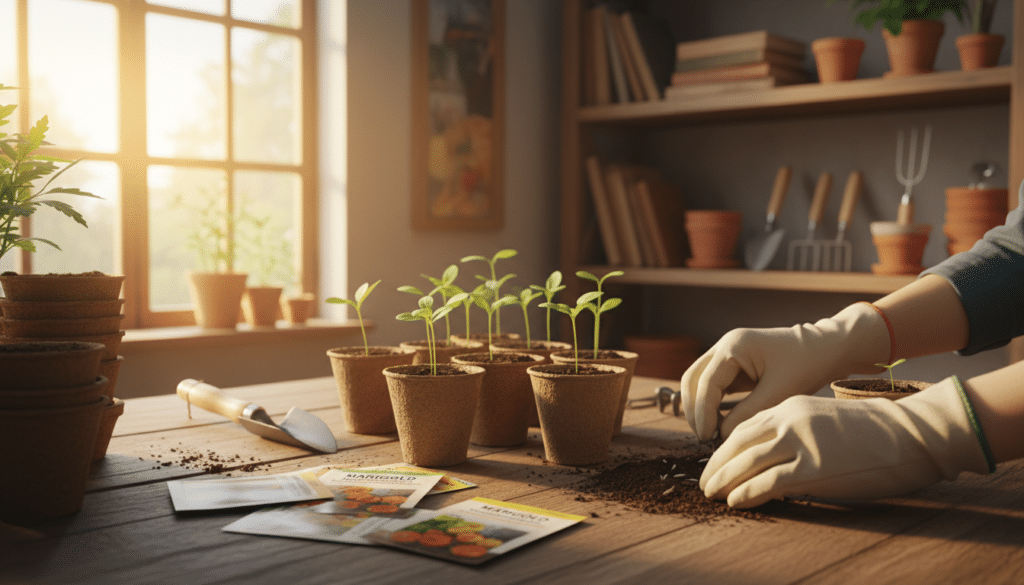
Getting a jump on the season begins with a simple decision: start indoors or sow directly? This choice shapes your entire timeline for vibrant blooms.
Understanding your local climate is the first step. It guides you toward the most successful method for your garden.
When to Start Seeds Indoors
For a strong head start, begin your seeds indoors about six to eight weeks last frost date is expected. This timing gives young plants a robust beginning.
These flowers need warm soil to sprout, ideally above 59°F. Starting inside guarantees that perfect environment.
This method is especially valuable if you have a short spring. Your marigolds will be ready to transplant as soon as the weather cooperates.
Direct Sowing: Pros and Cons
You can also plant directly into the garden once the danger frost has completely frost passed. Wait until the soil is thoroughly warm.
Direct sowing is straightforward and requires less upfront work. It’s a good fit for gardeners with long, warm summers.
However, starting seeds indoors often provides more reliable results. It protects tender sprouts from unpredictable weather and pests.
Many find that indoor germination rates are higher. This control can be crucial for a successful display of marigolds.
Always check your local forecast before making a final choice. Your specific conditions will point you toward the best path.
Step-by-Step Guide to Planting Marigold Seeds
A meticulous approach to sowing lays the foundation for a season full of color. Following clear steps gives your young plants the best chance to thrive.
Proper Sowing Techniques
Begin with a high-quality, pre-moistened seed starting mix. Fill your trays or pots to provide a perfect environment.
Place one or two seeds into each cell. Gently press them down and cover with a thin layer of fine vermiculite.
Sow your marigolds about 1/4 inch deep. This depth ensures good soil contact for successful sprouting.
Watering and Germination Strategies
Use a spray bottle to lightly moisten the soil surface. Keep it consistently damp, but never soggy, during this critical phase.
Planting trays need a warm spot. Ideal temperatures range from 65°F to 75°F (18°C to 24°C).
Germination typically takes 5 to 14 days in these conditions. Once seedlings emerge, thin them to one strong plant per cell.
This gives each seedling ample space to develop robust roots. Proper planting techniques set the stage for vigorous marigolds.
Caring for Your Marigolds Throughout the Season
Keeping your garden’s vibrant marigolds flourishing all season requires just a few simple care routines. Consistent attention ensures a non-stop display of cheerful color.
Watering and Fertilizing Best Practices
Always water at the base of your plants. This keeps the foliage dry and helps prevent fungal issues like powdery mildew on the leaves.
These flowers are not heavy feeders. A single application of a balanced, slow-release fertilizer at planting time provides all the nutrients they need for the season.
Controlling Pests and Disease Prevention
Watch for common pests like aphids or spider mites. A strong spray of water or insecticidal soap quickly dislodges them.
Maintain a clean garden by removing spent blooms and debris. This simple habit significantly reduces the risk of disease and keeps your marigolds healthy.
Optimizing Growth with Indoor Seed Starting Techniques
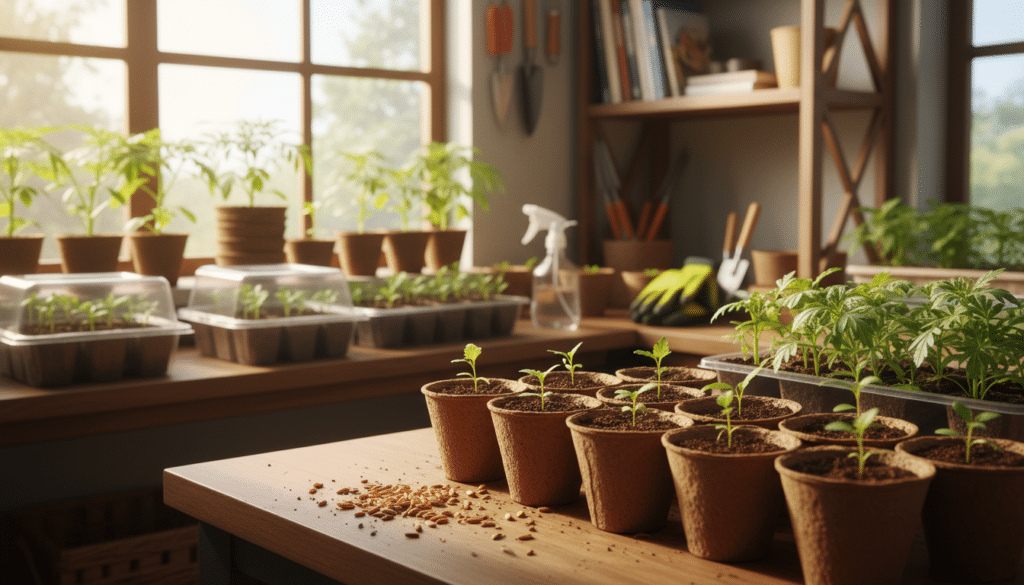
The secret to vigorous marigolds often lies in the controlled environment you create before they ever touch garden soil. Fine-tuning light and warmth gives your young plants a formidable head start.
Utilizing Grow Lights and Heat Mats
Consistent, bright light is non-negotiable. Position grow lights just one to two inches above your seedlings. Run them for 12 to 16 hours daily to mimic strong sun and prevent leggy, weak growth.
Place a heat mat under your trays. This maintains the warm soil temperature that sparks faster, more uniform germination. Your seedlings will emerge stronger and more reliably.
For the next six to eight weeks, keep the soil moist but not soggy. Use a small fan to provide gentle air circulation. This crucial step prevents damping-off disease.
When the second set of true leaves appears, feed with a diluted, balanced fertilizer. Once plants reach about four inches tall, pinch the main growing tip. This simple action encourages a bushier plant packed with future flower buds.
Never skip the hardening-off process. One to two weeks before transplanting, gradually expose your sturdy seedlings to outdoor conditions. This careful transition ensures your marigolds thrive from their first day in the garden.
Companion Planting: Enhancing Your Garden with Marigolds
Imagine your vegetable garden thriving with fewer pests, thanks to a simple floral ally. This is the power of companion planting. It creates a balanced ecosystem where plants support each other.
Integrating specific flowers among your crops offers natural protection. It also boosts overall garden health and yield.
Marigolds as Natural Pest Repellents
These flowers are renowned for their pest-fighting abilities. French marigolds, in particular, release alpha-terthienyl from their roots. This compound suppresses harmful root-knot nematodes in the soil.
Their strong scent also deters insects like whiteflies. At the same time, they attract beneficial predators such as ladybugs and hoverflies. These helpful insects control aphid populations naturally.
Choosing the Right Companion Plants
Selecting compatible partners is key for successful companion arrangements. You want to avoid competition for space or nutrients.
Tomatoes, peppers, and cucumbers are classic choices. Planting marigolds nearby creates a protective barrier. This strategy often reduces the need for chemical sprays.
| Vegetable Companion | Primary Benefit | Recommended Marigold Type |
|---|---|---|
| Tomatoes | Deters whiteflies and nematodes | French Marigolds |
| Peppers | Repels aphids and beetles | Signet or French Marigolds |
| Cucumbers | Protects against root pests | French Marigolds |
| Beans | Attracts beneficial pollinators | Signet Marigolds |
This table guides your companion planting decisions. It helps maximize the benefits for your favorite summer vegetable crops.
Harvesting, Deadheading, and Propagating Marigolds
Extending the life and beauty of these annuals requires attention to seed collection and plant grooming. A little effort now rewards you with more color and free plants for the future.
Your cheerful marigolds typically produce their first flower heads within two months. From there, simple care keeps the show going.
Collecting and Saving Seeds
Wait until the blooms are fully dry and the petals feel brittle. Gently pull the seeds from the base of the old flower head.
Store them in a paper envelope in a cool, dry spot. This cost-effective practice ensures plenty of plants for next year.
These plants are excellent self-sowers. Leaving some seeds on the ground often brings surprise volunteers the following season.
Pruning Techniques for Extended Blooms
Regular deadheading is key. Snip off spent blooms to redirect the plant’s energy into creating new ones.
For a major refresh, cut the entire plant back by one-third late in the season. This encourages a final, vigorous flush of color before frost.
| Technique | Key Action | Primary Benefit |
|---|---|---|
| Deadheading | Remove faded flowers | Promotes continuous blooming |
| Pruning | Cut back by one-third | Rejuvenates for late-season flowers |
| Seed Saving | Harvest dry seed heads | Provides free seeds for next year |
| Self-Sowing | Allow seeds to fall naturally | Encourages voluntary return of plants |
Mastering these steps keeps your marigolds vibrant and your garden tidy for many weeks.
Creative Uses for Marigolds Beyond the Garden
Did you know marigolds can transform from garden staples to creative home decor and more? Their cheerful presence isn’t limited to vegetable plots. These versatile plants offer a world of artistic and decorative possibilities for every home.
Edible Options vs. Ornamental Displays
It’s crucial to distinguish common marigolds (Tagetes) from edible calendula, often called “pot marigold”. Tagetes varieties are grown for ornament and pest control, not for your kitchen. Ingesting them may cause digestive upset.
Their primary magic lies in decoration. You can create stunning dried arrangements by hanging flower heads upside down in a dark, cool spot. This preserves their vibrant yellow and orange color for months.
The bright foliage and blooms make perfect pops of color for window boxes and patio pots. Some inventive gardeners even use the petals for natural dyes or infused vinegars.
Always verify the specific variety first. Certain species can irritate skin or cause issues if eaten. For safe, stunning yellow blooms, explore our guide to beautiful orange flowers.
Ornamental displays of marigolds effortlessly brighten outdoor living spaces all summer. From festive wreaths to lively garden borders, these marigolds provide endless creative inspiration.
Conclusion
Your journey from tiny seeds to a garden bursting with cheerful color is now complete. This guide has shown you how to select the perfect varieties and prepare your soil.
These resilient flowers thrive in full sun with minimal care. They reward you with vibrant blooms for many weeks throughout the summer and into fall.
Use them for companion planting in your vegetable plot or as stunning ornamental borders. You can feel confident starting your own plants.
Happy gardening! Watch your seeds transform into healthy plants that bring joy. With proper timing, your marigolds will brighten the landscape until the last frost of the year.
