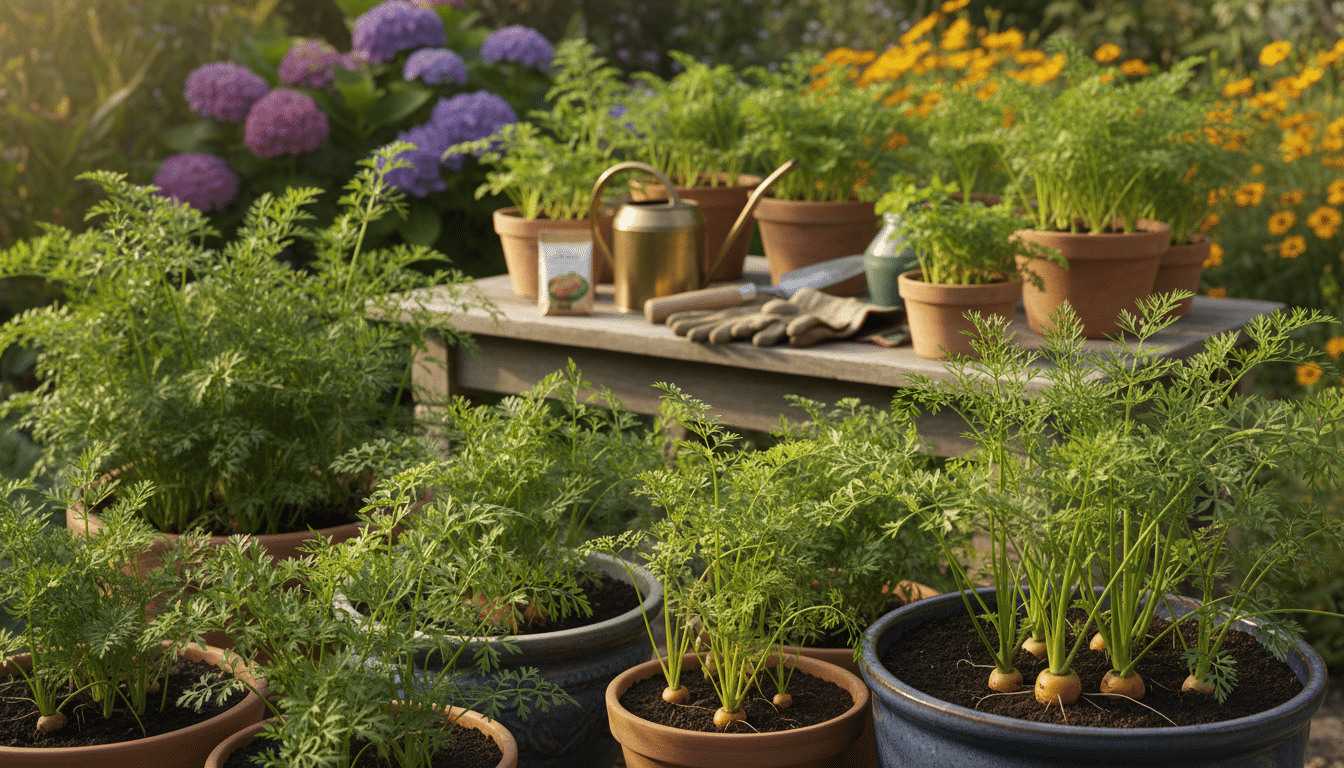
What if you could harvest crisp, sweet carrots without a single square foot of garden space?
Limited outdoor area is no longer a barrier to fresh produce. A sunny apartment balcony or a small patio is all you need. This approach lets you enjoy homegrown vegetables anywhere.
Using planters gives you superior command over the environment. You can tailor the soil nutrients and moisture levels perfectly for your root crops. This often leads to healthier, more vibrant harvests than traditional beds.
This is a fantastic project for families. It encourages kids to eat more fresh veggies they helped nurture. The process is simple and rewarding for gardeners of every skill level.
Our guide will walk you through the essentials. You’ll learn how to pick the right variety, mix the ideal soil, and master a watering schedule. Get ready for a bountiful and delicious reward from your own doorstep.
Key Takeaways
- You can cultivate carrots successfully on balconies, patios, or other small spaces.
- Container gardening provides excellent control over soil quality and water drainage.
- This project is engaging for children and promotes healthy eating habits.
- Selecting the appropriate carrot variety and planter size is crucial for success.
- Proper soil mix and consistent watering are the foundations of a good harvest.
- The method is manageable and productive for both new and experienced gardeners.
Understanding the Benefits of Container Gardening for Carrots
Elevating your carrot patch off the ground can solve many common gardening frustrations. You gain precise command over the environment your roots develop in.
One major advantage is complete control over soil quality. You can fill your planter with a perfect, loose mix. This prevents the common issue of stunted, forked roots.
You will also encounter fewer pest problems. Many insects and diseases live in native earth. By using a fresh potting medium, you avoid these threats entirely.
Containers enable easy succession planting. Sow seeds in a new pot every few weeks. This trick ensures a steady supply of fresh vegetables all season long.
If your yard has heavy clay or rocky soil, this method is a perfect solution. A pot bypasses those limitations completely. Plus, the vibrant green foliage adds a lovely decorative touch to your patio.
Consider these key benefits:
- Superior soil management for straight, healthy roots.
- Reduced exposure to soil-borne pests and diseases.
- Continuous harvests through staggered planting.
- Overcoming poor native soil with a custom blend.
- Adding visual appeal to your outdoor living space.
Essential Tips for Growing Carrots in Containers
A single round pot can become a powerhouse of fresh produce with the right approach. You might harvest 30 to 40 crisp carrots from one planter. Proper spacing and care make this possible.
Potted plants need more attention than traditional garden beds. Their soil dries out faster. You must water them more frequently to keep the medium moist.
Feeding is also crucial. Use a balanced fertilizer to nourish your crop. This ensures strong, sweet roots develop fully.
Get your kids involved in this fun project! Give them their own container to sow seeds. They can even spell their name with the plantings.
For apartment dwellers, this method is ideal. It’s the best way to cultivate your own food without a yard. A simple pot becomes a reliable source for dinner.
Remember these key points:
- Maximize space with correct seed spacing.
- Water consistently to prevent dry soil.
- Involve family for a fun, educational project.
- Use quality soil and feed for a hearty harvest.
Choosing the Right Carrot Varieties
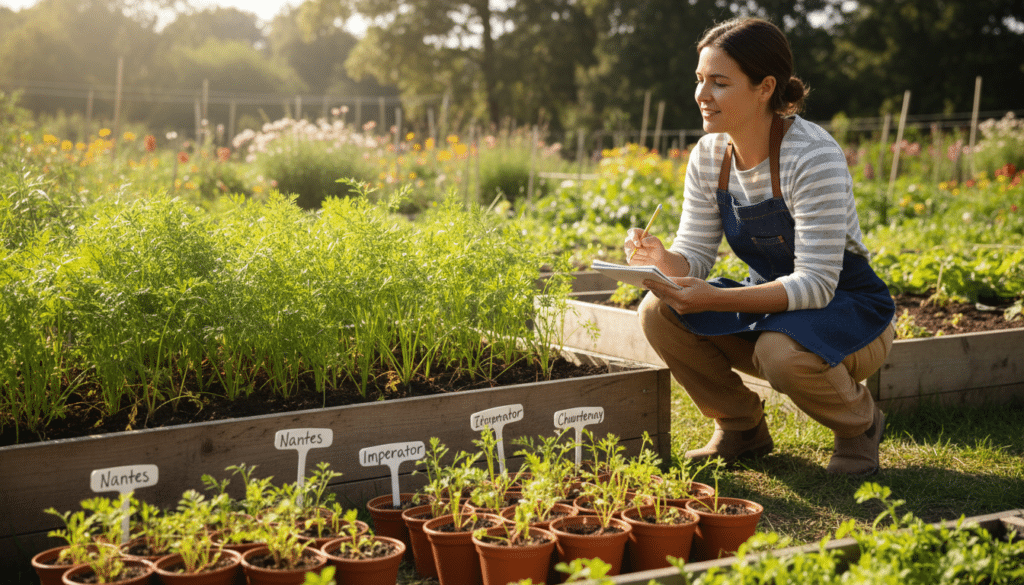
Imagine pulling up sweet, crunchy roots perfectly suited to your space and meals. It all begins with smart variety selection.
Shorter vs. Longer Varieties
Your container’s depth dictates your best options. Compact types are ideal for shallow planters.
Little Finger, Tonda di Parigi, and Red Cored Chantenay grow just 3 to 6 inches long. These shorter varieties thrive in confined spaces.
Always check the seed packet. Confirm the mature length fits your pot’s depth.
Best Uses for Different Carrot Types
Think about how you’ll enjoy your harvest. Your culinary plans should guide your choice.
Nantes varieties are excellent for fresh juicing. Their sweet, crisp texture is perfect.
Tonda di Parigi is a preferred choice for roasting. Its round shape caramelizes beautifully.
For warmer climates, try a heat-resistant option like Shin Kuroda. It handles summer heat well.
With a larger planter, you can experiment. Test a few different types to see what you love most.
Quick Variety Guide:
- For small pots: Little Finger, Tonda di Parigi (3-6 inches).
- For juicing: Nantes types.
- For roasting: Tonda di Parigi.
- For heat: Shin Kuroda.
Selecting the Ideal Container and Material
The material and dimensions of your planter directly influence the quality and quantity of your yield. Choosing wisely sets the stage for a successful harvest.
Container Depth and Width Requirements
Depth is your primary concern. For compact varieties, a pot that is at least 6 inches deep is sufficient. For longer types, you need a much deeper home—aim for 16 inches or more.
This prevents the main root from hitting the bottom and becoming stunted. In terms of volume, a 7-gallon pot works well for smaller roots. For larger varieties, opt for a 15-gallon size or bigger.
Material and Color Considerations
The pot’s composition matters greatly. Prioritize breathable materials like terracotta, wood, or fabric. These allow for better airflow to the soil and roots.
Avoid dark-colored planters, especially black ones, in full sun. They absorb heat and can overheat the soil, damaging your crop. This is a key tip for summer gardening.
Always check for drainage holes. If your pot lacks them, you can easily drill a few. Good drainage is non-negotiable for healthy root development.
These principles apply to many potted plants. For example, you can use similar guidelines when growing raspberry plants in containers. The right foundation makes all the difference.
Preparing and Amending Your Potting Soil
The secret to plump, straight roots lies beneath the surface in your planter. Your choice of medium directly impacts the health and shape of your harvest. A perfect blend provides the right balance of nutrients, drainage, and texture.
Selecting a Well-Draining Potting Mix
Always begin with a high-quality, well-draining potting mix. Brands like Fox Farms Happy Frog are excellent. They contain higher phosphorus, which is vital for strong root development.
You might want to add compost for extra nutrients. Never use pure compost alone. It holds too much water and can cause roots to fork. Instead, use a 50/50 mix of potting soil and compost.
Fill your container to about one inch below the rim. This prevents the young seedlings from being shaded too much. It also makes watering easier and more effective.
Avoid using old garden soil from your yard. It can compact in a pot and may introduce pests or diseases. Starting fresh is the best policy for a healthy vegetable crop.
Follow these simple tips for success:
- Start with quality: Use a well-draining potting mix designed for root crops.
- Amend wisely: If using compost, mix it 50/50 with your potting soil.
- Fill correctly: Leave an inch of space at the top of your planter.
- Keep it clean: Never reuse old, native garden soil in your container.
Taking time with your soil preparation sets the stage for a fantastic harvest. A loose, nutrient-rich foundation is the key to success.
Planting Carrot Seeds: Techniques and Design Ideas
The moment you sprinkle those tiny seeds into the soil marks the beginning of your harvest journey. How you place them affects both beauty and bounty.
You have two primary options for arranging your plantings. Each method offers distinct advantages for your planter’s layout.
Broadcast Sowing vs. Row Planting
Broadcast sowing means scattering them freely across the soil surface. This creates a natural, dense patch of foliage.
Row planting involves making neat, shallow drills. Space these lines about two inches apart for proper root development.
| Method | Description | Best For | Seed Depth | Spacing |
|---|---|---|---|---|
| Broadcast | Seeds scattered randomly | Aesthetic, natural look | 1/4 inch | N/A |
| Row Planting | Seeds placed in straight lines | Organized, easier thinning | 1/2 inch drill | 2 inches apart |
| Pattern Planting | Seeds arranged in shapes | Fun projects with kids | 1/4 inch | As designed |
“Good seed-to-soil contact is the non-negotiable first step for germination. Don’t just drop them; press them in.”
Lightly Covering Seeds for Optimal Germination
After sowing, cover your seeds with a very thin layer of soil. They only need to be about a quarter of an inch below the surface.
Gently press them into the ground. This ensures essential contact for moisture absorption.
Delicate seeds can struggle if buried too deep. A light covering is the key to strong, even sprouting.
Optimizing Spacing and Thinning for Healthy Growth
Don’t let a crowded pot lead to a disappointing yield. Strategic spacing is your key to success. This essential work allows each plant to reach its full, delicious potential.
Begin when your carrot seedlings are about 2-4 inches tall. Use small scissors to snip the extras at the soil line. Aim to leave the remaining plants about 1 inch apart.
This first pass might feel like you’re removing a lot. Don’t worry! Those tender thinnings are a tasty bonus for salads.
One month later, perform a second thinning. This gives your best carrots even more room. Space them roughly 2 inches apart for their final development.
Perfect spacing at sowing is nearly impossible. Thinning is the standard, effective way to manage density. By giving each carrot its own space, you ensure a harvest of healthy, crisp vegetables.
Watering Strategies to Keep Soil Moist and Roots Happy
Your watering routine is the lifeline for your potted carrot crop. Getting it right ensures your seeds sprout and your roots develop into sweet, crisp vegetables. Inconsistent moisture is a common cause of forked or split harvests.
Establishing a Regular Watering Schedule
A simple schedule is your best tool. Carrot seeds require consistently moist soil to germinate successfully. Using a soil moisture meter takes the guesswork out of this critical phase.
Check the meter daily. Your goal is to keep the top two inches of soil moist. This is especially vital during hot, dry spells when your pot can dry out fast.
Here is a simple guide to follow at different stages:
| Plant Stage | Watering Goal | Best Method | Frequency Check |
|---|---|---|---|
| Seed Germination | Keep top 2″ moist | Use a gentle mist | Daily, sometimes twice |
| Young Seedlings | Evenly moist soil | Light watering can | Every 1-2 days |
| Established Plants | Deep root hydration | Water until drainage | When top inch feels dry |
For newly sown seeds, always use a mist setting on your hose. A heavy blast can wash away the shallowly planted seeds. Gentle moisture is key.
Once your carrots are established, water deeply. Continue until you see liquid draining from the pot’s bottom. This ensures the entire root zone is fully hydrated.
Sticking to a regular schedule prevents stress. Happy roots grow straight and sweet, giving you a fantastic harvest from your planter.
Managing Sunlight, Covering, and Temperature in Containers
Your pot’s location can turn good roots into great ones. Your carrots crave sunshine to develop their full, sweet flavor.
Once those first green shoots appear, find a bright spot. Your planter needs at least six hours of direct light every single day. This daily sun fuels growth and builds sugars in the roots.
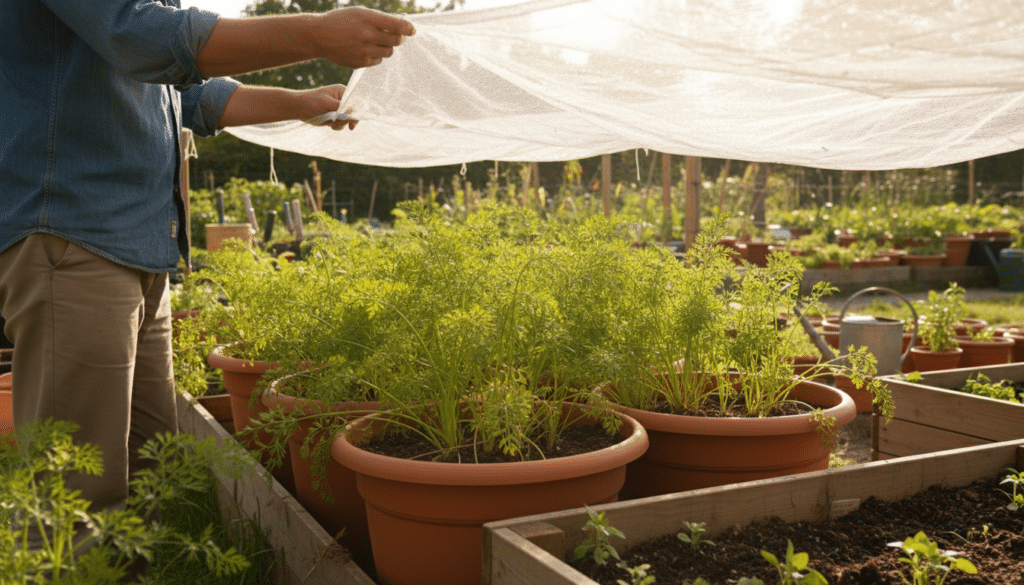
Before germination, sunlight isn’t necessary. In fact, covering the soil with a plant blanket is a smart move. This fabric locks in moisture and reduces evaporation, giving your seeds the perfect, humid start.
Keep the blanket on until you see sprouts. Then, remove it to let the sunshine in. This simple step can make germination much more reliable.
Summer heat can be intense. If a heat dome arrives, protect your carrot crop. Move the pot to a shaded area during the afternoon hours. Extreme afternoon heat can stress the plants.
A consistent temperature helps, too. Avoid placing your pot against a hot wall. The soil should stay cool and moist for best results.
This careful management stops roots from becoming bitter or woody. It ensures a harvest that is crisp and sweet, not stunted.
Applying Fertilizer and Monitoring Plant Growth
The right nutrients at the right time transform leafy tops into plump, edible roots.
Apply your first round of fertilizer when the foliage reaches 2-4 inches tall. This supports the initial growth of the plant’s root system.
The second application should occur when the stems are 6-8 inches high. This encourages the final development of your harvest.
Choose a fertilizer high in phosphorus and potassium but low in nitrogen. This balance promotes strong, sweet roots instead of excessive leafy growth.
Avoid products with too much nitrogen. They can cause your carrot to grow hairy, fibrous roots instead of a smooth vegetable.
Monitor your pot over time. If you see the shoulders of your carrots popping out of the soil, act quickly.
Mound a little extra mix around those exposed shoulders. This prevents them from turning green and bitter in the sun.
Regular checks allow you to catch small issues early. Your attention ensures a high-quality yield from your planter.
Conclusion
Mastering these simple steps leads to a rewarding harvest of crisp, homegrown vegetables. In just about two to three months from sprouting, you can enjoy fresh produce from your own space.
Remember, consistent moisture and the correct planter depth are crucial. They prevent common problems like forked or stunted roots. Proper soil mix and timely thinning also play vital roles.
This method is straightforward and productive for everyone. Whether you’re new to gardening or have experience, you’ll find success. Start your project today and savor the triumph of harvesting your own dinner.
