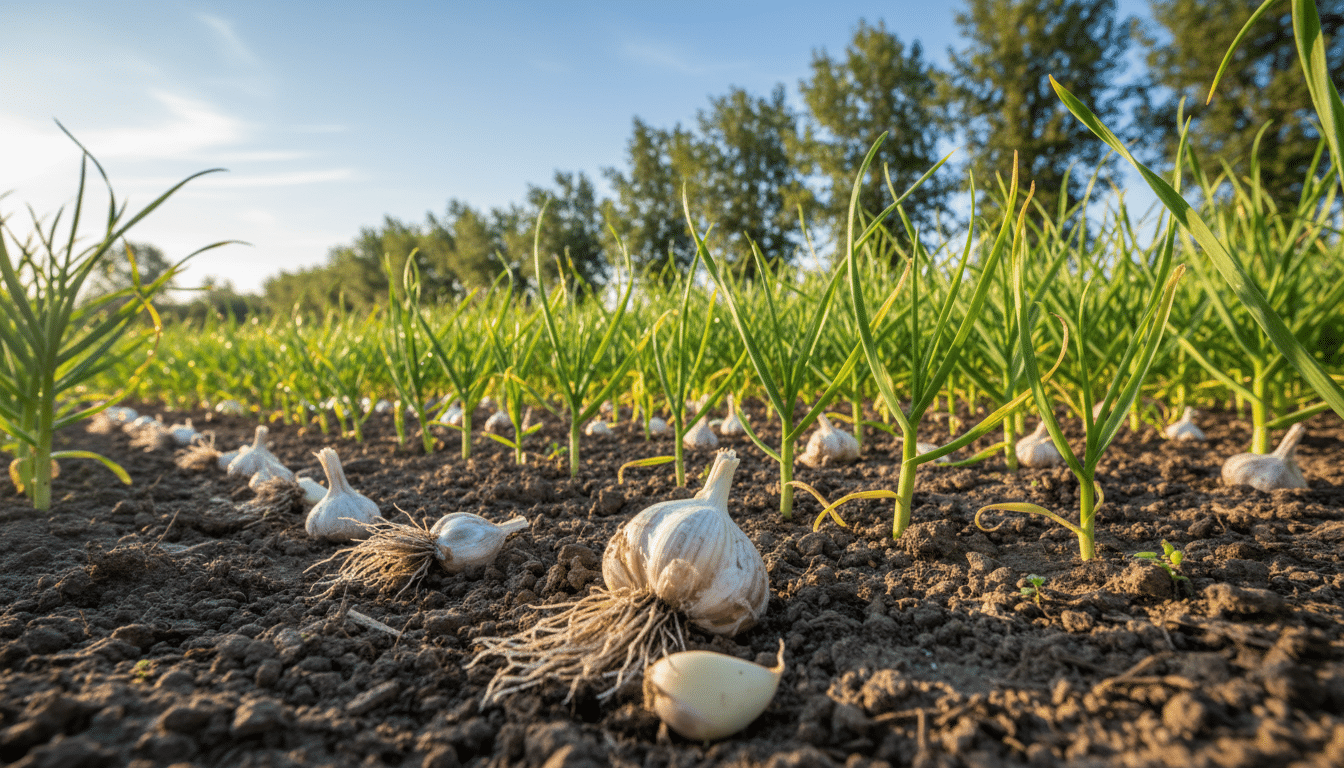
What if you could harvest nearly 100 bulbs of a powerful superfood from a modest garden space?
Take Dana McHenry, for example. From a simple 4-foot by 10-foot raised bed in the Pacific Northwest, she reaps about 90 bulbs weighing seven pounds each year. This bounty is a testament to the plant’s generous nature.
Cultivating this staple crop is a deeply rewarding journey. It provides a versatile ingredient for your kitchen and offers significant health benefits, acting as an immune booster and supporting cardiovascular wellness.
As a long-season crop, it requires patience. But the payoff is immense. Following a clear plan ensures your harvest provides enough robust flavor to last your family until the next summer. Knowing the right moment to pick your bulbs is crucial, which is covered in our complete guide to harvesting garlic.
Key Takeaways
- Growing this crop is a rewarding experience that yields a versatile kitchen superfood.
- It offers notable health benefits, including immune and cardiovascular support.
- A substantial harvest is possible in a relatively small space, like a raised bed.
- It is a long-season crop that requires patience throughout its growth cycle.
- Proper timing and techniques are essential for a successful yield.
- Following a step-by-step guide helps ensure a flavorful harvest that can last for months.
Introduction: Getting Started with Garlic Gardening
Imagine cultivating a crop so revered that ancient Olympians consumed it for enhanced performance. Starting with this pungent bulb connects you to a rich history. Your journey is about more than just planting. It focuses on quality, vitality, and personal reward.
Why Grow Your Own Garlic?
Taking control of your food source is powerful. Cultivating your own crop lets you avoid the chemical treatments common on store-bought bulbs. You gain access to a fresher, more robust flavor.
Historically, this powerhouse has served as a home remedy for centuries. Pulling your own fresh bulbs from the earth provides a deep sense of accomplishment. The taste is noticeably more intense.
The Benefits of Garlic in Your Garden
These plants act as a natural pest repellent. They can help protect neighboring vegetables from insect damage. This makes them a valuable companion in your plots.
Your local climate plays a decisive role. Selecting the right variety for your region is a critical first step for success. This simple act ensures your gardening adventure is both fruitful and deeply satisfying.
How to Grow Garlic in Your Garden: The Basics
Before you plant a single clove, getting the season and site right sets the stage for your entire crop. Success hinges on two simple, non-negotiable rules.
Optimal Timing for Planting
This plant has a unique biological need called vernalization. It requires a cold period of about ten weeks near 45°F to trigger bulb formation.
For most regions, the ideal window is mid-September through October. Fall planting allows roots to establish before the ground freezes. This gives the crop a strong head start for the following summer.
“Gardening is the art of using the calendar as much as the spade.”
If you live in a warm climate, you can mimic winter. Place your seed cloves in the refrigerator for ten weeks before spring planting.
| Planting Time | Key Benefit | Primary Consideration |
|---|---|---|
| Fall | Roots establish over winter for robust spring growth. | Bulbs are typically larger and more flavorful. |
| Spring | Suitable for areas with mild winters. | Bulbs are often smaller without the cold trigger. |
| Refrigerated (for warm climates) | Simulates necessary vernalization. | Requires planning ahead of the spring season. |
Choosing the Right Growing Conditions
Location is everything. Select a spot that receives a full six to eight hours of direct sun daily. Ample light is crucial for developing large, healthy bulbs.
Equally important is soil drainage. These plants despise “wet feet,” especially during cold months. Ensure your bed does not collect standing water.
Well-draining, fertile soil is the perfect foundation. With the right timing and conditions, your cloves are primed for a spectacular harvest.
Choosing Your Garlic Varieties
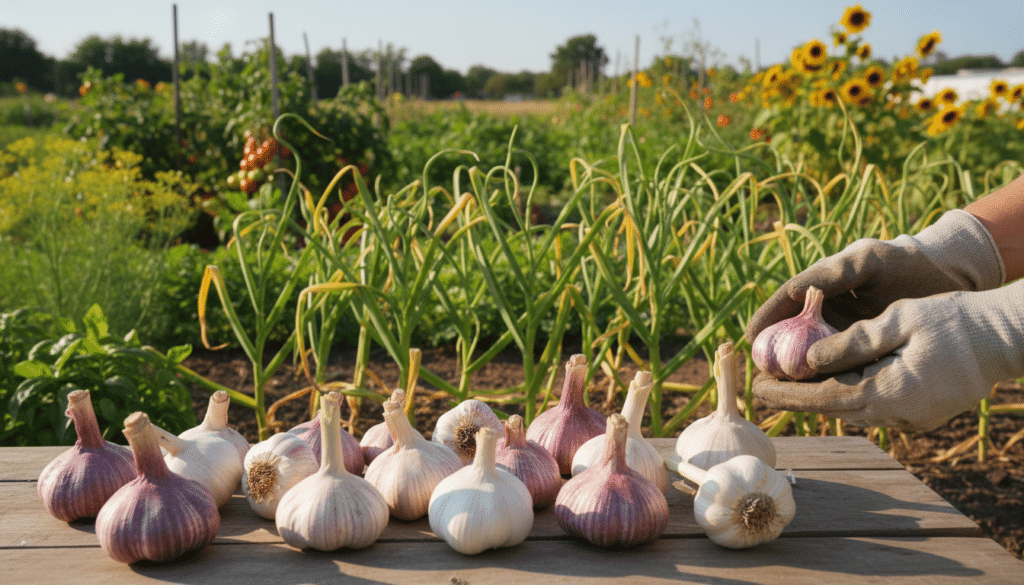
Navigating the world of garlic varieties unlocks flavors, storage potential, and climate adaptability for your garden. Your selection shapes the entire growing experience.
Hardneck vs. Softneck Garlic
The primary difference lies in their stems. Hardneck varieties have a rigid central stalk. Softneck garlic features a flexible, braidable neck.
Hardneck garlic is extremely cold-hardy. Northern gardeners favor types like ‘Music’ and ‘Chesnok Red’. They produce larger, easier-to-peel cloves with a stronger flavor profile.
Softneck garlic varieties thrive in warmer climates. ‘California White Early’ is a popular example. These types offer a longer shelf life and are perfect for braiding.
Exploring Special Varieties and Elephant Garlic
Your specific hardneck varieties and softneck garlic choices depend on your local conditions. Experimenting with different types is part of the fun.
Remember, elephant garlic is not a true garlic. It’s a mild-flavored allium that produces massive bulbs. It’s a fascinating addition for any gardener seeking something unique.
Preparing Your Garden and Soil
Your garlic’s future flavor and size are directly tied to the quality of the soil it calls home. A well-prepared bed is the best gift you can give your crop.
Soil Amendments and Composting Tips
Begin by enriching your soil with organic compost and a balanced fertilizer. This provides essential nutrients for your garlic to thrive.
Aim for a soil depth of 8 to 12 inches. This gives the cloves ample room for strong root development.
Research shows the perfect blend matters. A mix of 75% compost and 25% vermiculite yielded 489 grams of garlic in tests, outperforming pure compost beds.
| Soil Blend | Compost Ratio | Vermiculite Ratio | Key Benefit |
|---|---|---|---|
| High-Yield Mix | 75% | 25% | Superior drainage and moisture retention for larger bulbs. |
| Standard Compost | 100% | 0% | Good fertility but can retain too much water in heavy rains. |
| Lightened Mix | 50% | 50% | Excellent for very dense, clay-heavy garden soils. |
Adding vermiculite significantly improves drainage while holding moisture. This balance is crucial for bulb health.
Before fall planting, work these amendments deep into the soil. Mix them several inches below where the base of your cloves will rest.
Always use certified seed garlic. Avoid grocery store bulbs. They may carry disease and are not suited for your local soil and climate.
Planting Garlic: Step-by-Step Process
The moment has arrived to transform your prepared bed into a thriving garlic patch. This systematic approach ensures each clove develops into a robust bulb.
Separating Cloves and Proper Planting Technique
Begin by gently separating your seed garlic into individual cloves. Always select the largest ones from the bulb.
Larger cloves consistently produce bigger, healthier bulbs at harvest time. Place each clove with the flat root side facing down.
The pointed end must face upward. This orientation guides the shoot toward the sun.
Spacing, Depth, and Mulching Guidelines
Proper spacing is crucial for bulb development. Use a 7-inch off-center spacing pattern.
This clever layout allows you to add an extra row in the same garden space. Your total yield increases significantly.
Plant each clove about 2 inches deep. This depth protects them from harsh winter temperatures.
A Hori Hori knife makes measuring easy. It can dig holes exactly 4 inches deep for consistent planting.
After placing all cloves, cover the entire bed with 2 to 3 inches of leaf mulch. This layer provides essential insulation.
Your garlic will survive the coldest months snug in the ground. The mulch also suppresses weeds and retains moisture.
Caring for Your Garlic: Water, Fertilizer, and Mulching
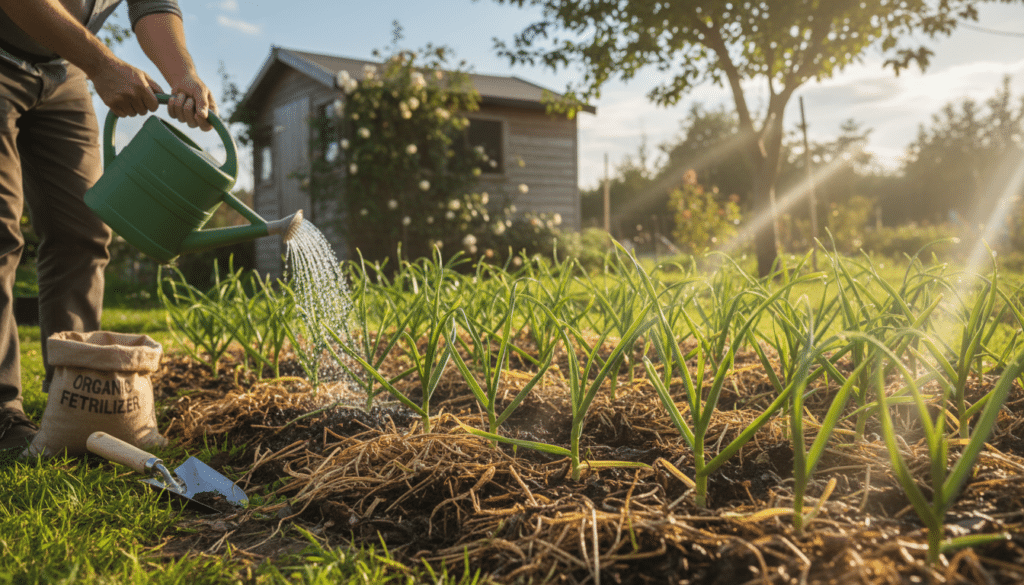
Spring’s arrival signals a crucial shift in your garlic patch’s care routine. As the weather warms, remove the winter mulch. This allows the soil to heat up and encourages strong shoot emergence.
Watering and Fertilization Strategies
Your garlic requires consistent moisture for optimal development. During the critical late spring bulbing phase, water every three to five days. An automatic irrigation system set for 25 minutes every other day can ensure perfect hydration.
Early in the season, side-dress your plants with blood meal. This provides the nitrogen needed for rapid, green foliage growth. Yellowing leaves often indicate a need for this nutrient boost.
Weed Control and Mulch Benefits
Keep the bed well-weeded. Garlic does not compete well with weeds for essential resources.
After weeding, consider a light layer of fresh mulch. It conserves soil moisture and further suppresses weeds. This careful attention supports strong root and bulb development throughout the growing period.
Harvesting Your Garlic Bulbs
Reaping the rewards of your labor requires precise timing and gentle handling. This final phase transforms your healthy plants into a storable, flavorful crop ready for your kitchen.
Identifying the Right Harvest Time
Watch the foliage closely for the perfect signal. Your garlic is ready when the lower five leaves have turned brown. This indicates the bulbs have reached their maximum size underground.
Harvest time typically arrives in June or July. It depends on your local climate and the specific variety you planted.
For hardneck types, remember a crucial spring task. You must remove the curly scapes in late spring. This redirects the plant’s energy from flowering into forming larger bulbs.
Techniques for Digging and Curing Garlic
When it’s time to harvest, use a garden fork or Hori Hori knife. Gently loosen the soil and lift the bulbs. Take care not to damage the delicate root plate.
After digging, allow your crop to cure. Place them in a shady, airy spot for two to three weeks. This process ensures the papery wrappers become completely dry.
Never wash the bulbs with water after the harvest. Introducing moisture can lead to rot during storage. Simply brush off any dry soil once the roots and stem are brittle.
Proper curing locks in that robust, homegrown flavor. Your patience throughout the season culminates in this satisfying yield.
Processing and Storing Garlic for Maximum Flavor
Preserving your harvest transforms those earthy bulbs into year-round culinary treasures. Proper techniques lock in the robust flavor you nurtured.
From Garlic Salt to Puree: Simple Recipes
Follow Dana McHenry’s lead. She bakes a mixture of kosher sea salt and fresh cloves at 200°F for two hours to create a flavorful garlic salt.
For a versatile puree, simmer peeled cloves until soft. Strain and mix the result with olive oil. This paste is a kitchen timesaver.
Roast whole bulbs at 450°F for 40 minutes. The caramelized result freezes beautifully for future pizzas or bread toppings.
Your properly cured crop stores for several months. A cool, dark, and dry pantry or garage is ideal.
Always separate your hardneck and softneck varieties. This helps you use crops with shorter shelf life first. The difference in longevity matters.
Save your largest, best-formed bulbs from this year’s harvest. Replant them in the fall for a continuous cycle. Your garden’s bounty renews itself.
Conclusion
Your journey from a single clove to a full harvest is a testament to nature’s cycles and your dedication. This gardening adventure connects you deeply with the earth from winter dormancy to spring growth.
By following these steps, you’ve learned to nurture your plants through each season. Patience is key during the long wait, but the reward is immense. The robust flavor of home-grown bulbs far surpasses any store-bought variety.
Remember, timing is everything. For instance, knowing the precise moment to pick is crucial for quality. You can learn more about when softneck garlic is ready to to perfect your technique.
As one year ends, another begins. Save your best bulbs for replanting this fall. We hope this guide inspires you to start your own patch and enjoy the incredible taste of success.
