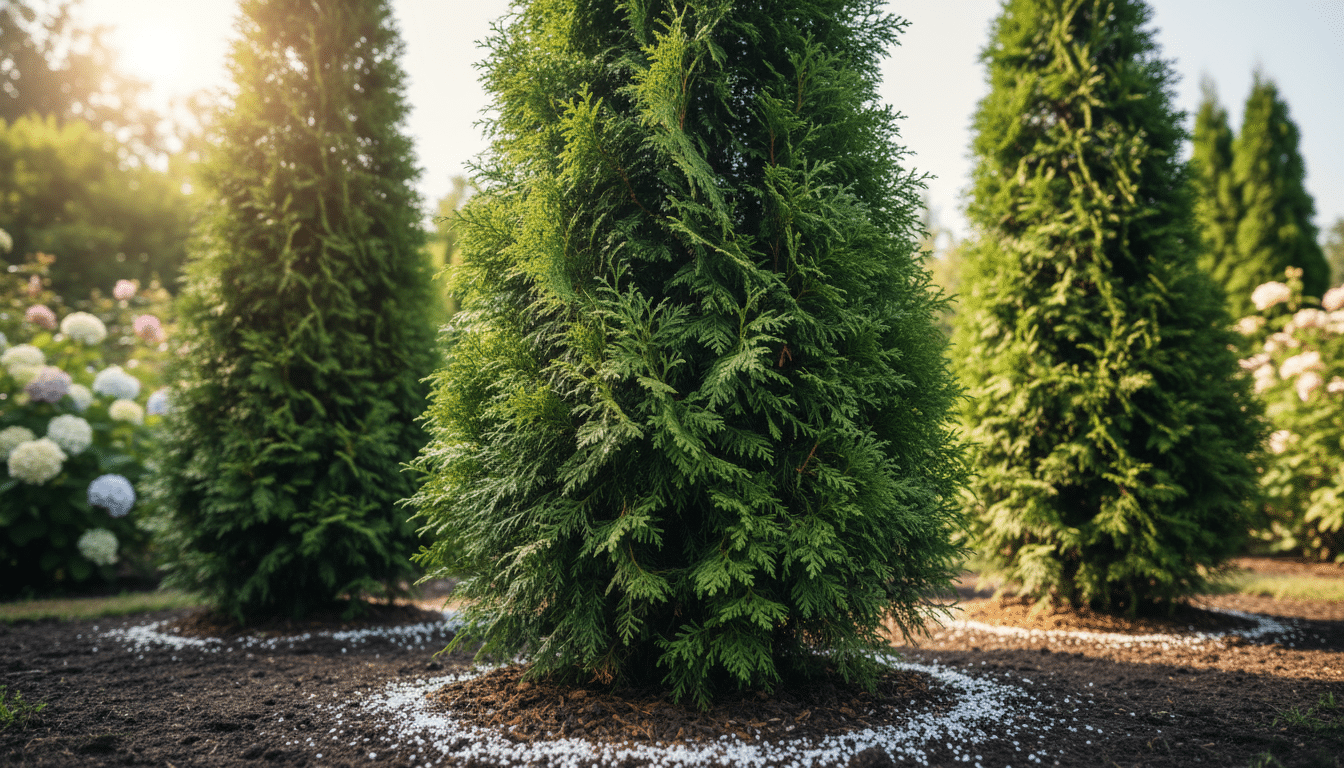
Have you ever wondered why some backyard hedges look like lush green walls while others stay thin and brown? It often comes down to the activity happening beneath the soil where your plants struggle for space. These narrow-leaf evergreen trees are famous for their scale-like leaves and their ability to create a natural screen.
In a typical backyard, your greenery must compete for every drop of water and scrap of food. Without the right nutrients, your once-vibrant hedge might lose its luster or fail to fill in correctly. Keeping your landscape healthy requires a proactive approach to soil care.
Using a high-quality fertilizer ensures your greenery stays thick and healthy throughout the changing seasons. This becomes especially critical for established hedges that provide essential privacy for your residence. By feeding your trees properly, you encourage the vitality needed for a dense barrier.
Learning to nourish your arborvitae correctly is the secret to a professional-looking garden. Strategic maintenance transforms a basic yard into a stunning landscape that increases property value. You can easily achieve breathtaking results with the right knowledge and tools.
Key Takeaways
- Nutrient competition is much higher in dense hedges than in lone specimen trees.
- Proper feeding supports fast development and maintains thick evergreen foliage.
- Specific fertilizer formulations help you avoid root burn and long-term damage.
- Consistent nourishment is essential for trees serving as natural privacy screens.
- Correct application timing ensures maximum absorption for year-round health.
When to Fertilize Your Arborvitae Trees
Helping your arborvitae thrive starts with understanding the natural rhythm of its growing season. Giving your plants a boost at the right time ensures they remain healthy and strong throughout the year.
Best Timing for Application
The ideal window for fertilizing is early spring. During this spring window, the soil warms up and roots wake up. You want to apply fertilizer just before new growth begins. This allows the tree to use nutrients for fresh foliage and roots.
Signs Your Trees Need Nutrients
Watch for yellowing foliage or sparse needle coverage. If you see slower growth than usual, it’s a clear signal. A healthy tree should look vibrant and full with deep green color.
“A healthy garden reflects the quality of its soil and the care of its keeper.”
When to Skip Fertilizing
Stop applications at exactly the right time, usually one month before the first frost. Do not use fertilizer during a drought. Avoid feeding in late summer to prevent tender new growth from suffering severe frost damage.
Check your lawn care schedule as well. Trees in regularly fed lawns may already have all the nutrients they need. Feeding a stressed plant can often do more harm than good.
| Season | Recommended Action | Primary Benefit |
|---|---|---|
| Early Spring | Main Application | Boosts new foliage and root expansion |
| Late Summer | Avoid Feeding | Prevents frost damage to tender shoots |
| Early Fall | Light Feeding | Prepares the plant for winter dormancy |
| Drought Periods | Skip Application | Prevents root burn and moisture stress |
Choosing the Right Arborvitae Fertilizer
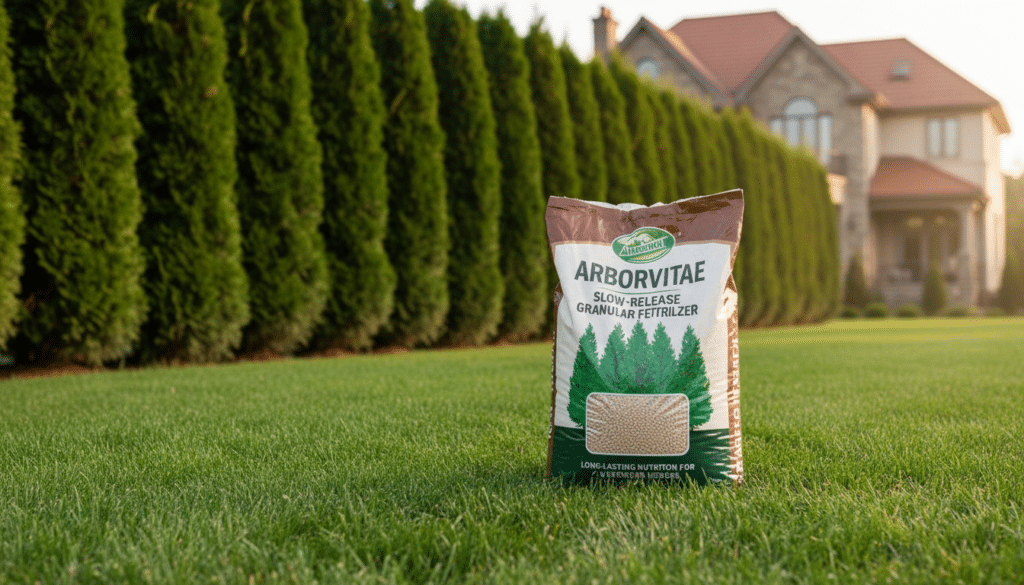
Finding the perfect arborvitae fertilizer requires a quick look at NPK ratios and your specific garden conditions. Selecting a high-quality product ensures your trees stay lush and resilient throughout the year.
You want a formula that supports steady growth without causing chemical stress. Providing the right balance of elements helps your hedge reach its full height and density.
Recommended NPK Ratios and Formulations
Experts often suggest using a high-nitrogen fertilizer like a 20-15-15 or 10-5-5 formula. You can also achieve great results with a balanced 10-10-10 fertilizer designed for trees and shrubs.
High nitrogen levels are essential for that signature vibrant green foliage. These ratios provide the specific support your evergreens need for vigorous spring development.
Why Slow-Release Fertilizers Work Best
A slow release granular fertilizer for arborvitae is often the safest choice for your landscape. These fertilizers deliver vital nutrients gradually, which prevents the delicate feeder roots from burning.
Look for a mix where at least 50 percent of the nitrogen is slow-release. This ensures your trees enjoy a steady supply of energy over several months.
The Benefits of Soil Testing
Arborvitae grow best when your soil pH stays within the 6.0 to 8.0 range. You can get an affordable soil test through a university extension office or the UConn Soil Lab.
These extension programs offer research-based advice to help you balance the nutrients in your ground. Testing your soil takes the guesswork out of maintenance and prevents you from buying unnecessary fertilizers.
How to Apply Fertilizer to Your Arborvitae
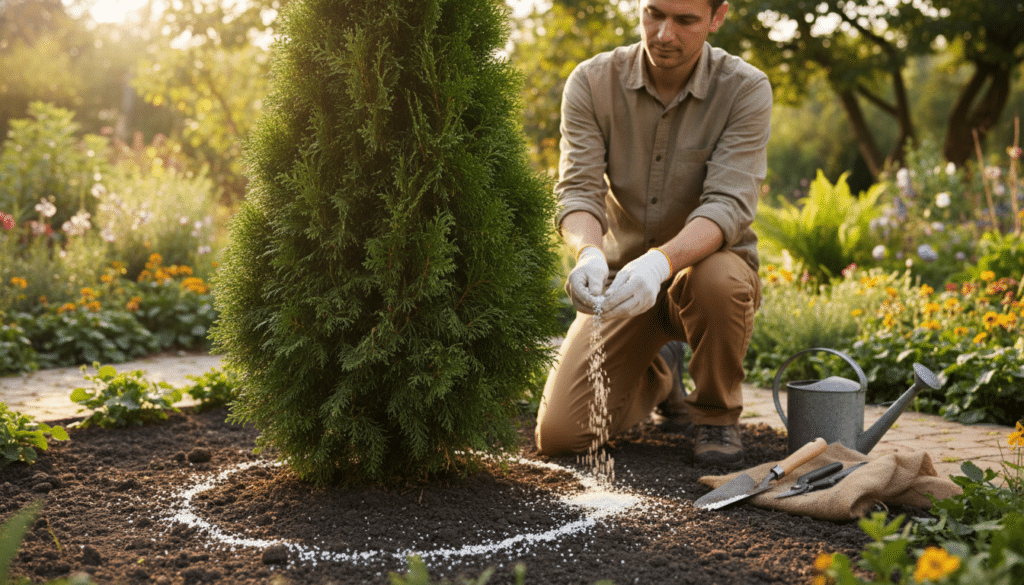
Applying nutrients to your trees requires precision to ensure the underground systems get exactly what they need. A steady hand and a clear plan help your arborvitae thrive throughout the seasons. Proper application supports healthy growth and maintains the vibrant green color you love.
Step 1: Calculate the Correct Amount
Check the instructions on your fertilizer bag for specific measurements before you begin. Most experts suggest applying one pound of product per 100 square feet of the root area. Measuring accurately ensures your tree receives the right balance of nutrients without the risk of burning.
Step 2: Broadcast Fertilizer Over the Root Zone
Spread the granules evenly across the entire root zone to reach the delicate feeder roots. This zone extends from the trunk outward to the drip line where the branches end. Using a broadcasting method prevents concentrated pockets of nutrients from damaging your arborvitae.
Step 3: Keep Fertilizer Away from the Trunk
Ensure the granules stay several inches away from the base of the plant. Direct contact with the bark in the trunk area can cause severe chemical burns or rot. Focus your efforts on the outer circle where the absorbing system is most active.
Step 4: Water Thoroughly After Application
Use a garden hose to soak the soil once you finish spreading the fertilizer. This moisture helps dissolve the granules so the nutrients can travel deep down to the tree. Be careful not to create puddles, as excess water can sometimes lead to fungal issues.
Special Considerations for Green Giant Arborvitae
The green giant variety is famous for its rapid growth, often adding three to four feet of height each year. When choosing the best fertilizer for Thuja Green, remember that these trees need consistent support to reach their 60-foot potential. Because a green giant hedge is usually spaced five feet apart, they will compete for nutrients as they mature.
Proper spacing and feeding turn a simple row of trees into a majestic living wall.
Common Mistakes to Avoid
Never apply fertilizer to a newly planted arborvitae because it can easily harm the young roots. Wait until the tree is fully established before you start a regular feeding schedule. Also, avoid adding nutrients during a drought when the greenery is already under stress.
| Application Step | Best Practice | Benefit for Green Giant |
|---|---|---|
| Measurement | 1 lb per 100 sq. ft. | Prevents nutrient burn |
| Placement | Outer drip line | Supports green giant width |
| Watering | Light, steady soak | Activates the green giant food |
Conclusion
Unlocking the full growth potential of your arborvitae trees starts with a simple, consistent fertilizing routine. These trees often compete for nutrients in backyard soil, so adding the right fertilizer is vital.
Whether you grow a green giant for privacy or use smaller landscape plants, proper care supports healthy roots.
The natural range of the tree reaches far north, proving how hardy this plant can be with a strong root system.
If you feel unsure about your soil, contact a local extension office for a quick test. Your arborvitae will reward you with lush, vibrant foliage that naturally blocks noise. These trees transform any landscape into a privacy sanctuary.
Every arborvitae tree benefits from your care, especially a fast-growing green giant. Keeping your arborvitae healthy ensures these trees and nearby garden plants flourish together.
When each tree receives a quality fertilizer, your arborvitae and other plants create a stunning view for every tree lover. Nourishing these trees today builds a stronger yard for tomorrow.
| Care Category | Management Goal |
|---|---|
| Fertilizing Schedule | Promote vigorous growth and color |
| Soil Health | Balance essential nutrients for roots |
| Tree Placement | Optimize space for privacy hedges |
