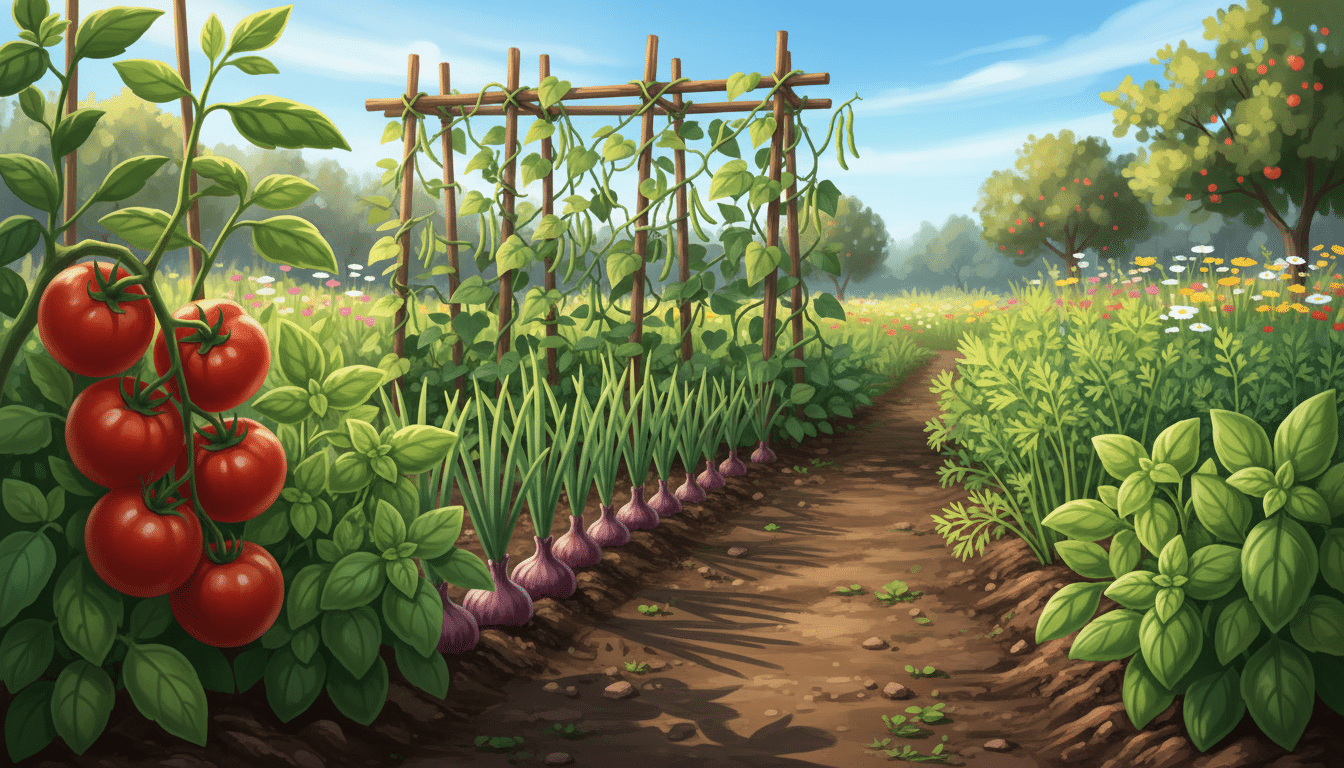
Have you ever wondered if your backyard could flourish simply by choosing the right neighbors? Welcome to a companion planting guide for vegetables that transforms your annual layout.
This comprehensive method transforms your outdoor space into a highly active ecosystem. By using strategic pairings, you combine traditional wisdom with modern facts to enhance health.
Diverse plants work together to maximize growth and repel insects naturally. For example, the Three Sisters system shows how corn, beans, and squash support one another.
Smart choices prevent common mistakes that often stunt a harvest or attract hungry pests. Knowing these connections gives you the trust to plan a space that thrives through natural teamwork.
You will learn the best pairings to assist tomatoes, carrots, and cucumbers to improve your yields. This resource makes it easy to avoid pairings that might hurt your progress this season.
This garden method creates a setting where plants support each other’s specific needs. You will find how to work with nature to get better results.
Key Takeaways
- Learn to pair crops to boost health and yield.
- Discover how to repel pests using natural relationships.
- Avoid common mistakes that can stunt garden growth.
- Understand the science behind traditional gardening wisdom.
- Create a balanced ecosystem that works with nature.
- Gain confidence in planning your annual layout.
What Is Companion Planting?
Think of companion planting as building a tiny, supportive community right in your own backyard. It is the strategic practice of growing different plants close together so they can support each other through various beneficial relationships. This companion planting method helps your garden thrive by using nature’s existing bonds. It is truly rewarding to see your garden function as a self-sustaining team.
In this natural community, vegetables, herbs, and flowers work together to produce better yields. You create a balanced ecosystem where different plants share resources and protection. Some relationships are mutually beneficial, such as when beans enrich the soil with nitrogen while corn provides a tall structure for them to climb. These partnerships ensure that every inch of your garden bed stays productive.
Other companion pairings might offer one-sided benefits for your crops. For instance, you might place bright flowers near your vegetables primarily to attract helpful pollinators. This specific planting style helps you deter garden pests and can even enhance growth rates. Attracting beneficial insects is a great way to keep your harvest safe and healthy without using harsh sprays.
Using a companion strategy is a time-tested technique that has existed for centuries. Indigenous gardeners used these companion methods long ago to create resilient and healthy plants. By understanding these pairings, you can reduce your reliance on chemical interventions and enjoy a more sustainable planting journey. This approach makes gardening more enjoyable because you are working with nature rather than against it.
Why Companion Planting Works in Your Vegetable Garden
Science proves that pairing vegetables creates a small ecosystem that naturally boosts health and productivity. When you use companion planting, you help your plants interact with the environment to manage pests and improve growth.
These relationships influence everything from pollination success to how well your garden handles stress. By understanding how plants work together, you can create a more balanced and productive space.
Science-Backed Research on Plant Partnerships
USDA research confirms that intercropping, or growing different crops together, helps limit pest outbreaks significantly. Unlike monocultures, diverse plots make it much harder for bugs to spread. For example, university studies found that interplanting marigolds reduced aphid populations by acting as a natural shield.
Research from Rappahannock Community College also supports pairing basil near tomatoes to improve flavor and pest resistance. These biological mechanisms involve species releasing compounds that deter harmful insects or attract beneficial insects. Modern agricultural studies now confirm what traditional gardeners have suspected for generations.
How Plants Interact to Support Growth
Plants also support each other below the surface in very specific ways. Legumes like beans and peas fix nitrogen in the soil, which enriches the earth for nearby neighbors. This natural fertilization leads to healthier growth and more vigorous vegetables throughout the season.
Strategic pairings also help with resource management and protection through these natural methods:
- Pollination Boost: Nectar-rich species draw bees and butterflies to the area to improve fruit yields.
- Confusing Pests: Mixing different crops makes it harder for pests to find their food by sight or smell.
- Resource Sharing: Varieties with different root depths ensure everyone has access to moisture and nutrients in the soil.
By using these proven methods, you create a more resilient space where every living thing plays a supporting role.
Key Benefits of Companion Planting for Your Garden
Unlocking the potential of your outdoor space starts with understanding how certain pairings help each other thrive. Companion planting serves as a natural shield, using strong-smelling herbs to confuse pests like aphids and beetles. This smart planting strategy keeps your vegetables healthy without relying on harsh chemicals.
By including bright flowers, you invite beneficial insects such as bees and butterflies into your garden. These visitors are vital for pollination, which directly improves the growth and yield of your fruit-bearing crops. You can even enhance the flavor of your harvest by choosing the right neighbors, like utilizing garlic companion plants to protect your veggies.
Beyond protection, these partnerships improve the soil significantly. Legumes fix nitrogen, creating a nutrient cycle that feeds hungry neighbors throughout the season. This dense planting also creates a living mulch to stop weeds from taking over your thriving garden space.
| Benefit | Primary Action | Garden Result |
|---|---|---|
| Pest Control | Deterring harmful pests | Healthier foliage |
| Soil Health | Adding nutrients to soil | Increased fertility |
| Space Use | Layering different heights | Bigger harvests |
- Natural Defense: Smelly herbs mask the scent of your vegetables from hungry bugs like cabbage moths.
- Better Flavor: Some pairings, such as basil and tomatoes, actually make the fruit taste much sweeter.
- Weed Control: Thick foliage shades the ground, preventing weed seeds from sprouting and stealing water.
- Resilient Ecosystem: These benefits work together to create a low-maintenance space that produces better results.
The Three Sisters Method: Corn, Beans, and Squash
You can easily master the Three Sisters method, a time-tested companion strategy involving corn, beans, and squash. This traditional planting system originates from Indigenous North American agricultural practices that have sustained communities for centuries.
In this setup, corn serves as a sturdy vertical trellis for your climbing beans. As the beans grow upward, they fix atmospheric nutrients into the ground to enrich the nitrogen soil content for their neighbors.
The large leaves of the squash spread across the earth, acting as a living mulch. This layer shades the ground, retains moisture, and naturally suppresses weed growth around your companion plants.
The Three Sisters are inseparable, for they thrive only when planted together.
This companion trio creates a complete micro-ecosystem where every plant fulfills a specific function. By boosting nitrogen soil levels, you ensure long-term vitality for your planting beds without external inputs.
| Plant | Primary Role | Main Benefit |
|---|---|---|
| Corn | Vertical Support | Acts as a living trellis |
| Beans | Soil Enrichment | Fixes nitrogen for growth |
| Squash | Ground Protection | Blocks weeds and saves water |
Follow these simple steps for a successful harvest:
- Plant your corn first and let it reach about 6 inches tall.
- Add beans once the stalks provide enough support for climbing.
- Finish by sowing seeds for the third sister around the perimeter of the mound.
Best Companion Plants for Tomatoes
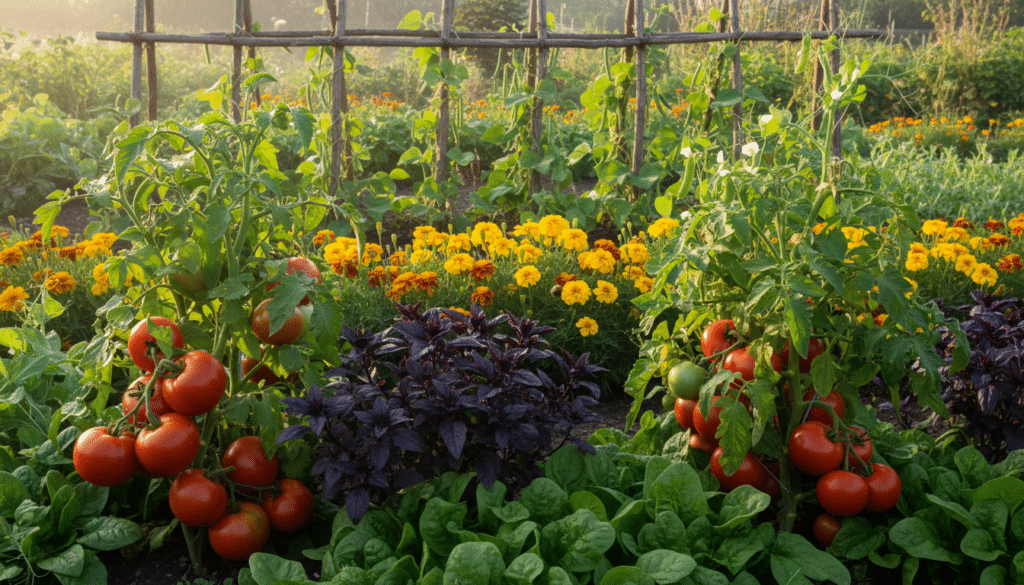
Many gardeners consider tomatoes the crown jewel of their vegetable patch, yet these plants often face pressure from hungry bugs. These vegetables benefit tremendously from a smart companion strategy to protect against common diseases and persistent pests. By surrounding your crops with helpful neighbors, you create a natural shield that promotes a bountiful harvest.
Basil and Other Beneficial Herbs
Basil stands out as the ultimate companion for your tomatoes. This fragrant plant reportedly enhances fruit flavor while repelling whiteflies and aphids. You can also tuck parsley between your plants to attract beneficial insects that help pollinate your garden.
“The partnership between herbs and vegetables is a classic example of nature’s synergy in the garden.”
Adding alliums like onions or garlic is another fantastic move. Their pungent scent helps repel spider mites and aphids effectively. Using these aromatic herbs ensures your tomatoes stay healthy throughout the growing season.
Flowers That Protect Tomatoes
Flowers serve as a defensive line for your tomatoes. Planting borage nearby attracts pollinators and deters destructive tomato hornworms. This companion plant works through multiple mechanisms to keep your garden thriving.
| Companion Plant | Main Benefit | Target Pest |
|---|---|---|
| Basil | Flavor Boost | Whiteflies |
| Borage | Pollination | Hornworms |
| Alliums | Scent Masking | Mites |
Calendula flowers draw in ladybugs that naturally control populations of small pests. You should space these herbs and flowers strategically around your rows. This creates a protective barrier without overcrowding your primary crops.
Companion Planting Guide for Vegetables: Cucumber Pairings
Growing cucumbers often feels like a constant battle against sneaky garden pest issues, especially the destructive cucumber beetles. These insects can quickly overwhelm your vines if you do not have a defensive plan in place.
Choosing the right companion plants is essential for protecting your crop and ensuring a healthy harvest. By mixing flowers and herbs nearby, you create a natural shield that keeps your garden thriving.
Marigolds and Nasturtiums for Pest Control
Planting marigolds near your cucumber plants helps repel harmful nematodes in the soil. These vibrant marigolds also deter various beetle species that might damage your vines during the peak growing season.
Nasturtiums act as an effective trap crop by pulling aphids away from your main plants. They improve overall growth and flavor while specifically repelling cucumber beetles to keep your cucumber patch safe from harm.
Radishes and Dill as Cucumber Companions
When you interplant radishes with cucumbers, they release compounds that actively repel flea beetles. Since radishes mature quickly, you can harvest them before the cucumbers need the full space to spread out.
Using dill as a companion is a great way to attract beneficial pollinators and predatory insects to your garden. This herb also helps by deterring mites and aphids from attacking your cucumbers. For the best results, plant these flowers around the perimeter and throughout your patch for comprehensive protection.
| Companion Plant | Role for Cucumbers | Targeted Issue |
|---|---|---|
| Marigolds | Soil Protection | Nematodes |
| Nasturtiums | Trap Crop | Aphids |
| Radishes | Space Efficiency | Flea Beetles |
| Dill | Natural Defense | Mites |
| Final Result | Better cucumber growth | Lower damage |
Carrot Companion Plants That Repel Pests
Pests like the carrot fly rely on scent to find your crops, but you can hide them using specific companion plants. These flies are the primary threat because they lay eggs near your roots. The larvae then create damaged, tunneled paths that ruin your harvest.
Onions and Garlic to Mask Carrot Scent
Onions belong to the allium family and release very strong aromatic compounds. These scents effectively mask the smell of your carrots from flies searching for a home. By planting onions in alternating rows, you create an olfactory barrier that confuses these pests.
You can also use garlic to keep your carrot patch healthy. It provides dual benefits by deterring aphids and beetles while hiding the carrot scent. Interplanting onions and garlic ensures your carrots stay hidden throughout the growing season. Combining onions with other alliums makes the barrier even stronger.
Chives and Sage for Carrot Fly Prevention
Using chives as a companion is a smart move for any gardener. They help repel carrot flies and aphids while reportedly improving both growth and flavor of your carrots. Sage is another powerful ally that uses its strong aromatic oils to repel carrot flies.
Planting sage and chives near your carrots creates a multi-layered shield. Make sure to plant them densely enough to maintain a scent barrier. However, give them enough space so they do not compete for soil nutrients. This strategic placement will help deter flies throughout the summer.
| Companion Plant | Primary Benefit | Pests Targeted |
|---|---|---|
| Onions | Masks Root Scents | Carrot Flies |
| Garlic | Aromatic Deterrent | Aphids and Beetles |
| Chives | Flavor Enhancer | Carrot Flies and Aphids |
| Sage | Oil-Based Protection | Carrot Flies |
Cabbage and Brassica Companion Planting
Cabbage, broccoli, and kale are garden favorites, but they often attract a wide variety of persistent pests. You might notice tiny holes from flea beetles or see cabbage moths fluttering around your leafy greens. Using a companion strategy offers a natural way to protect these vulnerable plants.
Herbs That Deter Cabbage Moths and Beetles
Using aromatic herbs is one of the best ways to hide your crops from hungry insects. Rosemary serves as a powerful deterrent because its strong oils naturally repel moths and other flying invaders. Sage also provides excellent protection for your cabbage by repelling flea beetles and even slugs.
You can also plant dill to attract beneficial parasitic wasps that feast on cabbage worms and other larvae. Chamomile is another popular choice among companion growers. It improves cabbage flavor while attracting helpful bugs to manage pests.
Companion Flowers for Brassicas
Adding bright flowers to your garden beds does more than just boost beauty. Geraniums effectively repel various beetles when you plant them near your broccoli, kale, or cabbage rows.
A diverse border of herbs and flowers reduces the need for chemicals and helps your cabbage thrive.
- Calendula: This plant attracts ladybugs and hoverflies that eat aphids on your cabbage.
- Dill: It brings in lacewings to devour destructive worms and larvae.
- Rosemary: This woody plant confuses moths that want to lay eggs on your leaves.
This companion planting method keeps beetles at bay and creates a resilient garden ecosystem. By mixing these species, you ensure your garden stays healthy and productive all season long.
Best Companions for Beans, Peas, and Legumes
Legumes like beans and peas act as tiny fertilizer factories for your backyard garden. These plants fix atmospheric nitrogen into the nitrogen soil through their root nodules. This natural process enriches the soil for heavy feeders like corn or potatoes.
Choosing the right companion for your beans makes a huge difference in your yield. Climbing beans love using corn as a natural trellis to reach the sun. This setup eliminates the need for extra wooden supports in your garden beds.
Meanwhile, peas provide beneficial shade and enrich the garden with every planting cycle. When you grow peas, you ensure the ground stays nutrient-dense for future crops. They specifically help boost the size of potato tubers when planted nearby.
| Companion Plant | Main Benefit | Relationship Type |
|---|---|---|
| Corn | Acts as a living trellis | Supportive |
| Squash | Suppresses weeds with leaves | Protective |
| Potatoes | Increases tuber size | Nutritional |
The Three Sisters method combines corn, beans, and squash into a perfect micro-ecosystem. You will find that these plants protect and nourish one another throughout the summer. Squash leaves keep the soil cool while the legumes provide the necessary food.
By the end of the season, your peas and beans leave behind a legacy of nitrogen soil for the next planting season. Simply turn the plant residues back into the earth after harvest. This smart companion choice ensures your peas and beans keep your garden healthy for years to come.
Squash, Pumpkin, and Cucumber Beetle Control

Safeguarding your garden’s squash and pumpkin patches starts with choosing the right neighbors to deter beetles. These crops are frequently targeted by squash bugs and harmful beetle species. Strategic companion planting is essential for protecting your harvest naturally. By placing specific plants nearby, you can shield your vines and improve growth.
Planting nasturtiums near your vines serves a dual purpose. These flowers deter squash bugs through their natural compounds while adding beautiful trailing colors. Additionally, calendula provides a shield against beetles and root nematodes. You can also tuck in some thyme to help repel various worm pests that damage developing fruits.
The Three Sisters method is a perfect example of successful companion planting. In this setup, squash grows alongside corn and beans. The corn acts as a living trellis for climbing beans. Meanwhile, the beans help the soil by adding nitrogen. The large leaves of the squash then shade the ground to suppress weeds and keep the soil moist.
- Plant herbs and flowers around the perimeter to create a protective barrier against beetles.
- Use the corn and beans trio to maximize your garden space.
- Combine these natural strategies to minimize the need for chemical pesticide applications.
Potato Companion Plants for Healthier Growth
Your potato patch can become a thriving ecosystem when you pair your tubers with beneficial neighbors. Growing potatoes is much easier when you choose a companion that adds value to the surrounding environment. These partners help manage common garden pests effectively without the need for harsh chemicals.
Beans are incredible partners because they naturally enrich the soil with nitrogen through their roots. This specific nutrient boost encourages your potatoes to develop significantly larger and healthier tubers. When you plant beans nearby, you provide essential food for your growing crop while maximizing your space.
Peas act as another nitrogen-fixing companion that won’t compete for the same resources. You can also use corn to provide partial shade for your potato plants during the hottest summer months. This shade helps prevent the developing potatoes from greening due to excessive sun exposure.
To repel destructive beetles, try planting aromatic cilantro or coriander throughout your beds. These herbs protect potatoes from aphids and spider mites while attracting beneficial insects like hoverflies and parasitic wasps. Using nature to fight beetles is a smart and sustainable way to ensure a healthy harvest.
Finally, beans and other friends should be interplanted throughout your garden beds rather than in separate rows. This strategy maximizes the protective benefits for all your potatoes during the growing season. It is truly the best way to maintain a high-yielding potato garden with minimal effort.
| Companion Plant | Main Benefit | Target Pest |
|---|---|---|
| Bush Beans | Enriches nitrogen in soil | General soil health |
| Cilantro | Strong aromatic repellent | Potato beetles and aphids |
| Alyssum | Attracts predatory insects | General pests |
| Sweet Corn | Provides beneficial shade | Greening prevention |
Using Herbs as Companion Plants Throughout Your Garden
You can turn your vegetable patch into a thriving ecosystem by scattering aromatic herbs throughout your garden beds. These plants act as multitaskers that smell amazing and attract vital pollinators to your yard.
Instead of isolating them in a separate patch, mixing them with vegetables provides natural protection. They help repel common pests and can even improve the flavor of your harvest.
“The most successful garden is one where the plants work together, not just beside each other.”
Basil, Dill, and Parsley
Basil is a classic companion for tomatoes and peppers because it repels flies and aphids. Many growers find that planting it nearby significantly enhances the flavor of their summer vegetables.
Dill acts as a powerful magnet for beneficial insects like ladybugs and hoverflies. These predatory insects help control the population of tiny pests that try to destroy your crops.
Planting parsley between your vegetable rows also provides great benefits. It invites pollinators and protective insects that keep your plants healthy all season long.
Sage, Rosemary, and Mint
The strong scent of rosemary makes it excellent for repelling cabbage moths and beetles. It is an ideal neighbor for broccoli, kale, and even carrots in your beds.
Sage provides another layer of protection against cabbage worms and flea beetles. Using these fragrant herbs creates a natural shield around your most sensitive brassica plants.
Mint is very effective at deterring flea beetles, but it spreads quickly. You should grow it in containers near your problem areas to keep it from taking over the soil.
Chives and Garlic
Chives are a natural way to repel aphids and carrot flies in your garden. Try planting them near your carrots, lettuce, or even your strawberry patches for the best results.
Garlic is a fantastic companion because its sharp aroma masks the scent of nearby vegetables. This makes it much harder for hungry beetles to locate their favorite snacks by smell.
Mixing several different aromatic plants creates multiple layers of natural protection. This strategy ensures your plants stay vibrant and your harvest remains bountiful.
| Herb | Best Companion | Primary Benefit |
|---|---|---|
| Basil | Tomatoes, Peppers | Repels flies and aphids |
| Dill | Cabbage, Cucumbers | Attracts beneficial predators |
| Sage | Broccoli, Kale | Deters cabbage worms |
| Chives | Carrots, Strawberries | Repels carrot flies |
Companion Planting with Flowers to Attract Beneficial Insects
While vegetables provide the food, strategic flowers provide the protection and pollination necessary for a thriving garden. These vibrant additions serve critical functions beyond aesthetics, acting as natural pest controllers and magnets for beneficial insects.
By integrating floral variety throughout your vegetable beds, you create a balanced ecosystem. This planting strategy reduces the need for chemicals and improves overall plant health through biological diversity.
Marigolds and Nasturtiums as Trap Crops
Using marigolds effectively repels soil nematodes and aphids while confusing various beetle species. Their strong scent and root secretions act as a natural shield for your most vulnerable vegetable crops.
Meanwhile, nasturtiums function as sacrificial trap crops that attract aphids, whiteflies, and squash bugs away from your main plants. These decoys draw pests to themselves, allowing you to monitor and manage populations in concentrated areas.
- Marigolds: Repel soil-dwelling pests and mask the scent of vegetables.
- Nasturtiums: Act as preferred targets for squash bugs and aphids.
Calendula, Alyssum, and Borage
Calendula is a powerhouse that attracts beneficial insects including ladybugs, lacewings, and hoverflies. These predators are essential for your patch because they prey on aphids and other soft-bodied pests naturally.
Alyssum has a low-growing habit that makes it perfect for edging garden beds. Its tiny blooms attract pollinators that patrol your vegetables, ensuring every flower turns into fruit.
Borage is a powerful bee magnet that thrives near tomatoes and strawberries. It attracts essential pollinators while deterring several pest species with its fuzzy leaves and bright blue flowers.
| Flower Name | Primary Benefit | Targeted Bug |
|---|---|---|
| Marigolds | Repellent | Root Nematodes |
| Nasturtiums | Trap Crop | Squash Bugs |
| Calendula | Attractant | Ladybugs |
Sunflowers and Other Pollinator Magnets
Sunflowers serve dual purposes by acting as natural support structures for climbing plants like beans and cucumbers. These tall flowers also function as massive beacons for pollinators in your garden.
For the best results, use diverse companion pairings throughout your beds rather than in separate sections. This planting method ensures that beneficial insects are always close to where they are needed most. These companion flowers create a thriving ecosystem that manages pests through natural biological controls.
Plants You Should Avoid Planting Together
Understanding which plants to keep apart is just as important as knowing which ones to pair. While most combinations help your garden thrive, some companion choices can actually cause harm.
Some pairings might invite specific pests or stop the growth of neighboring crops. It is best to plan your planting layout carefully to avoid these common mistakes.
Common Incompatible Vegetable Pairings
You should never plant tomatoes and corn together because they both attract the destructive corn earworm. Similarly, keeping tomatoes away from potatoes is vital to prevent the spread of blight.
When growing legumes, avoid placing beans near onions or garlic. These alliums release natural compounds that can stunt the growth of your beans.
Even popular herbs can cause issues for your carrots. Mature dill often competes with carrots for space and nutrients, leading to smaller harvests.
Why Some Plants Don’t Get Along
Some plants release allelopathic chemicals that actively inhibit their neighbors. For example, onions and garlic can hinder the development of certain plants through their root systems.
Members of the same family often share the same weaknesses. Placing tomatoes near other nightshades increases the risk that a single disease will wipe out everything.
Always observe your garden closely each season. Sometimes, local soil conditions change how plants interact with each other in a companion environment.
| Crop Type | Bad Neighbor | Resulting Issue |
|---|---|---|
| Legumes | Onions | Inhibited Development |
| Nightshades | Potatoes | Rapid Disease Spread |
| Cucumbers | Sage | Stunted Harvest |
Practical Tips for Successful Companion Planting
Putting your companion planting knowledge into practice is easy when you follow a few simple, field-tested rules. You should avoid overcrowding your garden beds to ensure success. Even the best plant friends need their personal space to breathe and thrive.
Start Small and Mix Crops Strategically
Begin your journey by adding just a few proven combinations like marigolds, basil, or nasturtiums. These simple additions allow you to observe how specific companion pairings perform in your unique environment.
You can also interplant fast-maturing vegetables like radishes with slower-growing crops like carrots. This smart strategy maximizes your summer productivity within the same row while keeping the soil active.
Consider Spacing, Sunlight, and Root Depth
Always research the mature size of every plant before you start digging. Each one needs enough room for healthy root development and proper air circulation to prevent disease.
Think about root depth to minimize underground competition for water and nutrients. Taller plants can provide beneficial shade during a hot summer, but you must position them carefully to avoid blocking essential light.
Use Vertical Space with Climbing Plants
You can save massive amounts of ground space by using a trellis for climbing varieties. Train pole beans or cucumbers to grow upward instead of spreading across the garden floor.
This vertical planting method creates room for shade-tolerant companion varieties underneath. It allows you to grow more diverse crops in a limited area while creating healthy microclimates.
| Focus Area | Practical Action | Primary Benefit |
|---|---|---|
| Spacing | Avoid Overcrowding | Better Airflow |
| Structure | Use a trellis | Saves Space |
| Health | Rotate crops | Pest Control |
Rotate Crops Annually for Best Results
Always rotate your vegetables to different areas every year. This critical practice prevents specific pests and diseases from building up in the soil over time.
Crop rotation works perfectly with companion methods. Move your favorite plant pairs together to fresh ground each summer. Keep detailed records to repeat every successful planting and healthy root connection you discover.
“The goal of a healthy garden is to mimic the diversity of nature, where every plant has a partner and a purpose.”
Conclusion
Embracing the wisdom of natural partnerships brings balance and health to your backyard garden. Companion planting is a time-tested method that allows you to work with nature rather than against it. By choosing the right companion pairs, you can reduce pests and improve soil quality naturally.
This approach transforms your space into a thriving ecosystem where plants and beneficial insects support robust growth. Start small by trying a few proven combinations in your vegetable patch this season. Observe how these plants interact and adjust your strategy based on your specific climate and soil conditions.
Using a companion strategy makes your vegetable hobby more rewarding and productive. You will enjoy a bigger harvest and a more beautiful garden as you master these simple techniques. Companion planting creates a resilient environment where every living thing thrives together.
