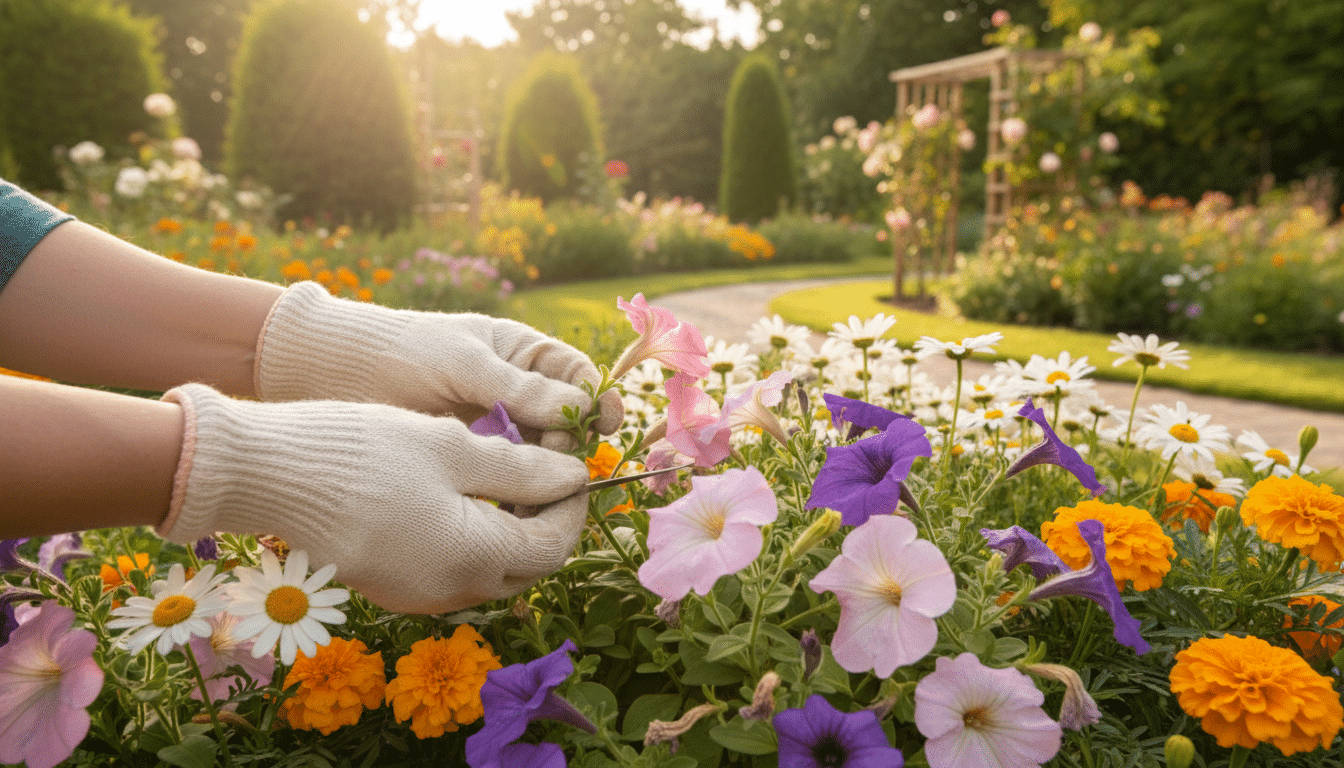
What if a simple five-minute task could keep your garden bursting with color for months?
This is the power of a core gardening technique. It transforms tired-looking beds into vibrant showcases. Many enthusiasts choose Proven Winners® for their plant selections. These varieties are bred to be prolific bloomers with minimal fuss.
The secret lies in redirecting a plant’s energy. Instead of letting it produce seeds, you encourage fresh growth. This practice is not just for experts. It’s a fundamental skill for anyone who loves a lively outdoor space.
By mastering this method, you extend the display of your favorite blossoms. Your garden stays looking pristine and healthy all season long. It’s a rewarding habit that makes a huge visual impact.
Key Takeaways
- Removing spent blooms prevents seed formation and encourages new flowers.
- This technique is a fundamental skill for maintaining a vibrant, healthy garden.
- Many gardeners rely on Proven Winners® for low-maintenance, prolific blooming plants.
- Redirecting a plant’s energy leads to a longer and more spectacular floral display.
- The practice is simple to learn and benefits both novice and expert gardeners.
- Consistent care keeps your outdoor space looking its best throughout the growing season.
Understanding the Importance of Deadheading
Gardeners often discover that the secret to non-stop color lies in a simple, timely action. This practice is about more than just tidying up; it’s a strategic choice for your garden’s vitality.
What is Deadheading?
At its core, this technique involves removing spent flowers and developing seed pods. A plant’s primary biological mission is to reproduce.
Once it sets seed, many species receive a signal that their job is done. They then stop producing new blossoms. By intervening, you interrupt this cycle.
“A garden is a reflection of care. Redirecting growth is the ultimate act of cultivation.”
Benefits of Removing Spent Blooms
Redirecting a plant’s energy is the biggest gain. Instead of fueling seed production, resources go toward creating fresh, vibrant growth.
Your garden’s appearance stays crisp and inviting. Decaying material doesn’t clutter your stems.
Many find this routine to be a peaceful, almost meditative, part of their day. It fosters a deeper connection with your living space.
This essential gardening task encourages many additional blooms. It transforms your outdoor area into a continuous display.
When and Why to Deadhead Your Flowers
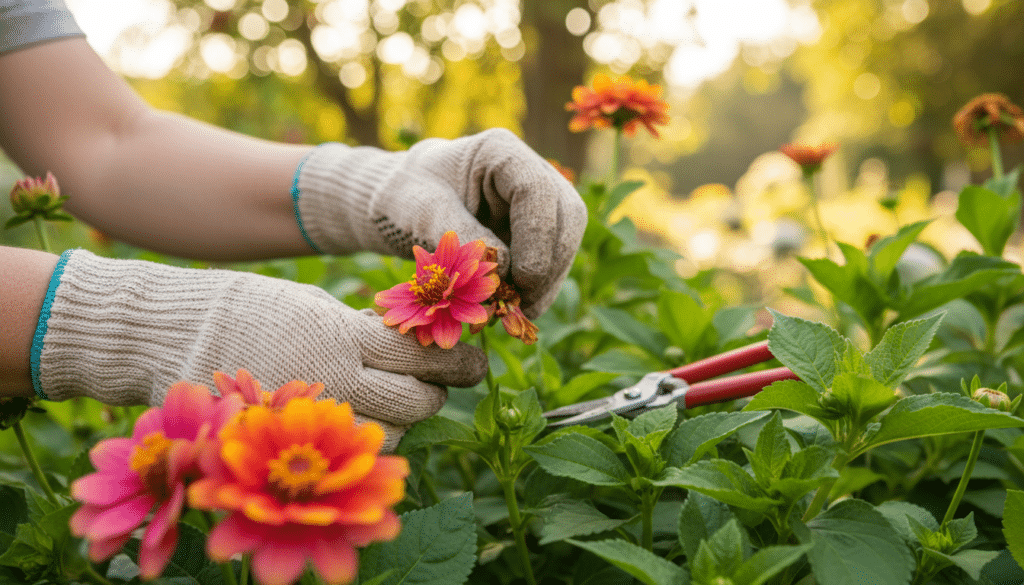
Knowing the right moment to act can make all the difference for your flowering plants. This practice is not just about removal; it’s a strategic decision tied to your garden’s calendar.
Aligning your efforts with nature’s rhythm ensures the best results. You support the plant’s natural cycle for a spectacular show.
Seasonal Considerations
The ideal window runs from spring to early summer. This period matches the peak growth of most garden plants.
Energy is high, and days are long. Plants are eager to produce new blossoms.
Beginning in late summer or fall is often too late. Cooler temperatures and shorter days limit new growth.
For busy gardeners, selecting varieties that do not need deadheading is a smart choice. They will continue bloom with minimal intervention.
Maximizing Bloom Time
For many perennials, removing spent flowers is a time-honored tradition. It keeps your space a colorful sanctuary all season.
“A garden’s beauty is a dialogue with the seasons. Listen, and it will reward you.”
Some plants produce seeds that benefit local wildlife. However, removing seed heads early in the year can boost overall flowering performance.
This simple gardening task redirects energy from seed production back into creating more vibrant flowers. Your display remains lush and extended.
How to Deadhead Flowers Properly: A Step-by-Step Guide
The method you choose to remove old flowers directly impacts your plant’s future performance. This guide outlines two effective approaches.
Each technique serves a specific purpose. Your goal is to stop seed formation and encourage fresh buds.
Pinching Versus Cutting: Methods Explained
Selecting the right approach depends on your plant’s stem strength. Soft stems often respond well to a gentle pinch.
Use your fingers for tender growth. Pinch the spent flower stem just below the faded bloom.
For tougher stems, sharp tools are essential. Secateurs make a clean cut without crushing the plant tissue.
| Method | Best For | Tool | Key Action |
|---|---|---|---|
| Pinching | Soft-stemmed plants like Calibrachoa | Finger and thumb | Pinch off old blooms or seed pods |
| Cutting | Woody stems (e.g., roses) | Sharp scissors or secateurs | Cut just above the first healthy leaf |
Proper Removal Technique to Prevent Seed Formation
Precision matters for redirecting energy. Always target the correct part of the flower stalk.
Research confirms roses bloom more when cut above the first leaf. This prevents unwanted seed pods.
Remove the entire flower stalk low to the ground. This prompts the plant to focus on a second flush flowers.
Avoid damaging new growth buds near the flower head. Your care ensures strong stems for the next cycle.
This precise technique keeps your garden tidy. It simultaneously promotes vigorous growth and extended color.
Tools and Techniques for Effective Deadheading
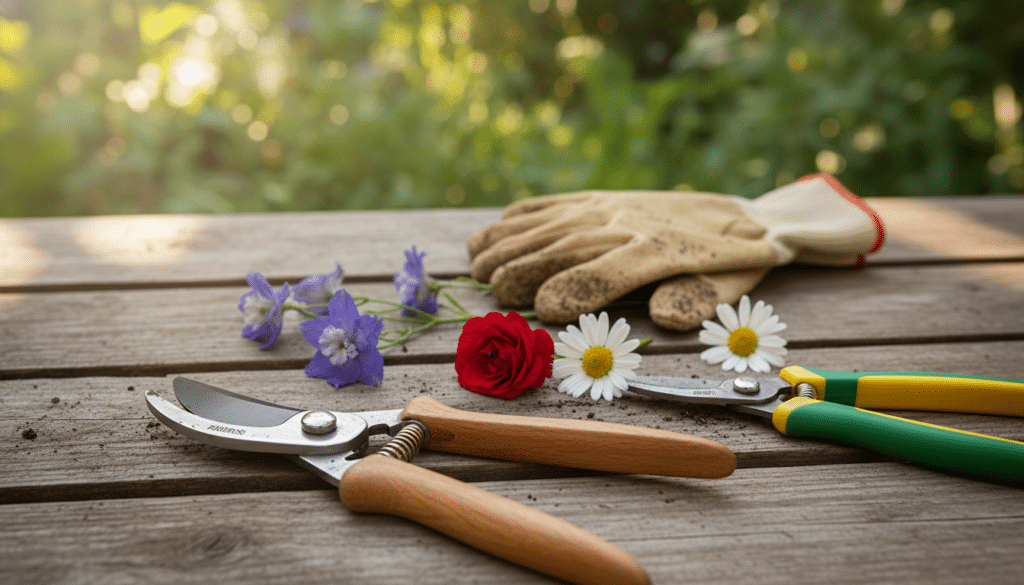
A gardener’s toolkit, when thoughtfully assembled, directly supports a season of spectacular color. The correct implements make the task swift and protect your plants.
Choosing the Right Tools
Selecting sharp, clean tools is essential. For thick or woody stems, bypass secateurs provide a clean cut. Floral snips work well for tender growth.
This prevents crushing the flower stem and encourages quick healing. Dull blades can damage plants and invite disease.
| Tool | Best Use | Stem Type | Key Tip |
|---|---|---|---|
| Floral Snips | Delicate annuals | Soft, green | Precise cuts near blooms |
| Bypass Secateurs | Roses, shrubs | Thick, woody | Cut at a 45-degree angle |
| Gardening Scissors | Herbaceous perennials | Medium, fibrous | Keep blades disinfected |
| Your Fingers | Soft-stemmed plants like Coleus | Very tender | Pinch just below the spent flower |
Best Practices for Different Flower Types
Each plant has unique needs. For roses, you might want to cup the flower in your palm before snipping. This contains falling petals.
Long-stemmed flowers like Shasta Daisy or Heuchera require removing the entire flower stalk to the base. It keeps the appearance tidy.
Regular care during the summer season helps perennials continue bloom through the year. Always clean tools after use to protect your garden in spring.
Tailored Tips for Specific Plants and Garden Styles
Not all flowering plants require the same level of maintenance for continuous color. Your approach should match each plant’s unique habits and your garden’s design goals.
Deadheading for Roses and Perennial Blooms
For classic roses and many perennials, precise removal is key. Snip the spent flowers just above the first healthy leaf.
This encourages a strong second flush of blooms. Some gardeners leave seed heads on plants like Sedum for winter interest.
Self-Cleaning Varieties vs. Manual Deadheading
Modern breeding offers easy-care options. The Ageratum Artist® sheds old flowers naturally, saving you time.
Others, like Pelargonium Boldly®, benefit from manual removal for a tidier look. For foliage-focused plants like Coleus, pinch off flower stalks to prioritize leaf growth.
| Plant Type | Example Variety | Care Need | Primary Benefit |
|---|---|---|---|
| Self-Cleaning | Ageratum Artist® | Minimal | Continuous bloom without work |
| Manual Deadheading | Pelargonium Boldly® | Regular removal | Improved appearance and vigor |
| Foliage Focus | Solenostemon Coleus | Remove flower spikes | Lush, colorful leaves all season |
Always check your plant’s specific needs. This smart strategy keeps your garden vibrant with less effort.
Conclusion
Embracing this essential gardening habit rewards you with a season-long spectacle of color and vitality.
By consistently removing spent blossoms, you guide your plants to invest energy in fresh flowers rather than seed production. This leads to more abundant blooms and a tidier garden.
Whether caring for delicate roses or robust perennials, this maintenance boosts their health and appearance. Your entire outdoor space becomes more vibrant.
Remember, some varieties are self-cleaning or offer prized foliage. Yet, regular deadheading generally creates a more lively and enduring display. It brings joy and supports your local ecosystem.
