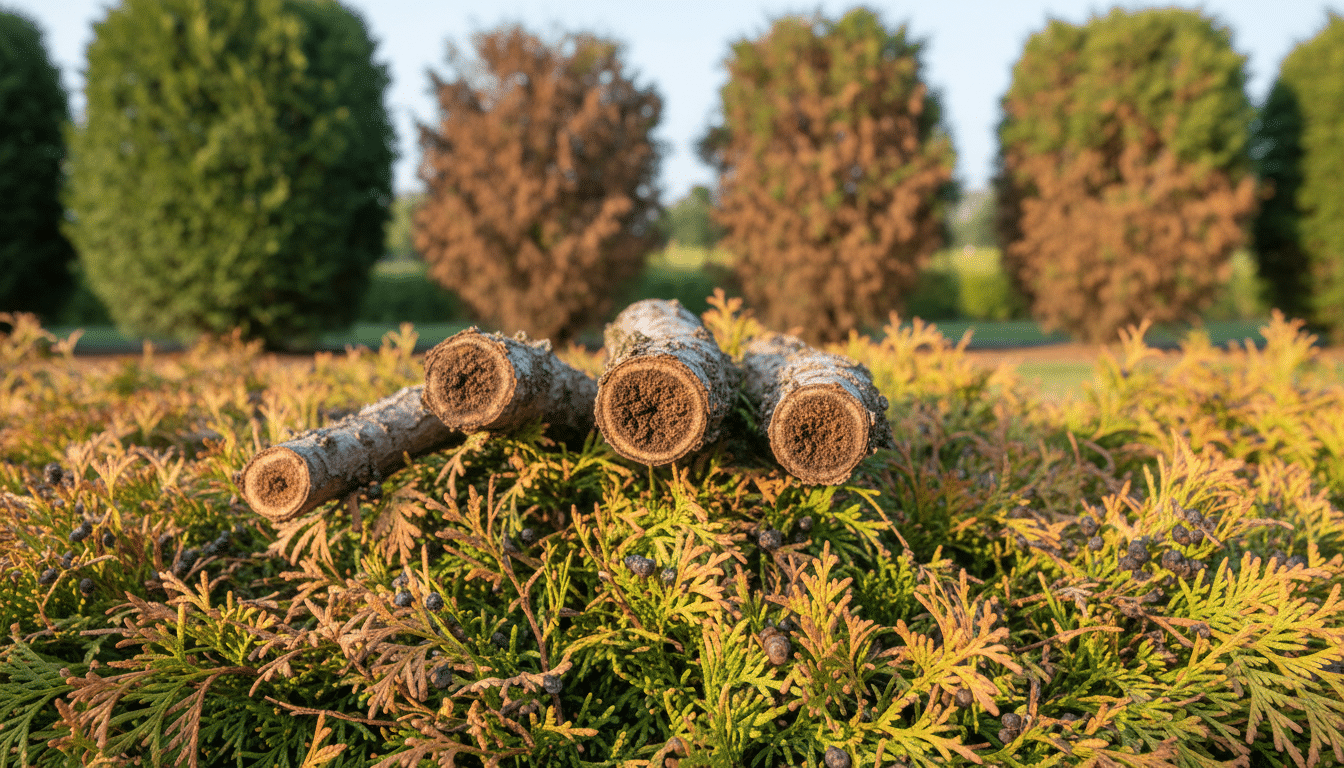
Have you ever looked at your lush green privacy wall and noticed a sudden, unexplained patch of brown? It can be heartbreaking to see your favorite landscape greenery start to fade or lose its vibrant needles without a clear reason.
Many homeowners choose this plant because it creates a perfect natural fence for their property. However, keeping a common arborvitae in peak health requires more than just regular watering and the occasional pruning session.
This guide provides arborvitae diseases pictures to help you spot fungal infections or pest damage early on. By comparing a clear image of your tree’s symptoms to known issues, you can protect your valuable outdoor investment.
Understanding these signs allows you to act quickly before small brown spots turn into a major problem. You will gain the confidence to assess if your evergreens are suffering from environmental stress or a specific sickness.
You deserve a yard that stays beautiful throughout every season of the year. Learning to recognize visual symptoms is the first step toward maintaining a vibrant and thriving outdoor space for your family.
Key Takeaways
- Use visual cues to identify fungal or pest issues before they spread.
- Compare your tree’s symptoms to specific diagnostic images for accuracy.
- Distinguish between natural seasonal needle shed and active tree infections.
- Act quickly to save your privacy screen from permanent aesthetic decline.
- Differentiate between simple environmental stress and serious plant pathogens.
- Maintain your property value with regular visual health assessments.
Understanding Arborvitae Health and Common Problems
Keeping your evergreens lush and green requires a solid understanding of common arborvitae problems and how they manifest. Your arborvitae depends on several factors working together to stay strong. This includes proper site selection, enough water, and good soil conditions.
When one of these factors is missing, the plant may start to struggle and lose its vibrant color. You might notice your common arborvitae turning brown or looking thin. These issues often stem from insect attacks, fungal diseases, or environmental stresses like winter damage.
It is vital to recognize that your trees might face multiple problems at once. For example, drought stress often makes a tree more likely to suffer from pests. Identifying early warning signs can save your entire hedge.
Knowing these common arborvitae problems allows you to act before the damage becomes permanent. You must learn the difference between normal seasonal needle drop and actual plant health threats. Sometimes, problems come from poor planting choices made years ago.
In these cases, understanding arborvitae health is the first step toward a solution. A professional diagnosis plays a critical role when your arborvitae shows signs of decline. Experts can distinguish between simple thirst and complex infections to ensure your arborvitae thrives.
| Feature | Healthy State | Warning Signs |
|---|---|---|
| Foliage Color | Deep green or bright gold | Yellowing or browning tips |
| Branch Density | Thick and lush growth | Sparse areas or needle loss |
| Bark Appearance | Smooth or naturally peeling | Cankers or visible holes |
Common Arborvitae Pest Problems
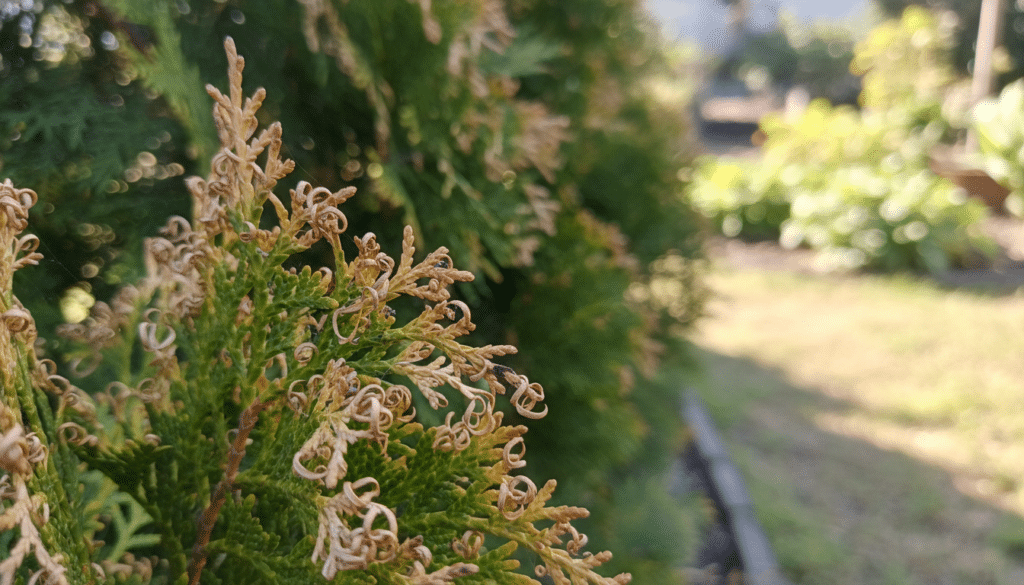
While fungal infections are a major concern, your arborvitae might actually be suffering from a hidden insect invasion. Identifying the specific pest responsible for the decline is the first step toward restoring the vibrant health of your trees. Finding a solution often requires checking for common diseases of arborvitae to rule out other pathogens.
Bagworms on Arborvitae
Bagworms are a particularly destructive pest that often targets these evergreens. These larvae are masters of disguise, making them very hard to see during the early stages of an infestation. If you do not catch them early, they can strip a plant of its foliage quite quickly.
Identification Signs
You can identify these insects by the spindle-shaped bags they hang from branches. These bags are made of silk and woven needles from your own tree. By the time these brown structures become noticeable, the larvae have already been feeding for several weeks.
Damage and Lifecycle
Each female can lay between 500 and 1,000 eggs inside her bag during the fall. These eggs overwinter and hatch in late May or early June, immediately causing significant damage as they feed. You can hand-pick the bags during winter, but professional treatments are often needed once the larvae hatch and start crawling.
Spider Mites
One of the most common issues you will face is an infestation of spider mites. These tiny arachnids are nearly impossible to see without a magnifying glass. Because they are so small, many homeowners do not realize there is a problem until the tree looks sickly.
Visual Symptoms
You may notice your arborvitae foliage turning a dull green, yellow, or even bronze. These mites often leave very fine silk webbing between the needles that looks like a tiny spider web. If you see this webbing, a spider mite colony is likely already well established.
Detection Methods
To check for them, shake a branch over a white piece of paper and look for moving dots. It is important to know that your tree has both good mites and bad mites. Beneficial mites or a harmless spider will actually eat the bad mites. A selective treatment program is best to kill the specific spider mite while keeping the helpful mites alive.
Scale Insects
Various scale insects can also drain the life out of your beautiful landscape trees. These pests are unique because they often look like small bumps or growths on the stems rather than moving bugs. Arborvitae trees are especially susceptible to these fluid-sucking invaders.
Fletcher Scale Characteristics
The Fletcher scale is the most common variety found on these evergreens in the United States. These scale insects use piercing-sucking mouthparts to drain vital fluids from the plant tissue. As the scale population grows, the foliage will lose its luster and begin to yellow.
Honeydew and Other Signs
A telltale sign of these scale insects is a sticky substance called honeydew that they excrete. You might find this residue on the needles or even on the ground beneath the tree. This sticky mess often attracts other insects like bees and flies, which is a clear signal that your scale infestation needs immediate attention.
Arborvitae Diseases Pictures: Fungal and Pathogen Issues
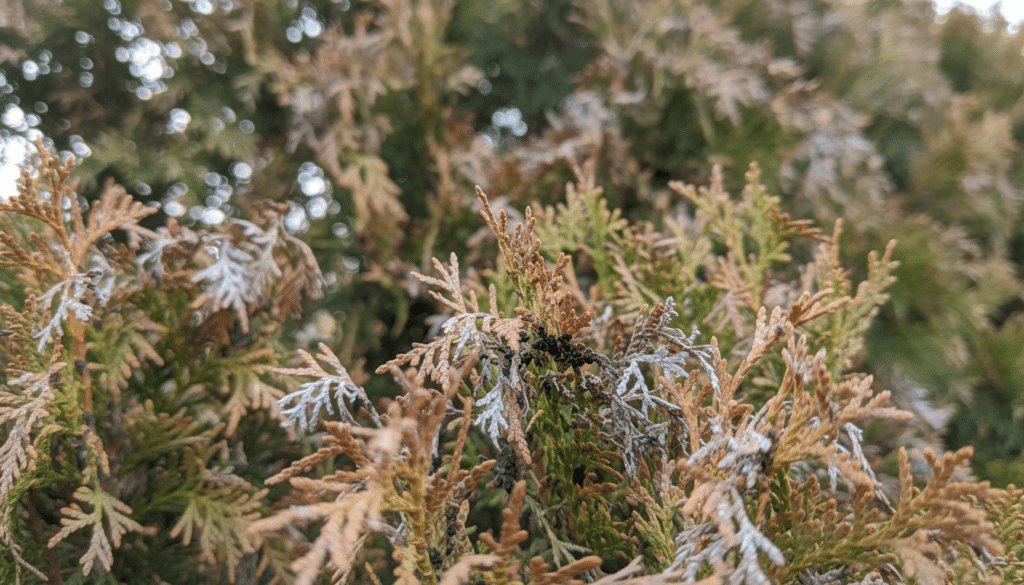
Learning to spot the visual cues of fungal infections can save your prized hedges from total collapse. When you look at your landscape, you want to see deep, lush greenery. However, a fungal disease often waits for the perfect moment to strike. These pathogens love moisture and mild temperatures, which are common in many parts of the United States. If you notice your arborvitae turning a strange shade of bronze, it is time to investigate.
Using pictures to identify issues is a smart move. Visual clues tell a story about the health of your plants. For instance, a fungus might stay dormant as an endophyte inside the tissue for months. It only becomes a problem when your trees face stress. Drought, poor drainage, or even a harsh winter can trigger an outbreak. If your arborvitae was recently pruned, it might have open wounds that invite infection.
“A keen eye and a quick response are the best tools a gardener has against fungal pathogens.”
Aggressive pruning is one of the biggest stressors for these trees. You might think you are helping the shape, but you could be letting a disease in. It is helpful to compare what you see with known fungal symptoms. Sometimes, natural seasonal needle drop is confused with a serious blight. Observing how the discoloration moves—from the tip to the base or vice versa—is a critical step.
In many cases, your evergreens will show signs near the bottom first. This is where airflow is often the lowest. Stagnant air and high humidity are like an invitation for fungal growth. By checking your evergreens weekly, you can catch these issues early. It is possible for your plants to look fine one day and turn brown the next. This proactive approach saves you money and keeps your yard looking beautiful.
Arborvitae Needle Blight
Identifying an arborvitae needle issue requires looking at the very tips of the foliage. This specific blight often comes from Phyllosticta or Pestalotiopsis fungi. You will see the needles turn from pale green to a dry, yellow color. This infection starts at the tip and moves inward. During wet springs, tiny black fungal spots appear on the surface.
Phyllosticta Symptoms
You will notice blighted needle tips and a desiccated appearance. These symptomatic areas often display black pads of fungal tissue. These pads rupture to release spores that spread to other plants nearby.
Pestalotiopsis Infections
Pestalotiopsis is a more aggressive arborvitae needle issue. It attacks both the foliage and the woody stems. It often enters through pruning wounds or areas with mechanical damage. If it spreads, it can quickly kill off entire small branches in your yard. This fungus often targets the tree when it is already weak.
Root Rot
If you see your arborvitae turning yellow from the ground up, you might be facing root rot. This happens when the soil is too wet for the roots to breathe. Soil that stays soggy and fails to drain is the main culprit.
Early Warning Signs
Look at the soil level for any mushroom growth. The ground may feel soggy or smell a bit sour after heavy rain. Impact is initially seen right at the soil level where roots may appear wet or slimy.
Advanced Symptoms
The needles will eventually wilt because the plants cannot take up water. This disease often means the tree is beyond saving if the root damage is severe. You will notice the foliage changing color as the internal systems fail.
Tip Blight and Needle Cast Disease
Both of these issues cause the foliage to turn brown and fall off. It is easy to mistake this for spider mite damage, but there are key differences. These problems often stem from repeated moisture exposure on the branches.
Distinguishing Features
With needle cast, you will often find black fungal fruiting bodies on the needle surface. Healthy needle tissue is replaced by dead, brittle growth. This blight usually moves from the inner branches outward, which is a classic sign.
Disease Progression
Over time, the needles will drop, leaving bare spots. Your arborvitae may also die if the trees are stressed. This disease spreads fast during wet weather. Repeated bouts of blight hurt your arborvitae over several seasons. You should inspect every needle carefully during your weekly yard walk.
| Disease Name | Primary Symptom | Key Indicator | Common Pathogen |
|---|---|---|---|
| Needle Blight | Browning tips | Black fungal pads | Phyllosticta |
| Root Rot | Base yellowing | Mushroom growth | Phytophthora |
| Needle Cast | Inner needle drop | Black fungal specks | Rhizosphaera |
| Tip Blight | New shoot dieback | Pale green to yellow | Kabatiella |
Environmental and Cultural Problems in Arborvitae
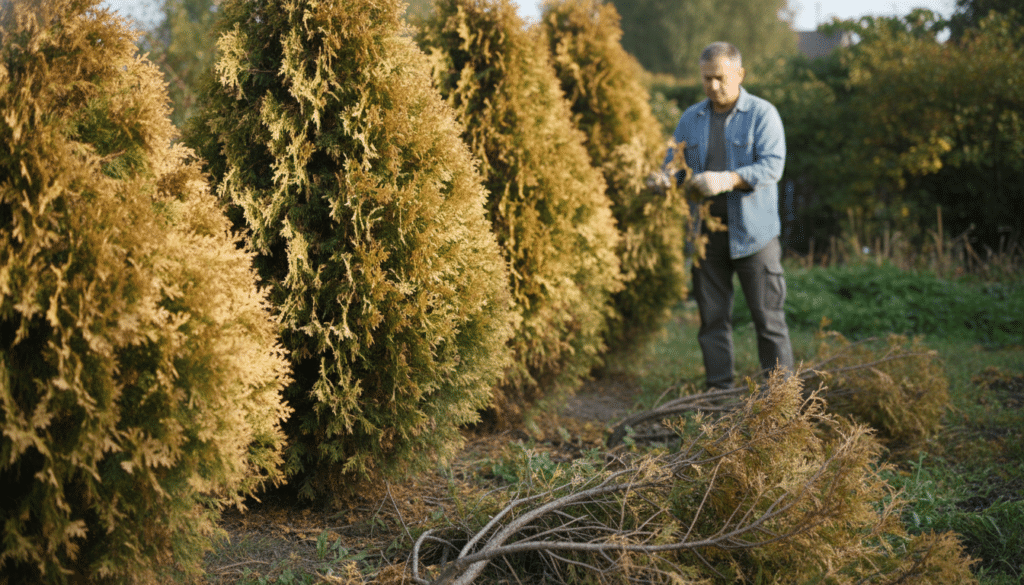
Beyond pests and blights, many common arborvitae problems stem directly from the surrounding environment and care routines. You’ll discover that stressors like harsh weather conditions or improper planting often make your plant vulnerable.
These potential problems are frequently within your control if you adjust your landscape maintenance. Sometimes, the location where the arborvitae grows is simply not a good fit for its needs.
Proper placement of arborvitae in the landscape is critical in avoiding disease outbreaks.
Winter Burn and Sun Scorch
During a harsh winter, dry winds and sun can pull moisture from needles while the ground is still frozen. This causes your arborvitae turning brown, which is a classic sign of winter burn.
You may also notice sun scorch during the hottest summer months. This environmental stress can quickly change the vibrant color of the arborvitae foliage to a dull, dry brown.
Watering Problems: Too Much or Too Little
Your watering habits play a massive role in whether your plant thrives or fails after planting. While drought is a concern, overwatering is actually one of the most common arborvitae problems.
Compacted soil often becomes waterlogged, which essentially drowns the roots by blocking oxygen. These wet areas create significant problems that can eventually lead to root rot if not corrected.
Nutrient Deficiencies and Malnutrition
Your arborvitae might lose its lush green color if the soil lacks essential minerals. Malnutrition is one of those potential problems that often stems from poor soil quality in your landscape.
If you notice general yellowing, the issue might be a lack of nitrogen or iron. Identifying these problems early ensures your arborvitae stays thick and vibrant for many years to come.
Because many problems stem from environmental stress, checking the soil and exposure is vital. A healthy arborvitae is much better at naturally resisting pests and fungal infections.
| Common Issue | Visual Symptom | Primary Cause | Care Solution |
|---|---|---|---|
| Winter Burn | Brown, brittle needles | Wind and frozen roots | Burlap windbreaks |
| Overwatering | Drooping, yellow foliage | Poor soil drainage | Improve aeration |
| Malnutrition | Pale green or yellowing | Low soil nutrients | Targeted fertilization |
| Sun Scorch | One-sided browning | Intense afternoon sun | Deep, regular watering |
How to Treat and Prevent Arborvitae Problems
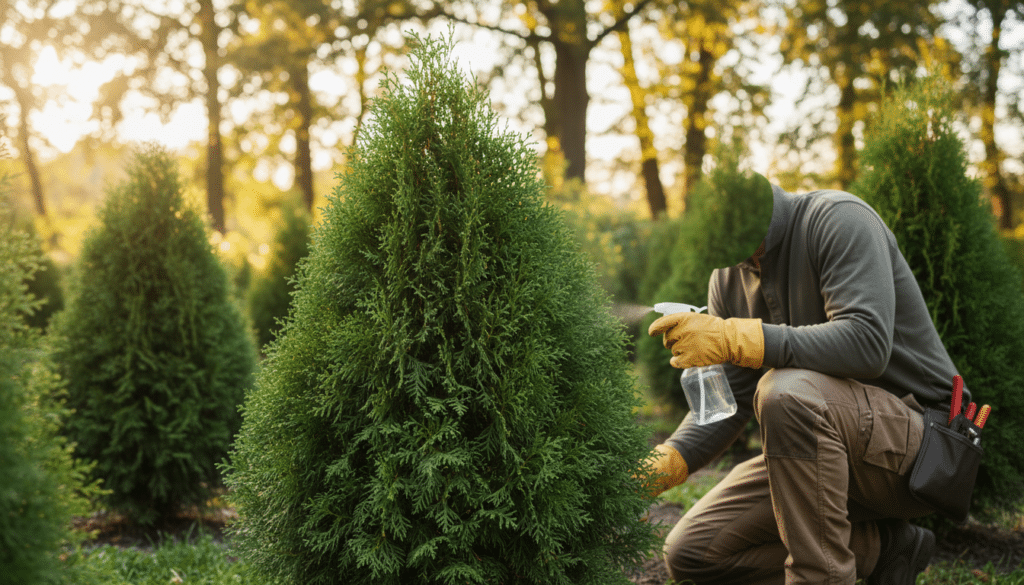
Protecting your trees shrubs from pests and diseases is easier when you have a solid plant health care plan in place. By catching any problem early, you ensure steady growth and lasting beauty for your landscape plants. Maintaining a clear image of health for your evergreens helps you spot trouble before it spreads.
Treatment Strategies for Pests and Diseases
The best course of action for managing needle blight pathogens involves pruning and discarding infected plant parts immediately. You should perform this sanitation during dry weather to prevent fungi from disseminating spores across your shrubs. For a specific pest like bagworms, professional product applications timed with larval hatching are best for complete control.
Of course, using fungicides like copper hydroxide or propiconazole can protect new needles during the spring time. Specialized products for mites preserve beneficial insects while resolving the underlying problem. These targeted treatments ensure your trees remain a vibrant part of your outdoor space.
Preventive Care and Plant Health Maintenance
Investing in a comprehensive plant health care program provides your landscape with total health care. This routine ensures your trees shrubs receive proper nutrition and monitoring to withstand environmental stressors. Proper watering is vital; use drip irrigation instead of overhead sprinklers to keep foliage dry and reduce disease risk.
A proactive plant health care routine focuses on preventing issues before they manifest. Regular health care and consistent care create the ideal environment for your plants. Professional health care and seasonal care habits may also include fall applications. Your garden requires dedicated care and specialized winter care to thrive year-round.
| Common Concern | Management Strategy | Best Timing | Key Benefit |
|---|---|---|---|
| Fungal Blight | Sanitation Pruning | Dry Conditions | Removes Pathogens |
| Bagworm Larvae | Targeted Sprays | Larval Hatching | Foliage Protection |
| Spider Mites | Selective Miticides | Spring/Summer | Saves Beneficials |
| Moisture Stress | Drip Irrigation | Growing Season | Prevents Root Issues |
Conclusion
Identifying common problems arborvitae might face is the first step toward a thriving outdoor space. Use each image to spot scale or other pests early. Protecting your arborvitae trees and shrubs ensures healthy growth for years.
Don’t gamble with your plants or the beauty of your landscape. By monitoring every tree, you prevent problems arborvitae and nasty scale infestations. Checking a clear image helps your arborvitae plants and your landscape stay beautiful.
| Focus Area | Maintenance Strategy |
|---|---|
| Pest Monitoring | Inspect branches for bagworms and scale twice a season. |
| Disease Control | Prune infected tips and apply fungicides when necessary. |
| Cultural Care | Maintain proper mulching and consistent watering schedules. |
| Environmental | Install windbreaks or burlap wraps to prevent winter burn. |
