
What if you could grow bigger, tastier tomatoes with fewer pests, all while using fewer chemicals?
This isn’t a gardening fantasy. It’s the real power of strategic companion planting. By placing certain species together, you create a supportive ecosystem right in your backyard.
Your tomato plants crave at least six hours of direct sun daily. The right neighbors help maximize this light and protect your precious crops.
Some allies attract beneficial insects. Others improve soil nutrients or even enhance flavor. But a bad neighbor can stunt growth and invite disease.
This guide cuts through the confusion. You’ll get clear, actionable steps to design a thriving, productive plot. Let’s turn your garden into a balanced, resilient haven for your summer harvest.
Key Takeaways
- Strategic plant partnerships create a natural, supportive ecosystem for healthier crops.
- Choosing the right neighbors can help deter common pests without harsh chemicals.
- Some companion species are believed to improve the flavor of your tomato harvest.
- Knowing which plants to avoid is just as important as picking the right friends.
- Proper layout ensures your tomatoes get the sunlight and nutrients they need.
- This method helps you optimize garden space and boost overall plant health.
Understanding Companion Planting for Tomato Success
Think of your garden as a bustling neighborhood where each resident helps the others thrive. This is the heart of strategic species pairing. Your goal is to build a supportive community that boosts health and yield naturally.
What is Companion Planting?
This is an age-old gardening technique. It involves growing different species close together for mutual benefit. The practice enhances flavor, vigor, and protection from harmful insects.
Benefits of Pairing Tomatoes with Other Species
When you pair your tomato plants with the right neighbors, you see major improvements. These relationships add necessary nutrients to the earth. They also prevent depletion from heavy feeders.
Strategic placement creates a natural barrier. This deters common insects and promotes a resilient environment. Understanding these interactions leads to a more successful harvest.
| Benefit Type | How It Works | Example Effect |
|---|---|---|
| Pest Management | Certain species repel or confuse harmful insects. | Fewer aphids and hornworms on your crops. |
| Soil Enhancement | Plants add nutrients or improve structure. | Better nitrogen levels for vigorous growth. |
| Space Optimization | Different root and canopy layers use space efficiently. | More produce from the same garden area. |
| Disease Suppression | Healthy biodiversity prevents pathogen spread. | Lower risk of blight and other common issues. |
Using this method allows you to make informed decisions for a bountiful plot.
Best Companion Plants for Tomatoes
Building a successful garden plot is about more than just the tomatoes themselves; it’s about the community you cultivate around them. The right neighbors provide direct support, leading to stronger, more productive tomato plants.
How Companion Plants Enhance Growth and Flavor
Strategic allies work beneath the surface. Some add essential nutrients to the earth, which heavy feeders like tomatoes crave. They help maintain the ideal soil pH between 6.2 and 6.8 for optimal nutrient uptake.
Your main crop needs full sun. Good partners won’t tower over them, ensuring everyone gets the light required for vigorous growth. Many gardeners also swear that certain herbs can actually improve the flavor of the harvest.
Attracting Beneficial Insects and Deterring Pests
Flowers like marigolds and calendula are magnets for beneficial insects. Ladybugs and hoverflies arrive to feast on destructive aphids. This creates a natural defense system.
Aromatic herbs mask the scent of your crops, confusing harmful pests. This simple trick makes it harder for them to find their target. A diverse planting scheme offers several key advantages:
- Better air circulation to prevent fungal diseases.
- Efficient use of garden space with different root depths.
- A balanced ecosystem that suppresses pest populations.
This approach to companion planting turns your garden into a self-regulating, healthy environment.
Herbs That Boost Tomato Health
The secret to a resilient tomato harvest often lies in the aromatic herbs you plant nearby. These fragrant allies do more than just smell nice. They actively defend your crops and can even improve their taste.
Integrating specific herbs creates a powerful, natural support system. This approach provides essential nutrients and protection for a productive season.
Basil, Mint, and Their Pest-Repelling Powers
Basil is a top partner for your tomato plants. Its strong scent confuses harmful insects like aphids and tomato hornworms. Many gardeners believe it also subtly enhances the flavor of your harvest.
Mint is another powerful pest deterrent. It masks the smell of your crops, repelling ants and flea beetles. Always plant mint in pots to control its vigorous growth.
Chives and Parsley for Flavor and Control
Chives work double duty. They help repel aphids and Japanese beetles. They also add a mild, onion-like taste that pairs well with your tomatoes.
Parsley attracts beneficial hoverflies. These insects prey on aphids and other small pests. This makes it a fantastic guardian for your garden.
Together, these herbs form a living barrier. They reduce the need for chemical sprays and help your tomato plants thrive all summer.
Flower Companions and Their Garden Benefits

A splash of color among your vegetables isn’t just decorative—it’s a strategic move for a healthier, more productive plot. Flowering companions work in several powerful ways to support your main crops.
They defend against pests, attract helpful insects, and even improve the soil. This creates a vibrant environment where your tomato plants can truly thrive.
Marigolds and Calendula for Pest Deterrence
Marigolds are superstar defenders. A three-year study found they were 46.38% effective at protecting tomato roots from harmful nematodes.
Their strong scent also confuses pest insects like tomato hornworms, making your garden a less attractive target. Like other pest-deterring plants, they offer a natural line of defense.
Calendula flowers are magnets for ladybugs and hoverflies. These beneficial insects feast on aphids, providing free pest control all season long.
Nasturtiums: Beautifying and Acting as Trap Crops
Nasturtiums play a clever double role. Their vibrant blooms attract essential pollinators like bees, which helps with fruit set.
More importantly, they act as a trap crop. Aphids are drawn to the nasturtiums instead of your precious tomatoes. The scent of these flowers also deters whiteflies and squash bugs.
By adding these floral allies, you build a more resilient and balanced ecosystem. Your garden becomes beautiful and functional, leading to stronger growth and better harvests.
Vegetable and Other Non-Herb Allies
Beyond fragrant herbs and bright flowers, several hardy vegetables make excellent partners for your tomato patch. These allies work in unique ways to fortify your garden ecosystem.
Garlic and Asparagus for Soil and Pest Benefits
Garlic is a powerhouse. It acts as a natural fungicide, helping protect your tomato plants from blight. Its strong scent also repels red spider mites and aphids.
Asparagus offers a classic trade. It repels root-knot nematodes that harm tomato roots. In return, your tomatoes help deter asparagus beetles. This mutual defense is a smart partnership.
These vegetables contribute to better soil health. They ensure your crops get the nutrients needed for strong growth. Using them maximizes your garden space efficiently.
This balanced approach prevents harmful pest buildup. Your tomatoes can then focus energy on producing more fruit. Integrating these companions builds a resilient and productive home garden.
Avoiding Unfriendly Neighbors in Your Garden
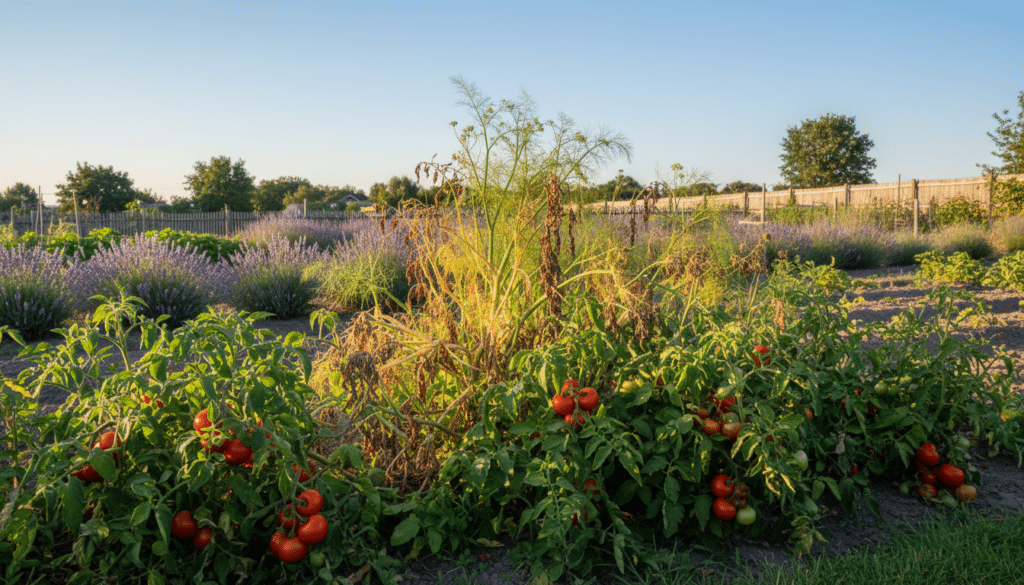
Some species can be surprisingly harmful to your tomato crop. They compete for resources or release toxic chemicals. Keeping incompatible plants apart prevents stunted growth and poor yields.
This knowledge protects your harvest. You’ll avoid common pitfalls that many gardeners face.
Issues with the Nightshade Family and Competitive Crops
Your tomato plants belong to the nightshade family. Other members, like potatoes and peppers, attract similar pests. Planting them together can spread blight and invite tomato hornworms.
Brassicas, such as cabbage, are heavy feeders. They compete fiercely for soil nutrients. This leaves less for your main crop, hindering growth.
Allelopathic and Invasive Species to Skip
Fennel releases allelopathic chemicals from its roots. These can stunt your tomato development. It’s a poor choice for a healthy harvest.
Walnut trees produce juglone, a toxin that damages tomato plants. Even roots nearby can cause harm. Always give your garden plenty of space from these trees.
By avoiding these unfriendly neighbors, you ensure your tomatoes get the nutrients and room they need. This leads to a more productive season.
Essential Strategies for a Thriving Companion Planting Layout
Your garden’s long-term productivity hinges on two key practices: thoughtful layout and crop rotation. Getting these right builds a resilient ecosystem where your crops support each other season after season.
Planning Your Garden Layout and Spacing Rules
Proper spacing is non-negotiable. Give your tomato plants 18 to 36 inches between them. This allows for good air flow, which helps prevent fungal diseases.
Group other species with similar nutrients and water needs nearby. This makes your care routine more efficient. Use vertical space for climbers like pole beans.
These tall partners can provide light shade without blocking the sun your main crop craves. This smart use of area maximizes your overall yield.
Crop Rotation Techniques and Long-Term Soil Health
Never plant the same family in the same spot two years in a row. Moving your tomatoes to a new bed each season breaks the life cycle of pests and soil-borne diseases.
This practice prevents the depletion of specific nutrients. Follow your tomatoes with a light feeder, like carrots or onions.
Consider planting a cover crop like clover in the off-season. It adds organic matter and fixes nitrogen back into the soil. Regular observation lets you see what’s working.
Adjust your strategy to ensure every plant in your garden contributes to a healthy, balanced system for strong growth.
Conclusion
The final step is putting your knowledge into action for a thriving harvest. Strategic companion planting creates a natural support system for your plants, especially tomatoes.
By choosing the right neighbors, you reduce pest pressure and improve soil health. This leads to stronger growth and better yields.
Remember, your garden is a living system. Observe what works and adjust your planting layout each season. Integrating helpful herbs and flowers attracts beneficial insects and adds essential nutrients.
When you plant with purpose, you build resilience. Your tomato harvest will reward your efforts with flavor and abundance from a vibrant plot.
