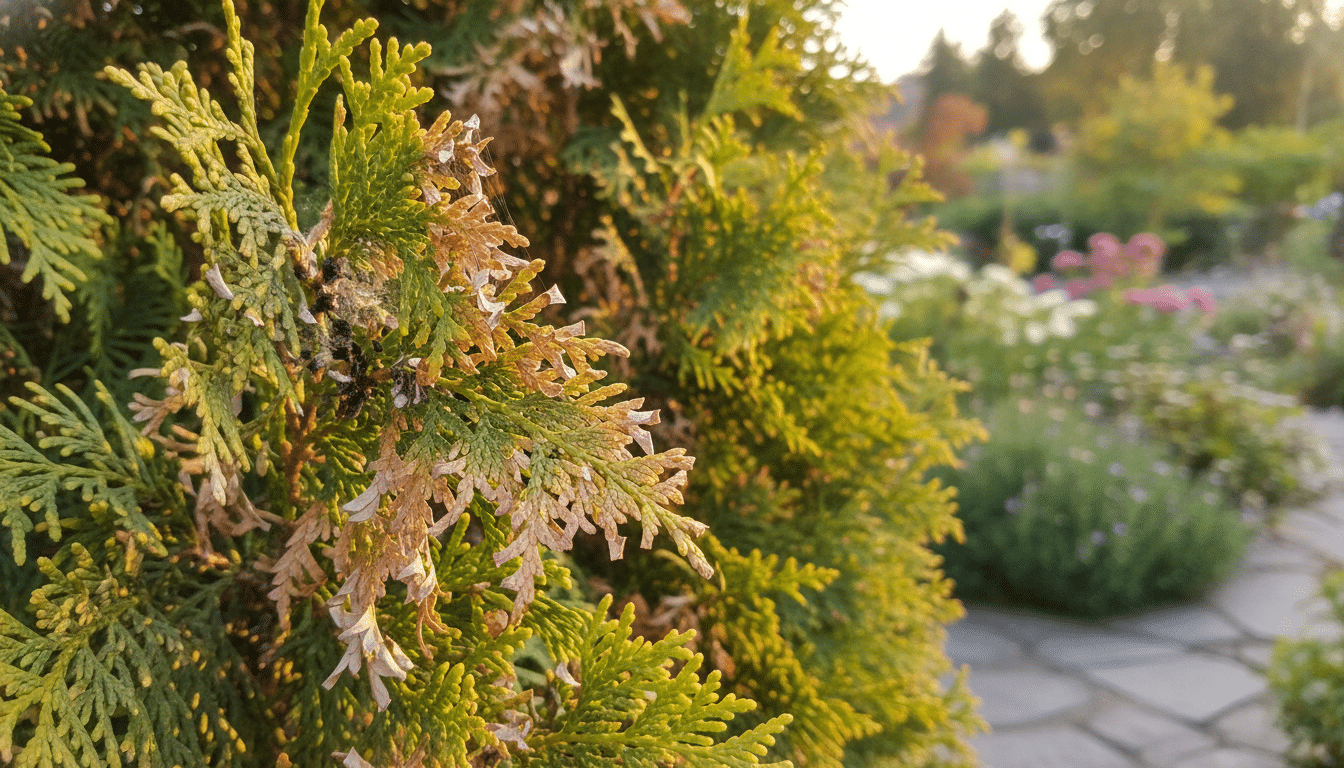
Have you ever noticed your vibrant green privacy fence turning a ghostly brown almost overnight? Many homeowners relied on these lush trees to create a private sanctuary in their yard. However, seeing that unexpected browning was quite alarming for anyone who valued their outdoor space.
These popular plants usually stayed green all year, but recent weather shifts caused significant problems. Expert Bill Hendrick from Klyn Nurseries noted that moisture was vital for their health. Without proper care, an arborvitae quickly showed signs of stress or even died.
In 2024, many trees in the landscape faced a harsh cycle of saturated soil followed by extreme drought. This specific type of arborvitae damage often left people wondering if their screen could be saved. Understanding these environmental triggers was essential for success in the garden.
Key Takeaways
- Early signs of distress often appeared as minor browning.
- Water fluctuations in 2024 caused extreme stress for evergreens.
- Consistent moisture was critical for long-term survival.
- Identifying the cause helped determine if recovery was possible.
- Protecting your investment required timely intervention.
- Expert nursery advice provided a foundation for better results.
Recognizing the Signs of Arborvitae Damage
To save your arborvitae, you must first learn how to read the visual clues it provides throughout the year. Identifying signs of trouble early can often prevent a total loss of your beautiful evergreens.
These plants sometimes hide their stress until the problem becomes very severe. By the time you notice brown leaves, the plant may have been struggling for many months already.
Paying close attention to the health of the foliage is your best defense against lasting damage. It allows you to intervene before the tree is beyond help.
Browning and Discoloration Patterns
Not all browning looks the same when you inspect your trees. For example, salt exposure typically causes yellowing on the side facing a road or the ocean.
In contrast, winter burn often starts at the tips of the needles and moves inward toward the center. One of the difficult parts of growing arborvitae is that they do not show stress until very late in the process.
You might see a tree go from slightly discolored to completely dead in a very short span. This often happens because the root system was failing long before the top turned brown.
| Pattern | Likely Cause | Side Affected |
|---|---|---|
| Tip browning | Winter Burn | South or West |
| Uniform Yellowing | Salt Spray | Road or Ocean |
| Total Brown | Severe Stress | Entire Tree |
When looking at local plantings of arborvitae in spring, some appear to be partially or totally brown, and sadly, the answer to whether they’ll recover is usually “no.”
Seasonal Timing of Symptoms
The time of year when symptoms appear helps you diagnose the root cause accurately. While some conditions show up during the peak of summer drought, others are only visible in early spring.
It is vital to distinguish between normal bronze-colored leaves in winter and actual dieback. Healthy trees may change color slightly to protect themselves from the intense cold and wind.
However, if the needles do not green up as the warm season changes, you likely have a problem. Look for signs of new growth in late spring to confirm the tree is recovering properly.
Common Causes of Arborvitae Damage
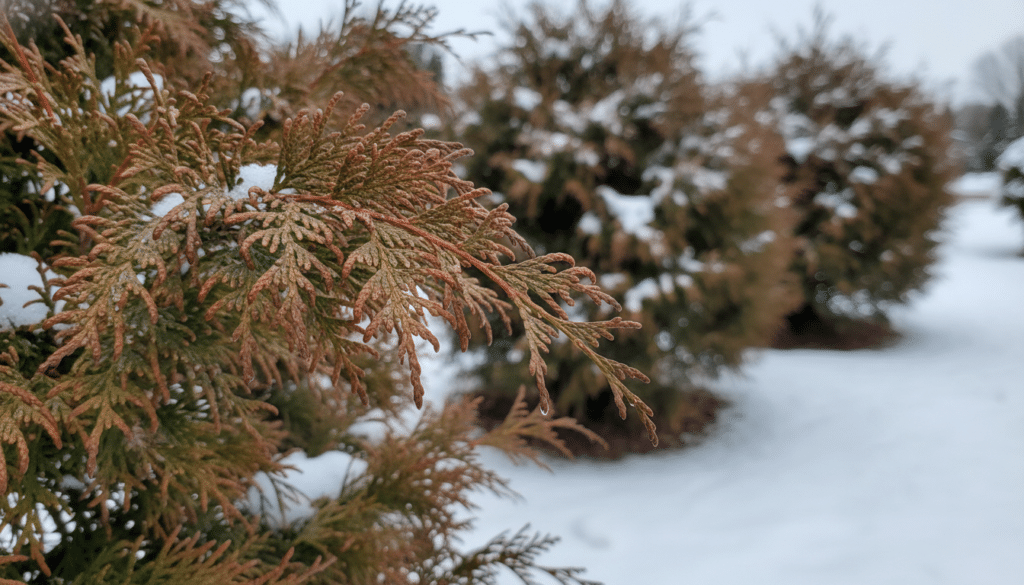
From thirsty roots to hungry bugs, various culprits could be behind your tree’s health issues. Understanding these problems helps you save your greenery before it is too late.
Knowing the source of the trouble is the only way to provide the right cure. Most arborvitae damage comes from environmental factors or small invaders.
Water Stress Issues
Most health problems for these plants start with hydration. Finding the right balance of water in the soil is key to keeping roots healthy and avoiding stress.
Drought and Insufficient Watering
A lack of moisture is a major killer of an established arborvitae. If you do not provide supplemental watering during dry spells, your tree will likely suffer.
Trees need about 1 inch of rainfall each week to stay vibrant. Without it, the foliage turns brittle and loses its deep green color.
Overwatering and Poor Drainage
Soggy soil is just as dangerous as dry ground for your trees. These issues often occur in heavy clay that holds too much liquid.
When the ground stays saturated, it leads to root rot. This prevents the tree from taking in oxygen, effectively drowning the plant from the bottom up.
Winter Burn and Environmental Stress
Severe winter conditions often lead to a painful sight called winter burn. This happens when the frozen ground prevents roots from drinking any water.
Meanwhile, the bright sun and dry winds pull moisture out of the leaves. This process, known as transpiration, causes the side of the tree facing the winter weather to turn brown.
Pest Infestations
Hungry pests often target trees that are already weak from other factors. Identifying these small bugs early can prevent a total loss of your hedge.
Bagworms
Bagworms are a major threat that is moving into many new regions. These pests build silk homes and eat through the foliage at an alarming rate.
Spider Mites
These tiny pests are hard to see but cause great harm to the needle foliage. They thrive in dry weather and turn green branches into dusty, yellowed shells.
Scale Insects
Scale insects look like small, hard bumps attached to the branches. They suck vital nutrients from the tree and create significant health problems over time.
Fungal Needle Blights and Diseases
Fungal diseases often appear during wet seasons or after a period of environmental stress. Specific needle blights like Pestalotiopsis attack the tips of the branches.
These diseases thrive when the soil is too wet or when the tree is crowded. Keep an eye out for dark spots that spread across the foliage of your arborvitae.
| Common Cause | Primary Symptom | Main Environmental Factor |
|---|---|---|
| Winter Burn | Browning on one side | Cold winds and bright sun |
| Root Rot | Wilting and yellowing | Poorly drained ground |
| Bagworms | Protective silk bags | Active pest feeding |
| Fungal Diseases | Spotting and needle drop | High humidity and wet foliage |
| Scale | Bumpy stems | Nutrient depletion |
How to Treat and Repair Arborvitae Damage
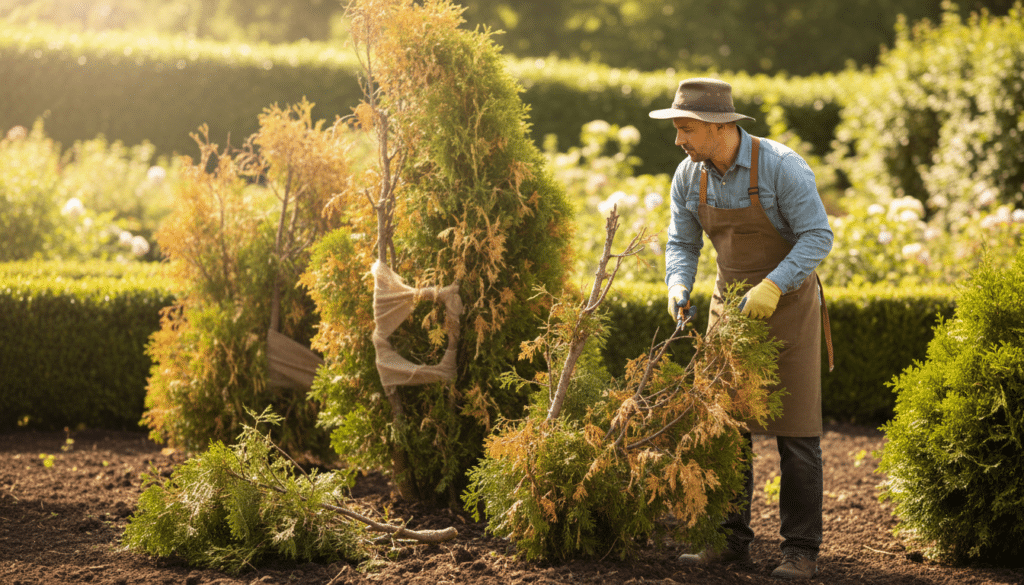
Once you identify the issues, you can begin the rewarding process of healing your landscape’s greenery. Many common issues are reversible if you act quickly and use the right techniques. Let’s look at how you can restore your plants to their former glory.
Correcting Watering Problems
To fix water issues, install a rain gauge in your yard to monitor weekly rainfall. Most established trees need about 1 inch of water per week, especially if you have sandy soil. Newly planted trees require more frequent watering to avoid transplant shock and establish a healthy root system.
In areas where the ground freezes, ensure your trees have enough moisture before winter begins. Give them deep soaking sessions during a dry fall to protect them through the cold months.
Pruning and Removing Damaged Growth
After heavy snow falls, gently brush the weight off the branches to prevent breakage. If you find broken limbs, use pruning to cut back to healthy wood to encourage fresh growth. You can also use soft plant ties to gently coax bent branches back into their natural shape.
Managing Pest Control
Keeping your tree healthy requires constant vigilance against tiny invaders. Regularly inspect the arborvitae for any signs of a pest or infestation. If you find pests, treat them promptly to stop the spread of common diseases of arborvitae and maintain strength.
Treating Salt Damage
If road salt hits your arborvitae, gently rinse the foliage with fresh water to remove accumulation. Deeply water the soil at the base to leach out salt and add gypsum to improve the ground structure. Applying organic mulch can also help protect the roots from further damage.
Supporting Recovery and New Growth
Apply a slow-release fertilizer in the spring to boost new growth and overall health. Protecting the tree from the harsh winter sun helps prevent the needles from drying out. Keep the ground moist while the plant recovers from environmental problems.
Sometimes, the best care is simply waiting until the next season to see if branches recover. Patience is vital, as browning needles take time to bounce back. If the majority of the plant has died, it may be time to consider a replacement.
Preventing Future Arborvitae Damage
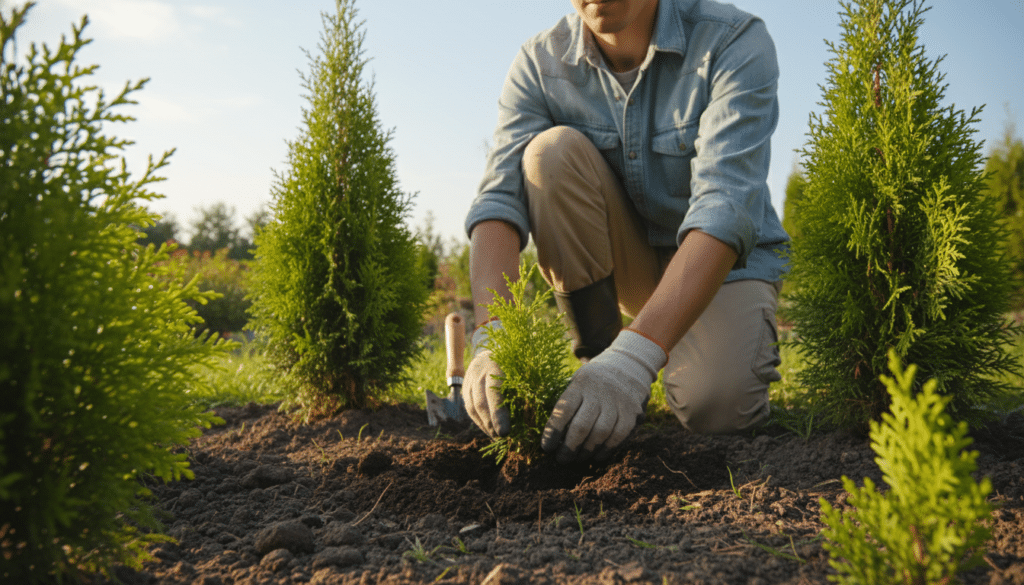
Preventing trouble before it starts is the best way to ensure your trees stay green and healthy for years. Consistent care and smart planning keep your arborvitae looking its best in any landscape. By taking a proactive approach, you can stop environmental stress before it harms your greenery.
Choosing the Right Planting Location
Make sure you select a site with well-drained soil to avoid root rot. Successful planting depends on finding a spot protected from harsh winds throughout the year. High-quality planting sites often face the north or east to limit winter sun exposure.
Early spring planting gives the root system plenty of time to grow strong. Do your research on site requirements before you buy new varieties. This preparation ensures your trees face the right conditions for success.
Proper Watering and Mulching Practices
Make sure you check new plants for moisture several times every week. Even established arborvitae need extra water during periods of extreme drought to maintain their health. Providing consistent water is critical for long-term survival and vigor.
Adding mulch around the base improves soil structure and supports steady growth. This practice helps the arborvitae thrive without the immediate need for heavy fertilizer applications. It also creates a safety buffer against lawnmower damage.
Winter Protection Strategies
Make sure you use burlap screens to shield vulnerable branches and leaves from drying winds. These barriers should be installed on stakes about two feet away from the drip line. Using screens prevents the foliage from browning during the coldest months.
Install these protective structures on the south and west sides of your trees for the best results. Remove the materials in early spring to allow for fresh airflow. This simple routine keeps your evergreens vibrant and ready for the new season.
Conclusion
Maintaining arborvitae health is possible with consistent effort. A tree problem often starts from a lack of moisture at the base. Good tree growth survives issues like cold winds, salt, and arborvitae diseases.
Time is the only way for needles and leaves to recover fully after a hard winter. Professional tree help ensures correct pruning before you replace a tree. Consistent arborvitae care protects these plants throughout every season.
Tree foliage needs regular monitoring for scale and heavy snow. A tree needle check on lower branches reduces environmental stress. Focused tree pruning and snow removal help save a tree from permanent damage.
Healthy trees thrive when other trees help block the wind. Watch your trees closely so your trees stay as a strong, vibrant tree in your landscape.
