
What if you could harvest buckets of crisp, refreshing cucumbers from just a few square feet in your garden? This dream is entirely possible with the right approach.
These popular garden favorites are over 90 percent water. That fact makes consistent moisture the absolute key to quality fruits.
Using a raised bed gives you incredible control over soil and water. You create the perfect environment for your plants to thrive.
This friendly guide cuts through the confusion. It provides the essential steps for a massive, delicious summer yield right in your backyard.
You will find that nurturing these plants is a rewarding experience. Many gardeners report they are easier to manage than other fruiting vegetables. For the best results, knowing exactly when to harvest your vegetables is just as important as the growing process.
Key Takeaways
- Raised beds offer superior control over soil and moisture, which is critical for cucumber plants.
- Since cucumbers are mostly water, consistent watering is non-negotiable for crisp, high-quality fruits.
- This method can lead to a prolific harvest from a relatively small garden space.
- Many find these plants simpler to care for compared to other garden vegetables.
- Providing the right environment makes the entire growing season more enjoyable and successful.
- Timely harvesting, as detailed in our complete guide, ensures peak flavor and texture.
Preparing Your Raised Bed for Cucumber Success
Before a single seed goes into the ground, the success of your crop is determined by how you set up your raised planting area. This initial work gives you incredible control over the environment, making the entire gardening season easier and more enjoyable.
Choosing the Ideal Location and Sun Exposure
Your plants are sun worshippers. Select a spot that gets a full six to eight hours of direct sunlight daily. A warm, sheltered location protects tender vines from harsh winds.
This simple choice fuels photosynthesis and promotes strong, healthy development. It’s the first step toward a prolific harvest.
Designing for Optimal Drainage and Accessibility
Well-built raised beds solve two major issues. First, their elevated nature ensures water drains freely, preventing soggy roots. A depth of 12 inches or more is ideal.
Second, keep the width under four feet. This lets you reach the center from either side without compacting the soil. Easy access turns routine care into a pleasure, not a chore.
Good drainage and easy reach are the unsung heroes of a productive garden.
Selecting the Right Soil and Nutrient-Rich Amendments
Soil is not just dirt. It’s the living, breathing engine that powers your vegetable garden’s success. Getting this foundation right is the single best thing you can do for your cucumber plants.
Understanding Soil pH and Drainage Needs
Your soil needs to be slightly acidic. Aim for a pH between 6.0 and 6.5. This range allows your plant to access all the nutrients it craves.
Good drainage is just as crucial. Loose, well-aerated soil prevents waterlogged roots. It’s a non-negotiable for healthy growth.
Mixing Organic Compost and Fertilizers
Cucumbers are heavy feeders. They demand a lot from the soil. You must replenish it with rich organic matter.
Mix in well-rotted manure or a high-quality compost. Products like Plantura Organic Tomato & Vegetable Compost are fantastic choices. They feed the soil ecosystem slowly and steadily.
Always avoid fresh manure. It can harm plants and introduce weeds. Your goal is to create a nutrient-dense buffet.
| Amendment Type | Key Benefit | Application Tip |
|---|---|---|
| Organic Compost | Improves soil structure and provides slow-release nutrients. | Mix 2-3 inches into the top layer of your bed before planting. |
| Well-Rotted Manure | Boosts nitrogen and organic matter content. | Ensure it is aged for at least 6 months to avoid burning plants. |
| Balanced Fertilizer (10-10-10) | Offers immediate, essential nutrients for rapid growth. | Apply a light side-dressing when vines begin to run. |
| Garden Lime | Raises soil pH if it’s too acidic. | Use only if a soil test confirms a pH below 6.0. |
Feed the soil, and the soil will feed your plants.
This simple philosophy ensures your vegetables have the energy for an abundant season. Start with great soil, and everything else becomes easier.
How to Grow Cucumbers in a Raised Bed
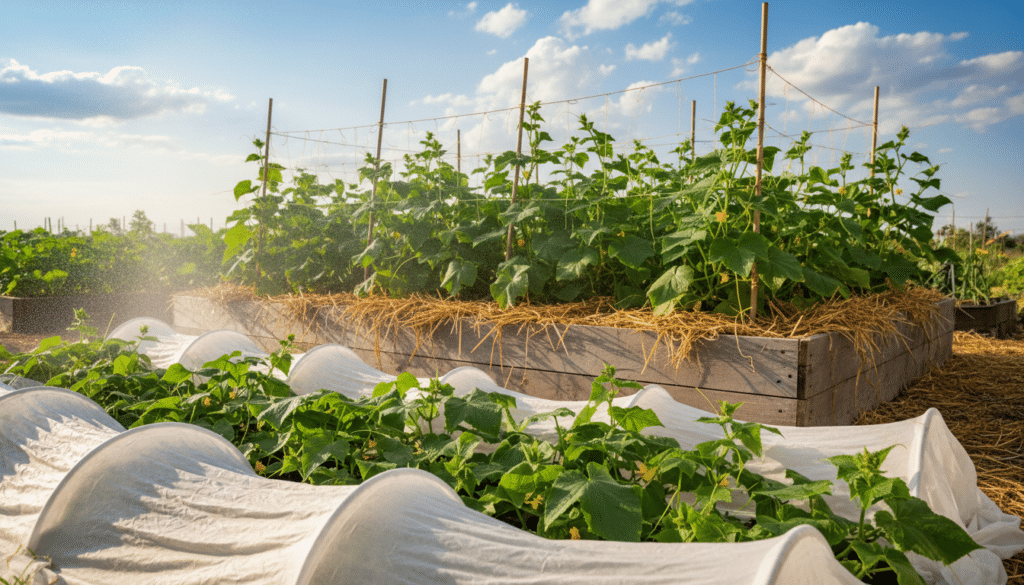
The secret to an early and bountiful harvest often lies in managing the small world of air and soil directly around your vines. This controlled environment, or microclimate, gives your cucumbers a significant head start.
Creating the Perfect Microclimate for Growth
Spun row covers are a gardener’s best friend for early-season protection. They gently raise the air temperature around your plants and shield them from chilly nights.
This simple barrier creates a cozy pocket of warmth. It encourages strong, early growth when the weather is still unpredictable.
Black plastic mulch is another powerful tool. Laying it over your soil a week before planting absorbs solar heat.
This warms the earth beneath, allowing you to plant seeds sooner. Your young starters will develop faster with this extra root-zone warmth.
| Method | Primary Benefit | Best Use Time | Key Consideration |
|---|---|---|---|
| Row Covers | Raises air temperature, protects from frost and wind. | Early spring, after planting. | Must be removed for pollination once flowers appear. |
| Black Plastic Mulch | Warms soil, suppresses weeds, conserves moisture. | Lay down 1-2 weeks before planting. | Ensure soil is moist before laying plastic; cut holes for plants. |
| Cold Frame / Cloche | Creates a mini-greenhouse for individual plants. | Very early spring for transplants. | Requires ventilation on sunny days to prevent overheating. |
Watch local forecasts closely. Once daytime temperatures are consistently warm and flowers form, remove the row covers.
This allows bees and other pollinators to access the blooms. Your careful management creates a sheltered, warm pocket for vigorous growth all season long.
Planting Techniques and Spacing Guidelines
Getting your plants off to a strong start hinges on two critical decisions: how you begin them and where you place them.
This foundation supports vigorous vines and a plentiful yield.
Direct Seeding Versus Transplanting Seedlings
You have two excellent paths for establishing your crop. Direct sowing is simple. Wait until all danger of frost has passed.
Your soil must be warm, at least 70°F at a one-inch depth. This warmth is key for good germination.
Starting seedlings indoors gives you a head start. Begin this process about four weeks before your last expected frost.
This method allows for an earlier harvest. Both approaches work well in a raised bed environment.
How to Space Your Plants for Vigorous Growth
Proper planting distance prevents competition. Each vine needs ample room for leaves and roots.
For most varieties, aim for a grid of about 100 by 40 centimeters. This translates to roughly 8 to 12 inches apart.
If you direct sowed, you will need to thin your seedlings. Select the strongest ones and remove the extras to achieve this space.
Crowded cucumbers struggle for light and nutrients. Giving each plant its own territory is a non-negotiable for health.
Generous spacing is a gift of air, light, and nutrients to every vine.
Whether you choose seeds or transplants, respecting this space ensures your cucumbers can thrive without a fight.
Watering, Mulching, and Fertilization Tips
The difference between a good harvest and a great one often comes down to moisture management. Your daily routine directly impacts fruit quality and plant health.
Establishing a Consistent Watering Schedule
Your plants need about one inch of water each week. Soak the soil deeply to encourage strong roots.
Irregular watering causes stress. This can lead to bitter-tasting cucumbers.
Always aim the hose at the base. Keeping the leaf surface dry is a simple defense against mildew. Drooping leaves are a clear signal for more water.
| Watering Method | Pros | Cons | Best For |
|---|---|---|---|
| Soaker Hose / Drip Irrigation | Delivers water directly to roots, keeps leaves dry, highly efficient. | Initial setup required. | Consistent, deep watering with minimal disease risk. |
| Hand Watering at Base | Precise control, allows you to inspect plants closely. | Time-consuming for large plantings. | Smaller beds and container gardens. |
| Overhead Sprinkler | Covers a large area quickly. | Wets foliage, promoting fungal disease; less water reaches roots. | Generally not recommended for cucumber plants. |
Using Mulch to Conserve Moisture and Reduce Weeds
A layer of organic mulch is a garden game-changer. It locks soil moisture in and keeps competing weeds out.
Mulch acts like a protective blanket, moderating soil temperature and conserving precious water.
It also keeps your developing fruits clean and off the damp ground. This prevents rot and mold. Healthy practices like these reduce disease pressure. For extra security, consider starting with disease-resistant cucumber seeds.
Trellising and Supporting Your Cucumber Vines
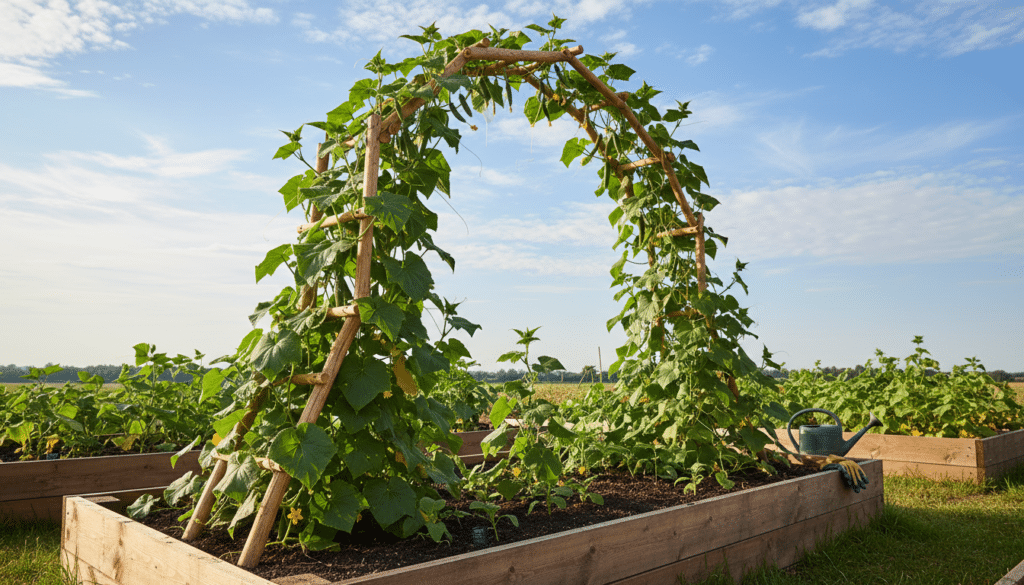
Vertical gardening isn’t just a trend. It’s a practical solution for maximizing yield in limited areas. Guiding your plants upward saves precious ground space and promotes healthier development.
This approach leads to cleaner, straighter fruits. It also simplifies your routine care and harvesting tasks.
Evaluating When Trellising is Beneficial
Not every cucumber plant needs a trellis. Compact bush varieties often thrive without support. Their shorter growth habit keeps them contained.
Long, vining types are a different story. They benefit greatly from a sturdy three- to four-foot structure. A simple wire or wooden frame provides the necessary support.
Training these vines vertically improves air circulation dramatically. This simple act is a powerful disease prevention strategy.
Techniques for Training and Pruning Vines
Begin training when plants are young. Gently weave the main stem and tendrils onto your trellis. You can direct any stray shoots back into the bed.
Pruning is another beneficial technique. Remove some lower leaves and lateral shoots. This focuses the plant’s energy on fruit production.
Remember, trellised plants dry out faster. Their elevated roots are more exposed. Monitor soil moisture closely to ensure a bountiful harvest.
A well-supported vine is a productive vine, yielding perfect cucumbers with ease.
Preventing Pests, Diseases, and Ensuring Healthy Growth
Keeping your cucumber vines healthy and productive involves a proactive defense against common garden adversaries. Vigilant care stops small issues from becoming big problems.
This protects your investment and ensures a strong harvest.
Identifying Common Pests and Preventative Measures
You must watch for striped pests like the cucumber beetle. These insects damage plants by eating leaf tissue, flowers, and fruit.
More critically, they can spread bacterial wilt. This disease causes vines to collapse rapidly.
Managing these pests is easier with planning. Choose resistant varieties noted in seed catalogs. Regularly inspect for signs of off-color growth or distortion.
Recognizing and Managing Cucumber Diseases
Fungal diseases are another challenge. Angular leaf spot causes small, blocky spots on leaves surrounded by a yellow halo.
Powdery mildew appears as a white, dusty coating on the leaf surface. Both thrive in humid conditions.
Good garden hygiene is your first line of defense against plant diseases.
Remove infected cucumber debris promptly. This simple act significantly reduces the spread of disease among your plants.
Proper spacing and watering at the base also keep foliage dry. This creates an environment where your cucumber crop can thrive.
Maximizing Your Harvest with Companion Planting
Companion planting transforms your vegetable plot into a cooperative ecosystem. This strategy uses smart plant relationships to support your main crop.
Your cucumbers will thrive with friendly neighbors. These allies attract helpful insects and improve soil health.
Choosing Beneficial Companion Plants
Certain plants are excellent neighbors for your vines. Dill and borage attract beneficial pollinators and predatory insects.
Lettuce makes a good, low-growing ground cover. Peas and dwarf beans are also suitable companion plants.
They fix nitrogen in the soil, promoting a healthy garden environment for your cucumber crop.
Enhancing Pollination and Reducing Competition
Strategic placement improves pollination for a better yield. It also naturally reduces pressure from common pests.
Avoid planting your cucumbers near tomatoes or peppers. These heavy feeders compete fiercely for space and nutrients.
Proper companion selection ensures your plants have all the resources they need. This leads to a more productive and harmonious garden all season.
The right plant partnerships create a thriving garden community where every member benefits.
Conclusion
Your journey from seed to salad is nearly complete, and the rewards are within reach.
Following this friendly guide sets you up for a productive harvest. You’ll enjoy picking crisp fruits for your favorite summer dishes.
Whether you love tangy pickling types or sweet slicing varieties, the right approach makes all the difference. Mastering how to grow cucumbers in a raised bed is a rewarding skill.
Stay watchful for common pests and diseases. Your plants will thrive with consistent water and good nutrition.
Choosing the best varieties for your climate ensures a long season of perfect cucumbers. Your raised beds will provide an abundance of fresh, homegrown goodness.
